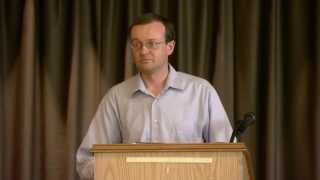
Brian Green is a scholar at Santa Clara University specializing in the intersection of transhumanism and Catholic ethics. His research explores the complex relationship between these seemingly disparate fields, seeking to identify areas of both conflict and potential collaboration. He has dedicated approximately a decade to this field of study, commencing with his master’s program at the Graduate Theological Union in Berkeley.
His work aims to foster mutual understanding and dispel misconceptions between transhumanist and Christian communities. At the Religion and Transhumanism Conference 2014, Green addressed prevalent myths regarding the Catholic Church’s stance on life extension and human genetic manipulation, arguing for a more nuanced perspective that acknowledges the diversity within both transhumanism and Christianity. He advocates for identifying true points of tension and exploring potential alliances between these groups.
Green’s research considers the justice implications of emerging technologies, and the practical challenges of achieving immortality. He seeks to encourage productive dialog that reconciles the benefits of emerging technologies with Catholic concerns for social justice, human dignity, and spiritual well-being.