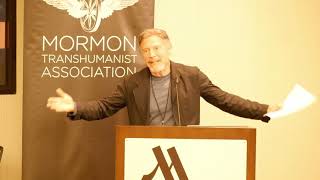
Charles Randall Paul is the founder and president of the Foundation for Religious Diplomacy, an organization based in New York and Utah dedicated to fostering trust between religious critics and rivals. Recognizing the need for constructive online dialogue, he co-founded The World Table, a software platform designed to facilitate respectful conversations on the internet.
Paul’s academic background spans diverse fields. He holds a B.S. in Social Psychology from Brigham Young University, an MBA from Harvard University, and a Ph.D. from the University of Chicago Committee on Social Thought. This interdisciplinary approach informs his work on religious diplomacy and online discourse. Prior to his academic pursuits, Paul had a career as a commercial real estate developer.
Influenced by thinkers such as William James, Jonathan Haidt, and Chantal Mouffe, Paul’s work explores themes of radical empiricism, personalism, and agonistic pluralism. His perspectives, rooted in Mormon theology and Joseph Smith’s notions of Zion, challenge conventional assumptions about knowledge and behavior, especially in the context of conflict and cooperation. He draws insight from the Mormon mythological example of the war in heaven, highlighting that knowledge doesn’t necessarily ensure moral behavior.
Paul is married to Jan, and together they have five children and fifteen grandchildren.