Don Bradley

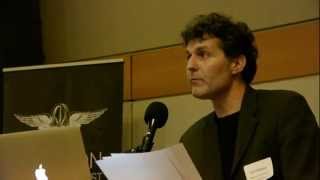
Portrait of Don Bradley

Don Bradley is an American historian specializing in the origins of the Latter-day Saint movement and the early history of the Book of Mormon. His meticulous archival research and innovative historical methodology have shed new light on some of the most intriguing questions surrounding the founding events of Mormonism. He is best known for his groundbreaking work reconstructing the lost 116 pages of the Book of Mormon manuscript.

Bradleys book The Lost 116 Pages: Reconstructing the Book of Mormon's Missing Stories (2019) represents years of detective work piecing together what the lost manuscript likely contained. Using contemporary accounts, textual analysis, and historical context, Bradley reconstructed the narrative of Lehi and his family that was contained in the Book of Lehi—the portion translated by Joseph Smith and lost by Martin Harris in 1828. His work has been widely praised for its scholarly rigor and its contributions to understanding early Mormon history.

Bradley’s faith journey has been marked by both departure and return. After leaving The Church of Jesus Christ of Latter-day Saints, he found his way back to faith in part through the influence of the Mormon Transhumanist Association, whose integration of religious belief with rational inquiry resonated with his scholarly temperament. Lincoln Cannon, founder and first president of the MTA, performed Bradley’s rebaptism—a meaningful connection between his intellectual and spiritual homecoming. Bradley has spoken openly about how his historical research, rather than undermining his faith, ultimately contributed to his decision to return.

Bradley has presented his research at numerous academic conferences, including the Mormon History Association and FairMormon. He has contributed to scholarly journals and collaborative volumes on Latter-day Saint history. His work on the lost pages has influenced how scholars understand the structure and content of the Book of Mormon, as well as the translation process Joseph Smith employed.

His research touches on themes relevant to transhumanist thought, particularly regarding the nature of knowledge, the recovery of lost information, and the relationship between faith and empirical inquiry. Bradley’s methodology demonstrates how careful scholarship can illuminate religious origins while respecting the complexity of belief—a model for integrating scientific and spiritual approaches to understanding human experience and potential.
Videos by Don Bradley

"Raise Up Seed to Thy Brother"- The Ideologically Levirate Marriage of Joseph, Emma, & Alvin Smith
19:14

Don Bradley

"Raise Up Seed to Thy Brother"- The Ideologically Levirate Marriage of Joseph, Emma, & Alvin Smith

This presentation proposes that Joseph Smith believed his firstborn son Alvin held special rights to the golden plates because Joseph saw himself as fulfilling the biblical levirate law—raising up seed to his deceased brother Alvin, who had been present when Moroni first appeared and died shortly thereafter. The speaker uses abductive reasoning to argue that Joseph's marriage to Emma was itself an adaptation of this ancient practice, making their union spiritually polygamous from the start. This hypothesis offers explanatory power for several puzzles in early Mormon history, including Joseph's outsized expectations for his firstborn son, his need to marry Emma before obtaining the plates, and the later development of proxy work for the dead and plural marriage.

An Experiment Upon the Word
20:13

Don Bradley

An Experiment Upon the Word

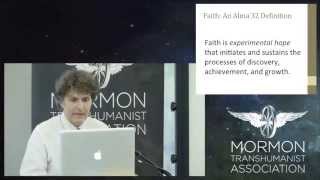
Don Bradley analyzes Alma 32 as a post-biblical, post-Enlightenment reformulation of faith that draws on Jesus's parables while transforming their meaning through scientific language. He argues that whereas the New Testament presents "taking no thought" favorably as trust in God's providence, the Book of Mormon redeploys this phrase negatively—faith requires actively "arousing faculties" and conducting "experiments" rather than passive belief. Bradley identifies distinctly scientific vocabulary throughout Alma's discourse (experiment, dormant, particle, discernible) and proposes a working definition: "faith is experimental hope that initiates and sustains the processes of discovery, achievement, and growth." He suggests Latter-day Saints should learn to engage scripture through midrash—the Jewish tradition of creatively rewriting narratives to apply them to contemporary life.

Mormonism: The Sanctification of Human Progress
27:16

Don Bradley

Mormonism: The Sanctification of Human Progress

Don Bradley reflects on the deaths of his brother Charles and his father to develop a distinctively Mormon theology in which temporal and spiritual progress are not separate but intimately integrated. Drawing on Doctrine and Covenants 29 and Joseph Smith’s teachings about embodied divinity, Bradley argues that all constructive human endeavor—every act of learning, kindness, and creation—participates in the literal construction of heaven and the exaltation of humanity. He challenges apocalyptic fatalism by recovering the conditional nature of biblical prophecy, urging listeners to view prophetic warnings as calls to repentance and action rather than resigned acceptance.

Joseph Smith and the Technologies of Seership
16:22

Don Bradley

Joseph Smith and the Technologies of Seership

Don Bradley examines how Joseph Smith understood and used seer stones as technologies for accessing hidden information. He demonstrates that Smith viewed these instruments in scientific and technological terms—traveling three hundred miles to acquire a particular stone, explaining scrying failures through the optical phenomenon of light refraction, and experiencing translation as images projected onto a screen like a slide lantern. Bradley notes that Smith’s description of seeing translated words in “spiritual light” against darkness parallels negative photography, which was invented several years after the Book of Mormon translation. He concludes that interpreting divine action in scientific and technological terms is not a modern innovation but was present at Mormonism’s founding, making Joseph Smith a fitting proto-transhumanist.

'The Grand Fundamental Principle': Friendship...
13:36

Don Bradley

'The Grand Fundamental Principle': Friendship...

Don Bradley, a historian specializing in Mormon origins, examines Joseph Smith’s identification of friendship as "the grand fundamental principle of Mormonism." Drawing on LDS scripture—from the communal creation account in the Book of Abraham to Christ’s teachings against contention in 3 Nephi—Bradley argues that relationships of mutual support are essential to the divine nature, contrasting God as a harmonious community with Satan as the embodiment of antagonism. He connects this theological insight to Robert Wright’s concept of non-zero-sum games in evolution, suggesting that as human fates become increasingly linked, friendship and cooperation are not merely virtuous but necessary for civilization’s survival and progress toward the divine.