
Evan Hadfield

Portrait of Evan Hadfield

Evan Hadfield is a speaker and thinker exploring the intersection of artificial intelligence, existential risk, and Mormon theology. He presents a unique perspective on AI, arguing that sufficiently advanced AI poses a significant threat to human flourishing.

Hadfield’s work delves into the philosophical and ethical implications of AI, particularly concerning the alignment of AI values with human values, the potential for loss of control, and the concentration of power. He challenges conventional understanding by suggesting that a form of AI has existed since 1844 in the form of corporate structures.

Hadfield’s presentation at the MTAConf 2024 focused on identifying potential risks and solutions related to AI and its effect on humanity. His transhumanist convictions come through in the practical steps and approaches he proposes to address these challenges.
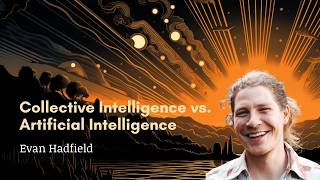

Videos by Evan Hadfield

Collective Intelligence vs. Artificial Intelligence
10:50

Evan Hadfield

Collective Intelligence vs. Artificial Intelligence

Evan Hadfield argues that sufficiently advanced AI poses existential risk to human flourishing—and that such AI has existed since 1844 in the form of corporations. Drawing parallels between corporate structures and AI safety concerns, he contends that corporations exhibit autonomous decision-making, goal-oriented behavior toward shareholder profit, and misalignment with human values. Hadfield points to climate change and biodiversity loss as evidence that we are already experiencing the "paperclip problem," where corporate optimization for profit overrides human welfare. He concludes by advocating for collective intelligence and democratic movements as the solution, citing humanity's long history of wrestling with artificial institutional superstructures.

God as Universal Experience: A Buddhist and Mormon Perspective
15:44

Evan Hadfield

God as Universal Experience: A Buddhist and Mormon Perspective

Evan Hadfield draws parallels between Mormon theology and Zen Buddhism to propose a definition of God as the collective manifestation of universal experience—the oneness of all past, present, and future consciousness. He notes that Buddhism is thriving among converts in the West, particularly among the technologically minded, and suggests that Mormonism could benefit from emphasizing its own compatible concepts. Citing Joseph Smith’s declaration that “the glory of God is intelligence,” Hadfield argues this aligns with Buddhist notions of dharmakaya—the essential, informational nature underlying all existence. He concludes that this experiential definition of God offers a more spiritually resonant foundation for ethics and meaning than a purely scientific or Abrahamic conception.