Giulio Prisco

Hedcut portrait of Giulio Prisco

Giulio Prisco is a writer, technologist, futurist, and transhumanist. He is based in Budapest and is a frequent speaker and writer on topics related to science, technology, and the future.

A former manager in European Science and Technology Centers, Prisco’s interests span a wide range of subjects, including information technology, emerging technologies, virtual worlds, space exploration, and future studies. He is especially interested in the convergence of science, technology, and spirituality—a theme he explores through his work with the Turing Church of Transcendent Engineering.

Prisco is deeply interested in concepts like mind uploading, cryonics, and brain preservation, and how these technologies intersect with philosophy and religion. He is an advocate for the potential of technology to transcend human limitations and explore spiritual possibilities, dedicating his work to advancing these ideas within the broader transhumanist community.
Videos by Giulio Prisco

How to Bring Eduardo Back to Life
19:45

Giulio Prisco

How to Bring Eduardo Back to Life

Giulio Prisco explores the speculative physics and technology that might one day enable the resurrection of the dead, using his ancestor Eduardo Scarpeta as a personal example. Drawing on concepts from string theory, higher-dimensional physics, and the film Interstellar, he imagines future beings with access to the fourth spatial dimension who could scan information from the past and restore individuals to life. Prisco frames technological resurrection not as imminent but as a far-future possibility—one that invites hope rather than passive waiting, much like early science fiction inspired the eventual reality of space travel.

Physics and the Indian Spiritual Tradition
1:14:10

Giulio Prisco

Physics and the Indian Spiritual Tradition

Giulio Prisco, physicist and founder of Turing Church, explores convergences between modern physics and Eastern spiritual traditions in this lecture at the Ramakrishna Mission Institute of Culture in Kolkata. He discusses how quantum physics, condensed matter theory, and the simulation hypothesis point toward concepts long held in Indian spirituality—particularly the identity of Atman and Brahman, the idea that individual consciousness reflects a universal mind. Drawing on cellular automata, Dawkins's "open individualism," and Mormon theology's view of human divine potential, Prisco connects these scientific developments to transhumanist visions of cosmic engineering. The lecture concludes with the Russian Cosmist vision of using science and technology to access deeper realities and ultimately achieve resurrection of the dead.

Religion for the Cosmic Frontier
25:04

Giulio Prisco

Religion for the Cosmic Frontier

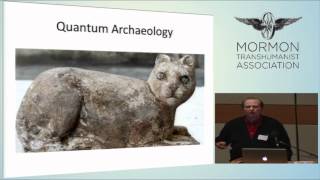
Giulio Prisco contends that Western society has lost both the consolation of traditional religious belief and the sense of an open frontier. He proposes that space exploration and emerging technologies—including mind uploading and "quantum archaeology"—could fulfill religious promises of resurrection and transcendence. Drawing on Russian cosmism and the writings of Nikolai Fyodorov, Prisco advocates for new spiritual movements that embrace science as the means by which traditional religious hopes might be realized, rather than viewing technology as a threat to faith.

The Computational Problem of Evil
20:04

Giulio Prisco

The Computational Problem of Evil

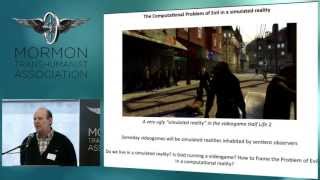
Giulio Prisco tackles the ancient problem of evil—why does suffering exist if God is good and omnipotent?—through the lens of computational theory. Using Conway’s Game of Life as a model, he demonstrates that our universe may be an "irreducible computation" where predicting the future faster than real-time is logically impossible. Even God cannot compute tomorrow’s weather in less than twenty-four hours. Furthermore, Prisco shows that frequent interventions to prevent suffering would destroy the very essence of the beings one tries to save—just as steering a glider in the Game of Life destroys its "gliderness." He suggests that even seemingly evil events may serve purposes within the larger computation that we cannot perceive from our limited perspective, offering a computational theodicy that frames omnipotence itself as necessarily constrained by logic.

The Cosmic Visions of the Turing Church
22:59

Giulio Prisco

The Cosmic Visions of the Turing Church

Giulio Prisco presents the Turing Church's transhumanist framework for spirituality, addressing humanity's deepest concerns—fear of death and longing to reunite with lost loved ones—through technological rather than supernatural means. He discusses mind uploading, "soft uploading" via extensive life-logging data, and the simulation hypothesis's theological implications: if reality is computed by a transcendent mind, then concepts like miracles and resurrection become coherent within physics rather than outside it. Prisco proposes that future superintelligences might reconstruct the dead through time-scanning technologies or simulation, offering science-based hope for resurrection.

The Turing Church of Transcendent Engineering
57:42

Giulio Prisco

The Turing Church of Transcendent Engineering

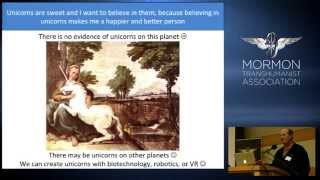
Giulio Prisco explores how transhumanism can function as a religion, offering hope for immortality and resurrection through emerging technologies like mind uploading, cryonics, and "quantum archaeology." Drawing on the Turing Church thesis, Russian cosmism, and quantum physics—particularly the many-worlds interpretation—he argues that future civilizations may develop the capability to reconstruct deceased individuals by extracting information from the past. Prisco finds resonance between these ideas and LDS teachings on theosis, suggesting that science and religion can mutually reinforce humanity's transcendent aspirations.