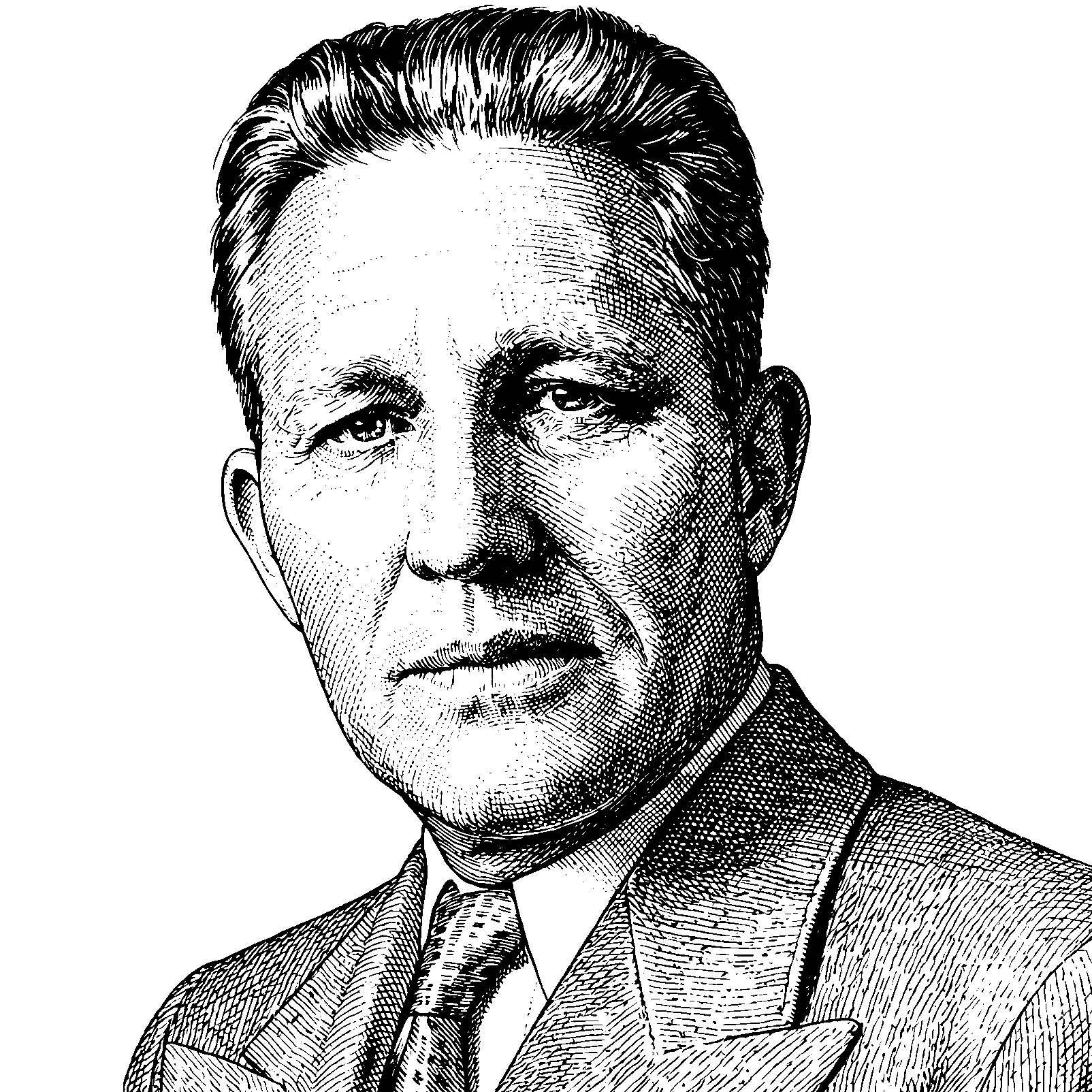
Hugh B. Brown(1883–1975)

Portrait of Hugh B. Brown

Hugh Brown Brown (1883–1975) was an attorney, educator, and Church leader who served in the First Presidency under President David O. McKay. Born in Granger, Utah, his family moved to Alberta, Canada, when he was fifteen. He served a mission in England from 1904 to 1906 and later married Zina Young Card, granddaughter of Brigham Young.

Brown had a distinguished career before his general authority service, including military leadership in World War I, serving as president of the British Mission during World War II, and working as LDS Servicemen’s Coordinator. He joined BYU’s faculty in 1946 as a professor of religion.

Called as an apostle in 1958 at age 74, Brown served as a counselor in the First Presidency from 1961 to 1970. He was known as a talented speaker and favored rescinding the Church’s priesthood restriction before it was changed in 1978. His address “The Profile of a Prophet” remains widely quoted for its articulation of the nature of prophetic authority.

Quotations by Hugh B. Brown

Both science and religion beget humility. Scientists and teachers of religion disagree among themselves on theological and other subjects. Even in our own church men and women take issue with one another and contend for their own interpretations. This free exchange of ideas is not to be deplored as long as men and women remain humble and teachable.

With the tremendous strides that science is making in our day, there is dawning upon this age what might be termed a scientific spirituality—a new type of mind that studies the truths of faith with the care and caution and candor of science, yet keeping the warmth and glow and power of faith. Spiritual insight is as real as scientific insight. Indeed, it is but a higher manifestation of the same thing.

It seems obvious that the scriptures were not intended as texts in biology, anthropology, geology or any other of the sciences.

Official statements of the First Presidency that have not been submitted to the membership of the church for its approval are matters of temporary policy only. Under present conditions, for example, the First Presidency may say, “We recommend this or that.” But conditions may subsequently change, and when they do the First Presidency may wish to make a statement which may not be in complete harmony with a former statement.