Joseph West

Portrait of Joseph West

Joseph West is a founding member, director, and secretary of the Mormon Transhumanist Association. He is deeply involved in exploring the crossroads of Mormonism, transhumanism, and technology.

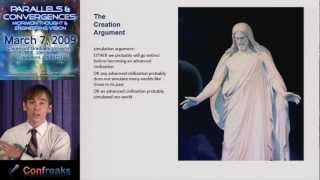
West is currently a PhD student in sociology at the University of Arizona, focusing his research on religion, culture, technology, and the family. He holds a bachelor’s degree in philosophy from the University of Utah. At the Parallels and Convergences Conference held in 2009, West presented on the “New God Argument,” co-authored with Lincoln Cannon, which explores potential reconciliations between religious perspectives and scientific materialism. The argument itself stems from secular assumptions and concludes with ideas resonating with Mormon perspectives on God and other religious matters.

Beyond his academic and organizational work, West is a family man, a father of two children, and is married to their mother, Jessica.
Videos by Joseph West

Psychedelic Medicine: Mental Health Therapies and Practices for a Decentralized World
14:19

Joseph West

Psychedelic Medicine: Mental Health Therapies and Practices for a Decentralized World

Joseph West, a psychotherapist specializing in psychedelic integration and assisted therapies, argues that psychedelic medicine offers Latter-day Saints a safe and reliable means of accessing deeply revelatory states of consciousness. Drawing on both neuroscience research and Mormon theology, he explains how substances like psilocybin produce “oceanic boundlessness”—a dissolution of ego boundaries associated with mystical experiences—which he connects to the scriptural concept of revelation as a non-ordinary state enabling creative vision toward atonement. West frames psychedelics as sacred technology that can help Mormons pursue the personal revelation their faith mandates.

An open letter to the lost children of Mormonism
9:38

Joseph West

An open letter to the lost children of Mormonism

Joseph West addresses the "lost children of Mormonism" through Nietzsche's parable of the camel, lion, and child. The camel gladly bears burdens; the lion rebels against old values with a sacred "no"; but only the child can offer the sacred "yes" needed for genuine creation. West argues that Mormonism's radical heritage—alternative family structures, innovative economics, the belief that humans can become gods—was suppressed when the community capitulated to mainstream American values. He calls for reconciliation between faithful "camels" and disaffected "lions," urging both to seek the "sacred feminine" wisdom that can guide them out of the wilderness.

Transhumanism, Feminism, and the Future of the Mormon Religion
54:22

Joseph West

Transhumanism, Feminism, and the Future of the Mormon Religion

Three Mormon Transhumanist Association members explore the intersections of religion, gender, and technology. The first speaker examines how post-secularism challenges the assumption that religion is fading, arguing instead that religion—understood as meaning-making systems—permeates even secular endeavors like environmentalism and science. A second presenter deconstructs binary notions of gender, highlighting biological complexity, transgender identity, and how reproductive technologies may expand possibilities for procreation beyond traditional forms. The final speaker delivers an allegorical "open letter to the lost children of Mormonism," using Nietzsche's three metamorphoses to describe the journey from orthodoxy to disaffection, calling for reconciliation with the "sacred feminine" to find a path forward.

The Demands of Authentic Mormonism
24:08

Joseph West

The Demands of Authentic Mormonism

Joseph West applies social movement theory to analyze the MTA’s position within the broader landscape of Mormon collective action. Drawing on subcultural identity theory, he argues that strong symbolic boundaries—not universalism—enable movements to thrive, pointing to early Christianity’s simultaneous opposition to both Jews and Greeks as an example. West critiques both the ex-Mormon discourse of shame and the Protestant assimilation of contemporary LDS culture, urging the MTA to define itself more sharply against these trends while maintaining its authentic Mormon identity.

Authentic Mormonism and Motivation to Action
19:28

Joseph West

Authentic Mormonism and Motivation to Action

Joseph West examines how shame and pride surrounding Mormon history shape Latter-day Saint identity and collective action, drawing on Kathleen Flake's scholarship about the church's turn-of-the-century transformation following the abandonment of polygamy. He argues that when faced with the Reed Smoot hearings, church leadership chose assimilation over resistance—publicly distancing from earlier practices and shifting the source of legitimacy from distinctive economic and family arrangements to the First Vision and continuing revelation. West suggests that this repression foreclosed the possibility of redeeming the "sins of polygamy" through internal reform, and uses the metaphor of the Salt Lake Temple's buried sandstone foundation—later replaced with granite—to suggest that contemporary movements like the Mormon Transhumanist Association may be uncovering and rebuilding Mormon identity on stronger foundations.

Authentic Mormonism and Resource Mobilization
16:41

Joseph West

Authentic Mormonism and Resource Mobilization

Joseph West explores what constitutes authentic Mormonism and how a progressive religious movement might mobilize resources for collective action. Drawing on sociological theory and the work of Pierre Bourdieu, he defines authenticity in two senses: the subjective experience of resonance with one's deepest interpretations of the faith, and the objective measure of whether a religious expression actually mobilizes people. West argues that early Mormonism's authenticity lay not merely in its grand fundamental principles but in its radical economic and family practices—particularly its communalism, which Leonard Arrington documented as incompatible with liberal capitalism. He challenges the Mormon Transhumanist Association to tap into whatever made those practices authentic while acknowledging that the creative work of synthesis can only come from prophetic, charismatic vision rather than sociological analysis.

Theological Implications of the New God Argument
20:33

Joseph West

Theological Implications of the New God Argument

Joseph West presents the New God Argument, co-authored with Lincoln Cannon, which uses secular premises to reach conclusions compatible with Mormon theology about God. The argument builds on Nick Bostrom’s simulation hypothesis and the “great filter” concept to conclude that if humanity survives and creates many worlds, our own world was almost certainly created by an advanced civilization. West argues this creator must be benevolent—otherwise they would have destroyed themselves before achieving such capabilities. He connects this to Joseph Smith’s King Follett Discourse teaching that God was once human, and even quotes Richard Dawkins acknowledging that “godlike extraterrestrials” who “didn’t start that way” are probable.

Afternoon Q&A with Carl Youngblood and Joseph West
3:28

Joseph West

Afternoon Q&A with Carl Youngblood and Joseph West

This Q&A session addresses a variation of the Fermi paradox in light of Ray Kurzweil’s sixth epoch of evolution, in which the universe "wakes up" and becomes infused with intelligence. If an advanced civilization could theoretically awaken the universe, why is it not already awake? One panelist suggests that such awakening would proceed outward from wherever a civilization originated, potentially far from us, and is limited by the matter available in the universe. Another panelist offers a provocative alternative: perhaps advanced civilizations do communicate with us, but through means we struggle to verify—namely, the long history of humanity’s claimed contact with the divine. These experiences, dismissed by thinkers like Nick Bostrom, might actually constitute evidence of communication from advanced beings that we will only fully recognize when we ourselves become "neo-humans" or gods.