
Marcus Flinders

Portrait of Marcus Flinders

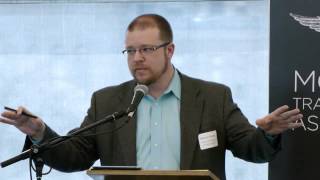
Marcus Flinders is the founding attorney and managing partner of Flinders Bandy Attorneys at Law, specializing in corporate and business law, as well as tax planning and litigation. He brings over fifteen years of experience as an entrepreneur and businessman to his legal practice. At the MTAConf 2013, Flinders was responsible for arranging lunch and presented on the complex topic of the legal rights of sentient machines.

Flinders holds a BS in philosophy from Utah Valley University, a JD from Valparaiso University, and an LLM in taxation from the University of Denver—making him a highly educated voice within the MTA community. He served a mission for the LDS Church in Côte d’Ivoire, demonstrating his commitment to his faith. He is married with three children.

At the aforementioned conference, Flinders explored the history of rights arguments, referencing thinkers from Socrates and Aristotle to Bentham and Mill, and touching upon utilitarianism. He framed his argument for the rights of sentient machines within the context of constitutional law, highlighting the challenges and possibilities this presents for lawyers and society as technology advances.

Videos by Marcus Flinders

The Legal Rights of Sentient Machines
17:55

Marcus Flinders

The Legal Rights of Sentient Machines

Marcus Flinders, an attorney specializing in corporate law, traces the history of legal rights from Socrates through the Declaration of Independence to modern United Nations conventions, examining how "power people" have historically granted or denied personhood to others. He uses the Dred Scott decision and the evolution of animal rights as case studies to illustrate how rights arguments develop gradually and depend on who holds power. Flinders then applies this framework to the coming question of machine rights, arguing that as artificial beings develop self-awareness, free will, and the capacity to feel pain, they will increasingly demand legal recognition. Drawing on LDS theology about spirits choosing bodies and intelligence attracting intelligence, he suggests that highly advanced machine bodies might attract souls seeking honorable vessels.

Taxation in a Millennial World
20:22

Marcus Flinders

Taxation in a Millennial World

Marcus Flinders, an attorney specializing in taxation and general counsel for the Mormon Transhumanist Association, examines how taxation reveals the character of a society. He distinguishes between negative scriptural examples—where kings taxed people for personal gain—and positive tithing, where contributions flow to the community’s benefit. Flinders argues that studying tax codes illuminates our societal values: estate taxes reflect beliefs about wealth distribution, and charitable exemptions incentivize benevolence. Looking toward a “millennial world,” he envisions currency eventually giving way to exchanges of love, charity, and companionship. The highest form of “joyous taxation,” he suggests, is Christ-like atonement—willingly bearing another’s burdens so they might flourish.