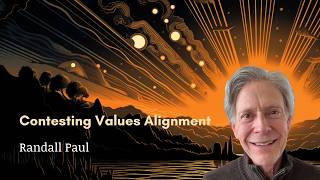
Randall Paul is a theorist deeply engaged with questions of value alignment, particularly within the context of Mormon cosmology and transhumanist thought. His work explores the nature of intelligence, divine purpose, and eternal sociality, drawing on Latter-day Saint theology while also critically examining its relationship with traditional Christian influences. Paul’s perspective is rooted in the belief that intelligences have always existed as individual, self-aware entities with infinite memories and a capacity for dynamic social interaction.
Paul challenges conventional interpretations of the glory of God, positing that it lies not merely in intelligence itself, but in the capacity of intelligences to freely love and interact with one another. He suggests that our current mortal existence is an experiment designed to improve our ability to trust and love, preparing us for a more harmonious eternal life. He frames the Mormon Transhumanist Association (MTA) as a microcosm of this process, a space for superhuman entities—or gods—to learn how to better interact and foster mutual love.
In his explorations, Paul questions the uncritical embrace of transhumanist ideals of longevity and enhanced capacities, arguing that the fundamental challenge lies in navigating the complexities of freedom and mutual influence within eternal societies. He emphasizes the importance of freely given and received love as the most valuable—and most scarce—resource in the cosmos, suggesting that intelligences exist in societies to expand the possibilities for these experiences. His aim is to provoke reflection on the deeper purposes of existence and the nature of divine love in a transhuman future.