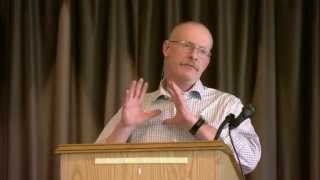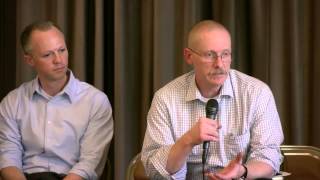
Robert Walden Kurtz is a Seventh-day Adventist minister, psychologist, and advocate for the convergence of religious faith and transhumanist aspiration. He holds a Master of Divinity from Andrews University (1990) and a Ph.D. in Psychology from Saybrook University (2022), and has served in roles spanning pastoral ministry, law enforcement, and academia—including service as a dean and professor of philosophy.
Kurtz is perhaps best known within the life-extension and transhumanist communities for his insightful reflections on the intersections of technology, health, and Adventist theology. At the Religion and Transhumanism 2014 Conference, he delivered a compelling synthesis of his faith tradition’s history and transhumanist philosophy. Kurtz draws a poignant parallel between the origins of Adventism—born out of the “Great Disappointment” of 1844, when early believers deeply mourned the delay of their expected spiritual deliverance—and the overarching transhumanist hope of escaping death through technological advancement.
Central to his thesis is the observation that Adventism’s foundational emphasis on health and longevity aligns naturally with transhumanist goals. He points to his denomination’s legacy of medical innovation—including pioneering smoking cessation programs, advancing proton therapy, and exploring xenotransplantation—as practical manifestations of the drive to push back against human biological limits. In his 2022 article, Transhumanism and the Future of Humanistic Psychology, Kurtz expands on these themes, asserting that humanity is no longer viewed simply as an isolated pinnacle being on Earth, but rather as an entity embedded in nature while inextricably intertwined with the technology its culture creates.
While Kurtz acknowledges that not all members of his faith tradition share his enthusiasm for radical technological integration—often confronting skepticism regarding the blending of machinery with the human body—he remains a steadfast advocate for progress, dialogue, and civil liberty. He consistently calls on believers from every background to keep religious agendas out of government and champions the strict separation of church and state. Ultimately, Kurtz envisions a collaborative destiny for humanity, urging both secularists and the faithful to work together toward a future where we might “argue as immortals rather than die as rivals.”