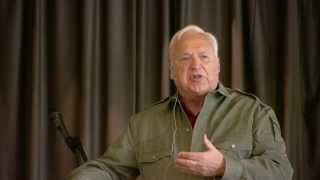
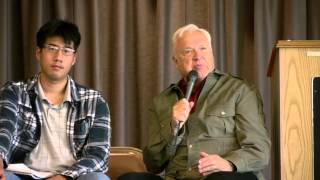
Ted Peters (b. 1941) is an American Lutheran theologian and ethicist widely recognized for his pioneering work at the intersection of theology and the natural sciences, particularly genetics, cosmology, and emerging technologies. He has served as a professor of systematic theology at Pacific Lutheran Theological Seminary and the Graduate Theological Union in Berkeley, California, and is the editor of the journal Theology and Science. His prolific scholarly output has made him one of the most influential voices in the religion-and-science dialogue over the past several decades.
Peters is perhaps best known for his extensive engagement with the ethical and theological implications of genetic engineering, human enhancement, and what he terms the “playing God” question. His books, including Playing God? Genetic Determinism and Human Freedom and Science, Theology, and Ethics, address how Christian theology should respond to advances in biotechnology and the prospect of reshaping human nature. He has also written extensively on the doctrine of God, eschatology, and the relationship between scientific cosmology and Christian hope, notably in works like God—The World’s Future: Systematic Theology for a New Era. His participation in major research initiatives, including the Human Genome Project’s ethical dimensions, cemented his reputation as a theologian deeply conversant with cutting-edge science.
Peters has engaged directly with transhumanism, offering both appreciation and critique. He acknowledges the legitimacy of using technology to alleviate suffering and improve human life, resonating with the Mormon Transhumanist conviction that scientific knowledge and technological power can serve as means ordained by God. However, Peters has raised concerns about what he sees as transhumanism’s tendency toward a purely secular eschatology—a vision of salvation through technology alone that displaces divine grace and the promised action of God in bringing about ultimate transformation.
Peters’s legacy lies in his insistence that theology must engage science and technology seriously and critically, neither capitulating to technological utopianism nor retreating into anti-scientific postures. His work remains an essential reference point for anyone exploring how faith communities can thoughtfully navigate the promises and perils of human enhancement and emerging technologies.