Models of Spirit Matter
Adam Davis, a physicist at Wayne State College, explores the concept of spirit matter—a theological necessity in Latter-day Saint belief—through a scientific lens. He examines three models: the "mirror model" (spirit matter mirroring physical matter), the "computational model" (spirit matter as information-based reality), and the "phase model" (different states of matter interaction). Finding problems with each approach, Davis concludes that while no current model fully explains spirit matter, continued exploration through eliminative reasoning can help narrow the focus toward viable theories.
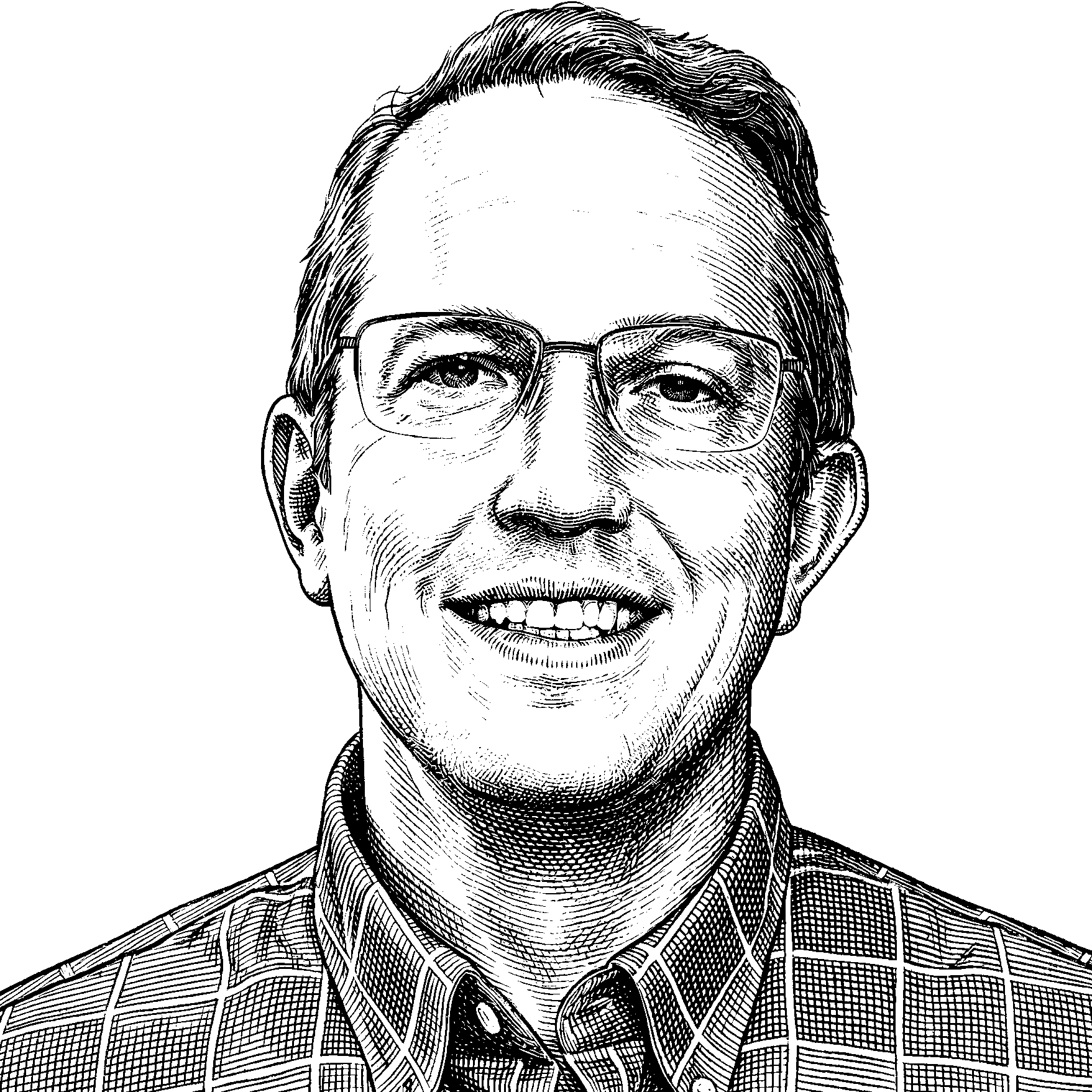
Adam Davis is a physicist and educator. He received his degree from Case Western University and currently teaches physics at Wayne State College. His academic pursuits extend beyond conventional physics into areas that bridge science and theology, particularly within the context of Latter-day Saint beliefs. ¶ Davis’s interests lie in exploring the concept of “spirit matter,” a topic central to Mormon theology. He approaches this subject through a scientific lens, seeking to develop models and frameworks for understanding its nature and properties. His work examines the theological necessity of spirit matter and considers its implications for human advancement and the attainment of divine potential. ¶ At the Mormon Thought & Engineering Vision conference held in 2009, Davis presented his perspectives on spirit matter, acknowledging the limited understanding currently available while emphasizing the importance of continued exploration. He examined scriptural and anecdotal accounts, including descriptions of spirit bodies and the spirit world, to inform his approach and stimulate further discussion on this complex topic—ultimately suggesting that no current models are completely adequate. Davis served on the MTA Board of Directors for several years.
Transcript
Speaker 1
We turn now to Adam Davis, who is a physicist. Received his degree from Case Western University and now teaches physics at Wayne State College. And he is going to speak about models of spirit matter; one of the great realms of speculation that Alan was referring to too. What is going on there? And is going to make an attempt at suggesting ways to approach this question of spirit matter. And suggesting, I believe, that none of them are quite right. So, Adam.
Adam Davis
Okay, so as was mentioned, my talk today is about spirit matter. And why spirit matter? Well, as a young fellow, I came across a small little book called The Key to the Science of Theology. And it really started me thinking about a lot of these things. I already knew that I wanted to be a physicist, but it really put me into a position to think about this in a scientific light.
Adam Davis
Spirit matter is required by our theology. Latter-day Saint theology demands the existence of spirit matter. It is not questionable. As was mentioned, there’s the scripture that spirit matter is not immaterial. The spirit matter is material. And ultimately we know very, very little about it. But if we are to be participants in advancing the human condition to what we might call divine, we must know something about spirit matter. If we don’t know anything about spirit matter, all of our efforts will be necessarily inadequate. And so I decided to think a little bit more about this.
Adam Davis
Now, even though we don’t know a whole lot, little isn’t necessarily nothing. We have a little bit of ideas about bodies. We have a little bit of ideas about the concept of spirit worlds. We have some idea of whether or not-- where the spirit world is, and we have some idea that spirit world or spirit matter doesn’t necessarily interact, at least interact readily with physical matter. And so these four concepts here give us a little bit of a starting point to talk about this idea of spirit matter.
Adam Davis
First, the idea that spirit bodies are phenotypically similar; that is, they look like us. If we go to the Brother of Jared, he had a vision as described in the Book of Ether, and he saw the Savior in his premortal body. And he explicitly said, "My body that you see now is going to look just like I’m going to look when I come down to earth in Bethlehem." Parley P. Pratt went actually a little bit farther and he suggested that our physical body is almost a perfect mirror of the spirit body. You know, if we have an appendix in our physical body, our spirit body has a physical-- or an appendix. And so he went to a one-to-one correlation there. And then there are numerous, numerous accounts of people who’ve seen the other realm, and every description of people that they’ve seen is always they look like people. They’re not looking like something different. There’s no Casper visions, as it were.
Adam Davis
The spirit world is another thing. Now, we’ve seen-- some of us have seen church videos and stuff, and they describe a nice white, glowy place and stuff. But that’s not the way that the spirit world is described, and those that have seen it. The spirit world is something that is rich and looks like a world. And as Brother Leigh mentioned, our physical world is patterned after the spirit world. Okay? So the spirit world is something that is not white or ghostly, much like my slide might suggest, but it is colorful. There is air or something that approximates air. There are animals. There are buildings. Visions have described buildings in the spirit world. So it’s not just this amorphous cloud-like place where people are playing with harps. It is a place where people function, work, interact, and believe in. It’s much more sophisticated than we’ve typically given credit.
Adam Davis
Okay, now we’ve got the concept of locality and the idea of non-interaction. When asked where the spirit world was, Brigham Young gave the idea that the spirit world is here, that it is not somewhere else, it’s not on a distant star or a distant planet. The spirit world is actually here. And indeed, when we die, typically those that have experienced such situations, they describe themselves as not going vast distances, but they’re right there, okay? That when we die, that our spirit body leaves our physical body, but we haven’t immediately transported anywhere.
Adam Davis
There also has to be the idea that there is some degree of communication between the spirit world and the physical world. We have a spirit body, and as Alma teaches us, when we die, we don’t change personality. And if we’re not changing personality, and if we’re not losing our memories, somehow what is occurring to our physical body, our memories and stuff, has to be transferred to our spirit body. Okay, so there has to be some degree of interaction, but on the other hand, if the spirit world is right here, by and large, there isn’t any interaction. So we have this real delicate condition that we have to balance the ability to interact, but in most cases there isn’t interaction. It’s been often suggested that there may very well be spirits who are attending this conference and listening, but we don’t see them. They’re just-- they’re not something that interacts with us readily. So, that puts us in a tricky situation.
Adam Davis
So, how do we deal with this? Well, we try to come up with some models and see if they can fit the data that-- the very little that we know. So I’ve come up with three models. The first is what I call the Mirror Model, and this is based largely off of the concept that the Parley P. Pratt proposed. And then there’s another model that I wouldn’t necessarily have thought of, but It has a great deal of appeal, and it may have promise. It’s what I call the Computational Model. And then, based off some of the problems, I try to fix some ideas about the Mirror Model, and I come up with what we call the Phase Model.
Adam Davis
Okay, so the Mirror Model. The Mirror Model basically asserts that spirit matter is like physical matter. Now we’re told that spirit matter is more pure, more fine, and in Parley P. Pratt’s vision, spirit matter really isn’t any different than physical matter at all, but that it is simply a more fundamental existence. Unfortunately, that doesn’t quite work because with what we know about physical matter and what we know about how bodies assemble, the spirit matter, even if it’s more fundamental, would have to diverge and assemble itself in a way. And so I’m going to take this other path of assembly and call that spirit matter. And so we have atoms, we have forces, and everything that we might associate with physical matter has its analog in spirit matter. This is the first approximation that I’m going to start with. And at that first approximation, everything will be basically the same. Okay?
Adam Davis
Which is nice. That’s what we saw earlier. We got spirit bodies, they look like physical bodies, they’ve got the spirit world. They look like the physical world. That’s all well and good. Okay. Additionally, we’ll say that the spirit world is here. Okay, so we have our physical matter world, and then we have the spirit matter world, and they’re just both right here, co-local. And they’re not interacting. There might be a third medium that allows the spirit matter and the physical matter to interact, something that I’ll talk about in my second presentation. And this is the nice picture. And this is the picture that I actually adopted when I first read The Key to the Science of Theology, and it held a great deal of appeal. Unfortunately, when I decided to probe it a little bit further, not everything decided to work out.
Adam Davis
One is the idea that we have to synchronize. That is, my spirit body is typically assumed to be here with my physical body. Okay? I’m here with my physical body. My spirit body is right here with me. That is the generally assumed model. And then here I am driving down the road, talking about this with people, and I say, okay, I have a spirit body. My spirit matter body isn’t interacting with the physical world, but it should, at first approximation, interact with the spirit world. Now, if the spirit world is right there and I’m driving down the road, and the road is clear and nice and empty, but there might be a spirit building there ahead of me. So, I drive through with me in the car, it goes through, it doesn’t interact with the spirit matter at all. But what is my spirit body going to do? What is its spirit matter going to do? And if it’s supposed to act just like physical matter acts, it’s not supposed to go through the building. But that’s obviously not what we see. So that’s a little bit of a problem.
Adam Davis
Another problem that occurs is that the spirit world is supposed to be here with our physical world. And we have a nice orbit. And if you know anything about orbital mechanics, it has to be fairly precise, and even a little bit of deviation over time will cause that to come out of synchronization. And so how do you get that the spirit world is in the exact same orbit as our physical world. Well, it’d have to have precisely the same mass. And then the Sun, which would have to have its own spirit Sun, would have to be the same mass as the Sun, and then they’d have to start off with all the same initial conditions. And even then, if you give everything right initially, any kind of deviation, you know, a large asteroid coming through, over time that’s going to create small, small deviations that will exaggerate. And we’ll eventually have our spirit world and our physical world, and they’ll not be in the same place. And that’s a problem. Okay? And it’s not a measly problem; if you don’t allow interaction between those two.
Adam Davis
Additionally, as I mentioned earlier, we have the idea that the spirit body is going to retain all of my physical body’s memories when I die. And if we allow essentially no interaction, that becomes very difficult to accommodate. So Unfortunately, as much as I liked Brother Pratt’s model, it has a few issues that-- a few kinks that need to be worked out.
Adam Davis
One of the alternative routes that we can take is to say, okay, spirit matter, if we define spirit matter as being different, things don’t quite work out. Let’s assume that spirit matter is just like our ordinary physical matter but that it creates a representational environment. A reality, but the reality is based off of information. And this is allowed because of recent developments. We can conceive of it. We talk about virtual worlds. And there are some of you who might have engaged in various MMOs or Second Life or things like that, where we can actually exist in realities that are fundamentally distinct from the physical reality. But they’re real, I mean, and it’s nice. So the idea is that spirit matter exists, but it assembles itself into information, and that that information becomes the perceptual reality of the spirit world. Okay? And so individuals, their spirit body is a collection of maybe electrons or some other kind of physical matter that we already know about. And its bits and bytes and stuff are creating the information that allows our spirit body to exist. And so everybody will be themselves and they’ll have their spirit body and so on.
Adam Davis
But everybody has to interact. And so you have all the individual spirit bodies, but you also have to have a server, as it were, that will be the spirit world. And that spirit world allows all the individual spirit bodies to interact. Okay, and this is nice. This solves all of the problems that I’ve mentioned so far. This eliminates all of the problems that are inherent in the mirror matter matter-- the mirror matter model. Say that ten times fast. Okay. So that solves all those problems. But it has its problems of its own. Okay?
Adam Davis
This isn’t one of those problems. Spirit matter will exist in space and time. But the entities, the informational entities, they are separate. They exist in a distinct space and time with a distinct set of rules that are governed by this spirit world. And so we’ll have the electrons or the neutrinos or something somewhere, and they’re assembled into the information, and they communicate, and then they create a world of its own. Okay, so what are some of the problems that occur with that?
Adam Davis
First, our physical body, which exists in the cosmos as we know it, has to be able to communicate with the spirit realm. Okay. And that means that we have to have some kind of way of transmitting information. Now, given what we understand about the body, the physical body, there is no mechanism of transmittance. We are not broadcasting radio waves. Actually, we are broadcasting radio waves, but it’s purely thermal. We’re not broadcasting information that we’re aware of. We’re not broadcasting microwaves or anything of that nature. So we don’t have any kind of physiological mechanism to communicate with the spirit world that we might posit. And that becomes a little bit of a difficulty. Now, we could say that we’re interacting or communicating with a different kind of matter and with a different kind of energy, but that eliminates some of the benefits of the entire idea behind the Computational Model where we’re going to restrict ourselves to the physical matter that we’re aware of now.
Adam Davis
Additionally, we have to deal with the problem of the server, okay, because if we’re going to restrict ourselves to communication that-- accordance with the matter that we’re aware of, we’re limited by the speed of light. And we can’t have the spirit world be off on the Sun. Because if it’s off on the Sun, when I die, it’s going to take 8.3 minutes before I’m aware of it. And everybody else will be aware of it. And so that becomes a little bit of a problem.
Adam Davis
And one of the other problems, which is somewhat of an aesthetic problem, but is the problem of resolution. Now, I mean not resolution in the sense of conclusion, but the resolution in the idea of fineness of detail. Here I am in the spirit world and I want to feel the sand between my toes. Now if you take one gram of sand, you’re going to have order the number of particles that are about the number of stars in the visible universe. Okay, some 10 to the 22nd particles. That is not something that we are computationally feasible to do. Now it’s-- not yet, not yet. But we can conceive that maybe we’ll get that many, that amount of information, which is several orders of magnitude above our petaflop capability, but when we come to that level, we’re assembling more particles than--to describe the number of particles that we exist. To say that again, if I want to describe one electron, computationally, it’s going to take a heck of a lot more than one electron to describe that one electron. If that makes any sense. And so what we come into is a situation where we’re hugely imbalanced, that our information becomes inefficient to describe the physical world. And so it’s only not inefficient if our resolution is very gross. That is, it’s not a fine resolution. And that is not necessarily a hard opposition, but it is definitely an aesthetic opposition.
Adam Davis
Which brings me to another aesthetic opposition, which some will like, some won’t, but the Computational Model is basically a brain in the vat model. That idea that the spirit world is fundamentally distinct from our physical reality. It is a reality, but it is not based in here. So, that will bother some, that won’t bother the others. But it gives a little bit of an idea of where people are going. Okay.
Adam Davis
Returning back, because my aesthetic preference is against the Computational Model, I want to see if I can correct some of the Mirror Matter problems. And particularly, I want to worry about the synchronization. I want the spirit world and the physical world to be in the same place. And I want that there are interactions between my spirit body and my physical body. But I also don’t want my spirit body to interact with all the physical or the spirit world. We would be a little bit disturbed by the idea that if there are spirits right now with us, do they see your spirit body? And when I’m walking around, do we just see the spirit bodies floating around randomly in the spirit world? That’s a little bit of a difficulty. So let’s see if we can posit some ideas and go anywhere with that.
Adam Davis
To do that, we basically have to come up with four different phases. We have the pure spirit matter phase, and those entities will interact with the spirit world much as I described in the first model. And then we have the pure physical matter. That’s what the atheist will like and believe in, and that’s what we see. And then we’ll have the idea of coupled spirit matter and hybrid matter. So let’s talk about those two.
Adam Davis
With coupled spirit matter, the physical body will subsume the spirit matter. Okay? So the spirit matter ceases to readily interact with the spirit world, but will simply be a component, integrated component, of the physical body or the physical matter. Okay, and then we’re also given the idea that uh there will be no interaction. Now the spirit world will have to be in a situation where it can interact with both. It will interact with both in this way, and if the spirit world and the physical world are the same world, then we don’t have any problem with orbits or things like that. But it still has problems. The body is taken care of, memory is taken care of, But we have some problems with the hybrid model, where we would have the spirit matter and the physical matter interacting in the same level.
Adam Davis
Suppose there’s a spirit building over here, and I’m about to build a house, and I want to dig a hole. And I dig a hole right under where that spirit building is built. What happens to that spirit building? If it’s built on hybrid matter, then suddenly there’s a hole and the building has to collapse. And that’s not exactly the situation that our data leads us to believe is existing. And so this also has some problems. Personally, I think it’s a start, that it will give us a clue as to where we’re going, but that we have a lot of work yet to do.
Adam Davis
And so I look forward to interacting with people and uh probing some of these ideas. So we got to just keep looking at the puzzle pieces and see if we can knock down some of the options that aren’t viable. One of Joseph Smith’s quotes says that, "By proving contraries, the truth is made manifest." So, if we can eliminate all the stuff that doesn’t work, that narrows our focus to what might work. And so, that’s what I encourage us to do. And thank you.