Scientific Realism and the Simulation Argument
Adam Davis examines Nick Bostrom’s simulation argument through the lens of scientific realism. He observes that scientific realism requires modeling all of reality—including unobserved events—while simulation arguments assume we need only simulate human minds. Given chaos theory’s demonstration that minute changes can produce enormous effects, and quantum mechanics’ implication that every particle influences every other, Davis argues that simulating reality would require computational resources equal to the universe itself. While not dismissing simulation hypotheses outright, he notes their tension with the realist paradigm that has driven scientific and technological progress.
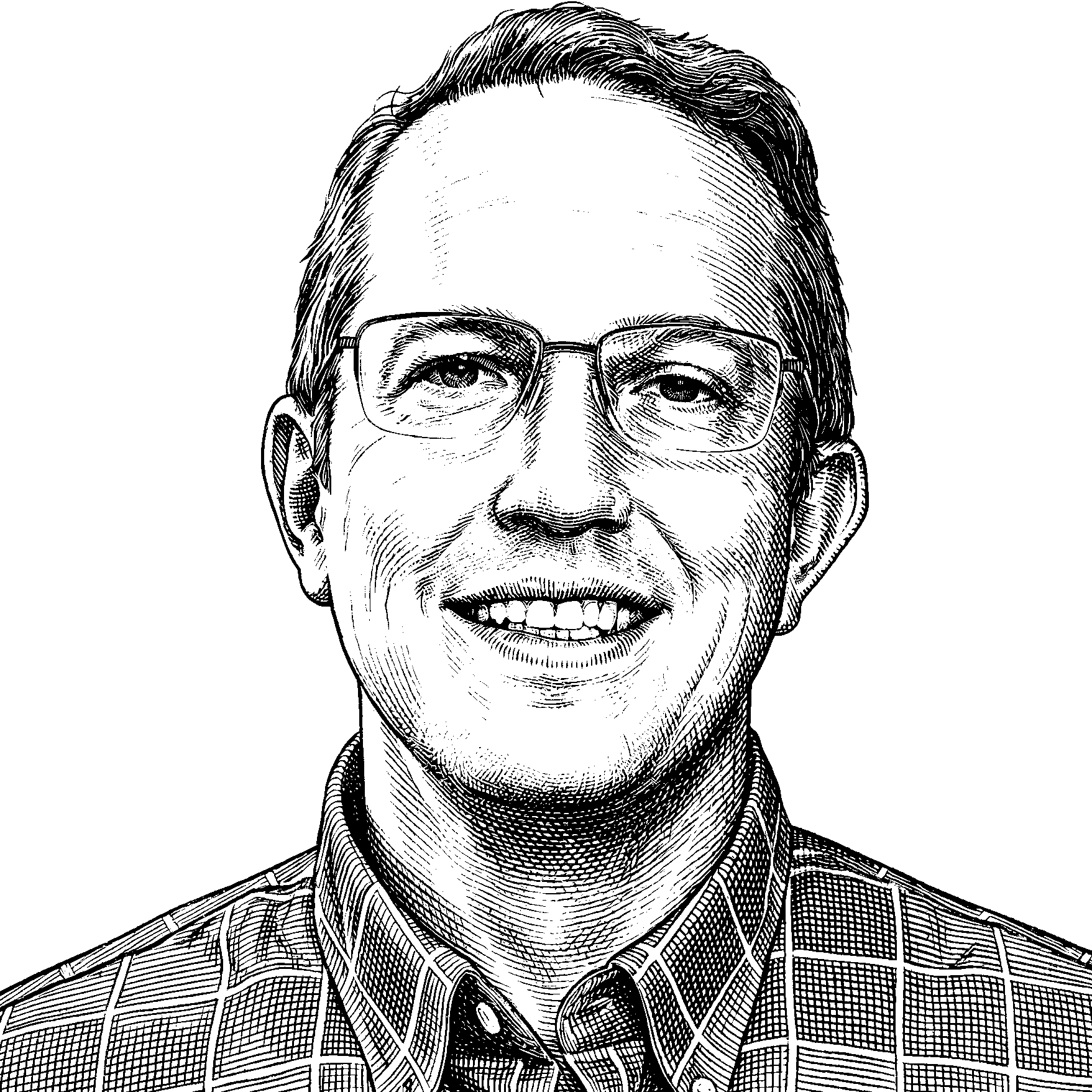
Adam Davis is a physicist and educator. He received his degree from Case Western University and currently teaches physics at Wayne State College. His academic pursuits extend beyond conventional physics into areas that bridge science and theology, particularly within the context of Latter-day Saint beliefs. ¶ Davis’s interests lie in exploring the concept of “spirit matter,” a topic central to Mormon theology. He approaches this subject through a scientific lens, seeking to develop models and frameworks for understanding its nature and properties. His work examines the theological necessity of spirit matter and considers its implications for human advancement and the attainment of divine potential. ¶ At the Mormon Thought & Engineering Vision conference held in 2009, Davis presented his perspectives on spirit matter, acknowledging the limited understanding currently available while emphasizing the importance of continued exploration. He examined scriptural and anecdotal accounts, including descriptions of spirit bodies and the spirit world, to inform his approach and stimulate further discussion on this complex topic—ultimately suggesting that no current models are completely adequate. Davis served on the MTA Board of Directors for several years.
Transcript
Speaker 1
Our next speaker is Adam Davis, who currently teaches physics at Wayne State College in Nebraska. He earned his Bachelor of Science in Physics from Brigham Young University and his doctorate in science with an emphasis in cosmology from Case Western Reserve University. His current interests include spirit-matter, free will, Bohmian mechanics, and time. And he will address us on scientific realism and the simulation argument.
Adam Davis
It's a pleasure being here. So, we’ve heard a few references to the idea of living in a simulated reality or some sort. And what do we mean by that? There’s been a a few explanations. One person put forth a particularly interesting formulation of the simulation idea, and that’s Professor Nick Bostrom who’s been mentioned times, but he gave an argument that said that basically one of three things will happen. One, we’ll never achieve a post-human state. Humanity will destroy themselves or something, but that-- or that post-humanity is simply an impossibility, and so that’s option one.
Adam Davis
The second option was that If we have posthumans, they have no interest whatsoever in running ancestor simulations. They just don’t want to, and are not interested in, for whatever reason, and-- trying to recreate doing quantum archaeology or anything like that.
Adam Davis
And then the third option is that quantum archaeology and other things like that have occurred, and that they are running simulations. And then, if you have a plurality of simulations, and you can give the principle of indifference, one of these three things are likely. I counter this in a little bit with a-- or counterpoint it with a little bit of the paradigm of scientific realism.
Adam Davis
And scientific realism has a whole bunch of subtleties to it, but we can exemplify it a little bit with the cliché, if a tree falls in the woods, does anybody hear? And-- or does it make a sound? And the scientific realist answer is yes. The sound really does occur. Maybe nobody’s around to hear it, but it’s-- the event happened in that it’s there. That is not the case for all epistemological models. And so let’s compare a little bit.
Adam Davis
Scientific realism and the simulation argument. In the case of scientific realism, to really fully model reality, you have to model everything. You can’t model just what’s being seen, but you have to model the tree that nobody hears. And not just at the macroscopic level, but at the microscopic level as well. And because everything is really happening, it’s not-- events are not mind-dependent. Reality has an existence outside of the human mind. Now our perception of the reality might not be there, but the reality does have a distinct and separate existence from human human minds.
Adam Davis
The simulation argument, well at least as Nick Bostrom presented it is, really, all we need to do was simulate human minds. And then-- because that’s what we see. And as long as you’re simulating the human mind, then you have enough data to create the reality. Okay? So if nobody’s in the bathroom right now, we can shut down the data and simulation of the bathroom and we don’t need to. It’s just not there. Not until somebody actually opens the door and walks into it is it there.
Adam Davis
Now you’d also-- he doesn’t actually talk about this, but you’d also have to have enough simulation to correlate the two different perspectives of people so that they can agree. Now, the question here is, can we get away with just simulating human minds? And one of the things that was mentioned by our keynote speaker was the idea of chaos and other things like that. And what we find is that the amount of computation or the influence of things that can occur, given chaos theory, is that very large results can occur from very, very minute things. And so just because nobody’s in the bathroom does that mean we have to ignore it and ignore what’s going on inside the bathroom? Chaos theory would suggest, really we do have to. I mean, the classic the butterfly flaps its wings and now we have our hurricane in the Pacific. I guess they call it a typhoon.
Adam Davis
Another interesting thing was Brian Cox. He gave a BBC talk. a couple of weeks ago or a couple of months ago to a bunch of affluent people who wanted to pay a lot of money to listen to a celebrity talk about science. And he pointed out that according to the theories of physics as we know them or understand them now, any minute change that occurs here will influence everything everywhere. And the example he pulled out is a diamond, and he rubbed the diamond and said, "When I’m affecting the-- just the slight minute change in temperature of the diamond, I’m actually influencing the quantum wave functions in the Andromeda Galaxy." He did make a little bit of a boo boo with his citation of the Pauli exclusion principle, but even if the justification given wasn’t quite precise, his main point stood, is that-- and is that the computations necessary were tremendous.
Adam Davis
And indeed It turns out that the computations necessary, we can demonstrate that quantum computation can compute every single physical phenomena that we’re aware of. Problem is that it takes an infinite amount of computation. And we can go beyond that a little bit. As Prescotti mentioned, the fastest computer is the universe itself. Moreover, the largest-- the smallest-- well, the largest computer-- the size of the computer needed to simulate the universe would be the universe itself. You can’t simulate anything-- an atom can’t acquire more information, possess more data than the actual atom itself. Okay.
Adam Davis
And so whenever you engage in some kind of simulation, you are actually simulating something smaller than what scientific realism suggests. And that builds into it an incredible inefficiency. And inefficiency isn’t usually considered one of the hallmarks of post-humanity. So that becomes a little bit of a difficulty. And so all arguments about simulation that are really, really trying to seriously tackle it, or propose a kind of laziness, is that we’re really only simulating a portion of reality. and that becomes good enough. Like we just need to simulate every human mind that has ever existed. And that’s a much, much smaller subset of reality than the universe itself, and that’s good enough. We could do that, but that runs into problems with the chaos and the interconnectivity and all this kind of stuff.
Adam Davis
A much more subtle discrepancy occurs in the concept of explanation. Scientific realism’s concept of explanation is a little bit different than simulated reality. And Briscotti actually mentioned this, you know. The laws of physics for our physics don’t have to be the laws of physics of the simulated reality. And so you can get these supernatural events because they’re obeying their physics, but the the programmers can tweak the code in whatever way possible. Or if something happens bad, there’s a blue screen of death in the simulation. Well, we just rewind it a couple of minutes and run everything again, and we’re all okay. That runs into a little bit of fun with the Mormon concept of accountability and agency, but we won’t worry about that too much. Okay.
Adam Davis
Anyway, the explanation is a little bit subtle, and suffice it to say that if we were to go to a pure simulated reality, the concept that we sometimes associate with explanation needs some adjustment. In the end, what we can see is that it’s okay to assert that assimilated reality, that we are living in a matrix, as it were, or that we’re brains in the vat or of some other variation. But it does come at the cost of giving up the paradigm of scientific realism. The two don’t really play nice together. The scientific reality or scientific realism has been very, very successful. All of our technological advances have come more or less in the realm of a realist mode. Simulation argument's track record for scientific advancement is a little bit less less prolific. But that’s philosophers and philosophers can have all kinds of fun ideas, so Well, that’s more or less my conclusion. Have fun.
Speaker 1
There’s time for one question.
Speaker 3
Thank you very much. I think you are making the assumption that in case we are living in a simulated reality, we can never find out that we are living in a simulated reality. And then I think I do completely agree with you, we should keep scientific realism because it has been very successful so far. But suppose we could find out somehow. Don’t you think then we should appropriately extend our concept of scientific realism to accommodate the new understanding of reality?
Adam Davis
Okay, so the observation, the potentiality for observation of a simulated reality. One, we would have to identify the observables. And we can-- and this is another of philosophical subtlety, is that we can really only observe what our theory tells us we can observe. And so if our theory doesn’t allow us to assume a simulation, then we’ll never see any data. Well, the best we could see are anomalies that are inconsistent with our theory. The other idea is that we might assume that they would let us see. I mean, maybe we make an observation and we see a glitch in the matrix, as it were. And then again, they can just rewind and rewrite the entirety of everything. And so maybe we discover it, but rewind a couple seconds, and our discovery is gone.