Amit Goswami on Quantum Physics, Consciousness and Health
Amit Goswami argues that quantum physics reveals a reality beyond space-time—a domain of potentiality from which consciousness chooses what becomes actual. He presents experimental evidence for nonlocal communication between correlated minds, showing that intention and meditation can produce measurable brain activity in distant subjects. Goswami applies these principles to health and healing, proposing that blocked emotions—particularly suppressed love associated with the heart chakra—can impair immune function and contribute to diseases like breast cancer. He advocates for a science that treats humans not as machines but as conscious beings capable of participating in their own healing through quantum leaps of insight and transformation.
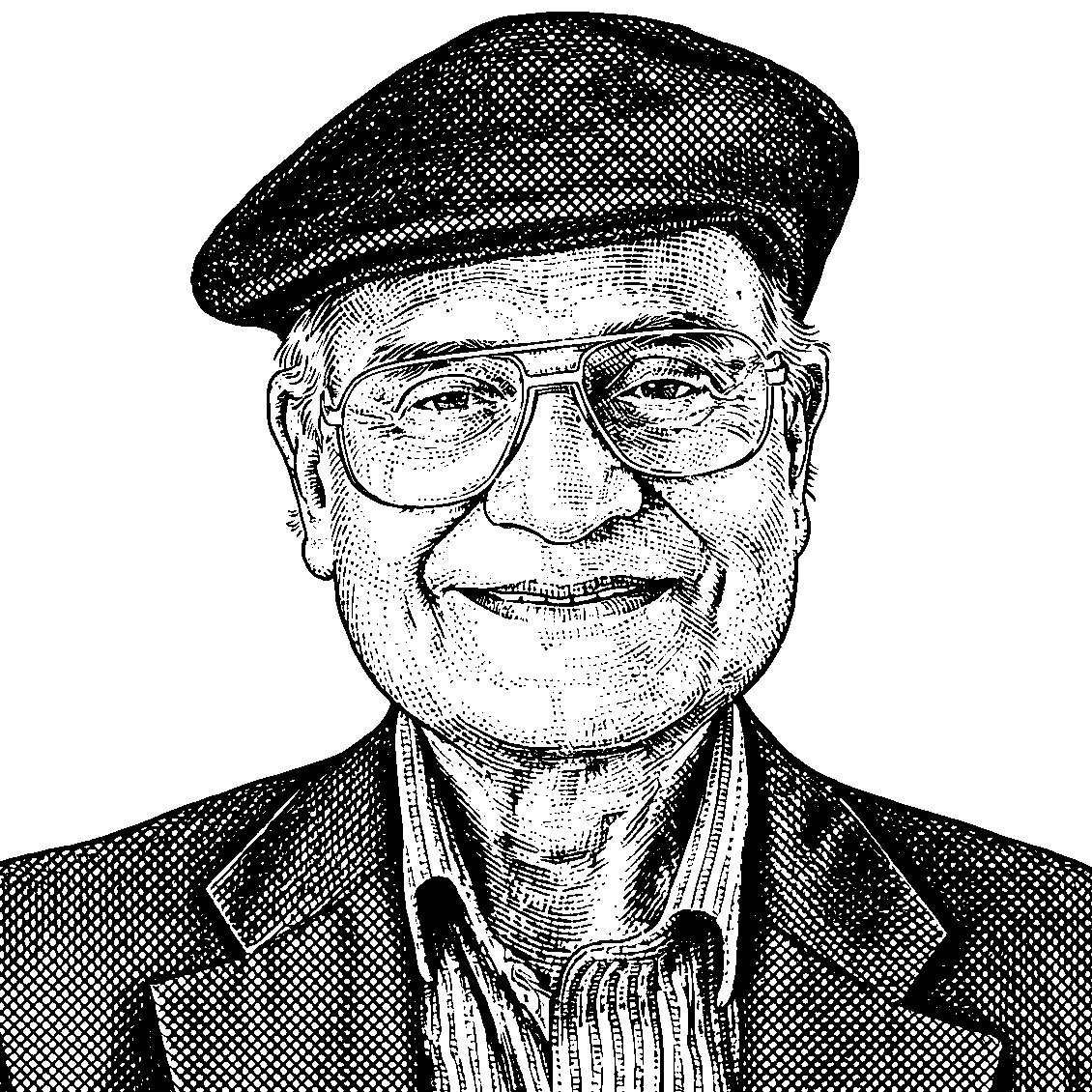
Amit Goswami is a scientist and researcher who challenges mainstream scientific materialism, particularly in its application to consciousness, health, and healing. He advocates for the integration of spirituality with medicine and seeks to demonstrate the importance of consciousness in these areas—a view often dismissed by conventional scientific paradigms. ¶ Goswami draws heavily on the principles of quantum physics to argue for a reality where consciousness plays a fundamental role. He posits that the prevailing materialistic worldview, which treats the body and mind as mere machines, inhibits our understanding of health, healing, and the human experience. He believes that quantum physics offers an alternative perspective, one that acknowledges the subjective aspect of consciousness and its potential impact on our well-being. ¶ At a 2013 conference jointly organized by the Integrative Health Network and the Mormon Transhumanist Association, Goswami presented on “Quantum Physics, Consciousness and Health.” He emphasized the disconnect between the implications of quantum physics and its public perception, suggesting that media and academia have perpetuated materialistic concepts to the detriment of a more holistic understanding of consciousness and its potential for influencing health and personal agency. His work attempts to bridge the gap between scientific inquiry and spiritual understanding, encouraging a reevaluation of the role of consciousness in our lives.
Transcript
Amit Goswami
Thank you all for coming. I want to start from the beginning acknowledging how friendly this town is. Everywhere, the few times that I used the elevator was the most interesting. People immediately said greetings or some such thing. You know, I’m not used to that much in America. So this is very good.
Amit Goswami
So can we be friendly to our disease? Can we be friendly to our illnesses? Is there any sense at all to being spirituality in medicine, spirituality in the subject of health and healing?
Amit Goswami
You know, as a scientist, when we ask questions of consciousness, we asked the wrong question. The mainstream science, which is based on a very interesting philosophy called scientific materialism holds that everything is matter. So if everything is matter, then the question to ask, is there any room for consciousness? Is there any room for consciousness in the sense that how can consciousness be there at all? That becomes the paramount question. Can consciousness be a material thing, somehow emanated or produced by the brain? This is the kind of question that neurophysiologists today ask.
Amit Goswami
You think about it and then if consciousness is brain phenomenon, it does not take too much intelligence to see that obviously that consciousness would not have very much to do with health and healing or any importance at all in our affairs in general.
Amit Goswami
So we are in a peculiar place of history. Where our academe and the scientific community in general have accepted the fact that we are material machines. There is no theory of consciousness that is possible in this kind of approach in the sense that consciousness basically has two aspects. And the primary aspect that makes us special is of course the aspect that we refer to as a subject. Not only are we an object, we certainly are, but we are also a subject. We can talk about our experiences, we have the experience of 'I'. And the question really in connection with anything, any social activity, any social engagement, is really does that 'I' have a role to play or not? If we are brain phenomenon, then how can we have a role in anything that we talk about? Because that is the approach, right? This idea—body is a machine, mind is a machine, even the soul is a machine—has been prevalent now for almost 60 years. And I submit that if you hold on to this, there is just no possibility of introducing not only spirituality but also any kind of role for the person in health and healing.
Amit Goswami
So from that premise, it certainly is a tremendously hopeful thing to suggest, to claim, and in fact to demonstrate that quantum physics is staying otherwise for almost a century now. And it’s quite amazing how we keep the message of quantum physics from reaching the public. If I could go on to that subject, I could probably keep you amused for the entire evening just talking about how media and academe have been sold on these concepts of scientific materialism and kept away from the message of quantum physics. But quantum physics, of course, is here to stay, however much the movement to offset its message, however much that movement goes on. The idea that quantum physics tells us an entirely new story is slowly coming out, much to the credit of the Internet.
Amit Goswami
So what is it in quantum physics? That’s totally unambiguous, totally non-controversial, that everybody has to accept and only can be suppressed by very careful politicization. And that idea I want to start with. This is the idea that the world does not consist of solely the space-time world. I think I need to repeat that. Usually we think that this is it. This is what all that happens is and this is reality. Space and time, matter moving in space and time. Whatever else it is, this is it. Back stops here, or however I want to put it.
Amit Goswami
Quantum physics starting with 1913 or little bit later maybe—and definitely after it was officially discovered, the equations of this were discovered, that was in 1925—have been telling us completely unambiguously, verified experimental data in 1926. And the idea is that quantum objects are waves of possibility. If you can just take this one notion that what the words mean, that one notion of what the words imply, my effort to make clear that consciousness is important will be fulfilled. So this is the very important concept.
Amit Goswami
What is the waves of possibility? As soon as you have realized that this is really true, we have seen experimentally that yes, objects are undoubtedly waves before they appear as particles too in our experimental laboratory. Waves first, then particles. Waves of possibility. Now some of you are very unfamiliar with quantum physics, so this phrase is a little disconcerting in the beginning. So, what that means is quite simple.
Amit Goswami
If I release an electron right in the middle of the room, our ordinary notion about objects as Newtonian objects, is that the electron stays there unless a force acts on it. Quantum physics says otherwise. Quantum physics says that in a matter of moments, the electron can be all over the room. But here is the catch. If we set up a three-dimensional grid of electron detectors, in a given experiment, only one of these detectors will find the electron—not the others. Other detectors will not tick. Only one detector ticks. What does that mean?
Amit Goswami
Well, that per se does not mean anything much. But when we do a whole bunch of experiments, we find something quite strange. The electrons do have the capacity of being in other places, showing up; because if you do different experiments, electrons do show up in different parts of the room. And when we take a whole bunch of numbers and plot them, then we find a Bell curve. For the electron’s position. So, where is the electron? Well, electron is everywhere, maximum probability to be right where we released it, but then It has probability of being every corner of the room as well as in the middle of the room. And most interestingly, when we see it, it shows up as a point particle like Newton says.
Amit Goswami
But when you are analyzing this, how can we understand that it was in different places? Because otherwise, how is it showing up in different places? It doesn’t show up just at that one place as Newton claims. It shows up in all the different places. This is the fact that we have to explain by saying that, well, in possibility, electrons can be everywhere in the room. In possibility. So the question arises, where do they reside before we measure them, before we observe them? Where do they reside? And the answer is that they really reside in a domain of potentiality which is different, which is very different—and I’ve used the word different, it’s very important—than the world of space-time. This is from the beginning.
Amit Goswami
Quantum physicists have been trying to tell us that. Many ways of avoiding the implication of death. Why do you want to avoid the implication? Because you see, as soon as you have said that something is outside of space and time, according to the newspapers and academe in general, we are talking about supernature. We are talking about spiritual traditions, religions. They talk like that, that there is a world which they call heaven and this is the earth. And all that prejudices we have finally been able to remove and all that stuff goes down the drain, if quantum physics starts talking about another realm of potentiality or possibility.
Amit Goswami
But make no mistake about it, because what initially was just a little bit of guesswork, because after all, we are making these measurements and are we really inferring correctly the measurements? It is a fact the electron shows up in different places. It is a fact that the theory describes them as wave of possibility. But are we correctly interpreting that there really is another domain of reality? But then in 1982, a French physicist named Alain Aspect did a beautiful experiment in which he showed-- he found an experimental way of discerning these two domains of reality. These experiments showed how to discern the world of possibility from the world of actuality, world of manifestation that we call space and time.
Amit Goswami
How? In the world of possibility, no signal is needed to affect communication. No signal is needed for communication. Interactions can occur without a signal propagation. Now, according to the theory of relativity, which you have heard to this extent, I am sure, that all communications must take place with signals and with a finite speed. Speed of light is the maximum speed limit for objects, for signals included. Signalless communication, instantaneous communication, that cannot occur if you hold on to this world of space-time. But experimentally, this fellow Aspect first did it, but now any graduate student in physics or even undergraduates can go to the laboratory and demonstrate that indeed there is communication without signals. How do they occur? They must occur via this special pathway, going outside the space and time, just as we thought; there is a domain of potentiality which then can affect communication also, both local and nonlocal. Nonlocal is the name we give to communication without signals.
Amit Goswami
What does that mean? What should we call this domain of possibility? What should we name it? Naming is very, very important. If you immediately go ahead and name it like the ancient people, spiritual traditions, then you are in trouble. People immediately start suspecting you. So, the quantum physicists who discovered this kind of thing, one of them was Werner Heisenberg, very cleverly said, well, this domain of potentia, he call it potentia, taking the word from Aristotle. We now call it potentiality, that’s more English. So this domain of potentiality has to have something to do with our consciousness.
Amit Goswami
Why? Because look at what is taking place. The electron is everywhere in the room. We do the experiment. We detect the electron. Electron shows up in one place. So before, we only knew the probabilities and the possibilities. After we know exactly what the electron is. So what is going on is a change in our knowledge about the electron. Right? And what is the vehicle with which we know? Look at the etymological origin of the word consciousness. Con comes from cum with, and the rest of the word comes from the Latin word scire, which means to know. So consciousness is the vehicle with which we know. So consciousness gets in. You read the literature, philosophical explanations of what is quantum physics from the twenties and thirties, you find invariably people are very excited that the subject is in, consciousness in. So what happened to it?
Amit Goswami
Well, World War II came and that’s a long story. I don’t need to go into it. But until Aspect did his experiment, this nonlocality experiment, we really were missing the message of quantum physics except for those few who did continue to do theory which led to Aspect's experiment. This changed everything. If there is another world and we can discern it from the space-time world, it’s not just theory, it’s experimental, then you have to deal with it. And if, as Heisenberg suspected, this world has to do with consciousness, the vehicle that we know with, then of course we are into the game of science. Maybe we can even find a science of our experiences. And certainly that would be a huge breakthrough for all of our sciences that depends on our experiences.
Amit Goswami
Especially of course, this evening we’ll talk about disease and healing. But look, these are our experiences. When we say disease, we don’t quite want to remember that it is an experience, but when we say illness or lack of wellness, certainly we are talking about a feeling, an experience. So how can we even have a science of health and healing, proper science of health and healing, if we don’t have a science of experience? It’s amazing that we have submitted ourselves to being treated as a machine when clearly we have experiences and in particular, feeling is about such an experience. So how to bring in consciousness then even with more relevance than this?
Amit Goswami
This is the question that is called the measurement question. Question of observer effect. I said when you observe the objects become localized. But before we observe, the objects are waves of possibility. So I’ll simplify this phrase, waves of possibility. Think of it just as a bundle of possibility. So a multifaceted object becomes a one-faceted object. That is what happens in the transition.
Amit Goswami
Now the model that generally scientists work with, scientific materialism, in its base has this kind of picture of consciousness. Elementary particles make more and more complex objects, atoms, molecules, cells, brain and there you have it. Consciousness is a brain phenomenon. This is called upward causation model. Quantum physics immediately gives a paradox. Paradox of course is wrongful logic. Why? Because look at it from quantum language point of view, possible elementary particles make possible atoms, make possible molecules, make possible cells. make a possible brain, makes a possible consciousness. And possible consciousness is observing. You have actuality. It’s easier to believe in Hemstreet, right?
Amit Goswami
Possibility coupled to possibility can give you only possibility. Logic says that. Well, von Neumann, a mathematician, went further. Being a mathematician, he mathematically proved that material interactions can never convert waves of possibility into actual events of experience. In other words, that wave to particle manifested to one facet. This reduction is impossible to do with material interaction alone. Impossible. And physicists have been trying to escape this absolutely little grip of von Newman’s theorem ever since without any success. Although there have been many decoys, and I don’t-- this is not a talk on quantum physics, so I won’t get into that. But the sum and summary is that there is only one paradox-free explanation of it.
Amit Goswami
That explanation also has a little history; von Newman himself came up with the first idea that consciousness does it. Consciousness does it by choosing among the many facets, the one facet. He was right about that. Except that at that time, the model of consciousness that was prevalent in the West was the Cartesian model, which is called dualism; consciousness separate from matter. Consciousness is a separate world. And from that world, it does the choosing. But then, of course, question of interaction comes in, and here is the fundamental difficulty of Cartesian models of consciousness, which is that there cannot be any non-material interaction. Because where is the signal? The belief, so long as you hold on to the belief that a signal is needed for interaction. We know that signals carry energy and energy is never transferred between this world and the non-material world, any world, world of consciousness, whatever you call it. There is no evidence of energy ever going out from this world into another world. Conservation of energy. This is a physical law. So that thwarted the consciousness explanation for quite a while.
Amit Goswami
Took a bold step, could not have happened without the aid of consciousness, I submit. It will become clear how a little later. But it did occur as a big insight to myself to Henry Stapp a little later on and to Casey Blood. So three of us came out with this great idea that there is no paradox here— either of dualism or of upward causation, scientific materialism—if we assume that consciousness is the ground of all being. There is nothing but consciousness. There is only consciousness. When consciousness chooses, consciousness chooses from its own possibilities. Matter exists in consciousness as possibilities, as waves of possibility, as packets of many-faceted possibilities. Consciousness chooses. Because it’s choosing from its own, it does not require an interaction. What should we call it? What should we recognize it as? Isn’t this what Aspect discovered, demonstrated experimentally? Isn’t this signalless communication, nonlocal communication? Isn’t this what we are talking about? So this downward causation, now we are getting into a naming again.
Amit Goswami
This name came from the Christian tradition. Absolute no-no for scientists, but I and others of my ilk insist on using it because we are not so sure if we should not acknowledge the heritage of these spiritual traditions. I think we should. But downward causation has-- there is another reason for doing it because It is not immediately clear that this is a viable solution. Because it’s Max like, you know, then we create reality by choosing and we in our ordinary consciousness choosing reality, that sounds a little bit stretch, probably a lot of stretch.
Amit Goswami
So downward causation. No, we don’t do it in our ordinary ego consciousness. We do it in a higher state of consciousness. This is the idea. We do in a higher state of consciousness and that fits because that’s the consciousness that is nonlocal. That’s the consciousness where instantaneous communication is possible. Communication without signal is possible. In the ordinary state of ego, we know that we cannot just communicate with another person without any signal. We have to do it with some sort of signal, right? But in this special non-ordinary state of consciousness, says quantum physics, we can, and indeed that’s how we choose. So then it comes down, to boils down to one question only. So this is the basic message.
Amit Goswami
Transcendent potential, that’s another word from spiritual tradition. I think first used or implicitly used by Augustine. Of course, he was not writing in English. But you get the idea. Why we are forced to acknowledge the spiritual traditions now can be brought in. The reason is that almost 3,000 years ago—when these people in various parts of the world, India, Greece, and Israel being a few places where these discoveries were made, China—people were not labeling themselves as spiritual or religion. Religions did not exist at that time. What actually took place was these people were researchers of consciousness. They did not have the apparatus to look at physical matter very much. So they looked inside, looked at themselves. But they were scientists in spirit. And what they discovered is a lot of stuff about the nature of consciousness that today we are rediscovering, partly on psychology, partly in our adventures in health and healing, partly as part of quantum consciousness research. If we do it that way, it becomes clear that there there is much to learn from these people. This, what I’m talking about is really a rediscovery. They already enunciated ideas such as consciousness is the ground of being.
Amit Goswami
In fact, it would surprise you to know that even before quantum physics, there was already in the scientific world a second time that this was discovered. It was discovered again by Sigmund Freud and specially by his protégé, Carl Jung. They called it unconscious, confusing a lot of people, but now that we understand what they were trying to say. It is very clear that they were talking about this nonlocal consciousness, especially in Jung's writing. I don’t have the time to go into the details but you can probably read one of my books to get an idea of what I’m talking about. It’s really quite amazing how much integration quantum way of looking at these things can give us. So the next stage that I think I will do, and it is imperative to do, because-- I’ll come back to some of these things. Sorry, they’re not very well organized. Okay.
Amit Goswami
I want to talk to you about an experiment that leaves no doubt that there is not only this nonlocal consciousness, but access to it. We do have access to it. On one hand, certainly it’s megalomania to suggest that ego creates reality, but certainly on the other hand, it is not very difficult to get into this nonlocal consciousness either. So we come to this experiment. We have on one hand Aspect's experiment which establishes the concept of nonlocality beyond any doubt. So there is no doubt about it already, but it is important to verify one thing, because this otherwise would baffle us. After all, Aspect's experiment is about elementary particles; electrons, photons, and such. It’s a legitimate concern that something that we can see very readily in the world of elementary particles, will that show up in the macro world where we live? If it doesn’t, then of course at least we can say that, okay, there is this other reality, but no need to call it consciousness, we don’t have access to it. So, access has to be proven without any ambiguity.
Amit Goswami
So, this experiment was done by Jacobo Greenberg-Zilberbohm at the University of Mexico right around when I was writing my first book, Self-Aware Universe on this subject. So I got a call from him. And he was very excited that, "I think you will want to see our data," he says. So he flew me over to University of Mexico, and I was astounded. Two people meditate together for twenty minutes with the intention that they will have direct, nonlocal communication without signals. After the meditation, they are separated, put in what they call Faraday chambers, electromagnetically impervious rooms. While in those rooms, they are still meditating on their nonlocal communication. But now their brains are connected to electroencephalogram EEG machines. And then one subject and one subject only is shown a series of light flashes. So naturally, this subject’s brain becomes quite active.
Amit Goswami
Just pay your attention to this one picture here. So one color is the potential measured from the active subject which sees the light flashes, and that’s not supposed-- sorry. And that’s not hard to understand because obviously he has seen electricity, electrical signals-- I mean electromagnetic signals and therefore electrical activity in his occipital area would be-- oops, again I did that-- would be natural. But the surprising thing of course is the second curve. Oops. Oops, no, no, no. Oops, no, no, no. Okay, I won’t try to point anymore, you know where to look. So how come two, both subjects showing electrical potential? Huge mystery.
Amit Goswami
Until you realize that, well, but they are correlated. They are correlated in the quantum sense. They are geared to non-local communication through this consciousness. To this date, this remains and not just this, this has been now verified by some two dozen experiments at different laboratories. So there is no doubt that this transfer potential is reality. Whenever I present this to neurophysiologists, they are a little bit surprised. This has kind of worldview changing capacity, this particular experiment. So, indeed, the idea that consciousness can connect us and take us to nonlocal communication and the proof is verifiable by measuring brain potentials. And this is irrefutable because obviously electrical activity cannot go through electromagnetically impervious chambers. They’re sitting in Faraday chambers after all. So it just leaves you no doubt about the authenticity of the experiment. And having replicated by two dozen times, this is now quite solidly established. Nonlocality of human brains.
Amit Goswami
No other way to understand it than consciousness choosing from the possibilities that exist in the second subject. Because who hasn’t seen light flashes? Possibilities exist, but that possibility is being chosen by consciousness because the person is now correlated with her partner who was shown the light flashes. Right? So in this way
Amit Goswami
There is no question that the axis just is quite simple, just the intention of the experimenter and the intention of the participants. That was enough. But the intention, is it very easy to maintain? No, that’s not true either. Only one in four, roughly speaking, could produce transfer potential. For the others, it didn’t quite work. So this control subjects are of two kinds. One kind of control subject is when there was no clear evoked potential. They had to verify that. Does it happen even without any electricity, any electrical showing at all? In any of the brains. No, it doesn’t. You have to have a clear evoked potential in order for it to be transferred.
Amit Goswami
Two people meditating. If they don’t meditate properly, then also it doesn’t. Sure. The transfer potential does depend on meditating. That ability has to be there. Maintaining that intention. So again, it’s not that simple. But if we learn, again, going to spiritual traditions, they have been teaching meditation for a very long time; 3000 years to be specific. We haven’t learned it en masse, but some of us are. They did a lot of experiments taking people from the streets. Just any two people who don’t know each other and have never meditated with each other, have never meditated, period. And they found that even then, some of these people, even without any training, could meditate enough for the transfer potential to show up. That gives us very good hope that accessing this nonlocal consciousness may not be so hard.
Amit Goswami
Now, mind you, this is the surprise of surprises, that this experiment was done in 1993-94. In 1988, there was already a wonderful experiment. Experiment that suggests nonlocality in human communication by Randall Byrd, who was a physician, hospital in San Francisco. Very reputed hospital. He took a bunch of patients recovering from heart surgery and measured their healing rate while they were divided up into a control group and regular group. The control group was just a group that nobody prayed on them. I mean prayer. Nobody did prayer for their healing. But the active group, there was a prayer group some distance away who prayed for their healing by choosing from a list that nobody knew about, that the doctors didn’t know about, that the patients didn’t know about. So, this is a double-blind kind of experiment where they are looking at a list, randomly choosing from the list and praying for the names they chose. And those people were found, astoundingly, had beyond doubt, beyond any statistical deviation, normal statistical deviation, showed up a rate of healing significantly better than what you would expect on the basis of sheer statistical fluctuations.
Amit Goswami
And this was in 1988, followed up by again many, many people, although there was a very large group of patients for which a Harvard study was done. This got a lot of publicity worldwide because it gave a neutral result. Mind you, it did not disprove it. Not negative, but got a neutral result that nothing much happens. Now does that cast a doubt on the results? I think not, because the problem with healing Is that healing is a very personal thing and to do a healing problem, healing study, with a whole bunch of people is a difficult thing. Because as I said, it’s a very personal thing. So if the group is very large, I don’t think you can induce that needed quantum correlation between the group and the prayer, people who are praying. And that correlation is basic. One-to-one works the best, but it is believable that you can pray maybe a small group of people and still affect a correlation, but when it becomes many hundreds of people, it may not work very well.
Amit Goswami
So there is also evidence in health and healing itself, that prayer at a distance works, and how can it work? It can only work if you allow for nonlocal communication, this domain of potentiality that you must recognize as transcendent consciousness, and your worldview forever changes. From that worldview now, it’s very easy to develop the science of all of our experiences. All of our experiences.
Amit Goswami
How many experiences have we got? Well, Carl Jung did it. I’m talking about more about scientists. We know this already. This is a discovery which is again almost 3000 years old. Because look, even in the Hindu Upanishads there is a story which suggests that they knew that these worlds of experience exist.
Amit Goswami
But Carl Jung did the best in modern times. He did a typology on personality types. And he found that there are four types of personalities: sensing, feeling, thinking, and intuiting. So these four types of personality you can associate with the personalities meaning which is the emphasis, which experience is the emphasis for those people. So sensing type obviously emphasizes the physical stimuli the most. But what Jung found is that there are people who emphasize feeling much more than physical, think sensing. And then some thinking people, mental much more. And even, he found evidence for people who give the intuitive world much more attention. So there is also a world of intuition, which we can call supramental, using a word that Sri Aurobindo, a very famous philosopher in India, first used.
Amit Goswami
Four different kinds of worlds. Our four experiences come from these worlds. Each of the worlds in quantum language would be recognized as quantum possibilities of consciousness. So four different world of possibility. Where is-- oops. I should have a picture. Ah, there it is. So, four different worlds of possibility exist in consciousness and when consciousness chooses, there is a manifest event of experience in each of these worlds. Sometimes we have, simultaneously, experiences in more than one world, sometimes we just have experience only in the physical. That is only in the sensing type. When we think, we find that we have thinking, but we also have the physical. So, physical is a concomitant of all of our experiences. Without the physical, we would not have the conversion of possibility into actuality at all. Okay.
Amit Goswami
So this is all good. So now we have a scientific model which fits all of our experiences. Now we are in business. We are in business in talking about everything that the human being can do. Abraham Maslow said very optimistically in one of his books in the 60s. that there will be a science one day which can treat everything that is the case, everything that happens in consciousness. We should be able to talk about it. If we are machines, we can’t. We can only talk sensibly about things that we sense. If we are machines, we can only administer machine kind of medicine that we call allopathic medicine today. But if we are not machines, if we are consciousness, if we have access to nonlocal consciousness, then we can talk about not only these four experiences, but the supreme experiences of them all.
Amit Goswami
Supreme experience, which is that? The experience of 'I' is that 'I' that feels illness. Is that 'I' which says, "No, I’m healthy now, I have healed." Is that 'I' relevant? Can that 'I' have access to this downward causation to produce health, which otherwise would be just left to the doctor and machines to deal with? Can the 'I' do the healing? Can the 'I' participate in its own health? I submit that we have no choice in view of what quantum physics is telling us, but to agree with these questions, if somebody says yes, yes, yes, yes to all these questions. Yes, the 'I' can. I can.
Amit Goswami
Now thankfully, there was one physician-- while all this progress we were making in the world of quantum physics, there was one physician who in the Department of Health and Healing-- or two or three actually. It’s astounding how these physicians had the same intuitions as we were when we were doing quantum measurement theory. Their intuitions were based on evidence. Deepak Chopra in particular, and Larry Dossey to a certain extent, anticipated that this nonlocality, this nonlocal consciousness, or rather just nonlocality—because that’s what Aspect’s experiment directly told us about—that it is connected with consciousness was not so clear. But Dossey’s book came out in the same year, 1982. And of course, Randall Byrd’s experiment might greatly have been influenced by that book that he wrote. And Deepak Chopra’s work was published in 1989. Both of these works suggested that nonlocality has consequences in health and healing. This nonlocal consciousness, as it came to be called after our work, in quantum physics has much consequence.
Amit Goswami
So Chopra did the best of this. His term was quantum healing. He suggested that yes, we have been seeing this. We have been seeing this in the data of healing. It is a fact that there are cases. Just at that time, Institute of Noetic Sciences, an organization in California by the leadership of Willie Surman, was making research in this area. And a guy named Brandon Oregon who found a whole bunch of data about spontaneous healing without medical intervention; without any known medical intervention. Spontaneous healing. So Chopra suggested that in quantum physics there is a phenomenon of spontaneous transitions. In quantum physics, we call it a quantum leap. When electrons jump from one orbit to another, I have a picture of that actually. Oops, no, I think it’s later. Oh, no, no, no, no, no, it’s earlier. I’m sorry. I feel so embarrassed that this pictures are not all in the way that I want to present, but I never can present the same way. That’s the problem. Ah, there it is.
Amit Goswami
So when electrons jump from one orbit to another, they never go through the intervening space. Quantum leap, a discontinuous transition. There’s no continuity. Where is it in between? Well, it sits in that domain of potential, domain of potentiality. It’s identical with consciousness as possibilities. That’s what it’s doing in between. It’s here and it’s there. Quantum leap. So Chopra suggested that maybe these spontaneous healings are nothing but quantum leaps of healing. It’s not difficult to make a theory of this kind of thing. You know? Not difficult.
Amit Goswami
Lately I have become extremely interested in the phenomenon of breast cancer. What happened was that I was reading about Angelina Jolie and her decision of getting a double mastectomy because she had an 88% chance of contracting cancer from genetics. Now I’m not doubting the data, but immediately it occurred to me, because this is a lady who is a brave lady, lover of mankind, lover of children, wonderful lady from what we see in her public life, just absolutely wonderful. So it became a concern for me because was it necessary just because there was a chance? So I already had looked into breast cancer a little bit when I wrote the book, The Quantum Doctor. But I became very interested and started working with a practitioner of traditional Chinese medicine. And together or not entirely together—I mostly, but he sent me some of his work and that was crucial in pointing me the right direction—something very new came out, which I think you will all appreciate, particularly women folk of this audience. But you know, men too can have breast cancer in principle. And this apply more generally to perhaps all other kinds of cancer as well.
Amit Goswami
So the picture, for the picture-- to get an understanding of the picture, I need to show you another picture. And I need to tell you about some changes that has taken place in biology starting in the 1980s. These ideas that feeling is a brain phenomenon, of course, is the popular knowledge. And there is no doubt about it. Indeed, there are brain circuits in the limbic brain, in the hind brain. That gives us feeling, no question about it. Brain is certainly involved. But people in traditions, especially in India and Tibet, and now, of course, in the West, we have studied this quite a bit in psychology these guys, and we all come up with this fact that yes, other organs too are very much involved. And medicine to its credit, there is the field of psychoneuroimmunograstointostenology, which certainly suggests the same thing. Yes, it’s a complicated affair. The brain is not solely involved in our feelings; there is also visceral aspects of feeling. Body organs, all body organs are involved.
Amit Goswami
So, Easterners are talking about this for a long time. They call seven special points in the body, seven chakras, and those are the places. And they are all near very important organs. This is the thing that people have noticed without making any sense of it. Why is it so? We didn’t have any idea until Rupert Schalbreck, a Maverick biologist, came out with an idea, not directly connected with chakra. He didn’t make this connection. But his idea was that, "Look, these organs, physical organs, there is something. There is something behind these organs. The organs are very peculiar", said he, "because the cells are differentiated to perform in a certain way." Now, the amazing thing about that is that we all begin as the same cell, as the one-celled embryo, but then cells divide and they should have all the same DNA and of course, they should have potentially the capacity of making all the same proteins, but of course, they don’t. They become specialized, they become differentiated. A cell in the brain will make different sets of proteins entirely from a cell in the liver. How does this happen?
Amit Goswami
The plot thickens when we realize that the programs, some sort of program must be running the genes to activate them. In the brain, different genes are activated than in the liver. That’s the obvious explanation of cell differentiation. But where are these programs? And then the subject of epigenetics was discovered. It’s not in the genes, it’s outside the genes. Now Sheldrake really took epigenetics very far by sheer intuition by asking this question, how does the cell know? How does the cell know where it is in the body? To him, it was clear that the cell only can know if there is nonlocal knowing. And that nonlocal entity that came into the picture, Sheldrake called it called it morphogenetic field. Fields that are necessary to make biological form.
Amit Goswami
So Sheldrake’s idea fits in beautifully with our idea of feeling having also a vital component, mind having a mental component; those things now can be fit, especially for the vital. Sheldrake is saying that, well, there are objects called morphogenetic fields that form the vital body. They give the blueprints of biological form. So every organ has a morphogenetic counterpart, which can be called its blueprint. And the organ is a physical representation of the morphogenetic field, just as brain makes physical representation of mental thinking or mental meaning. So things now become very, very clear. Physical makes representation of the mental and the vital. This is what the job of the physical body is. Once we learn it, then it’s just another step from it just to compare what kind of feeling exists at what kind of chakra and see that, yes, indeed the organs at that chakra is quite appropriate.
Amit Goswami
I will take one, the stomach chakra. Let’s talk about that one because that’s about our basic maintenance. And indeed, what are the feelings associated with that chakra? Pride and of course unworthiness. If we are feeling insecure, unworthy, then we feel butterflies in the stomach. If we are feeling secure and worthy, we feel gut feeling, I’m good, I’m able, I’m confident, right? Another chakra, heart chakra, this one is the most important one for
Amit Goswami
breast cancer patients, breasts are heart chakra organ also. So what is that? That one has to do with the thymus gland. Thymus gland has the capacity of distinction between me and not me; part of the immune system, of course. When we are in romantic love, that distinction goes away. Right? You are mine. I am yours. It may not last for very long. For James Bond, it’s only six weeks. But even for us, you know, it goes away eventually. So why does it go away? Well, that’s the thing. That’s the thing. Can we not make it go away? Can we not make it-- can we make it permanent? That of course the age-long enquiry which some people call spirituality, you know, find love. It turns out, I mean, the trite answer to how to take care of breast cancer is find love. And I’ll come to that, why that is in a sec.
Amit Goswami
So if we recognize that the heart chakra is about the feeling of romantic love. And then I can make the following scenario. I can make this scenario that suppose the feelings of love have been cut off. The woman loves her partner and the partner passes away. Feeling is I cannot love without this person. We call that feeling grief. And this grief prevents the heart chakra to become activated. Now remember, what do we mean by activation? We mean the coordinated action of the immune system and the morphogenetic fields associated with the immune system. So if I am resolving that without this person I cannot love, the immune system function and the movement of morphogenetic field that gives me that feeling of love-- feelings come from the movement of the morphogenetic field. I’m not feeling my immune system to fill it up. I’m really feeling the movement of the morphogenetic field associated with the thymus gland to feel love. If I cut off the access to this morphogenetic field, I refuse the feeling of love. I block the feeling of love. I block the vital energies, if we call that an energy.
Amit Goswami
Then what I am doing, I am also cutting off the function of the thymus gland and by doing that I am putting myself into great jeopardy. Why? Because the body is always producing abnormal cells. If these abnormal cells are not killed off, which is the function of the immune system, which always finds this not me, not normal, and therefore kills them off. But now its function is impeded by the feelings of love being cut off. You can see what can happen. The abnormal cells can become malignant, which is what we call cancer. In particular, the organs in the heart chakra are the most susceptible. So, naturally, the breast which are connected indeed with love in a very direct way, first of all in sexuality and second of all in child rearing. Immediately, as soon as the mother puts the breasts in the child’s mouths, immediately feelings of love come in. I have never experienced it, but that’s my loss. I mean, every woman I have talked to always reported how wonderful it is to breastfeed. So it is obvious then that breast cancer, at least many breast cancer cases, are those where there is suppression of love energy, and that suppression is producing a malfunctioning immune system, and then that is what is producing the breast cancer.
Amit Goswami
Two conclusions. First of all, the conclusion about healing. So, back to quantum healing. What can we say now about quantum healing? We can say this, very strong statement, very strong statement: that as soon as the barrier to love has been removed, then the immune system can come back to functionality. And the action is so drastic that overnight, the cancer cells can be destroyed. And in fact, this is the surprising thing about those cases of spontaneous healing. They have an incident, and that incident produces virtually overnight vanishing of the cancer, almost unbelievable, almost like a miracle.
Amit Goswami
Dr. Richard Maas, who was a physician of some repute before he became a spiritual teacher, he used to do workshops. I have attended one of his workshops in the 80s. And a woman came with cancer all over the body, terminal cancer. She wanted healing, but of course she was so sluggish. The cancer is very advanced. She’s so sluggish, she just cannot participate or make herself participate in much of the exercises. And one night, because Maas was very insistent and very stubborn, and he was able to break through and the woman said, "Okay, I’ll dance." And she started dancing and more she danced, she felt more energized, so she danced and danced and danced. The next morning she’s feeling quite well. So she goes to Maas and Maas examines her cursorily and immediately sends her to her oncologist and lo and behold, one night. That’s all it took. All of the cancer is gone. It’s cancer, the whole body. Everything is gone. Now this is just one case. Brandon, Oregon literally had hundreds of cases like this reported. How can it happen? This is the model it can happen.
Amit Goswami
Because the quantum leap that is removing the mental belief that yes, I can love again, it’s an amazing power that removes the block of the vital energies, removes the block of the immune system. Immune system comes back to functioning overnight, cancer is gone. This kind of potentiality for quantum healing is in our hands. If we know that we do have the power, we can access quantum consciousness. And of course, we have a very regular way of accessing it. It’s called creativity, if you take the quantum leap as part of the creative experience.
Amit Goswami
We have enormous evidence for the last hundred years. We have been studying creativity practically in the not the physics laboratory, it’s not as elaborate as that, but it is the psychological laboratory. We have been studying it quite methodically, quite scientifically. And what we find that indeed creativity has four different stages. Sudden insight, the third stage of creativity. Preparation, incubation, sudden insight, manifestation. This incubation is the idea of unconscious processing. Psychologists called it unconscious processing because they found that really there is processing going on in the unconscious. In quantum physics, we can understand what happens in unconscious processing. In the unconscious, objects become possibility. And in possibility, they spread like waves. Waves become bigger and bigger. when they spread, right? And so possibility wave becomes bigger and bigger pools of possibility to choose from. Obviously, the chance of containing the healing possibility is much greater if you allow the possibilities to proliferate. So the Simontons, this is a couple who have a farm in Arizona where they invite terminal cancer patients to
Amit Goswami
Meditate to visualize the healing of cancer. What does that do? It’s simply this. Visualization produces reverberations in the unconscious. It primes the unconscious to process this kind of healing stuff. I will tell you about an actual case of healing that happened. A woman writes about this. She went to one of these institutions and visualized a lot. And no visualization is particularly effective. Of course, the unconscious is going on working. She didn’t know that, but that’s obviously the quantum answer to what happened subsequently. So one day she had the feeling that her breast or her chest is very heavy, very heavy, like a thick block of ice is sitting in it. And then she started that this block of ice is melting. This is not a visualization she ever practiced. Visualizations are more like sharks eating away at your cancer, that kind of visualization. This just came to her. She felt a block and then the block is melting. And then she realized the melting is really there is water in her system. Why? Because she is crying. The teardrops took on the shape of the ice melting and the eyes melted away. The heavy heart was lifted in her visualizations, and she started feeling better. Went to an oncologist, same thing, completely healed. Unconscious processing. Sudden insight, that’s our insight, that all these griefs, all this heaviness in the heart that we create
Amit Goswami
through our wrong misconception about the world, that I cannot love without one person. We can love everyone. Mystics have been telling us that for ages. No, I cannot love without this one person. Wrong conception of the world. As soon as quantum leap takes place that this conception is wrong, immediately relief. Ice melts away. Tears and healing. Quantum healing. So what is the
Amit Goswami
general answer to this kind of disease then, which is being caused by the suppression of love? By the way, there is direct evidence now because a doctor in India uses Kirlian photography. I don’t have the time. I promised Cassie that there will be some time for questions and answers. And I suppose there should be. So I’ll finish in another five, ten minutes.
Amit Goswami
There is now direct evidence, this Dr. Chavan in India. She takes grieving women and with Kirlian photography today we can measure vital energy directly. We can measure because the organs are connected with the skin, of course. And at the skin, the human being has an electrophysiological body, biophysical body. electromagnetic body, whatever you call it. Some people can see this body in the form of aura. So this is not exactly unknown to alternative culture. Not so much accepted to the staunch, hard-nosed scientific materialist, but not quite so unacceptable either. And there’s a lot of-- you know, I must say that bulk of the physicians don’t care about scientific materialism in their heart because they are already allowing such things as aura and spirituality and singing and dancing as healing mechanism. So, you know, my salute to those those medicine doctors indeed. Coming back to this, so this Dr. Chavan has found that indeed weeping women have different kind of Kirlian photograph when they take the photograph of the heart chakra vital energy. Normal vital energy photograph would be quite different than the grieving women. So whenever he found abnormality, he started sending them to oncologists, who then did biopsy. and started finding very early cancer. I mean, this cancer would never show up, never show up in any kind of mammograms or whatever have you, or examination of breast and the like. Now Kirlian photographs are not-- I mean, you cannot buy one just like that, not yet.
Amit Goswami
And there is controversy about it also. I’m not saying that this is available today. But I also think that if we took a concerted effort, if we make-- literally billions of dollars are spent in the study of cancer today. Mostly goes to pharmaceuticals for producing pharmaceutical drugs. Chemotherapy, I have nothing against it. Chemotherapy is fine for people who can take it. But I’m talking about preventing it at very early stages, of clearly seeing signs in people who do not love. For some reason, they have cut off love from their life. Can’t we take those women and give them tests of Kirlian photography and see if their heart chakra is blocked and then routinely, at that early stage, healing is so simple, right. Of course, loving is also very simple, so we can prevent. I mean not that simple, but simple. We can prevent it in the first place by loving.
Amit Goswami
So back to this story that I was telling initially, I started working with this traditional Chinese medicine practitioner. Master Lu is his name, lives in Northern Virginia near Washington. And so he is very interested in it and particularly prevention of it because TCM, traditional Chinese medicine, has a recipe for prevention of breast cancer. And the recipe is very simple. Take care of your liver. Take care of your liver and in part of your stomach. So, he suggests various nourishing techniques for not only the organs but also the meridians.
Amit Goswami
You know, in Chinese theory, there is this meridians. But meridians are not physical. That’s where the mistake occurs for the allopathic physician. Meridians are in the vital body. So they are connectors of the vital component of the organ. They are connectors of the morphogenetic fields, the blueprints. So when you understand it, the quantum wave, then what he is saying really is that you should not look at the immune system as an isolated system in the vital body. This general idea of nonlocality, it gives you this renewed respect for what every medical doctor already knows, alternative or conventional. That body is a very connected system. Agreed that if you only thinking of material interactions, you cannot make much of it. Why it can be a connected system? Because any body movement of fluid, etc. , is so sluggish. Even electrical movements are very sluggish. Neurons, you know, they they connect with each other admirably. You have a unity of experience and neurophysiologists are always puzzled. How can this happen? Because it takes, you know, several seconds for neurons here to communicate with neurons there. Well, of course, quantum nonlocality solves the problem, but nonlocality not in the physical. In the vital. That’s where things happen rapidly.
Amit Goswami
So I realized that in the vital body these three organs, this liver, stomach and immune system together makes a system that we call circularity or in quantum language tangled hierarchy. The brain has a tangled hierarchy in it, because if the brain didn’t have that, we never could have the 'I' experience. If you think about it, the brain is very, very special. Why? Because when we are looking at an object, the signals from the object is being processed by the brain. And then consciousness is choosing from the brain possibilities as well from the possibilities of the object. But the result of the choice, we see the object. Where is the brain? We never see the brain. Instead, what do we do? We become identified with the brain. We say, I see the object. I see you, but I don’t see myself. I don’t see myself as the brain. I become identified with the brain. So it takes a little bit more arguments, and I won’t take up your time, but let’s say that brain has a tangled hierarchy within it of its apparatuses. What happens is that perception requires memory and memory requires perception. This becomes a circular logic operating in the brain and that circularity produces that closed desk. brain becomes isolated from the rest of the system. But that circularity in the vital then, will produce the same kind of isolation?
Amit Goswami
This liver, stomach and thymus gland together? Indeed, the Chinese guessed it some 2000 years ago, because in Chinese medicine you do have such comments about how these interactions have kind of circularity, affect both ways. So the idea came to me like a ton of bricks, like a quantum leap, which is that maybe deep spiritual traditions are not wrong in this one either. You know, people great teachers that lived recently, like Ramanu Maharshi, they have been insisting that there is a heart center. That’s where the real consciousness is. Of course, the women folks among us have always been insisting, to men, including myself, because we are too centered in the brain they are saying to us, but pay attention to the heart. Now, I never thought that this is literal. Of course, with the understanding of the immune system and connecting it with the energy of the heart, romantic energy, that did help me a lot. But still, to have a center, to have a self, in the same way that we have a self centered in the neocortex. That I was not able to imagine as of yet. But this quantum wave, when that took place, I realized that yes, if you take account of the vital body, indeed, there is this circularity in the logic of these three apparatuses that the Chinese medicine practitioner Master Lu was telling me. And if the Chinese are correct and if quantum physics is correct, then of course there is a tangled hierarchy involving these three organs, and therefore, there is really a self-identity center in these three organs. A real heart center. So what is the best preventive idea for avoiding breast cancer? Is simply to discover this heart center.
Amit Goswami
Is something that we may always have known, but under the barrage of scientific materialism that we suffer every day through our newspapers and academe is not helping. We have forgotten this lesson. Find our heart center and we will. So today I go around the world and I have a very simple practice. I try to keep my attention, most of the time, to my heart chakra. When I interact with anyone, I try to keep my heart open. There are simple practices one can do, but this practice really has given me a lot of hope that we can love. We can love, we can love. The Beatles sang in the 80s, or I don’t know when, 70s maybe. John Lennon sang, I think, All You Need Is Love. It’s true. My friends, it’s true. Thank you.