O death, Where is Thy Sting
The speaker shares two harrowing encounters with death: the near-death of her newborn son, who was resuscitated after five minutes without breathing, and her own close call during a third cesarean section when she felt drawn toward a "dark paradise" of unconsciousness. Her son's view that he was literally resurrected—and that this must therefore be heaven—frames her argument that transhumanism must address quality of life alongside quantity. She challenges critics who dismiss her social justice work as tangential, insisting that oppression based on race, gender, and sexuality are transhumanist concerns because death comes unequally to marginalized bodies.
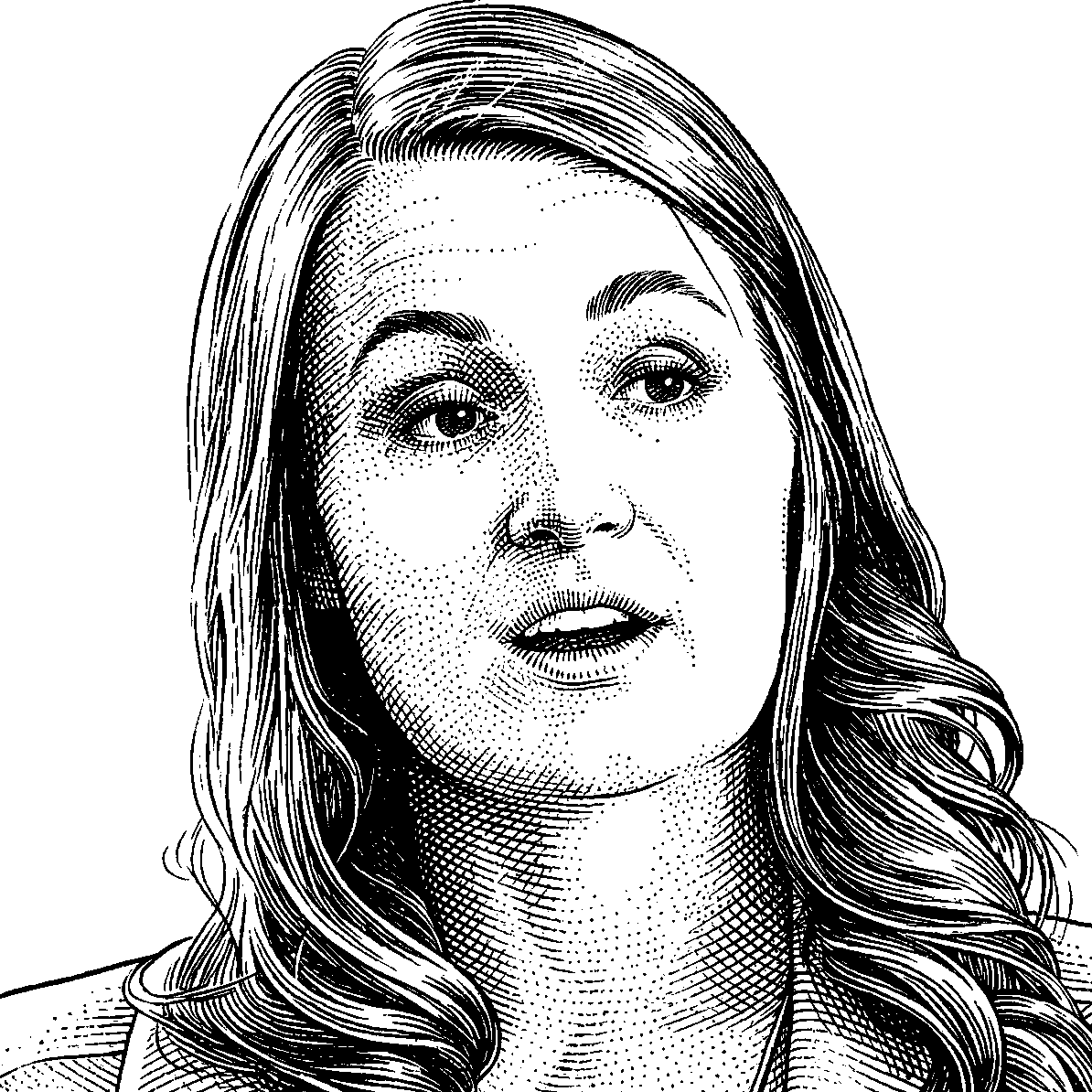
Blaire Ostler is a philosopher, author, and artist whose work explores the intersection of Mormon theology, transhumanism, and human identity. A ninth-generation Latter-day Saint, she has been a notable voice in conversations about the synthesis of religious tradition with technological progress and expanding theological inquiry. ¶ Ostler holds a Bachelor of Fine Arts in Design from the International Academy of Design and Technology–Seattle. Her background as an abstract modern artist deeply informs her philosophical work. Her paintings, characterized by their exploration of aesthetics and form, can be found in residences and businesses throughout Seattle. This artistic sensibility extends to her writing, where she examines the boundaries of traditional categories to explore a more expansive understanding of divinity and humanity. ¶ Ostler is the author of Queer Mormon Theology: An Introduction (2021), in which she engages with Mormon doctrinal concepts such as the nature of the divine, the significance of Heavenly Mother, and the potential for technological resurrection. Her involvement with the Mormon Transhumanist Association has been significant; she served on the Board of Directors for six years and as CEO from 2016 to 2018. Her transhumanist vision emphasizes active discipleship, where humanity participates in the work of God through morphological freedom and cognitive liberty. ¶ Blaire continues to write, paint, and speak on themes of identity, truth, and beauty, exploring the relationship between the human and the divine.
Transcript
I noticed in James Stats how it said um there was like 6% that said they didn’t know an LGBTQ person or whatever, and I’m like, I have it like literally all over all the time. So now you know one. She’s standing right here in front of you.
So when, oh, Brian, I need tech help. My thingy isn’t here. I need my thingy. I joke that, you know, if I weren’t a transhumanist, I’d be a Luddite because I don’t know how any of this stuff works. I don’t really care. People smarter than me will take care of it. I’m the talent. I’m just kidding. I’m just kidding.
Um but it was really funny listening to you guys talk about gender because um I like to study gender too and I had like a billion things today and or to say and I’m like for once in my talk about gender today at least explicitly. I will be talking a lot about, how did you say it, biological meat sack? I’ll be talking about my biological meat sack. And I’m rather attached to my biological meat sack. I like it.
Alright, that’s okay. I’ll just click my little thingy from here and I’ll just kind of stand off center and do it like this. So, um, today you’ll have to forgive me a little bit. I’ll be doing a little bit of reading to you because today I will be reading you a story because everyone knows stories aren’t controversial. So if I tell you a story, everything I’m saying is totes legit.
I remember the first time I met death. It was a brief and horrifying experience. The second time I met death it was far more alluring. The second time I couldn’t tell if death was friend or foe. Despite these two interactions with death, I still not know death, and I prefer to keep it that way.
I was formally introduced to death in 2010. I had only heard whispers and myths of its existence, but didn’t take death seriously until it threatened the life of my unborn child. I knew him before he was born, and it was more than the figment of my imaginations or the projections of a loving mother. I knew him as much as anyone could know a human that lived inside their body. We shared the same flesh and blood for nine months, and every time I vomited, I clutched my abdomen and whispered, It’s okay, I’m going to get you here safely. Every time I gagged on a pill to combat pregnancy-induced anemia, I whispered to him, It’s okay. I’m going to get you here safely. Whether I was saying these things to him or myself, frankly, didn’t matter for those nine months. We shared the same body.
I was 26 years old, lying naked and awake on an operating table. A team of talented doctors and nurses attempted to safely extract a human body out of my splayed uterus. Due to the complexities of my anatomy and morphology, this wasn’t a routine transsection. Though my uterus was a deformed, mutated mess of a womb It got the job done. It gestated two tiny cells into a full grown human. My son, who was nestled safely inside my body.
Yet, as I laid there on the operating table, the promise I whispered to my son so many times was no longer in my hands. His safety and well being was out of my control. I was compelled to trust in powers outside myself, when my power alone proved insufficient.
My husband sat on a stool next to me while the doctors operated on me. We exchanged smiles He never got used to watching the doctors cut into my flesh, so we simply stared into each other’s eyes, probably more for his sake than mine. The C section seemed longer than the previous C section I had two and a half years prior. I began to worry.
The tone of the room shifted and muffled voices spoke with urgency. Our son had rotated from a transversed horizontal p position to a breech position, and his head was stuck inside my uterus, my misshapened uterus. The umbilical cord was wrapped around his neck. So with each pull, he was being strangled.
The anesthesiologist noticed my heart rate begin to rapidly increase the machine next to me. He tried to calm me down, but it was useless. How could I calm down? My baby was suffocating.
I felt a sudden amount of pressure on my abdomen as the nurses pulled with their bodies. I felt a huge rush of relief as the weight of our baby left my spinal column. The doctor said, He’s here, he’s out I tried to compose myself, waiting for our baby to cry. But there was no sound. There was no crying. There was no breathing. There was nothing. And the silence was terrifying.
In the quiet chaos my husband stood up to see him, but a nurse abruptly interjected Dad, sit down There was too much force in her tone. Something was very wrong. I managed to choke out from the operating table. Why can’t I hear him crying? Everyone ignored me as I lay there exposed. I looked over at my husband and there as I rarely see. He stepped back from the blue sheet separating me from our son and bowed his head to the floor. He seemed to be praying. It was always so natural for him.
The doctors rushed to help our little blue infant. Everything was happening so quickly. I heard one nurse saying, Pump him, pump him again, one more time. I heard the clicking of more machines working to resuscitate my son. I didn’t know what was going on, and frankly, I didn’t care. All I wanted was to hear my son cry. I felt completely helpless.
Finally, I heard him. It wasn’t the strong scream or cry of a thriving baby, but it was enough to let us know that he was alive. At that moment his muffled cry was the most wonderful sound in the world. I couldn’t help but cry with him. I looked over my husband to see tears filled in his eyes too. Five minutes until the doctors resuscitated our baby, but even five minutes is too long to believe your child is dead. The first time I met death was a brief and horrifying experience.
If you ask my now nine-year-old thriving son about his entrance into the world, he will tell you he was resurrected. Well, he likely won’t answer you because he’s incredibly shy, but I will tell you what he told me. Quote: If people don’t believe in resurrection, they need to come talk to me. Because I know things about heaven and resurrection that other people just don’t understand.
In his mind, resurrection isn’t a matter of if, but a matter of when. Reductively put, the longer someone has been dead, the harder it’s going to be to resurrect them. We are resurrecting people every day in his model. We just need to get better at it. In his model, there isn’t just one resurrection. There are many possible resurrections. You can be resurrected as many times as you need.
In his case, we had the necessary technology to resurrect him. If not, if he had been born fifty years sooner, even twenty five years sooner, with the technological advancements made, he would have been one of the many babies buried by a grieving mother. However, modern technology changed all that.
My son further expanded on his theory by explaining to me, If I died now and I’m alive now, well, this is heaven right now. Because if I died as a baby and then I was resurrected by the doctors, so this has to be heaven, or at least one type of heaven.
For Mormons, this is not a new notion. In Doctrine and Covenants, we read: The earth may be sanctified of all unrighteousness and prepared for celestial glory. And how do we sanctify the earth of unrighteousness? Well, we have sin, and the Scriptures taught one sin is death. In Corinthians we read the sting of death is sin. And in Moses we read the glory of God is to bring to pass immortality of humanity. Not only that, it is prophesied in our Scriptures that celestial glory is right here on earth, and celestial bodies may possess it forever and ever, but this is a promise only that we can choose. We have to choose it. God doesn’t override human agency in Mormon theology, and we are not idle participants waiting for God to do for us what we can do for ourselves. According to Mormon scripture, my son’s theory is right: This is heaven, and we have not received its highest degree of celestial glory unless we choose it with both faith and works.
Every day I see my son’s smiling face. I am reminded there were doctors and technologists and scientists and people that decided death was a sin. They watched dead babies being pulled from their mothers’ bodies and decided, No more. We can fix this. No mother should have to bury their baby.
The second time I encountered death, I wasn’t scared because it wasn’t my child’s life that was threatened. It was mine.
My third pregnancy proved to be far worse than both previous pregnancies combined. The nine months after conception were excruciating. Every complication I had previously endured was heightened, causing a new set of complications. I developed malnutrition from vomiting that was far more persistent than before. I was losing weight and eating too much fluid due to polyhydromniose. I developed anemia and suffered from chronic low blood pressure. I would randomly lose vision and blackout. I needed to have surgery during my second trimester due to a digestive complication that was more painful than I’d ever experienced in my entire life.
After suffering from eight months of vomiting and H G, I decided to stop eating. I could no longer bear to vomit. Starving seemed less painful than vomiting. I lived off of supplements and broth. I lost more weight, and I eventually got to the point where I couldn’t walk up and down the stairs without the help of another person. My skin turned to a lifeless shade of white due to the persistence of the anemia. My body was falling apart. I did not doubt my will to give my daughter life, but my body simply wouldn’t comply.
The morning of the C-section came as usual. They prepared my body, and once again I was hooked to machines that had a newfound presence in the room. I didn’t even mind the piercing of the metallic needle entering my spine. It seemed routine by now. I lied down flat on the operating table and listened to the humming of the machines while the doctors cut into my flesh. My husband, lovingly, ran his hand across my forehead and swept my dark hair from my eyes as we waited to hear our daughter cry. Right on schedule, she arrived perfectly as planned, healthy and strong. I smiled at my husband with relief. He had he held out our baby girl for me to see. I wanted nothing more than to reach out and hold her, but my arms had lost all feeling. Instinctively my husband saw the wordless yearning in my eyes, and brought her closer to me so that our cheeks could touch for a brief moment before she was taken away. I watched them leave as I stayed behind for the remainder of the surgery, where I was to be sterilized.
As the doctor operated, she asked me, Do you mind if we bring in some staff to look at your uterus? I mildly laughed. With a humorously vivid case of deja vu, after experiencing three C-sections, multiple surgeries, an invasive procedure, the idea of physical modesty was a laughable concept to me. This wasn’t the first time a doctor wanted a private viewing of my internal reproductive anatomy. I confidently and softly said one more time, absolutely, anything for science.
She continued operating on me and said, Thank you. I have never seen anything like your uterus before. I replied, Yeah, I get that a lot. I actually don’t need it anymore. I don’t mind donating it.
Her voice became suddenly very serious through her surgical mask. She said, You still need this. It’s full of healthy red blood cells, and you’ve lost a lot of blood, and you’re not fully recovered from your anemia. You need this so you can get better. You have given enough to day I didn’t have the strength to respond to her.
I waited patiently through the procedure in silence. I listened to the humming of the beloved machines that kept me alive and were intimately connected to my new body. While the doctors operated on me, I couldn’t help but have an overwhelming sense to sleep. I was so tired and so weak. All I wanted to do was close my eyes and dissolve into the darkness. So I closed my eyes and welcomed the warmth of the blackness. The gentle beeping of the machine monitoring my heart began to slow. It was peaceful and inviting. I indulged. It was so easy. Time didn’t seem relevant. It didn’t matter. I couldn’t feel pain anymore. In fact, I couldn’t feel anything at all. I entered what I call a dark paradise.
A man’s voice interrupted my tranquillity. You need to open your eyes. Can you hear me? From the opposite side of the room, I could vaguely hear a woman’s voice distant saying, Her heart rate is still dropping.
The man repeated with more force in his tone, Can you hear me? I could barely hear him, but responding seemed impossible. The nothingness was so heavy. I felt pain as I tried to regain consciousness. I didn’t care. My eyes slowly fluttered open to see the blurry face of my anesthesiologist. Unable to comprehend the severity of his demand, I was only mildly annoyed with his interruption of my dark paradise. I closed my eyes again to retreat, and muttered, I just want to rest.
His voice seemed much more urgent. No, you need to stay awake. I heard you have two boys. Can you tell me about them? What are their names? I paused, motionless in the blackness of my mind, trying to recall. I could see the faces of my children, but I couldn’t recall their names. Had I forgotten them? How could I forget my children’s names? I’m their mother My mind wasn’t mine. I finally had the strength to open my eyes, which seemed abnormally heavy in their sockets, and slowly said, Preston and William, yes, I have two sons. I love them so much. I have a daughter, too.
He replied warmly and said, Yes, she’s perfect. Can you tell me her name? I strained, trying to remember, I couldn’t recall her name, until the word spilled from my mouth: Elizabeth. The woman in the background said, her heart rate is beginning to stabilize.
I continued, Can I only be gone a moment? He persisted, No, you can’t go now. You need to stay with us. Tell me more about your children. He persisted in our foggy conversation for several more minutes until the surgery was complete. I’m sure if we had met under other circumstances I would have found him far less annoying. Regardless, I am grateful he kept me out of the blackness that beckoned me. I never saw him again.
The second time I met death, it was far more alluring. The second time, I couldn’t tell if death was friend or foe. The second time I met death reminded me that quality of life is just as important as quantity of life. We all need something to live for.
When I look at my thriving five-year-old daughter, I cannot help but see the full robodiment of quality of life. She lives every day with new excitement and wonder. She is a creator dreaming up visions that defy impossibility. The other day she called me to the kitchen, Mom, Mom, look what I made She had taken all her Finding Nemo fish, collected all my mason jars, filled them with water among with other things in the kitchen, and attempted to create her own personal aquarium. Upon entering the kitchen she said, Look, Mom, I made an aquarium for all my fish. I smiled at the detail and care she put into her creation that was now covering dripping, wet countertops.
And I asked her, Wow, that’s really creative. How did you come up with that idea? How did you make this? And my five-year-old daughter looked at me as if I was patronizing her and said, Mom, don’t you know I can create anything?
At what age do we become so jaded or cynical that we Belief impossibility. At what age did we stop believing we couldn’t create anything? At what age did we throw up our arms in defeat when our visions became a little bit harder to achieve? How could we possibly how could the impossible ever become possible impossible ever become possible if its possibility cannot be envisioned? Impossibility is a state of mind that favors obedience to conventionalism over the courage to create. A child doesn’t waste time and energy imagining what’s impossible. She imagines what is possible and then how to make that vision a reality. She truly believes she can create anything.
Sometimes I receive criticisms, a bit of feedback from people who think my work focuses too much on social issues and not enough on, quote, real transhumanist issues. For me, quality over quantity. Transhumanism has generally been concerned with quantity of life, but what about quality? And when I say quality, I’m not limiting that definition of quality to medical conditions, sickness, injury, aging, or infirmity. I’m talking about a quality of life beyond that.
What good is a healthy body if it’s enslaved? What good is a healthy body if you are never granted social allowance to share it with a lover if they happen to be the same? What good is a healthy body if its morphology or anatomy are grounds for subjugation, exclusion, marginalization, and discrimination? What good is the quality of life for women’s bodies, black bodies, poor bodies, queer bodies, brown bodies, beaten bodies, oppressed bodies? What good is a healthy body without love?
For critics of my queer work, I ask what kind of future are you building? Is it one where queer folks are killing themselves? What kind of future is that if it’s a future that people don’t want to live for? No nanotechnology, terraforming, or biomedicine or pill can compensate for telling people that we can’t be with the people we love. All the people we love. Robotics nor space colonization can compensate for taking away someone’s hope. A future of eternal discrimination and subjugation needs to be resisted with every ally we can muster. This is transhumanist activism. If we’re creating an immoral future built upon the oppression of others, that transhumanist vision is hell.
For critics of my transhumanist work, I ask, once we’ve achieved gender liberation, racial equality, sexual liberation, what’s next? We all answer to the biggest oppressor of all death. That is that doesn’t care about your gender. Doesn’t care about your sexual orientation, your race, your likes, your dislikes, your religion, your family, your hopes, your dreams, your life. It doesn’t love you. And even worse, it doesn’t hate you. It doesn’t feel, it doesn’t sleep, it doesn’t think, it doesn’t get tired, it doesn’t stop. Death exterminates, consumes, and negates life. Death comes for all of us.
Oppressive systems will unfairly afford more time and life to others. And this is exactly why we need social work in the transhumanist movement. Death shouldn’t come more to a black woman in labor any more than it did to me. We shouldn’t ignore the discrepancies in maternal mortality rates according to race. Death shouldn’t come to a trans woman any more than it comes to a cisgender woman. Yet where are the transhumanists taking a stand against the violence perpetrated against queer bodies?
We are all running from the safety. And while that monster consumes life at an unchallenged banquet, you and I squabble over the scraps death left lying on the floor. Death gave us so little time that we squabble like vultures, arguing over whose sexual orientation or gender identity is more legitimate than whose. We fight over nations and plots of land that don’t belong to any of us. We draw imaginary borders in Mother Earth that somehow make it okay to take a baby from a migrant mother’s arms. Death mocks us. We bicker with each other while death feasts. Neither you nor I should be the one to take a baby from a mother
Naysayers will doubt that death is an oppressor, let alone one we should stand against. They may claim it is only natural. Natural selection will run its course. Yet might I remind you, according to natural selection, dead Not only that, my children are supposed to be dead So do you understand what I’m saying? If death is something I’m supposed to just accept, then my children and I are supposed to be dead. I argue that instead of building coffins for babies, well, let’s build technologies that keep babies breathing.
We’ve already taken arms up against death in ways we never have before. We are resurrecting those that would have been presumed dead by working to a year where nobody is beyond resuscitation. As a species, we are fighting the oppressor in ways we never have been, and sometimes it’s okay to set aside our differences and take our efforts against death seriously.
I’m not so naive to think that this is an easy task, or immortality and resurrection don’t come with a set of new philosophical and logistical problems that can be explained away with a bedtime story. I don’t think that we will somehow achieve immortality on my own or that someday I won’t die. I probably will die, and so will you. But just as it was with my son, his survival was beyond my power. I had to rely on others. And now we have to rely on each other.
If there are doctors that could resurrect my son, perhaps there will some day be doctors that could resurrect me. Some day the hearts of the children might be turned to their parents. I gave my children life I’m kind of hoping they return the favor.
I’m not saying it’s going to be easy. I’m saying this is only what our scriptures have prophesied. What I’m proposing, I’m proposing that we, as Mormons, take our efforts against death seriously and actually put faith in what we’re talking about. This is the spirit of Elijah. I’m suggesting that together, as the body of Christ, some day we can truly say, O death, where is thy sting? Thank you.