Conference Intro and Web3 and the Promise of Decentralized Governance
Carl Youngblood opens the 2022 MTA Conference on “Decentralization of Power” with a comprehensive introduction to Web3 technologies and their implications for governance. He traces the evolution from Web 1.0’s server-based content to Web 2.0’s social platforms to the emerging decentralized Web3 ecosystem built on blockchain. Youngblood explains how cryptocurrencies, NFTs, DeFi, and DAOs are enabling new forms of transparent, democratic governance that may eventually give rise to “digital nations.” He connects these technological developments to Mormon utopian visions, suggesting that DAOs and charter cities represent modern approaches to building better communities.
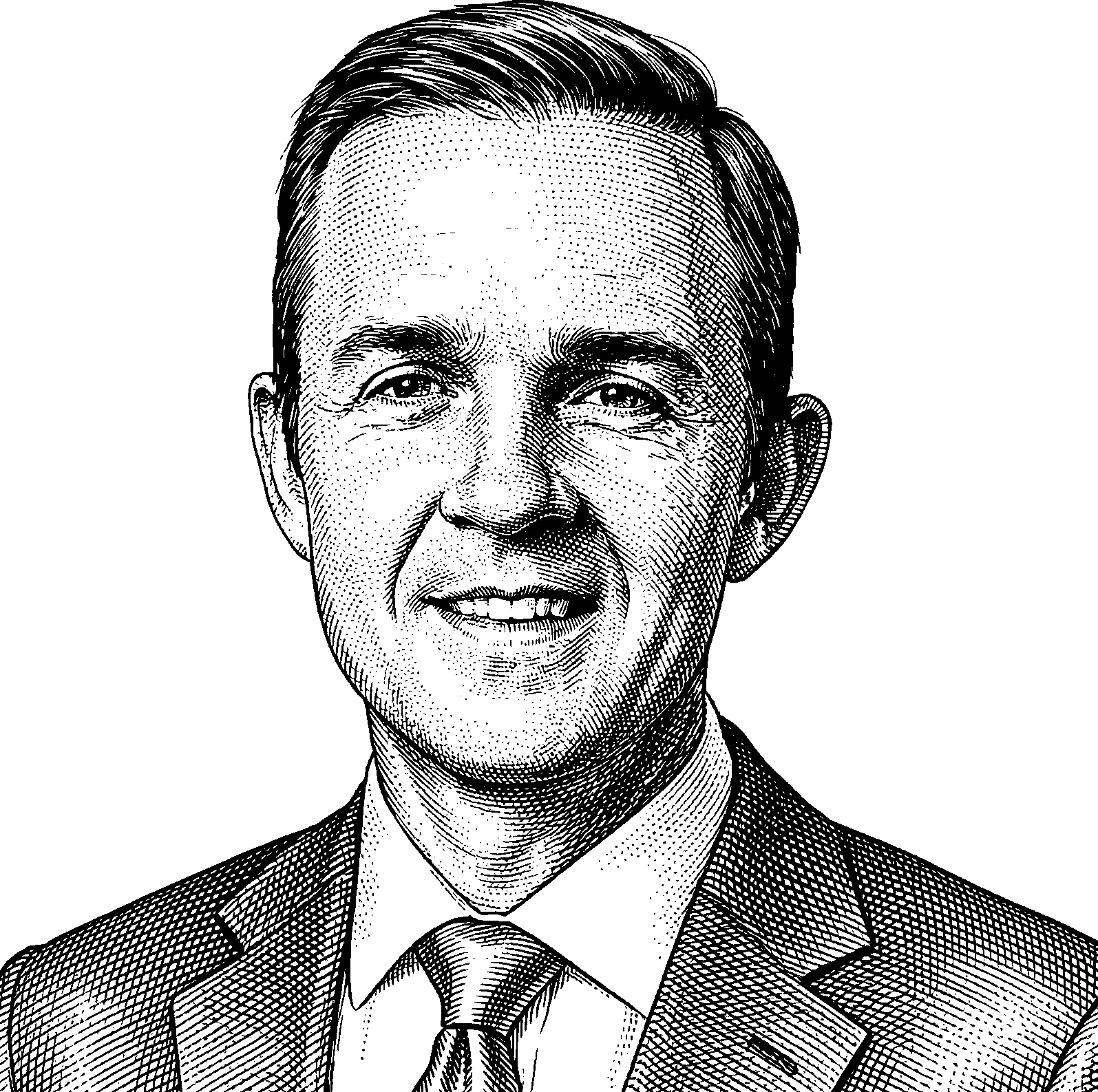
Carl Youngblood co-founded the MTA in 2006 and has served since 2021 as its President and CEO. He is engaged with the Association’s efforts to explore the intersection of Mormon theology and transhumanist philosophy. ¶ Among the many initiatives that Carl has been involved with, he has designed and built the Association's current website, which unifies all prior content in a single location using inspiring visuals and animations.
Transcript
Speaker 1
Carl Youngwood is the president and co-founder of And a co-founder of the Mormon Transhumanist Association. He co-founded BlockScale, which built the digital asset custody solution for Tezos Network. one of the first proof of stake blockchains. A former blockchain specialist for Amazon Web Services, Carl currently develops smart contracts for a highly successful DeFi project with nearly one billion in total value locked. Carl is technology lead for Utah DAO, a decentralized autonomous organization that is helping to build the blockchain ecosystem in the state of Utah. He advises several blockchain startups and leads the Blockchain Dev UTOP meetup, which is helping to train the next generation of Web3 engineers.
Carl Youngblood
Thank you, friends, colleagues, siblings. Welcome to MTA Conf 2022 Decentralization of Power. The Mormon Transhumanist Association is a group of religious technologists who use their talents and resources to promote radical human flourishing through the ethical use of science and technology. We regularly get together to discuss how we can use science and technology according to wisdom and inspiration to identify and prepare for risks and responsibilities associated with future advances. And to persuade others to do likewise. Our annual conference is one important occasion when we do this. One tradition we’ve had since our founding is to bring together people from diverse backgrounds, people who don’t often find themselves in the same room together. to engage in productive dialogue with one another.
Carl Youngblood
Today, we have world experts in various fields related to the topic of decentralization. Some approaching the topic from a secular perspective, and others exploring its ethical and theological ramifications. One thing that many of us who are close to these fields are seeing is that what starts with digital assets and governance often bleeds into the physical world. In that vein, we’ll explore other forms of decentralization with experts in DAOs or decentralized autonomous organizations, special economic zones. charter cities, international development, and energy. We’ve also invited a few candidates for public office to speak with us. I want to clarify that as a 501c3 nonprofit, the association has a stance of political neutrality and does not endorse any political candidates. We’ve invited these speakers to share their personal views and experiences on the topics in question and how they believe the public sector can contribute.
Carl Youngblood
Today, you’re also going to get a sneak peek of our rebranding. We’re in the middle of a website redesign that will be launching soon. For those unfamiliar with our logo, the winged wheel represents progress. The concept of human effort and ingenuity coupled with divine aid, collaboration between heaven and earth, or between those who already have it together and those who are still working on it. Our new visual theme invites the visitor to imagine future possibilities, worlds without number, both virtual and physical, that we can take part in creating together. It reminds us that it is perhaps in our creative capacities that we draw nearest to godliness, and that people should be anxiously engaged in a good cause, and do many things of their own free will to bring to pass much righteousness. for the power is in them wherein they are agents unto themselves. We felt that this Utopian imagery could serve as a springboard for contemplation An inspiring backdrop for a conference where we’re talking about the shape that future society may take. As you listen today, I invite you to imagine diverse communities scattered throughout endless worlds. each teeming with life and flourishing independently in its own sphere.
Carl Youngblood
One more thing before I begin my presentation. It’s our tradition to schedule our monthly meetup which normally takes place on the second Sunday of each month, on the Sunday evening after our conference, which is tomorrow night. So that out of town guests can join in, and we would love to have you there. There should be a flyer in your conference packet with information about that. And now on to my talk.
Carl Youngblood
I’d like to set the stage for the conference topic by providing a survey of several concepts and trends that bring us to where we find ourselves today. Philosophers and political scientists have long debated the challenge of balanced and sustainable governance. The problem of collective action or preference coordination has kept power sharing limited. For most of recorded history, humanity has been compelled to choose between chaos and tyranny, with power usually concentrated within a relatively small group led by a single dictator. Perhaps surprisingly, political scientists tell us that bad behavior is almost always good politics, meaning that dictators who hoard resources And dole them out lavishly to a small cadre of loyal leaders, tend to maintain their hold on power better than those who attempt to distribute resources more equitably across a larger number of constituents. This is because resource distribution gets exponentially messier as the number of beneficiaries grows.
Carl Youngblood
Another term used to describe the problem is the tragedy of the commons. As scarce resources are shared between more and more people, it becomes more and more difficult to coordinate them fairly. Inevitably, One person or group of persons begins to take more than their fair share of resources. Others react in kind, and before you know it, the resource has been ruined for everyone. Traditionally, centralized authorities have been relied upon to govern these scarce resources, carefully apportioning them to those in positions of privilege or power, or those who seem especially deserving.
Carl Youngblood
Thomas Hobbes appealed to the necessity of a powerful central authority created by everyone joining forces, a leviathan that was so awe-inspiring and intimidating that nobody would dare to provoke its wrath. By the way, this is a picture from the original publication of The Leviathan by Hobbes, and you’ll see that in that monarch there’s little pic pieces of people in there, sort of representing the entire body politic that the monarch ruled over. So without the pacifying power of the Leviathan, according to Hobbes, life would be nasty, brutish, and short. Tribalism and chaos would prevail because no faction would be sufficiently powerful. to prevent others from trying their luck at conquest.
Carl Youngblood
More recently, representative democracy has begun to gain favor over other more autocratic forms of government. The founders of the American nation relied on the technologies of paper ballots, original and periodic consent, representation, and various checks and balances to distribute power more equitably and keep it in balance. This improved preference coordination, but it still demanded significant compromises between expeditious execution and broad consensus gathering. The technologies used for democratic governance haven’t really undergone any significant upgrades since the Americans’ experiment nearly 250 years ago.
Carl Youngblood
So new technologies threaten the balance of power. Technological breakthroughs are often accompanied by a gold rush period where well capitalized interests quickly drive out other contenders and dominate the competitive landscape. And the advent of the public Internet has been no different. Many people have likened the Internet to the invention of the printing press, and it has been accompanied by similar levels of social transformation.
Carl Youngblood
For a while now, we’ve been hearing the term web 2. 0. That leaves many people wondering, what was web 1. 0? So that’s a period most of us forget, but it was basically the days when people who wanted to post content online had to run their own server. If we’ve learned anything since then, it’s that people really don’t like to run their own servers.
Carl Youngblood
Web 2. 0 made it possible for everyday Internet users to post content online without having to run a server. Social media platforms allowed people to share their opinions, or maybe just what they had for breakfast, to the entire world. While many older folks initially wondered why anyone would want to do this, it caught on rather quickly. But as these platforms have grown in popularity, they’ve gained tremendous control over the flow of information, including control over advertising markets and revenues, over access to news and entertainment. and even influence over the outcome of elections, conflicts between nations and ethnic groups, as well as matters of public health. Value has been captured by these powerful interests and used in ways that are detrimental to the common welfare.
Carl Youngblood
Part of the reason for this is that the protocols of the Internet were not built with monetization in mind. So any value that someone wants to receive for services must be extracted At higher layers of abstraction. So you see here on the regular Internet stack, you see the application layer is very big, meaning that whoever builds those applications gets the lion’s share of the wealth. If I’m a search engine like Google, for example, I need to build and maintain a lot of servers, networks and software to collect revenue. It’s in my interest to keep people using my services and not others. and to prevent interoperability between my services and those of other competitors. Strengthening them weakens me, and vice versa, because so much of the added value is kept in my own proprietary offering.
Carl Youngblood
During the last decade, blockchain technology has started to change this dynamic. In blockchain, much more of the value is in the shared protocols, which are permissionless. meaning anyone can use them, and composable, meaning they can be mashed up and combined to accumulate more shared value in the public network. Building apps in this paradigm enriches the commons rather than damaging it, because contributions are inherently shared.
Carl Youngblood
Rather than relying on centralized servers operated by large companies, blockchains contain shared ledger data running on peer-to-peer networks consisting of many different computer nodes. each of which is operated independently by both individuals and corporations. If one node goes down, there are still thousands more to replicate the data. Each node can independently verify the integrity of the blockchain ledger with cryptography. and is incentivized to participate in the creation of new pages or blocks in the blockchain ledger through monetary rewards. This modern day leviathan of decentralized consensus becomes even more powerful and resistant to corruption than Hobbes’ nation states. Applications based on these blockchain protocols are often referred to as Web3 applications.
Carl Youngblood
The first blockchain use case was payments, like cash Cryptocurrencies are bearer instruments that grant direct access to wealth to anyone with access to the private key, the right private key, that is. Other methods of value transfer, like credit cards and bank accounts, rely on the intermediation of a financial institution that can block access to funds at any time, as we’ve recently seen in Canada.
Carl Youngblood
In addition to tracking debits and credits between users like Bitcoin does, modern blockchains also support storing the state of various operations in memory, and executing arbitrarily complex business logic, which we call smart contracts. All this happens without relying on any single computer or point of failure in the network. All the nodes in the blockchain working together effectively become a global computer with an extremely high level of security because its transaction logs can be verified with cryptography. The notion of cryptographic verifiability is important because it provides the highest level of assurance that is currently known to humanity. of the authenticity of a claim or logged event.
Carl Youngblood
Even though blockchains are relatively slow when compared to an individual computer working in isolation, They enable complex financial transactions and other business logic to be verified by all stakeholders and executed more quickly than present-day alternatives. Scaling up the nominal case and allowing many more legal contracts to be executed successfully is where blockchains really shine. Contractual disputes may occasionally still need to be resolved in court, but trivializing the nominal case is a game changer.
Carl Youngblood
Take the simple case of a wire transfer. To do that today, you need to call your bank or log into their website and request the transfer. Several hours later, the bank will call you back and ask some security questions to verify that you actually wanted to transfer that money. Then the wire goes out a few hours later in the next batch of transfers. The receiving bank must also acknowledge the receipt and credit the account of the intended recipient. The typical turnaround time is a business day. Compare this with sending cryptocurrency from your private wallet. The entire transaction is complete and confirmed in ten minutes or less, and it reaches the recipient’s wallet directly, not their bank account. Note that in both cases, the transactions are irreversible.
Carl Youngblood
Wire transfers cannot be clawed back. Some have complained that mistakes with cryptocurrency can be more catastrophic. And in some cases, they certainly can be. I’m speaking from personal experience here. We are only beginning to develop robust solutions around key custody that balance recoverability with self-sovereignty. But in many cases, the systems they are replacing are not any better. If the irreversibility of a crypto transfer is insufficient for a certain use case, a simple smart contract can be devised to hold funds in escrow while both parties confirm that their conditions have been met.
Carl Youngblood
Cryptocurrencies were the first use case for blockchain, but there are many others. More recently, non-fungible tokens or NFTs have captured the public imagination. The reason they’re called non-fungible as opposed to fungible is that NFTs contain specific information about a unique digital asset. If the NFT was minted properly, the wallet holder can cryptographically prove that they own the digital assets it describes. Till now, NFTs have mostly been used for art and other collectibles. And of course there’s a lot of speculation and hype around that. But they have many other practical use cases, including domain name registrations, streaming media purchases and rentals, and ownership of both physical and digital assets, including fractional real estate. NFTs can also ensure that content creators are properly paid their fair share of royalties in real time whenever someone consumes their content.
Carl Youngblood
In addition to value transfers and tracking assets, blockchains are being used to provide decentralized financial services, or DeFi. Including token trading, bonds, borrowing, lending, options, futures and derivatives, all of these services are being rendered without brokerages, banks or other intermediaries. The rules governing these complex financial services are encoded in smart contracts and executed on the blockchain for all stakeholders to observe in real time. Properly coded business logic ensures that transactions occur as expected without the possibility of human error. Of course, these services present new risks, such as contract risk. which occurs when hackers exploit a previously undiscovered bug in a smart contract that allows them to steal funds from the contract’s treasury. New services are emerging to insure against such risks, and contracts that have proved their security through long experience become trusted over time.
Carl Youngblood
Despite all these risks, many DeFi projects have been highly successful, as demonstrated by the explosive growth of the space over the past two years. You can see right here that the current total value locked in all DeFi projects that are measured by this index or aggregator is over $205 billion. And it’s climbed in only like the last year or so, as you can see. Despite all these risks, many DeFi projects have been highly successful as demonstrated. Many DeFi services offer more favorable interest rates than their traditional counterparts, and many of them are structured in a way where much larger percentages of the rewards are shared with users. In general, the value captured by project contributors in DeFi is roughly 10 times less than what you could expect from a typical firm on Wall Street. These applications are only the beginning.
Carl Youngblood
In addition to the decentralized settlement layer provided by blockchains, decentralized alternatives are being developed for all the other layers that currently Central applications need to run properly, including decentralized file storage, databases, and computing services. Eventually, Because they are running on self-healing peer-to-peer networks that route around failures, our applications will be running everywhere and nowhere. They will be resistant to censorship and surveillance because they don’t rely on any bottlenecks or single points of failure. The rules encoded in successful smart contracts will reduce our reliance on corporate goodwill. Rather than corporations backsliding on their motto don’t be evil, Web three protocols will make it so that directly interacting counterparties can’t be evil. Granted, this is an overall goal, right? It’s not perfect, but it’s getting better.
Carl Youngblood
These technologies raise the possibilities of restoring power to individuals and communities through disintermediation. that is by eliminating the middleman from various current ecosystems and allowing them to be governed democratically, including financial services, social media. sharing economy platforms, media, and entertainment. Imagine apps like Facebook, Twitter, Airbnb, Uber, Netflix, etc. , but without the corporate structures behind them. In their place, decentralized autonomous organizations or DAOs that are governed by project contributors and users who transact directly.
Carl Youngblood
Streamlined high touch democracy allows project stakeholders to vote easily on project initiatives and other decisions. This is a new frontier, and Dow management strategies and voting protocols are rapidly evolving. Simple one person, one vote strategies don’t work well because it’s easy to duplicate crypto wallets to get extra votes. Requiring wallets to verify personhood can improve this, but often at the expense of stakeholder privacy. That said, blockchain privacy features are also rapidly improving.
Carl Youngblood
Still, one person one vote fails to compensate passionate project contributors for the effort that they put in, thus failing to incentivize project improvements. Many projects have adopted token voting, in which stakeholders are weighted proportional to the tokens they own, with the assumption that larger stakeholders care more about the success of the project. Still other projects have adopted quadratic voting, where large token holders have more influence, but only in proportion to the square root of their token holdings, thus favoring broader consensus building.
Carl Youngblood
Some projects are also recognizing that early investors often don’t actively participate and aren’t always aligned with the long-term success of a project. By regularly issuing new tokens to active project stakeholders, sometimes what we call token inflation, these projects reduce the influence of inactive investors over the long term. ensuring that ongoing active contributors retain adequate control and influence over the project’s success. Projects are learning fast what works and what doesn’t.
Carl Youngblood
Beyond merely replacing the web services we currently use, DAOs are being organized with even more ambitious goals. According to the founders of AllianceDAO, an incubator for Web3 projects, four emerging megatrends are converging that will lead to DAOs becoming digital nations. The digit first, the digitization of everything, every aspect of life from work to social life. is going online. But more importantly, the world of bits has been driving innovations throughout the world of atoms. Robotics, energy, biotech, space and many other fields are all undergoing a renaissance thanks to decades of rapid advances in computing.
Carl Youngblood
The decentralization of global superpowers. The U. S. has been gradually losing influence as the enforcer of global order. With Brexit, the European Union is far less united. China’s values are fundamentally incompatible with the West, so it isn’t capable or willing to assume the role of world police either. This has created a vacuum that no single nation state can fill.
Carl Youngblood
The fourth turning. We’ve entered an era of great internal division between the establishment and commoners. between progressives and conservatives, between boomers and millennials, between the wealthy and the poor, and between capitalists and socialists. Ordinarily, people become increasingly frustrated with these societal issues, yet the vast majority cannot choose their society The society, government, and country they belong to. They’re born into them.
Carl Youngblood
And then finally, the rise of Web 3. Thanks to the giants that we’re standing upon, a new technology has arrived and gifted us the ability. to implement property rights via encryption, constitution and laws via smart contracts, taxation via token issuance, transparent policymaking via an open ledger, and international trade via DeFi. DAOs sit at the intersection of all these megatrends. They will provide prove to be the first primarily digital, transnational, frictionlessly opt in, opt out, and blockchain enabled nation states.
Carl Youngblood
Already, DAOs have been created with the goal of acquiring physical assets, including land. Some projects like CitiDAO and Praxis Society are raising funds to acquire land on which they intend eventually to build charter cities that are managed and governed more transparently using the technologies we’re discussing.
Carl Youngblood
It has been transformative for me personally to be involved in this space. As I’ve developed blockchain protocols with my colleagues and attempted to create the necessary checks and balances for them to operate autonomously, I’ve often felt like I was witnessing a sort of constitutional convention. Similar to what the founders of our nation experienced when they debated how best to craft laws and achieve a separation of powers. While it is still early days and there is still much work to be done, I find hope and inspiration in the many useful applications that are being developed. and continue to believe in the possibility of developing systems that can help us to govern more effectively and to come closer to building better communities. I hope this survey of the emerging landscape has helped to set the stage for the rest of our talks today and help people to see some of the possibilities in our future.
Carl Youngblood
If we continue to work towards their realization, as I think about these trends towards egalitarian digital nations, I can’t help but think about the utopian visions Of our own Mormon heritage and the possibility of reviving them today. I hope today’s discussions can facilitate that process. Thank you very much. So I have time for maybe one question if uh anyone has one. Richard. Oh, too late, Richard. Uh no, I mean you can. If anyone’s ready at the mic, we’re we’ll take it. Just the online audience can’t hear it otherwise. Or you could say it really fast and I could repeat it. Come on down. You’re the next contestant.
Speaker 3
What are ways in which the emerging blockchain technologies Could be leveraged to help the people who God is most concerned about, the least of these, those who aren’t able to financially participate in the current world order. and who aren’t going to be able to buy in in any meaningful degree if buy-in to these technologies is financial in any way.
Carl Youngblood
Thank you. Yeah. So really fast, I would say, and I’ve got to just jump right after this one, but I would say that in many ways, well, and this is not a complete answer to your question. We’re already seeing people in developing nations and in places where they don’t have a stable financial system. benefits hugely and significantly from cryptocurrencies. So the notion that this is only helping the haves and not the have nots is actually false, I think. Now that’s not to say that we can’t do better there, and I would love to see us do better, but I think we’re already seeing some really transformative changes. And thank you, gotta go.