Demythologizing Mormonism
Carl Youngblood draws on theologian Paul Tillich's work to address how Mormonism might navigate its tensions with modernity. He explains Tillich's understanding of faith as "the state of being ultimately concerned," symbols as the language of faith, and myths as narratives that derive power not from historicity but from their capacity to motivate and reveal. The "dishonesty of the unbroken myth" occurs when believers insist on literal interpretations that reduce the transcendent to the finite—a form of idolatry—while demythologization releases a myth's power for new contexts.
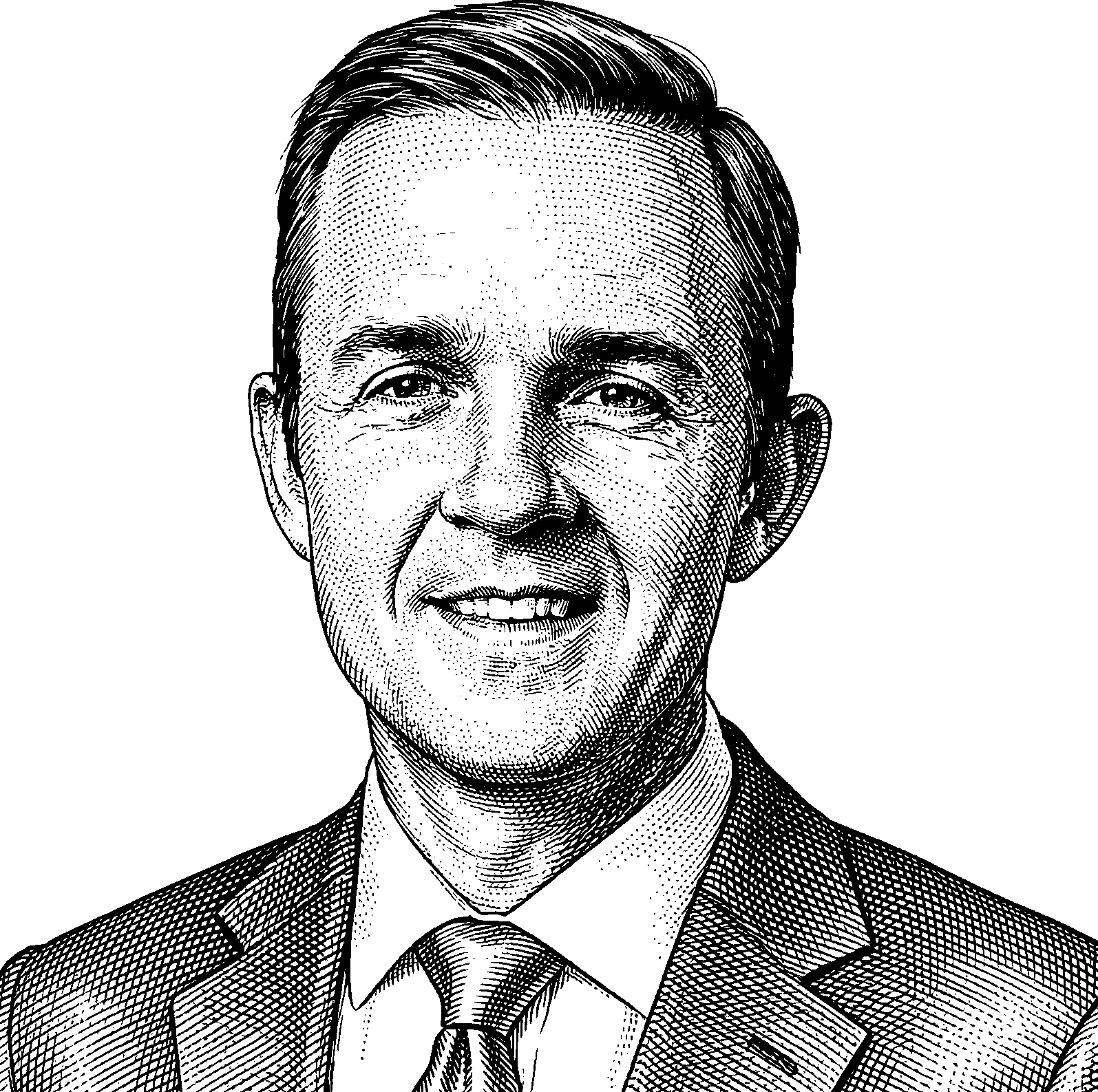
Carl Youngblood co-founded the MTA in 2006 and has served since 2021 as its President and CEO. He is engaged with the Association’s efforts to explore the intersection of Mormon theology and transhumanist philosophy. ¶ Among the many initiatives that Carl has been involved with, he has designed and built the Association's current website, which unifies all prior content in a single location using inspiring visuals and animations.
Transcript
Speaker 1
Our next speaker will be Carl Youngblood. Sitting here ready next to me. Carl has worked as a software engineer for over fifteen years and is currently employed by Cisco Systems in Norway. Aren’t you somewhere else besides Norway now?
Carl Youngblood
Moving to England.
Speaker 1
Moving to England. He received a bachelor’s degree in Portuguese from Brigham Young University and a master’s in computer science from the University of Washington. Carl enjoys woodworking, history, religion, philosophy, singing, and playing various musical instruments. Carl will be speaking on demythologizing Mormonism.
Carl Youngblood
Okay Ulysses by Fernando Pessoa Myth is the nothing that is everything. The very sun that breaks through the skies is a bright and speechless myth, God’s dead body, naked and alive. This hero who cast anchor here, because he never was, slowly came to be. Without ever being, he sufficed us. Having never come here, he came to be our founder. Thus the legend, little by little, seeps into reality, spreading and enriching it. Life, down below, half of nothing, perishes.
Carl Youngblood
Pessoa wrote this poem in an effort to rekindle the ambition his people displayed during the Age of Discovery by resurrecting the ancient symbols of Portuguese dominance. It describes the protagonist of Homer’s Odyssey, who, according to legend, founded Lisbon. Pessoa shows keen insight into the nature of myth. It doesn’t just explain the world, it creates it. this legendary figure, without ever being, ended up providing the identity through which the Portuguese nation rose to become a superpower.
Carl Youngblood
Like the ancient symbols of Portugal, the symbols of Mormonism are also in a state of flux. The Mormon church is facing increased disaffection, public scrutiny and tension with the larger culture. I’d like to talk more about these concepts today and explore ways that Mormonism can adapt to the sea change that it’s experiencing.
Carl Youngblood
I had to ruthlessly cut slides from this presentation. That were very precious to me, and I still probably won’t make it to the end. So if you find any of this interesting, please read my paper, which is you can find at this address. First of all, I’d like to thank Richard Holloway for his lectures at Gresham College on the myths of Christianity, from which I borrow heavily.
Carl Youngblood
People often think that the course of history is one of steady and gradual progress, but Thomas Kuhn claimed that the process of scientific discovery involves long stable periods interrupted by occasional dramatic upheavals, which he called paradigm shifts. For example, the Ptolemaic view of the heavens was replaced by the Copernican, which later gave way to Newtonian physics and more recently to Einstein’s theory of general relativity. Each successive paradigm was accepted because it answered both new and old problems better than before. The same patterns can be observed in human knowledge generally.
Carl Youngblood
As we look back through history, we notice perhaps disturbingly that rather than being something fixed and eternal, most of the so-called truths everyone accepted have been contingent upon time and circumstances. This is a difficult notion for many. In fact, philosophers have argued over the nature of truth for centuries.
Carl Youngblood
Rationalists believe that there is a perfect external reality that we must conform to. That truth is static and eternal, and can be arrived at through proper thinking, or through revelation from those who have it already. Hence it is often associated with religious authority.
Carl Youngblood
Empiricists, on the other hand, tend to be skeptical of ideology, preferring instead to acquire truth through experience and observation. William James tried to resolve the debate by proposing that rationalist theories should not be dismissed out of hand, but should instead be subjected to empirical analysis. According to this philosophy, which he called pragmatism, assertions are true to the extent they hold up under empirical scrutiny, but they always retain some degree of tentativeness because they could be modified by new experience. Truth, according to James, is what works, or what seems to provide the most effective explanations and solutions to our present challenges.
Carl Youngblood
It is important to clarify that pragmatism is not the same as relativism. As individual subjective experiences are shared and corroborated, they attain a type of objectivity within a human context or frame of reference. But we can never break out of that frame of reference to gain some sort of unfiltered access to the really real. This recognition is one of pragmatism’s significant contributions.
Carl Youngblood
Pragmatism also recognizes our role as agents in the universe, who aren’t merely acted upon, but who affect its state, and choose the direction that philosophical and scientific inquiry will take. thereby influencing what truths are actually discovered or even circumvented.
Carl Youngblood
Even those who claim a belief in unchanging standards often behave pragmatically. As Halloway puts it, the objective standards may indeed still stand where they did, but we keep moving. He uses the example of shifting standards regarding the treatment of women.
Carl Youngblood
In the biblical narrative of Eve’s betrayal in the garden, we can clearly see a primitive culture’s attempt to explain the difficulties inherent in womanhood. I will greatly multiply your pain in childbearing. In pain you shall bring forth children. Yet your desire shall be for your husband, and he shall rule over you. These explanations were accepted for a long time, but as civilization advanced, they gave way to others that were more useful. Most people today agree that women should not be completely constrained by their biology and the primitive gender roles that emerged around it. Many other similar paradigm shifts have also occurred over the years.
Carl Youngblood
So what happens to those who reject the tentative nature of truth? They often experience a lot of discomfort because, although they have embraced many aspects of the new paradigm, their underlying belief system is still opposed to it. The paradigm tension experienced by those who choose to stay within the faith group is what theologian Paul Tillich called the dishonesty of the unbroken myth. To understand what he means by this, we need to understand his theology.
Carl Youngblood
In his landmark book, Dynamics of Faith, Tillich describes faith as the state of being ultimately concerned. Pointing out that almost everyone has faith in this sense because nearly everyone has an ultimate concern, except the completely apathetic.
Carl Youngblood
Symbols are the language of faith. They use patterns with which we are familiar to teach us about the object of our ultimate concern. They can be understood on many levels. They also participate in that to which they point.
Carl Youngblood
For example, the flag symbolizes the nation for which it stands. Olympic athletes and returning expatriates wrap themselves in it. An attack on it is an affront to those who belong to the group it represents.
Carl Youngblood
Symbols grant us unique access to certain levels of reality. A picture, a poem, or a piece of music teach us things that we cannot learn in any other way. they resonate with aspects of our own nature, and in so doing reveal us to ourselves, such as when we are inspired by a great play or listen to great music.
Carl Youngblood
Whereas religious symbols take on a variety of forms, myths, literally stories about the gods, are a special subset of the symbols of faith in the form of stories about divine human encounters. Myths are not untrue. They can even be based on historical events. In fact, they often are. But their strength is not derived from their historicity. It comes from their being powerful, motivational narratives that will still be relevant long after the historical incidents that led to their emergence.
Carl Youngblood
Myths are inherently unstable because they describe transcendent experiences from a limited human perspective using everyday language. They impose a finitude on the Divine that weakens its ultimacy. This eventually leads to conflicts which, if not managed successfully, can lead to idolatry or misplaced ultimacy.
Carl Youngblood
Idolatry happens whenever we mistake something that is solely a human construct for the divine. Effective, non-idolatrous revelation always involves cooperation between humanity, that which we are, And the divine, that which we are becoming. When there is nothing that pushes us beyond ourselves, we are worshipping idols.
Carl Youngblood
We are fanatical by nature. We prefer gods that we can fit in our pocket. Simple lists of things to do over the soul-searching necessary To constantly ponder and reconsider our myths and symbols, to explain them and see if they are still leading us in a productive direction.
Carl Youngblood
The ongoing process of criticism to which myth is always subject is called demythologization. Holloway calls it the self conscious act of reflection on how myths operate.
Carl Youngblood
To de mythologize the myth of Adam and Eve, for instance, is not to abandon it as a uselessly primitive way of speaking about abstract matters. It is to understand it as a myth, a narrative way of speaking about abstractions, which is valued for that very reason. The myth is seen as a powerful metaphor for real human experience. It is kept not because it is bad history, but because it is good poetry. Because it provides us with a powerful shorthand for complex human experiences of alienation and regret.
Carl Youngblood
We can’t get rid of myths. They are the language of faith. But we also shouldn’t confine them to their literal meaning, insist on the importance of their historicity, or assign to them any final status. Doing that is to mistake the symbol for the thing it points to, to replace the ultimate with a human construct, an idol.
Carl Youngblood
We need to constantly ponder on how myths work, what they teach us, how they used to be taught, and whether or not those teachings are still beneficial, what new ways they might be applied to our present context, and so forth. A story that is demythologized but retained is what Tillit calls a broken myth, or a myth that is understood as a myth.
Carl Youngblood
Holloway points out that the Christian ethic requires this of us. Christianity denies by its very nature any unbroken myth because its presupposition is the first commandment, the affirmation of the ultimate as ultimate. and the rejection of any kind of idolatry.
Carl Youngblood
By breaking a myth we release its power. We give it motivational force for our own day. Insisting on lit literal interpretations and outmoded symbols only causes a religion to be more marginalized and retrench further into defensive fundamentalism.
Carl Youngblood
But demythologization is always resisted by those in authority over the myth. To challenge or criticize a myth of which they are the official guardians not only threatens their authority, it threatens the peace and security of those who have submitted themselves to the systems they control. This is why the people who challenge religion’s claim to be a carrier of objective knowledge rather than the poet of symbol and metaphor are invariably denounced as faithless apostates.
Carl Youngblood
The irony here is that these prophetic challenges to the misuse of myth and symbol are usually made by people who have a radical fear of idolatry, and who would rather be accused of or even fall into atheism rather than submit to the worship of human constructs, which is what failure to recognize the real status of myth amounts to.
Carl Youngblood
Ironically, those who resist the breaking of the myth and insist on literal interpretations are trying to apply to religious symbols the scientific that they precision that they have learned from the secular paradigm.
Carl Youngblood
Tillich describes this literalism in eloquent detail. He says The character of the symbol to point beyond itself to something else is disregarded. Creation is taken as a magic act which happened once upon a time. The fall of Adam is localized on a specific geographical point and attributed to a human individual The virgin birth of the Messiah is understood in biological terms, resurrection and ascension as physical events, the second coming of Christ as a telluric or cosmic catastrophe. Literalism deprives God of His ultimacy, and religiously speaking of His majesty, it draws Him down to the level of that which is not ultimate, the finite and conditional. Faith, if it takes its symbols literally, becomes idolatrous. It calls something ultimate which is less than ultimate. Faith, conscious of the symbolic character of its symbols, gives God the honor which is due Him.
Carl Youngblood
Tillich’s criticism almost seems to be custom-tailored to Mormonism, which claims a fully embodied finitist God A historical Adam, and even names the geographical location of the Garden of Eden. We may as well throw in a reference to Kolob for good measure. But I’m going to try to show how Tillich’s view need not conflict with the essentials of Mormon theology, and that there are areas where we desperately need the myth-breaking that Tillich prescribes.
Carl Youngblood
Notice that the aspects of Mormonism that many outsiders find most absurd are also some of the highly physical and specific assertions that Tillett criticizes. And in its current public relations campaigns, the Church seems to be deemphasizing many of these vestiges of physicalism somewhat already. You don’t often hear about the Garden of Eden being located in Jackson County, Missouri, or Kolob. The planet from which God is said to govern the universe at church, despite what you might hear in a certain well-known Broadway musical. But there are, of course, some highly literalistic teachings that continue to get airtime in Sunday school.
Carl Youngblood
More than anything else, Tillett’s conception of God seems at odds with that of Mormonism. Tillett claimed that the traditional theistic notion of God was no longer credible But that this did not imply the collapse of the reality of God, rather, the modern mind must be encouraged to think of the God above God, that is, of what is above and beyond the limits of our imagination. Tillich’s insight is that our understanding of God will always be imperfect and prone to error due to our human limitations, and that it is bound to improve and progress as time goes on.
Carl Youngblood
Tillich also understood that any attempt to describe God in terms that humans can relate to inevitably conveys less than all God is. Such narratives can only be symbols that will eventually become idolatrous and need upgrading. While Joseph Smith’s visions were certainly manifestations of God, it would be incorrect to assume that they conveyed an exhaustive or comprehensive understanding to him.
Carl Youngblood
Near the end of his life, Smith taught further that the God of our universe was an infinite and constantly progressing being who came from an endless family or divine community of other individuals like him. If, as Joseph Smith declared in his Revelation on the degrees of glory, God will one day make us equal with Him, then we will be in a position where, as equals, He will no longer be the appropriate object of our worship. To worship or strive to emulate such an equal would be damnation, according to Mormon understandings of that term. And yet even at this far flung stage, there will be still something beyond us to which we will strive. and ultimate concern that will be the appropriate and inevitable object of our faith. This is the God till it describes, the ever not yet.
Carl Youngblood
Lincoln Cannon described such an ultimate concern at last year’s conference with an interesting rephrasing of the First Commandment: Love post-humanity with all your heart and with all your mind. No matter where we are, post-humanity will always be our most noble projections of our future, one that Mormonism teaches has already been obtained by other gods before us. So while these explanations between Tillich’s conception of God and that of Mormonism are far from exhaustive, hopefully they show that there are some ample opportunities for harmonization and mutual benefit. It is interesting to note that Mormonism’s conception of a progressing God fits well with Tillich’s description of an evolving ultimate concern.
Carl Youngblood
So I’m out of time. What I was going to do at the very end was show some practical ways that we could demythologize some of the traditions and teachings of Mormonism. But if you want to see those, you’ll just have to read the paper. Okay? Thank you very much.