Reframing Environmentalist Narratives
Carl Youngblood’s presentation, “Reframing Environmentalist Narratives,” challenges conventional wisdom about humanity’s relationship with nature, particularly the romanticized view of pre-agricultural societies. He argues that prehistoric humans significantly altered their environments, perhaps even more drastically than modern populations when considering their smaller numbers. Youngblood suggests that outdated linear thinking, as seen in Malthusian theories, fails to account for accelerating technological advancements and their potential to reshape our relationship with the environment in the transhuman age.
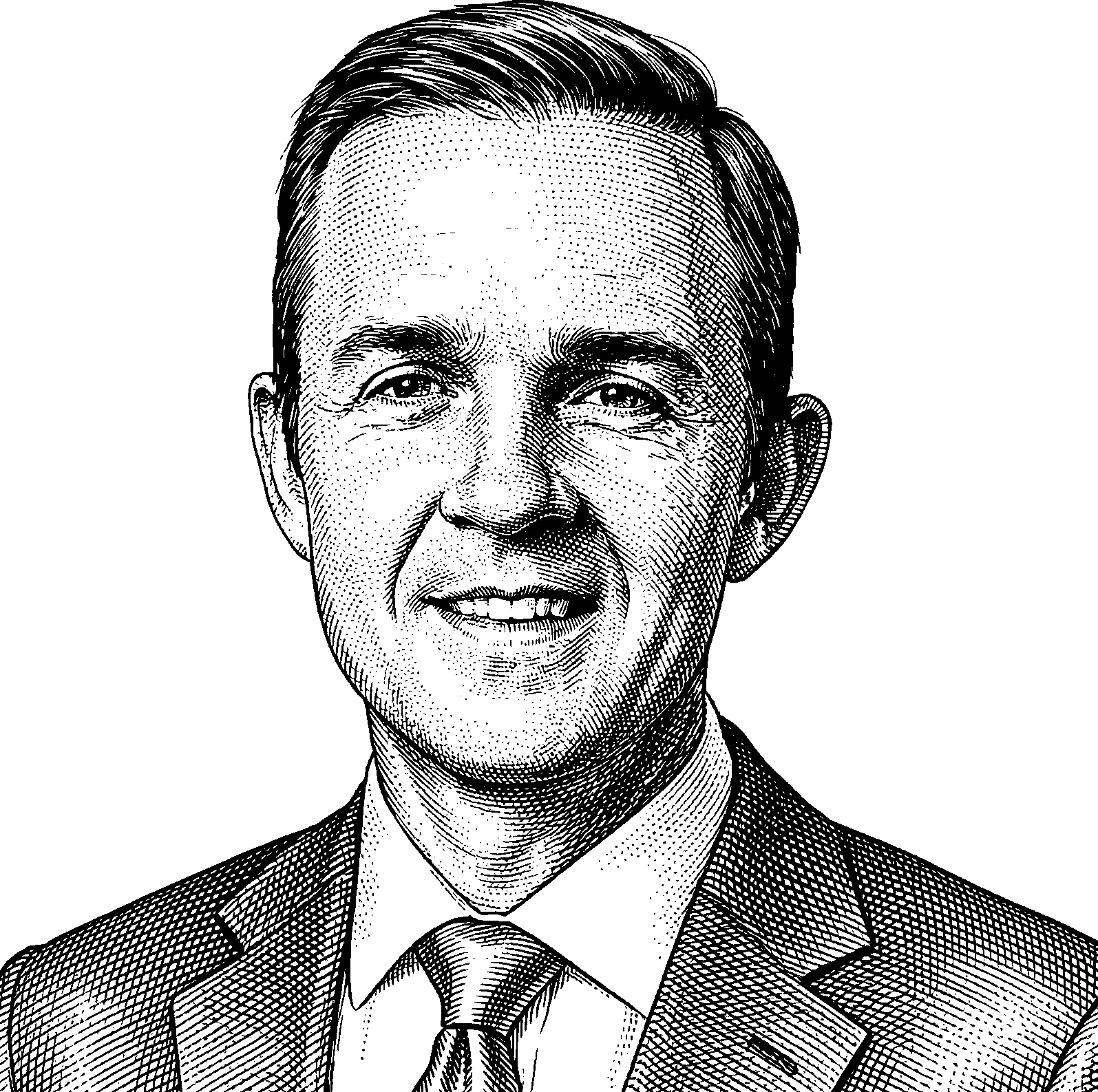
Carl Youngblood co-founded the MTA in 2006 and has served since 2021 as its President and CEO. He is engaged with the Association’s efforts to explore the intersection of Mormon theology and transhumanist philosophy. ¶ Among the many initiatives that Carl has been involved with, he has designed and built the Association's current website, which unifies all prior content in a single location using inspiring visuals and animations.
Transcript
Carl Youngblood
So my talk today is about how to reframe environmentalist narratives for a transhuman age. I want to begin by sharing a recent event in my life where a friend of mine reached out to me and said, you’ve got to read this book. It changed my life. It really clarified some things for me and articulated some aspects of the environmentalist Movement in a way I’d never heard before. And so, on his recommendation, I read the book and definitely agree that it’s a powerful book. It was a bestseller when it came out, and it continues to be Read widely. But I also felt that there were some aspects of this narrative that left me. Dissatisfied.
Carl Youngblood
He uses a dichotomy of leavers and takers to contrast prehistoric humanity’s attitudes toward nature from that of its successor. And he basically claims that humanity’s relationship with nature was in a state of relative balance during pre-agricultural times and that it has been out of balance ever. Since.
Carl Youngblood
So I think even though this book has some really powerful metaphors and concepts, I think there’s some fallacies there, and they’re not new. They perhaps reached the height of their popularity when Jean-Jacques Rousseau argued that humanity was more noble in its youthful state than when fully civilized. And one of his semi-contemporaries, Thomas Hobbes, argued just the opposite when he claimed that life in a state of nature was nasty, brutish, and short.
Carl Youngblood
So this same debate continues today, with environmentalists on the one hand adopting a closed loop zero sum calculus, while neoliberals and technophiles on the other seem nearly oblivious to the side effects of their creature comforts.
Carl Youngblood
Now, I think where it gets a little more complicated is that we’re discovering new discoveries in paleoecology. that are challenging the myth of the noble and balanced ecology of the hunter gatherer. So recent research published in the journal Science indicates that large bodied mammals, once plentiful on all habitable continents, and particularly important for their disproportionate influence on ecosystem structure and function, were all but wiped out in the latter quaternary period, primarily due to hominin activity. Research in Australia has shown similar megafauna extinctions after the arrival of humans on the continent. Other research indicates that prehistoric pastoral activity may have led to the creation of the Sahara Desert.
Carl Youngblood
Satellite imagery shows numerous rock formations that they call desert kites for some reason. I’m not sure why they’re called kites. In the Middle East, where prehistoric hunter-gatherers would trap big game by the thousands, eventually leading to the devastation and extinction of several species. So you can see basically these huge structures where they would herd like thousands of animals into them and just slaughter them. And you can imagine without any refrigeration or ability to do much with these Animals that there probably was a lot of waste that occurred.
Carl Youngblood
So far from being in balance with nature, prehistoric humanity Wrought changes in its environment on a level that rivals or even exceeds those we’re experiencing now when it’s considered in proportion to the population size. So if you think of how small the human population was at that time relative to now, and yet how much devastation it it created. It’s quite a different picture of what what the noble the so-called noble savage may have done to Earlier in earlier periods.
Carl Youngblood
So we’re also discovering that when the with the advent of agriculture, it may not have necessarily Been immediately better at sustaining humans than hunting did previously. So it’s a little more challenging and it it may have taken a little longer for agriculture to really be more successful.
Carl Youngblood
So each generation of sentient hominins seems to have faced both challenges and opportunities presented by its unique Adaptability. And I’m reminded here of Einstein, who said that the problems that exist in the world today cannot be solved by the level of thinking that created them. Or at least that’s a quote that’s apocryphally attributed to Einstein. We’re not sure.
Carl Youngblood
So, one of the things that a lot of thinkers are failing to factor in that I think is a great contribution of transhumanism. is this concept called the law of accelerating returns that was first introduced by Ray Kurzweil? More than anything, I think, an understanding of exponential growth and how and its surprising effects is something that we’re currently struggling with right now in the wake of the COVID nineteen crisis and that I think has not been applied enough to our predictions about the future.
Carl Youngblood
So we have an example here with Reverend Thomas Malthus, who theorized that overpopulation was going to cause many problems in the developing nations of Europe, including poverty, malnutrition and disease. And he argued that resources tend to grow linearly while populations grow exponentially. And that this would eventually result in an outstripped carrying capacity. And his being A prudish Victorian minister, he recommended that the answer was moral restraint. and making things worse for the poor by basically like keeping their houses crammed together and making it more likely for them to die of various things. So it’s a rather cruel individual. maybe was it was dir in direct response to him that Charles Dickens wrote many of his novels.
Carl Youngblood
More recently, we have researchers who make similar mistakes. In 1968, Paul Ehrlich An entomologist at Stanford who had observed population crashes in insects claimed that the human population growth spell rates spelled inevitable catastrophe. In his best selling book, The Population Bomb, he proclaimed that the battle to feed all of humanity is over. Hundreds of millions of people are going to starve to death, and nothing can prevent a substantial increase in the world death rate.
Carl Youngblood
These warnings captivated the popular imagination with dystopian science fiction like the 1973 film Soylent Green. in which an autocratic future American regime, plagued by food shortages, secretly supplements public rations with the processed bodies of the elderly. or even reactionary works like Saturday’s Warrior, in which Mormon families are ridiculed for maintaining relatively large families despite overpopulation worries.
Carl Youngblood
So technological innovation has been the main way that we’ve mitigated these concerns. In 1898, addressing the Royal Academy of Sciences, Sir William Crookes asked he exhorted his fellow scientists to diligently work to produce chemical manures. claiming that if not, if that didn’t happen, that famine was inevitable. And world population at this point was just over a billion. And the subsequent invention of the Haber-Bosch process by which ammonia used in fertilizer continues to be Produced on an industrial scale has allowed the population to increase fourfold since then. And so this has been a remarkable miracle.
Carl Youngblood
Dr. Edward Berkelar. Professor of Chemistry and Environmental Studies at Redeemer University College, he eloquently summarizes the importance of this invention. He says, It has been called by some the single most important Piece of technology developed in the 20th century, even more important than flight or computers. We are now quite dependent on nitrogen fertilizer to feed the world’s 7. 3 billion people. Vaclav Smil has estimated that approximately forty percent of the world’s population is fed by nitrogen fertilizers. Put it another way approximately forty percent of the nitrogen in our bodies has flowed through a chemical fertilizer plant operating the Haber Bosch process on a large scale. where population densities used to hover around four or five people per hectare of good arable land, the use of nitrogen fertilizers and modern cultivars of major crops enables fifteen to twenty people to be fed per hectare of arable land.
Carl Youngblood
So proportional innovations in human food production are happening today as well. New methods of vertical farming are enabling food to be grown using no soil and seventy to ninety five percent less water than traditional farming methods in sealed environments without pests or pesticide where renewable energy sources and LED lighting provides precisely tuned frequencies of light required for optimal growth. Plant needs are managed by machine learning algorithms, and fertilizer is provided by aquaponics. And harvesting occurs adjacent to where consumption happens, which also eliminates wasteful shipping. This can also be a way of providing a lot of employment in these Urban areas that are sometimes in need of renewal.
Carl Youngblood
And even more amazing technological breakthroughs are coming in the field of lab-grown foods. So there was recently a documentary on the BBC called Apocalypse Cow, and a guy named Georges Monbiot describes some of these astounding changes. He says Just as hope appeared to be evaporating, the new technologies I call farm free food create astonishing possibilities to save both people and planet. Farm free food will allow us to hand back vast areas of land and sea to nature, permitting rewilding and carbon drawdown on a massive scale. It means an end to the exploitation of animals and End to most deforestation, a massive reduction in the use of pesticides and fertilizer, the end of trawlers and longliners. Not only will food be cheaper, it will also be healthier. Because farm-free foods will be built up from simple ingredients rather than broken down from complex ones, allergens, hard fats and other unhealthy components can be screened out. Meat will still be meat, though it will be grown in factories on collagen scaffolds rather than in the bodies of animals. Starch will still be starch, fats will still be fats, but food is likely to be better, cheaper and much less damaging to the living planet.
Carl Youngblood
So this technology is generally referred to as let me think. I’m missing my It’s the something fermentation, precision fermentation is the term that they’re using.
Carl Youngblood
And there’s some really interesting predictions about how this will affect the agricultural industry and the cattle industry. So by twenty thirty, RethinkX, a think tank that’s devoted to predicting These changes say that the number of cows in the U. S. will have fallen by 50% and the cattle farming industry will be all but bankrupt. Modern alternatives will be 100 times more land efficient. 10 to 25 times more feedstock efficient, 20 times more time efficient, and 10 times more water efficient. The whole of the cow industry, for example, will start to collapse once modern food technologies have replaced the proteins in a bottle of milk. which is just three point three percent of its content. The industry, which is already balancing on a knife edge, will be thus all but bankrupt by twenty thirty. So
Carl Youngblood
there’s so many parallel innovations that are occurring right now. As we think of all these different disruptions in energy, land and water usage and food production with demographers’ predictions about global population declining after a peak of roughly 10 billion people as nations develop. it seems that it actually may be possible in the near future to greatly reduce our environmental impact and turn the tables in favor of reduced carbon emissions Increased carbon capture, vastly increased areas of wilderness and conservation, habitat renewal, and even species de-extinction.
Carl Youngblood
And so I don’t have a whole lot of time, and I want to leave time for one or two questions. But I just want to finally finish with some ways that I think we as religious transhumanists can contribute here. So I want to share that we believe in a particip participatory Form of revelation, where essentially all of the discoveries of science and all the different disciplines are all part of the process of revelation and learning. and that nobody can stop this from happening, essentially. As well might someone stretch forth their puny arm to stop the Missouri River in its decreed course or to turn it upstream as to hinder the Almighty from pouring down knowledge. from heaven upon the heads of Latter-day Saints.
Carl Youngblood
John A. Witso talks about how some of the latest and highest achievements of humanity in the utilization of natural forces Approach the conditions of spiritual operations, to count the ticking of a watch thousands of miles away, to speak in but an ordinary tone and be heard across the continent. To signal from one hemisphere and be understood on the other, though oceans roar roll and roar between, to bring the lightning into our homes and make it serve as fire and torch, to navigate the air and to travel beneath the ocean’s surface. to make chemical and atomic energies obey our will are not these miracles? The possibility of such would not have been received with credence before the actual accomplishment. Nevertheless, these and all other miracles are accomplished through the operation of the laws of nature, which are the laws of God. So the Mormon view is that all of this stuff is miraculous, even if we do understand how it’s happening.
Carl Youngblood
Finally, we believe that we should be involved in this, that we shouldn’t wait for someone to command us in all things, but we should do much of our own free will and choice to bring to pass much righteousness. And finally, I want to share that I believe that the earth is full and that there’s enough in despair if we will continue to apply our reason and our our goodwill towards utilizing our resources more wisely and sharing them more equitably with every And with that, I’ll end.
Carl Youngblood
We now, it’s 11:43. I think we have time for one question. I apologize that I didn’t leave a whole lot of time. Anyone have anything? Yeah, Giannati.
Speaker 2
Yes, first of all, thank you for the great presentation. I thoroughly enjoyed it. I agree with you. I think it’s quite necessary to have a contrary narrative to this Ishmael paradigm that is quite popular today. But I think it’s quite popular. because of this Malthusian fallacy that really underlies the Ishmael story and that many people in the world still believe in despite the technological evidence to the contrary. So, what do you think we can do to persuade the majority of people that Malthus was wrong, that the empirical evidence is out there and they just need to recognize it somehow?
Carl Youngblood
I think that it will become more dramatically obvious as time goes on. Some of these predictions by RethinkX are really Remarkable. Some other, like the guy who created the documentary Apocalypse Cow, think that it may take a little longer than some of their predictions, but I it’s still the idea that the agricultural or the cattle industry could be bankrupt in less than two decades is like incomprehensible. From most of our present experience. And yet, it seems that the trends are rapidly moving in that direction in terms of the advances in precision fermentation. So I think that as those things as those the actual technology gets in the hands of everyday people, I think that we’ll start to see rapid changes, especially when New demographics get access to protein that couldn’t before, such as in the developing world, and also when it becomes just ridiculously expensive to order regular meat. When you could just get something that’s even tastier, that looks the same, and is for all intents and purposes better than Than the real thing, right? So those that’s kind of what I think may happen. I wish I had a better off the cuff response, but that’s my initial thought.