Responding Prophetically to Technological Disruption
Carl Youngblood surveys technological disruptions reshaping society—from mass media fragmentation and blockchain decentralization to autonomous vehicles eliminating trucking jobs—and argues that religious transhumanists have urgent prophetic work to do. Drawing on Abraham Joshua Heschel’s theology of prophecy, he characterizes prophets not as predictors but as "forth-tellers" who perceive injustice and articulate compelling visions that mobilize people to action. Youngblood recovers Joseph Smith’s radically egalitarian view that prophecy belongs to all, not just institutional leaders, calling listeners to prophetic engagement with accelerating change.
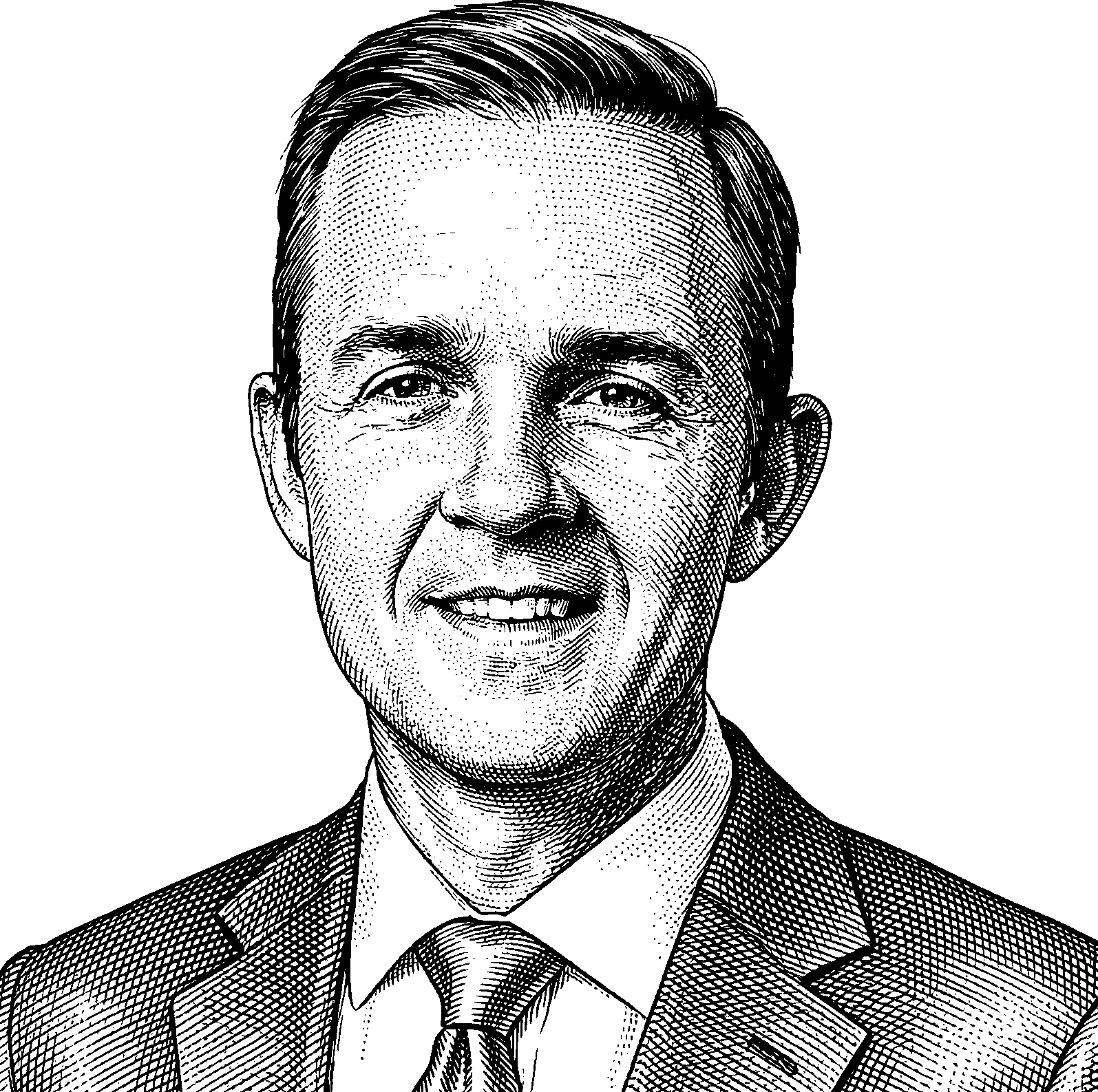
Carl Youngblood co-founded the MTA in 2006 and has served since 2021 as its President and CEO. He is engaged with the Association’s efforts to explore the intersection of Mormon theology and transhumanist philosophy. ¶ Among the many initiatives that Carl has been involved with, he has designed and built the Association's current website, which unifies all prior content in a single location using inspiring visuals and animations.
Transcript
Speaker 1
I’m pleased to introduce Carl Youngblood, who will address us next. Carl has been an avid technology enthusiast since early childhood and has been earning a living as a software engineer since 1997. He was a Mormon missionary for two years in Brazil, where his newfound aptitude for language led him to eventually get a degree in Portuguese from Brigham Young University and later a master’s in computer science from the University of Washington. Carl’s struggle to apply his faith meaningfully in today’s rapidly changing world led him to co found the Mormon Transhumanist Association in 2006. Carl is passionate about science, technology, religion, philosophy, and the performing arts. And he is vice president, director, and co-founder of the MTA. Can I hit buttons here?
Carl Youngblood
So they just gave away all my slides. Sorry about that. Hopefully you guys didn’t. You weren’t really paying any attention, right? Just a second here.
Carl Youngblood
It’s great to be with you. By the way, we actually do productive, pro-social, beneficial, humanitarian things with the money you give us. I just wanted to clarify that. Please, yeah, please send your. So far, it’s a very low amount between. Yeah, actually, it’s negative. Yeah. Um anyway okay let’s see
Carl Youngblood
Transhumanists are often characterized as technological cheerleaders, naively proclaiming that advances in science and technology will, in and of themselves, eventually and inevitably cure all human ills. There is certainly some justification for this stereotype, but the same insights that have led many in this movement to make surprising Positive predictions about the future have also caused many of them to explore potential challenges and existential risks more thoroughly and creatively than others. Religious transhumanists in particular have the opportunity to make some urgent and vital contributions, which is the subject of my talk today.
Carl Youngblood
Using the term disruption when talking about technology has become a cliche among Silicon Valley entrepreneurs, but it is particularly apt when we’re talking not about those who are building the new technologies but those who are left behind, those who are disrupted. The term was first used in the context of technological innovation by Acclaimed business management expert and happens to be Mormon as well, Clayton Christensen. He used it to refer to the type of technological innovation That takes incumbents by surprise and leaves them unable to adapt to new market conditions.
Carl Youngblood
So, there’s a number of alarming disruptions that are currently taking place much more quickly than many people realize or are prepared for. In general, we’re moving away from the centralized technologies of the twentieth century towards decentralized, headless replacements.
Carl Youngblood
Mass media is giving way to Internet-based news, streaming entertainment and aggregation services. Newspapers, mainstream media outlets and cable channels are rapidly losing market share. Increased consumer choice also means that citizens are less likely than ever to participate in a shared civic culture or narrative, which increases political polarization and gridlock.
Carl Youngblood
Viral sharing, filter bubbles and click-based ad revenues are incentivizing the spread of disinformation, so-called fake news, to the point where it is influencing politics and threatening national security. And Internet giants have a short term profit interest in allowing it to spread, unfortunately. They’re starting to work on it, though. I got something from Facebook saying they take this seriously. So we’ll see what happens.
Carl Youngblood
Centralized energy and utility grids are beginning to be replaced by rooftop solar. And battery storage. Power companies that planned their growth based on revenue projections from selling generated electricity are being relegated more and more to grid management. where there are far tighter profit margins and much less room for expansion. The exponential cheapening of solar technology took them by surprise.
Carl Youngblood
Blockchain technology has enabled individuals to anonymously transfer any amount of monetary value across national borders without reliance on any central authority. If you want to know how that even works, I be happy to discuss it with you. I’m really fascinated by this.
Carl Youngblood
It has also been rapidly adopted by the financial industry. We were surprised by that. I thought some there would be resistance, but they’ve quickly jumped on the bandwagon. And the second generation of this technology is now getting started.
Carl Youngblood
Smart contracts will make it possible to create unstoppable companies operating outside of all legal jurisdictions funded directly by anonymous stakeholders on the blockchain. They will also enable more transparent and secure governance in both public and private spheres.
Carl Youngblood
Eventually, we may even see more traditional functions of government such as health care, police and military protection. fire protection, whatever, managed and arbitrated through these kinds of anonymous exchanges.
Carl Youngblood
Blockchain technologies have also been instrumental in the emergence of a truly decentralized Internet that is no longer reliant on central authorities for name resolution. So you think the Internet’s decentralized, but it’s really not. There are still authorities in charge of Who gets what domain names, and they’re controlled by governments. Also, authorities in charge of blocking access to servers that are located in physical countries.
Carl Youngblood
But with this new technology that Really, after the NSA announcement, a lot of hackers really got PO’d with the NSA and other people, and they are now building. a blockchain based decentralized Internet that will be truly unstoppable. So the only way it’ll be impossible for countries to control Internet access without disconnecting their citizens entirely. which would completely handicap them in today’s economy. So we’ll probably see another land grab for domain names as well when that happens as people jump on these totally decentralized services.
Carl Youngblood
There’s recently been a lot of debate about so called sharing economy and the industries that it’s disrupting. Uber and Airbnb are the most well known examples of this trend, and they’re having a significant impact on the transportation and hospitality sectors.
Carl Youngblood
Uber claims that its current system is only the beginning. Eventually, it intends to get rid of drivers altogether and is heavily researching autonomous driving technologies along with Google, Tesla, and other car manufacturers.
Carl Youngblood
And although these technologies are expected to become available to consumers within the next decade, a more immediate disruption is already taking place in the trucking industry. Full driverless navigation is still difficult in urban areas where a high level of intelligence is required for safe navigation. But driving on interstate highways is a solved problem, and trucking companies are already making autonomous shipments. This happened a few months ago with Budweiser.
Carl Youngblood
This is especially alarming when you consider that truck driver is currently the most commonly reported profession on tax returns in the United States, employing over 3. 5 million people. Within the next five years, most of these truck drivers will be out of a job. Think about that.
Carl Youngblood
Reports of a strong economic recovery mask a more serious underlying problem. A growing number of low skilled laborers have ceased to look for work altogether, and therefore they’re not even counted in the commonly used unemployment rate. Most people, you know, we report unemployment at like 5%, 6%, 7%. It’s really probably more like 15% to 20%.
Carl Youngblood
The Economist recently reported on research conducted by Ann Case and Angus Deaton for the Brookings Institute. They said, quote, the authors suspect more amorphous long-term forces are at work. The fundamental cause is still a familiar tale of economic malaise. Trade and technological progress have snuffed out opportunities for the low skilled, especially in manufacturing. But social changes are also in play. As economic life has become less secure, low-skilled white men have tended towards unstable cohabiting relationships rather than marriages. They have abandoned traditional communal religion in favor of churches that emphasize personal identity, and they have become more likely to stop working or looking for work entirely. The breakdown of family, community and clear structures of life in favor of individual choice has liberated many but left others who fail, blaming themselves and feeling helpless and desperate.
Carl Youngblood
In his recent book, Men Without Work, demographer Nicholas Eberstadt provides compelling evidence of the problems emerging from these macros. Macroeconomic trends.
Carl Youngblood
He explains: here, then, is the underlying contradiction of economic life in America’s second gilded age. A period of what might at best be described as indifferent economic growth has somehow produced markedly more wealth for its wealth holders and markedly less work for its workers. This paradox may help explain a number of otherwise perplexing features of our time, such as the steep drop in popular satisfaction with the direction of the country. The increasing attraction of extremist voices in electoral politics, and why overwhelming majorities continue to tell public opinion pollsters year after year. that our ever richer America is still stuck in a recession.
Carl Youngblood
Though I don’t have time to delve further into these details, this brief survey of recent technological trends And the larger effects they’re having on society helps to demonstrate how profoundly our world is changing in good and bad ways. The challenges caused by these rapid accelerating changes are more than just logistical, and their solutions will require more than just scientific research.
Carl Youngblood
When we crafted the Mormon Transhumanist Affirmation, we deliberately placed a qualifier on our claim about the importance of science and technology in realizing human exaltation. We believe that these are critical And they are among the means ordained of God for this purpose. But other ingredients are also necessary, including compassionate outreach and prophetic vision.
Carl Youngblood
Long-held narratives such as those about rugged individualism, self-reliance, and national pride may need to be reframed in light of our world’s increasingly connected economy and environment. Many traditional religious narratives are failing to resonate with and inspire people as they used to, and are being rejected in favor of more virulent forms. of fundamentalism and extremism. Crumbling social structures are failing to sustain and support displaced workers at their time of greatest need.
Carl Youngblood
Evolving narratives and the changing needs of every era have fueled a constant demand for profits. P-R-O-P-H-E-T-S. And the accelerating pace of change in this, the dispensation of the fullness of times, has made the need for prophetic inspiration even more urgent. In the words of Emerson, the need was never greater for new revelation than now.
Carl Youngblood
The Mormon tradition offers many remarkable insights on prophecy and prophets. much of which I believe has been neglected and misunderstood as prophecy has become institutionalized.
Carl Youngblood
Most Mormons today think of prophethood and presidency in the Church as synonymous. And habitually refer to the president of the church as the prophet. At their local and general conferences, Mormons ritualistically affirm the top leaders of the church. As prophets, seers, and revelators, for the most part, confining their use of these terms to the church’s highest leadership. But the early Mormon conception of prophet differed in significant ways and can still be found underneath this institutional veneer.
Carl Youngblood
Joseph Smith’s view of prophecy and Revelation was radically egalitarian, a source of inspiration that rained down on men, women, and children. Indeed, Joseph’s spiritual journey began with faith in the premise that anyone who lacked wisdom could seek inspiration. When asked if he was a prophet, he replied, Yes, and so is everyone else who has the testimony of Jesus, for it is the spirit of prophecy.
Carl Youngblood
Joseph based his views on the biblical exhortations of Paul, who taught that people should be eager to prophesy. In fact, in the KJV it says they should covet to prophesy. And Moses, who when told that others were prophesying in the camp, exclaimed, Are you jealous for my sake? Would that all the Lord’s people were prophets, and that the LORD would put his Spirit upon them
Carl Youngblood
The Book of Mormon echoes this egalitarian view of prophecy. Nephi remarked that there were many prophets in the Jerusalem of his days, and Enos later wrote, That there were exceedingly many prophets among them. The book also teaches that the Lord shall speak to all nations of the earth, and they shall write it.
Carl Youngblood
And tells the story of two prophets, Abinadi and Samuel, who had no ecclesiastical authority at all. In fact, who condemned those who were in authority. It could be said that the Book of Mormon teaches that prophecy is a common privilege and even a duty shared by all conscientious souls of every religious persuasion throughout the world.
Carl Youngblood
And what are the characteristics of a prophet? Prophets discern the signs of the times. They are keenly aware of the zeitgeist. They perceive a pressing need or injustice, and they articulate a call to action that resonates with and mobilizes people. They start social movements.
Carl Youngblood
Contrary to popular opinion, prophets rarely predict the future. Rather than being foretellers, they are forth tellers. presenting visions of what the future could be in a way that compels people to realize them. The most potent form of prophecy is self-fulfilling.
Carl Youngblood
Much in contrast with modern LDS portrayals of Jesus and other prophets as meek and gentle souls who never swore. and never raised their voices, and who were unceasingly loyal to religious authority, prophets are iconoclasts. ridiculing fraudulent piety and corrupt traditions, seeming even to betray their own religion and culture as they do so.
Carl Youngblood
Imagine the establishment’s reaction to Isaiah when he proclaimed Your new moons and your appointed festivals my soul hates. They have become a burden to me. I am weary of bearing them. When you stretch out your hands, I will hide my eyes from you. Even though you make many prayers, I will not listen.
Carl Youngblood
Abraham J. Heschel, in his classic work on this topic, The Prophets, explains. The striking surprise is that prophets of Israel were tolerated at all by their people. To the patriots they seemed pernicious, to the pious multitude, blasphemous. to the men in authority seditious. What gave them the strength to demythologize precious certainties, to attack what was holy? to hurl blasphemies at priest and king, to stand up against all in the name of God. The prophets must have been shattered by some cataclysmic experience in order to be able to shatter others.
Carl Youngblood
Prophets have a seemingly disproportionate sense of indignation over the injustice in the world. Jesus of Nazareth, for example, was never more angry. Than when he criticized the Pharisees for their religious arrogance and their oppression of the poor, calling them a generation of vipers.
Carl Youngblood
Heschel explains further. Quote, The Prophet’s preoccupation with justice and righteousness has its roots in a powerful awareness of injustice. That justice is a good thing, a fine goal, even a supreme ideal, is commonly accepted. What is lacking Is a sense of the monstrosity of injustice. Moralists of all ages have been eloquent in singing the praises of virtue. The distinction of the prophets was in their remorseless unveiling of injustice and oppression, in their comprehension of social, political, and religious evils. They were not concerned with the definition but with the predicament of justice, with the fact that those called upon to apply it defied it.
Carl Youngblood
Prophets warn of potential calamities if their voice is not heeded but their power consists in turning people from their destructive course rather than in seeing their warnings fulfilled, which brings them no pleasure, setting aside a few rather unprophetic slip ups on the part of Jonah.
Carl Youngblood
Heschel elaborates The words of the prophet are stern, sour, stinging, but behind his austerity is love and compassion for humanity. Ezekiel sets forth what all other prophets imply. Have I any pleasure in the death of the wicked? says the LORD God, and not rather than he should turn from his way and life? Indeed, every prediction of disaster is in itself an exhortation to repentance. The prophet is sent not only to upbraid, but also to strengthen the weak hands. and make firm the feeble knees. Almost every prophet brings consolation, promise, and the hope of reconciliation along with censure and castigation. He begins with a message of doom. He concludes with a message of hope.
Carl Youngblood
While many ancient and modern accounts describe or imagine gods as being indifferent to the plight of humans and concerned with Far weightier matters, the prophetic conception of God is one of deep attention to the seemingly trivial details of human actions.
Carl Youngblood
Says Heschel, To the prophet, no subject is as worthy of consideration as the human plight. In the prophet’s message, Nothing that has bearing upon good and evil is small or trite in the eyes of God. What the prophets proclaim is God’s intimate relatedness to us. It is this fact that puts all of life in a divine perspective. in which human rights become, as it were, divine prerogatives. Humanity stands under God’s concern.
Carl Youngblood
This image of a deeply connected and compassionate God is echoed in the Book of Moses’ account of the vision of Enoch. And it came to pass that the God of heaven looked upon the residue of the people, and he wept. And Enoch bore record of it, saying, How is it that the heavens weep, and shed forth their tears as the rain upon the mountains? And Enoch said unto the LORD, How is it thou canst weep, seeing thou art holy, and from all eternity to all eternity?
Carl Youngblood
The LORD said unto Enoch, Behold, these thy brethren, they are the workmanship of mine own hands. They are without affection, and they hate their own blood. Wherefore should not the heavens weep, seeing these shall suffer?
Carl Youngblood
These characteristics of keen attention to human interests into the specific challenges of our time, compassion for the less fortunate, abhorrence of their oppression, and courage to stand up against injustice are the hallmarks of prophecy and should be the aspirations of every true Mormon.
Carl Youngblood
Heschel admonishes us, these characteristics of keen attention sorry, here we are. If intense regard and concern for humanity is the mark of a moral act. then inspiration of the prophets, in which God’s regard and concern for humanity are disclosed, and in which the prophet is entrusted with a mission to help the people, must be viewed as an eminently moral act. the moral aspect sets the prophetic act apart from intellectual, artistic, and mystical experiences.
Carl Youngblood
The vigorous compassion and creativity of a true spirit of prophecy is what will be required for humanity’s successful transition through the turbulent labor pains of our transhuman era. My confident hope Is that as secular and religious institutions falter and buckle under the stress of accelerating change, they will, in their desperation, become more and more willing to try the remedies prescribed to them by those of us who take up the prophetic mantle and articulate compelling visions of the future
Carl Youngblood
There will always be a need for prophecy. Our mastery of present problems is never sufficient to handle them with ease. Ingenuity and inspiration are indispensable. Art always goes before science. May we answer this call and make diligent use of both of these. Thank you.