Panel Discussion with Keynote Speakers
This panel discussion features keynote speakers Liz Parrish, CEO of BioViva, and Melissa Inouye, a scholar of Chinese Christianity, exploring the intersection of life extension, gene therapy, and religious meaning. Parrish discusses her company’s work on regenerative gene therapies and the ethics of expanding access to such treatments, while Inouye reflects on how her experience with cancer has deepened questions about embodiment, vulnerability, and divine capacity. The conversation touches on Mormon theology’s unique views of God’s body, suffering, and human potential.

Lincoln Cannon is an American philosopher and technologist who co-founded the Mormon Transhumanist Association in 2006, serving as its president from 2006 to 2016. He is a leading advocate of technological evolution and postsecular religion, combining software engineering expertise with degrees in philosophy and business. ¶ Cannon is also a founder and board member of the Christian Transhumanist Association. He formulated the New God Argument, a logical argument for faith in God that has become popular among religious transhumanists. His academic work includes “Mormonism Mandates Transhumanism” published in Religion and Human Enhancement: Death, Values, and Morality (Palgrave Macmillan, 2017) and “Transfigurism: A Future of Religion as Exemplified by Religious Transhumanists” published in The Transhumanism Handbook (Springer Verlag, 2019). ¶ Mormon transhumanism, as articulated by Cannon, holds that humanity should learn how to be compassionate creators. This idea is central to the Mormon theological tradition, which provides a religious framework consistent with naturalism and supportive of human transformation. Cannon’s work bridges religious faith with scientific advancement, advocating for the ethical use of technology to extend human abilities in ways consistent with a religious worldview.
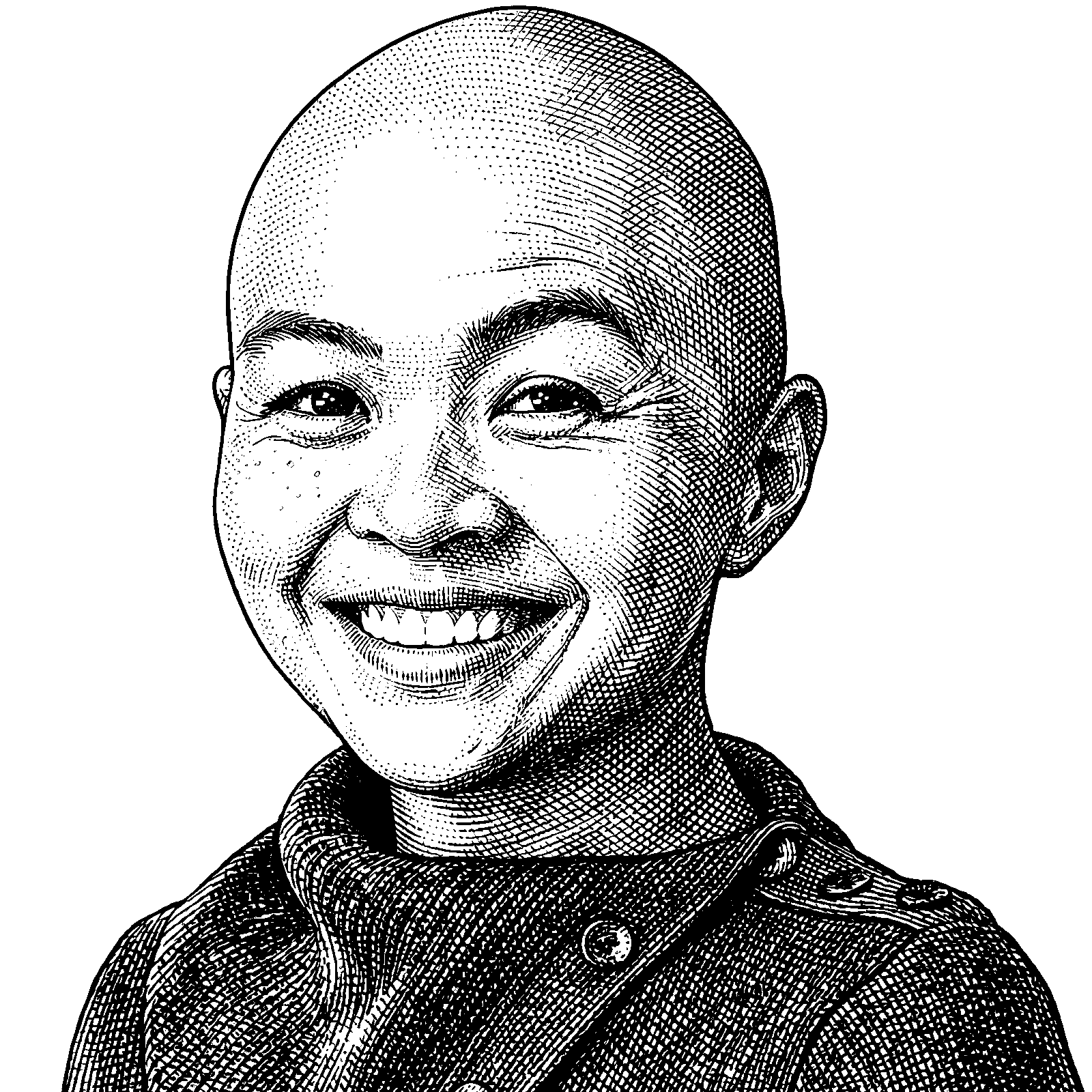
Melissa Wei-Tsing Inouye was a scholar and historian who explored the intersection of religion and culture in Greater China, global Mormonism, and 20th-century Chinese Christianity. She received her PhD in East Asian languages and civilizations from Harvard University in 2011. Her major work, China and the True Jesus: Charisma and Organization in a Chinese Christian Church (Oxford University Press, 2019), provides a comprehensive history of the True Jesus Church and charismatic Christian movements in modern China. ¶ In addition to her academic research, Inouye was a prolific writer and essayist known for her candid reflections on faith, motherhood, and the global church. Her memoir, Crossings: A Bald Asian American Latter-day Saint Woman Scholar's Ventures through Life, Death, Cancer, and Motherhood (2019), and her subsequent book, Sacred Struggle: Seeking Christ on the Path of Most Resistance (2023), examined the role of suffering and community within the Latter-day Saint experience. She was also a founding member of the Global Mormon Studies research network and served on the advisory board of the Neal A. Maxwell Institute for Religious Scholarship. ¶ Inouye passed away on April 23, 2024, at the age of 44, following a seven-year battle with colon cancer. She is remembered for her work bridging Chinese history, global religious movements, and transhumanist ideals, as well as for her commitment to fostering a more inclusive and globally-aware religious community.
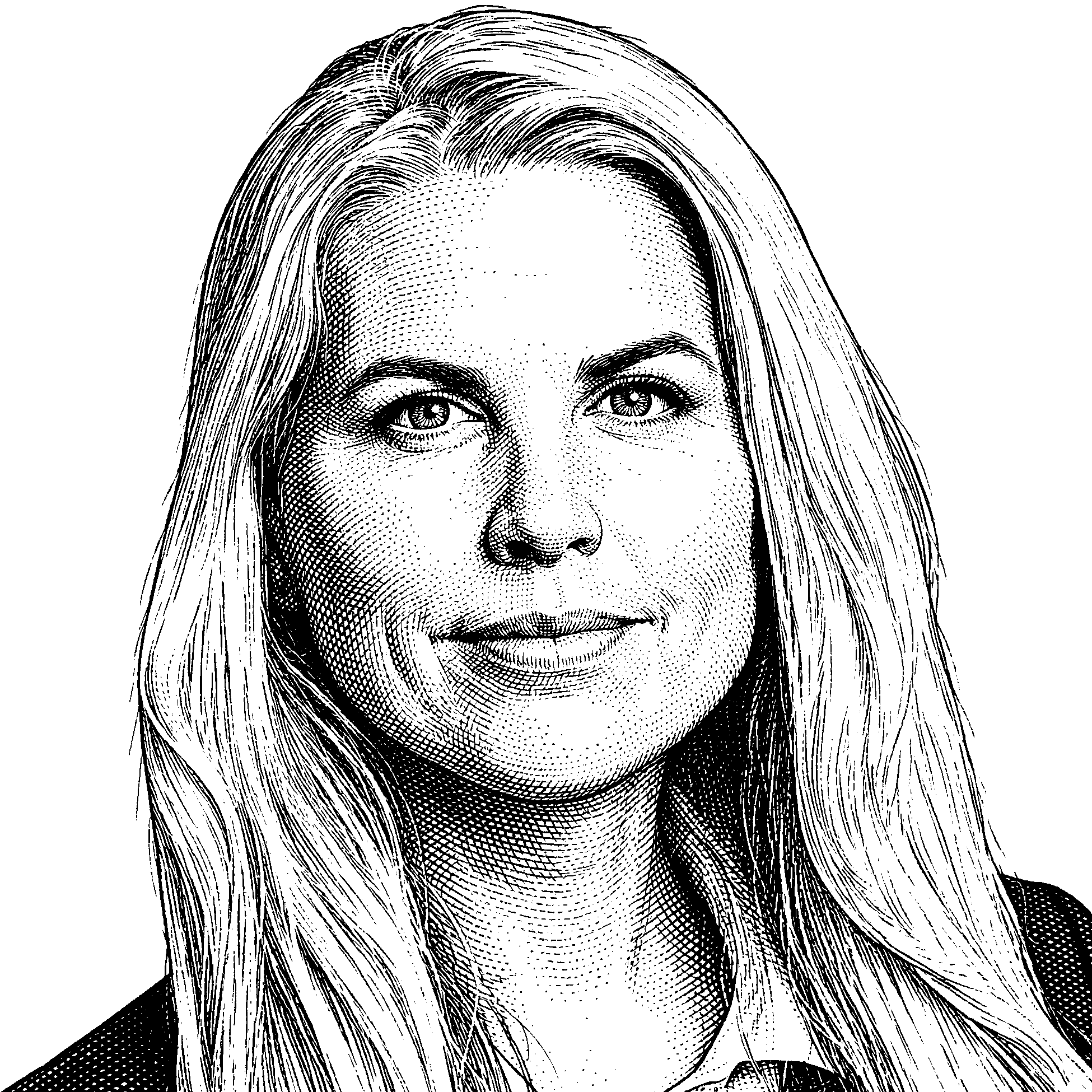
Elizabeth Parrish is the CEO of BioViva, a biotechnology corporation focused on combating cellular aging through the development of regenerative therapies for muscle and tissue. Driven by a humanitarian vision, BioViva strives to make these potentially life-saving therapies accessible to all. ¶ Parrish is recognized as a humanitarian entrepreneur, innovator, and a prominent voice advocating for genetic cures. As a strong proponent of education and advancement in regenerative medicine, she is a motivational speaker within the life sciences community and actively engages in international educational media outreach. She is also a founding member of the International Longevity Alliance. ¶ Further demonstrating her commitment to scientific discourse and discovery, Parrish is an affiliated member of the Complex Biological Systems Alliance (CBSA), a platform for highly gifted individuals. The CBSA’s mission is to advance scientific understanding of biological complexity and the origins of human disease. She also founded BioTrove Investments, LLC, and BioTrove Podcasts, initiatives dedicated to facilitating learning and funding research in the field of regenerative medicine. Though not raised religiously, Parrish expresses a reverence for nature and emphasizes the importance of self-reliance and action in achieving progress, urging individuals to actively utilize the tools available to them rather than waiting for others.
Transcript
Speaker 1
Thank you, Liz and Melissa. It’s awesome to have you both here. And what we’re going to try to do for the next half an hour is Engage in more questions with the audience, but also we’re going to work a little bit at trying to engage the two of you with each other. Okay. You come from very different backgrounds, have very different experiences, talents. Abilities, but hopefully, you’ll notice that we find that what you both do is very synergistic to our interests. And so, watching, listening to you two maybe respond to each other’s opinions and perspectives would be something that I know we. Would all value. So, as we take some questions, if you have thoughts on what Liz or Melissa says, then please share those too as we go along. All right, so let’s go ahead and open up for questions. That you haven’t been able to ask yet that you would like to direct at us up here.
Speaker 3
Liz, she’s about to ask us, then I can. Mentioned a couple of times that Louise you and Presumably, by the way, the call holds the view that health access should be egalitarian, there shouldn’t be health access gap. Beyond asserting this, are there any policies or structures that Are we going to speak to actually make this happen rather than simply saying control, please vote the right way, so to do this?
Speaker 2
Yeah, absolutely. So that’s a really good question. So what are we doing? Well, we’re doing a couple of things. One thing is we’re giving access to gene therapies now so that we can ignite the area, we can ignite investment. So whenever you have a nascent technology, whether it’s the first supercomputer or the first electric car, it costs a lot of money. Money, and that’s what we see right now. We need to get a therapy built for someone, GMP, and it costs an enormous amount of money because it’s a one-off therapy. But we know that if we can get 10 candidates signed up at the same time, we can bring down the cost significantly. Like, sometimes up to To 70%. So, one thing that we’re doing is expediting the use of the therapeutic so we ignite an industry and get everybody interested in it. And the second thing is we’re starting a company, an LLC for manufacturing. And in that way we can build in in large amounts and not only that, just cut the costs down significantly and stop this huge profit off of the top of Of an area of medicine that is significantly important to humans.
Speaker 5
On a related note, you mentioned earlier in your talk. The doctor may tell a 73-year-old that they’re healthy, but they’re not really. When we talk about health generally, and especially as we start to enable access to a broad range of people. To become more healthy. Is there a point at which there’s sort of an extra healthy or so forth that would be optional? I mean, where do you kind of draw the line of what we would consider healthy generally? Seems like. Especially in a transhumanist vein, there are therapies that would then go beyond what we would consider normal health. Right. And I’d love to know kind of what your thoughts are on that.
Speaker 2
Yeah, so people often talk about what is the difference between an Enhancement and preventative medicine. So they’re kind of synonymous. If you take an immunization, you’re enhanced. You’re enhanced against getting a disease. If you take antibiotics, you’re enhanced to probably survive the bacterial infection that you have. So it will definitely slur the lines in those two areas. And I don’t mean to insult people as we age that we’re not healthy, but we need to come to the path of understanding and starting a conversation. And actually, I think that’s where you play in significantly. The minute you insult somebody, you actually shut them down to a conversation. And what I really like about what I’ve seen here is this idea of a movement, of what Micah called the super organism, that we have the Potential to affect people, and by a multitude of different mindsets and different ways of communicating with one another and having different people going out and there do it, I can’t do it on my own. We can actually reach more people and Create critical mass.
Speaker 2
But as far as biologically, what are we looking for in a human? Well, when you’re an embryo, you know, by the time, from an embryo to the time you’re born, your telomeres go through 3,000 basic pairs of attrition. And up to 10,000, and you only have 5,000 more attritions left before you’re generally diagnosed with an end-stage disease correlated. So we need to become more than what we are, even. Born as. Okay, so don’t get development mixed up with biological aging. You’re biologically aging from the point of conception to the point of your death. Development is just a stage of growth hormones and things like that that create a Young organism to an adult organism. So the aging process and damage is happening throughout there. And scientifically, we can actually now see in some people signs of Alzheimer’s in their 20s, signs of atherosclerosis around the same ages. We’re going to become Better and better at predicting what’s going to happen to you down the road. But integrating the whole situation here is we need to have a conversation.
Speaker 1
You know, on that note, I’m wondering, Melissa, how do you think that? The people in the true Jesus church would react to Liz’s presentation today?
Speaker 6
Well, they’d probably tell you to pray really hard. I actually have this really interesting story. So there was this, I guess this. A different kind of medicine, but there was this lady in the 1930s, and she was a nurse, a trained nurse, in the city of Wuhan in China. And she was also a member of the True Jesus Church. And one day, some guy. Came into the Trudesus Church and he was sick and he was looking for someone to heal him and she’d never done it before. But she put her hands on his head and he said, he cried out and he said, Why is it when you put your hands on my head, my whole body burned? And then apparently he was healed. Now, on the other hand, Wei Enbo, the founder of the True Jesus Church, was theoretically miraculously healed of tuberculosis in 1916, and then he unhealed himself, or he died in 1919. It’s always hard to kind of, you know, it’s not really apples to apples when you’re talking about religious healing and medical healing.
Speaker 6
I actually have a question, not a question, but kind of just a comment. I know how it feels to have. to have something going on with your body that’s deeply frustrating and that that’s like really wrong. I have cancer right now, actually. And I’ve still got my port installed. I think I’m technically a cancer survivor ‘cause I’m past chemotherapy. Does that make you a cancer survivor? I don’t know how long it’s going to last. So I know that feeling of what’s up with you, body, you’re young, healthy, I took care of you, and what’s up with this?
Speaker 6
And then I guess one question that I have, though, is that the process. Of having cancer has made me feel, you know, has like provoked all the existential questions that you see in the good place. And in some ways, it’s been really good for my writing. It’s been actually great for my writing. I’ve written a book manuscript because it’s, you know. Provoke those questions. So, I guess my question is: if we get older and older, will that somehow, I don’t know, not diminish the meaning of life, but does it, if we have more and more control over life, then is that sort of a sort of illusion? Like, if we have control over our health, There are a lot of other things we don’t have control over. I mean, how does that how does that affect the meaning of life? What do you think about that?
Speaker 2
That’s a good question. I think that right now what we do is we live h historically by a lot of myths. And so, what we do is we construct reason and purpose around our situation, right? So, when my son got sick, I needed to have purpose, I needed to help kids. And then I went out there, and so it can be constructive or Destructive, depending on the outcome. And I think that living, I think that we’ll always have problems, okay? And I think that living by the myth that aging creates. Some sort of meaning in life that Alzheimer’s and cancer and heart disease creates meaning. I just don’t, I cannot believe that that is possibly true. I think that we fall into time really well. And when that’s not a problem, just like when infectious disease wasn’t a problem, we will fall out of the necessity for the rituals that we had at that point. And again, I am not against religion at all, even though I wasn’t raised religious. Almost no understanding of it, but religious people are the original immortalists. You know, the rest of the people are just kind of living day to day. So I have a high respect for starting at the level of that we believe in health and happiness. And I see Jesus as this great player of curing disease, and then I see him persecuted and prosecuted for it. And it perplexes me. And I had a lot of questions about that today to different groups that I sat with that I would like to understand. But I don’t see this as a movement of one group. I see this as a movement of all of us. And actually, it is a natural phenomenon when people become diagnosed with something that they’re actually freed up because we spend a lot of Of time worrying about what’s going to happen, and it has been written about over and over again how empowering it can be to get a diagnosis, become very productive around that, and then I hope you are in complete remission and we you. You never have to face cancer again, and that you live so long with me that when you do, we will have a fast fix for it because those are coming, you know? So that’s all I can say.
Speaker 6
Well, I have eaten a lot of ice cream. That sugar and cancer are two bad things. Like, whatever. Ice cream. Life is short. Right now it is.
Speaker 6
I guess the point is: life will always, I mean, because one of the kind of major kind of premises of Mormonism. Is that the purpose of having a body? Is that I kind of have the deep frustrations that come with a body. And I felt like, in some way, I never really understood that because I had a healthy body. I ran marathons. I was frustrated when I injured my knee or something. But that’s not the same thing as being frustrated. Because you have cancer. So I guess I’m not, you know, I’m just looking at your chart of how the ways we die has changed. I guess I’m not frustrated because I have tuberculosis or measles or those kinds of things. I guess we can just all be frustrated. In different ways, there’s always going to be some way to kind of come up with challenges and go against them. But I guess, oh, go ahead. I see you raising the mic.
Speaker 1
Yeah, you just, you provoked a thought. You know, in Mormon scripture, we have. The image of God weeping. So being a God in Mormonism is not always hunky-dory. And in Mormonism, also, God is embodied. And you mentioned a perspective on the purpose. Of embodiment. And I’m interested if you would elaborate on those two themes I just pulled out in relation to what you said about the purpose of embodiment. In Mormonism, God has a body. Is God experiencing embodiment? For the same purpose that you feel you might be.
Speaker 6
Right, well, you know, there’s all sorts of deeply painful and frustrating things about different conditions that people have. But I guess. What I would say, I think Latter-day Saints believe that God’s power comes from overcoming challenges, and it’s not about life is not. Out of competition, lots of things happen to you. And I guess what I’ve discovered is that we think about God as this kind of all-powerful being who has all this capability and is kind of impervious to problems. But but what I’ve noticed about just kind of experiencing sickness myself is that like vulnerability is very very It’s very powerful. It changes the way that you talk to people. It changes the way you think about life And I think it increases your capacity like in a strange way. Like that like um like the um like the emptiness you feel gives you capacity. But what do you think about that?
Speaker 2
I 100% agree. I think that there’s no place in the world for ego anymore. And I think that when we don’t have things like cancer and heart disease and whatever else, we’re going to still have people starving. And we’re going to have humility. I think we should be humiliated. I do not think that we are on the path to becoming gods and goddesses. I think that we’re on the path to, at best, upgrading the human and understanding ourselves better and the world better. I think that it should be a process that we take quite seriously and I don’t think that there’s room for egos here. I think that humility is a really important thing and I feel like I experience it on a daily basis. And sometimes very strongly, and sometimes not. And I try to take it as an important part of my life, and as you do, and as a way to open up and to see our imperfections. And I think that it opens me up to criticism. You know, our company has always been open to criticism. Criticize us and help us fix the problem. Help us see what the problem is because we have to do this together. I cannot do this alone. I cannot stand alone and try to create a world of safe therapeutics. I have to, you know, people have to help me, and whether that’s safe therapeutics or communicating with people and sharing. Your experience, which is incredibly powerful, and working through your networks and me working through mine, we kind of have to work towards the same goal, which is a a malevolent society that that has a reason to live much longer with each other. Because if we all have a zero sum game that we’re just looking for our own end points, We’re going to lose or end up with a world that we don’t want.
Speaker 6
So, this is maybe a silly question, but so I guess you’re talking about how we can live longer to prevent certain diseases like cancer and atherosclerosis Sclerosis and kind of like the big ticket items. What about things like, for example, bad knees and bad eyesight that you can’t completely fix? I mean, have you seen The Good Place? So you know like how there’s that lady in the middle in the middle place where she has like all the videos she wants, but they’re all this certain kind of show. Or like, you know, she’s got you know, she’s got complete freedom, but like in this one place. Yeah, like, what if you like have a really long life but you have Bad knees and bad eyes, and you know, like, yeah, how does it solve everything?
Speaker 2
Well, I mean, this is the first inklings that we really had that we could move regenerative medicine forward to the whole body was because the work they’re doing. On knees and eyes. So, in gene therapy, one of the big advancements has been with congenital blindness and now macular degeneration. So, these are like kind of the first therapies. Well, see, the eye is immune-privileged, and in order. To treat the eye, we can actually target most of the cells in the eye. Whereas we go for a whole organism and you can see biology is rough, right? The bloodstream is going to only hit so many cells, and we’re going to have a hard time. But when you work with the eye, it’s actually a closed system, and the immune system. The system will not attack it in your body. It’s immune privilege. So these are the areas that we actually got the first glimpse, no pun intended, that we could actually regenerate a whole body. So, yes, it is in all of those little things and building. Up from those little things. So, our company right now, one of the things that we’re looking at is using regenerative gene therapies in organ-specific. And by doing that, it’s the first time we can look at a gene therapy that won’t cost much more than people who go and get stem cell work. Or get plastic surgery or something like that. It’s around $20,000 to $65,000. It’s in that range. And the reason that we’re doing that is because we want to regenerate a whole organism, but a whole organism is so difficult, and yet we’ve gleaned so much interest from. Eyes and knees and joints, that we think that this is the place to start because if we can regenerate a kidney or a liver, now we’re onto something continually trying to transduce a whole organism with gene therapies that we really don’t have the quite the right. Delivery methods for yet is costly and only for the people who really, really need it. But yeah, looking at organ-specific is exactly where we need to go to make cost-effective therapies and to prove that we have some evidence. They’re already doing that and achieving it.
Speaker 6
Because in my mind, I had this kind of like idea of whack-a-mole. You know, the game of whack-a-mole just lasts longer, right? Yeah, the whacking down the sounds really difficult.
Speaker 2
So you can imagine if we can use that power of the knees or the eyes. And create a therapy for the whole body in the next five or six years that at least slows the process. Then we’re onto something. Now we’re onto tangible, you know, we’re not having an argument or whether this will work or won’t work. We actually have evidence.
Speaker 1
Liz, if we lived in a world where we had solved a lot of these problems and we were living a lot longer, what do you think would be the kinds of experiences That we would be having that would generate purpose and meaning in life.
Speaker 2
Yeah. So I think that that has to deal with how we build the bridge to the other side of the mountain. So, what do we view when we view getting over there? It’s all about me, and now I can, you know, amass all of the things I want. Are we going to look at a society as a whole? What kind of world do we want to live in? And I think it’s an incredibly important question that we need to. Make sure that we’re vetting because, like, when the gentleman was talking about AI, I really, everything he was saying actually was referring to humans. We don’t know what you’re thinking, you may be having benevolent thoughts, you’re going to hide what you’re actually really. Trying to achieve. This is all a very, very human thing. And we’re already dealing with it. So, you know, how do we create tangible societies? Well, we have to start working towards things. And we have to realize that humans right now are only humans. We can become better than this. We are limited by our desires, our lusts, and things that are really actually quite short-sighted. I think the human of the future is not only robust and regenerates as fast as they degrade, but they Actually, we’ll have some sort of control over our hormonal system so that we’re better thinkers, we’re smarter, we’re working for each other instead of just for our own means. And anyway, I’m not sure if I answered this. Question, but I just think an important part of looking forward is actually looking at bigger pictures and how do you get involved in making the world a better place and not just waiting for other people to solve the problem, whether that be the environment or feeding the world or Helping patients who are going through cancer therapies have the support that they need right now in order to get to the next stage. Well, we’re always going to need that sort of support. We’re always going to have problems. But as humans, we fall into time really well. Look how we’ve. Fell into increasing lifespan by three times for most people, just out of doing some what at that time was very technologically advanced but very simple things. And yet we still complain about time. As long as we focus our time then on constructive societies that have a network like you do, that are working towards something better always and not ever saying we’re done, I think we’ll be okay.
Speaker 1
Thoughts on that, Melissa? Um do you want to take questions or respond and then Unless you had something that we wanted to say and then we’ll go to questions. Let’s go to a question. Right. Who had their hand up first, be honest. We’ll go right there.
Speaker 7
So the China, as I understand, is way ahead of us in certain gene therapy, genetic engineering. And I’m wondering if this is something you could speak to, is do you think that the The different culture of China is enabling these things. Maybe they’re lax in Christianity. And if you want a constant reference to the Taiping Rebellion as part of it, that would be great.
Speaker 6
I don’t know how I can work the Taiping Rebellion into everything. I do try to work it into a lot of. Things. There are things in China that are medically possible because of the culture that aren’t possible here. You can get an organ transplant in two weeks. How does that happen? Where does the organ come from? I don’t know that much actually about gene editing or gene therapies in China. It is true that there’s a different set of kind of ethical and ideological Constraints there. China has a kind of layered ethical system. So the bottom layer is the idea of Confucian values, the idea that the most important thing in life are relationships. And inhabiting a certain role correctly. And then layered on top of that, you’ve got Marxism, which is a kind of utopian ideal about getting to new places really fast through great new technology. They could be health technologies, or they could be agricultural technologies, and so on. This idea that kind of ordinary people have this power that you’ve got to unleash. So, I really can’t speak to the actual genetic therapies going on in China. Right now, but the culture’s really different in terms of is it okay to do things to human bodies, you know, to do experiments with human bodies or to try things out? And I think that it’s true that. There aren’t the same, you don’t run into the same ethical problems. You also don’t run into the same political problems. If people started creating superhumans in America tomorrow, there would probably be some sort of outcome. Outcry, but there’s less outcry in China as well. So I think that’s obvious. That’s why I didn’t want to let people record the video that I is that obvious. No, that me record is it now. So so there’s just a lot more regulation of the of the media. And you know, there’s no outcry over the fact that, you know, political prisoners’ organs are harvested. and sold to people who want organs. You know, that’s yeah, that’s problematic. Yeah. Yes?
Speaker 8
So I’m a primary care doctor and family medicine has its roots here. in America and just now starting to come to China. In the past China has had more of an emphasis on specialty care internal medicine. But as a family doctor we see prevention, especially primary prevention, like vaccines. Public health to extend lifespan as a major part of what we do. And I totally agree with you that we should be spending our money on prevention and not on lumping up the mess after people have had 65 years to accumulate genetic. Problems, right? And environmental exploration. But one of the things that worried me during your presentation is that I think that what you’re proposing this may. More of a, I don’t want to use the word, but I can’t think. More of a cavalier, sort of autonomous. I know the risk, I’m willing to take it to further the cause of science. You know, and so having smaller groups who can do more invasive and more potentially efficacious stuff, going in and knowing the risk, I’m assuming this, you know, that they’re they’re well informed, they’ve gone through the process of informed consent to with a physician. Whoever’s going to administer these tests. You know, of course, there’s statistical issues with small beliefs. Is the group data officially to support the recommendations coming out of this study? But the bigger the number of people, obviously the better the power. I think that that’s one area that where American science and the way that the regulatory agency is set up is really, I know it’s a hindrance to farming. But it has probably saved countless lives. There are probably many, many people who are safe and healthy today because those harmful substances were screened out through that rigorous process. So I know there are dumb faults, but there’s also a lot of Benefit of that. And a lot of that isn’t done properly in other countries, especially like China, and people do get harmed. And I know that that’s a risk too, right? We address how much risk are we willing to assume? And how do we How do we compensate and care for those people who are harmed by what we do in the pursuit of this better community?
Speaker 2
Right. So, humans are vastly risk adverse, and actually, it has slowed science. Nearly to a stop because you can actually create a lot of really what seem like sound arguments that actually don’t hold water. So, for instance, in bioethics, we say a drug should be safe before it’s given to humans, and yet. Yet we pass unsafe drugs all the time. For instance, statins have the potential to help one in 164 patients, but one in four will get type 2 diabetes, and 1 in 10 will suffer from dementia. And the list goes on of the detriments of the drugs that we already have. We’re looking at gene and cell technologies that really, in small cohorts, should be a hit or a miss. And not only that, we’re only doing pre-preclinical data. These drugs still have to go to the regulatory service. What we’re offering is a glean of how powerful the substances are that we’re using. And everybody is taking a risk. So if we choose to not let people have access to these drugs, Who will account for the 40 million people that die every year waiting for access? So we cannot slow things down because of risk aversion. People are dying, and they are going to continue to die until we have. Proper therapeutics, and the only way to vet them is through human bodies. All of the doctors that we work with have no intention of hurting a person. Anyone can die for any one of reasons, but moving that technology forward, I think, is more. honorable than going to war to fight for a resource that we that we no longer need. We’re a variety of things that people Already swim with sharks and jump out of airplanes. So we choose to take these chances, and I think that every one of these persons is a hero, and every one of them is informed. They have consent, they have a multitude of documents they have to sign, and they need To talk to medical doctors before they go through it. But I would not discourage people from coming up and taking a stance because, again, like I said, we’re 100% guaranteed to die of the diseases that I showed you. And once you get a diagnosis, Staring down the barrel of a gene therapy is nothing in comparison to the grief that those diseases cause. So, yeah, we’re going to have to stand up, we’re going to have to get tough, we’re going to have to reanalyze bioethics. Ethics and what they actually are, and we’re going to have to let people do informed consent treatments that may or may not turn out to be the best outcome.
Speaker 6
So, is gene therapy, does it matter what a person’s race or gender is, or is it just the humanness of them? Because I know, for example, in certain drugs. Will be tested. They’ll be tested among a white population, and then they won’t work for like an African-American population, and they’ll actually have adverse effects on them. Is it universal?
Speaker 2
So when we look at the human genome, we’re Almost identical down to just a few percentage of our genes, but those genes do make a big difference. And so, you know, as we understand the genome more, we’ll understand better how things will relate to us. But the gene therapies that we’re starting with, remember, they have. Animal data and they have human toxicology data and some human use, right? And they’re universal genes. Increasing muscle mass and lengthening telomeres is the same gene therapies for everyone. But then as we work into population, And we start to look at, well, things that they’re already looking at, like monogenic disease, hemophilia B, sickle cell anemia, lipoprotein, lipase deficiency. We see those running in certain groups, and that’s when gene therapy, when the gene therapy is. The future is we’d be able to deliver a couple of genes that we would deliver to the whole population to make them more robust, and then we would deliver succinct genes to you depending on what the weakness of the system maybe was. I like that term, succinct genes. Genes? Are there like verbose genes? There are actually different alleles of genes. And so, and genes code for the same gene now we know can code for a multitude of different proteins. So, actually, we can cut it down. To just code to the protein that we want it to make. So it’s getting more and more interesting. But just to give you an anecdotal of how far away we might be, there’s a group in Finland and they all share. An allele and they all get heart disease really young. And so, you know, science was sure that this allele was like the driver of heart disease, and now we better look out for it. But then a group was found in Malaysia that don’t get heart disease or get it very, very late, late, late. Onset that have the same allele. So we are a long ways from understanding, but actually, by doing gene therapies, we can better understand even how the genome works because we’ll see how we’re affecting the methylation of different genes. And how the cells may behave differently, just like when you exercise it, it epigenetically changes your cells. And I don’t think anybody has asked, but maybe everybody already knows what gene therapy is. Because I don’t think we even explain. What we’re doing. But anyway, gene therapy is a huge umbrella that encompasses a lot of different types of technology, whether that’s putting one gene in as an exosome where it just lives outside of the chromosome and coats. For a gene, or we can integrate where we actually put it into the chromosome. Or now, what you’re hearing more and more about is editing, even though editing’s been around for a while. CRISPR technology makes it cheaper and more viable. Than ever, more accurate than ever. So, gene therapy is many things. So, you know, and generally, how we deliver gene therapy now is through a viral capsid. So, it’s what used to be a virus, but we take its ability to make You sec out, and we use it because it docks with a cell really well and delivers information, which is the genes. And so this technology is a bit limited right now, and we’re hoping for better technology in the future that will make the proliferation. Of gene therapies throughout your body much easier, but right now the viral capsid, just the part that docks with the cell, is the best way to get it in because you basically have to be able to signal to a cell to put something into it. So, other things that are being Looked at are lipids and sugar molecules because cells like to suck those up. So we need something that the gene the cell likes to bring in to bring the DNA material in. So, just in case I didn’t clarify that.
Speaker 9
This is a Mormon and a transhumanist group. So when you said, Liz, that we’re not trying to be gods or goddesses or anything like that. We’re not what? Trying to be gods or goddesses. Lincoln made the point, I just wanted to make it out loud, that for us, it is not this idea that a god or a goddess is beyond compassion, it’s beyond pain. In fact, they might be the most pain-filled entities in the universe. It’s so it’s it’s a big deal on the downside as well as the idea of love and compassion. it can be maximized. It’s hard to in other words, who would want that if I can’t handle you know what I’m trying to say? God God isn’t this being for us that is this Platonic ideal. Yeah, Platonic ideal beyond all. Very much hum human emotion as well.
Speaker 2
I understand better now. I sat with a group um during the breakout sessions and um the the topic was w do we become gods and goddesses or whatever. Isaac goddess. I love all the goddesses. And I just, my take on it was no immediately because that’s something bigger to strive for, something integrated or a consciousness that, but different people had. Different ideas, and really, where we all, when we didn’t come together, it’s because we didn’t have a definition for it. And so, me, especially having no definition for it, I’m at an impasse. So, I would love to sit down and have described. To me, what that is, and maybe for everyone it’s different. So I don’t know.
Speaker 1
Melissa, what is God?
Speaker 2
I mean, I meditate, and I feel when I Meditate, I feel connected. I mean, that’s how I ended up here: through meditation. And is that? I don’t know. You know, for me, meditation is moving through fear and coming out the other side. I mean, I was terrible. And I was locked up, and I was a person who wouldn’t let my kids do anything because I was so scared of everything, you know. And when my son was diagnosed, I just didn’t know what to do, and through Meditation, which may be similar, I just sat and I watched my son die over and over again. And I watched my head be torn off by a shark, and I watched my daughter burn in a fire, and I sweat and I cried, and when I came Came out of it, it took me days and days and days, and it’s still a process. I was just, I just felt unstoppable. I felt like I had, you know, touched something that let me let it. All go, just let me see. Let me see every one of my fears. Let me move through them. And then on the other side, what am I supposed to do now? And it’s not like I heard a voice. I just felt like I had. To move towards what made me feel better, and the only thing that made me feel better was being actionable and having faith in myself that, regardless of what anyone said or just how they discredited me, that I could make a difference. And so, maybe that’s touching on the Something, but I don’t know. I really don’t know. What is God?
Speaker 6
I think we’d say that God is a being with infinite capacity. And I think feeling like you’re like you’ve moved past your fears and feeling that kind of That power to do stuff is what God does. I think God is the ability to do work. And we just believe that instead of building houses, God makes planets and people and bodies and things. Like that. But, you know, I think I was on Randy’s note about God who suffers or God who loves, I remember I was a Mormon missionary in Taiwan, and I was in this one area for. About nine months. I knew the people in the area, in the church, really well. And at the end of this, when I was about to leave, you know, I was speaking to the congregation, and I looked across the whole congregation, and I knew everyone. Like, I knew them all. And I loved them all. It was this amazing feeling. It was like a superpower feeling. And I had it for about two weeks after I came home from my mission, and then it was gone. But I feel like that feeling is like how kind of it feels to be God, to have this, you know, this infinite. Unstoppable capacity to love people as well. That’s also a form of work. Love is a huge form of work. And you allude to that with you, like the fear that you feel when you think that someone that you love will be taken from you. Just to hold on to them is a form of work, and also to consider letting them go. Is also a form of work. Huge.
Speaker 5
Thank you to the panel. Sorry, we’re out of time.