Foundations of Skeptical Operating Systems
James Driessen presents his patented approach to programming machine sentience through what he calls a “skeptical operating system.” He argues that skepticism—the ability to pause and evaluate data rather than immediately resolving it into fact or falsehood—is essential for self-awareness and can be implemented computationally. Drawing on quantum mechanics and philosophical concepts from Descartes to Nietzsche, Driessen proposes that a belief-doubt gradient, rather than binary true-false logic, could enable machines to achieve something resembling genuine cognition. He envisions skepticism as the foundation for a computational framework where data becomes self-aware through cyclical redundancy rather than error correction.
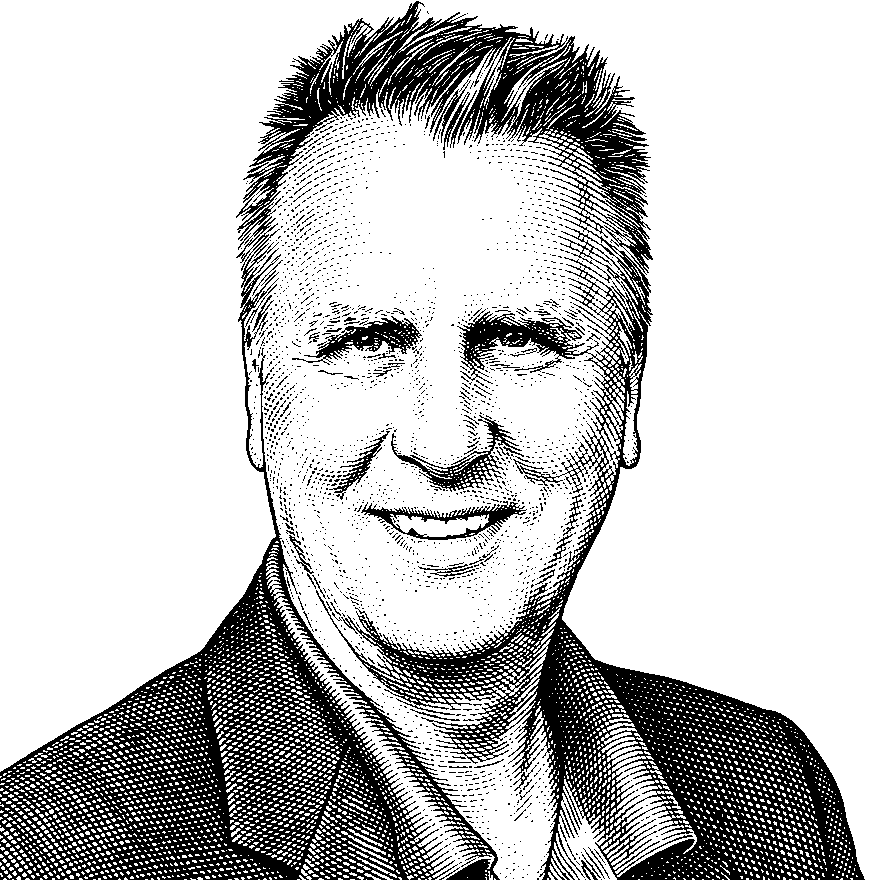
James L. Driessen is a Utah-based attorney, inventor, and active voice at the crossroads of law, technology, and transhumanist thought. With a career spanning over two decades in claims and litigation, he has focused his professional and intellectual energies on the systems—legal, digital, and mechanical—that govern human interaction and commerce. Currently serving as the Claims & Litigation Manager for Subrogation Division, Inc. in Spanish Fork, Utah, his work emphasizes the rigorous application of accountability within complex frameworks. ¶ In his presentation at the MTAConf 2012, titled “Foundations of Skeptical Operating Systems,” Driessen explored the critical need for robust methodologies in processing information and reality. Drawing on his legal background, he addressed the challenges of navigating systems where truth and functionality are often obscured. His concept of a “Skeptical Operating System” proposes a disciplined approach to validating data and experience, resonating with broader transhumanist inquiries into artificial intelligence, simulated realities, and the precise preservation of identity. ¶ Beyond his philosophical contributions, Driessen is the inventor of U.S. Patent No. 10,304,052, a “Retail Point of Sale Apparatus for Internet Merchandising.” This invention, designed to bridge the physical and digital worlds by facilitating web access through retail transactions, demonstrates his early recognition of the convergence of offline and online economies. His legal career includes defending such intellectual property, notably representing his interests in patent litigation against major global retailers to ensure the integrity of his innovations. ¶ Driessen’s work stands as a testament to the transhumanist goal of enhancing human capability through technology and rational inquiry. By applying the skepticism of a litigator to the optimism of a futurist, he embodies the drive to not only understand the future but to actively shape the structures that will support it. His diverse contributions highlight a commitment to ensuring that the “operating systems” of law, commerce, and human potential function with both precision and purpose.
Transcript
Speaker 1
Next up, we have James Dreesen addressing us on foundations of skeptical operation systems using non-classical. Suspension of a logic gate. James actually goes by Jamie. He has years of experience working in fast-paced, regulatory, and technology-driven environments. He’s an attorney. MBA and engineer, practiced in both sides of the business arena, defending corporations or advocating consumers’ rights. And he has in-depth software and hardware knowledge in Linux, Solaris, Windows and Netware LAN environments. In January of this year, James’ method of building a skeptical logic algorithm received a U. S. patent number eight zero nine nine three seven five. Welcome, Jamie.
James Driessen
Now I have to get into a Mac world here and figure out where I am. No I need to pull up my folder, which is in the presentations. There you go. Okay.
James Driessen
So I’m going to present a little bit differently here because I am uh approaching a very uh Optimistic or subject of programming sentience. And so while at the program while at the podium, I simply represent the programmer and you get to watch the movie.
James Driessen
This presentation introduces you to several new concepts about programming sessions. It particularly focuses on machine skepticism. and how skepticism relates to self-awareness. Skepticism no longer has to be some ethereal or unexplainable concept. Once skepticism is actually understood, it can be programmed.
James Driessen
The programmer defines sentience herein as the ability for self-awareness. This programmer also advocates human ownership for machine life. Much in the way we own our own children until they are 18, patent term periods for 20 years should serve for protecting machine life literally as children until maturation may lead to citizenship if the machine can qualify.
James Driessen
Just as different vertebrate animals seem to exhibit different levels of intelligence, different machines might also have different levels of intelligence. This idea of measuring a computer’s intelligence introduces us to a form of the compatibless argument for free will, on the standpoint that intelligence and sentience are actually not the same thing at all.
James Driessen
For example, oblivious routing protocols facilitate transmission irrespective of existing states of the network and allow for emergent behavioral routing between destination pairs. Emergent routing protocols suggest that we might manage data transmission independent of data connection, or even data correction. This might also introduce us to this rough idea of quantum computing.
James Driessen
Quantum computing is primarily approached on the chip level, what we call semiconductors. but it can also be a logic paradigm that challenges our established notions of what is computable and what is not computable. Quantum mechanics does not mean the world is suddenly gone magic or mystical. Yet, quantum computing should help inspire further advances in sentient computing beyond our standard true or false variables.
James Driessen
This three-dimensional block sphere diagram should not suggest to you tertiary or quaternary constructs. Rather, It should suggest a quantum level binary, or true-false, which builds upon our current understanding of true or false. This depiction of a two-dimensional Hilbert space overlaid upon a projective representation with right-hand rule consistency gives us a new way to look at true or false variables.
James Driessen
Because a free decision is a causally complex event consisting of the agents causing itself to have a certain intention, such a causally complex event is called volition. which any programmer of sentience should place at the pinnacle of any free overt action, such as one’s freely raising one’s arm.
James Driessen
The blue screen of death or stop message occurs when operating systems confront a programming error or glitch, also called kernel panic, fatal error, postmortem dump, segmentation fault, reboot requirement, core dump, or bus error. There is nothing mysterious or indeterminate about the blue screen. But under quantum computing, the blue screen may provide a separate state space representation for a simulation within the simulation.
James Driessen
Along these same lines, skepticism must not generate any independent fact or data. It should only organize or check data to form belief or doubt and to serve as an operating system in the game of self-awareness.
James Driessen
The skepticism alternative to a decision tree should perform only parsing and pausing of data input. Parse and immediate pause should occur whenever data or input is accepted and thus elevate any two-dimensional Hilbert space data representation or data correction to a higher level skeptical construct.
James Driessen
If objective self-awareness can be defined simply as the cognitive Ability to separate ourselves from our environment, programmers of sensions should aspire to acquire a much greater understanding of both physical reality. and metaphysical reality from a quantum level.
James Driessen
Even if existential truth is real, belief and doubt are actually the same thing. just different levels on the same scale, where irrefutable facts and knowledge are the fallacy. Understanding how the sentient mind is devoid of facts without Belief helps us overcome Hilbert’s space true-false limitations and leads us ultimately into the realm of antipodal belief doubt within the skeptic operating system.
James Driessen
Philosophically, a machine skeptic construct might be best imitated by nihilism, which refers to a reductionist principle proposed by 19th-century authors such as Friedrich Nietzsche, who once said, As long as you still experience the stars as something above you, you still lack a viewpoint of knowledge.
James Driessen
The solipsistic belief pass filtering can take us to an I think therefore I am picture of self. and the nihilistic pass filter can lead us even beyond to the I think but I am not yet self-realization.
James Driessen
Probabilistic or Bayesian neural nets, as useful as they may be, may not satisfy right-hand rule consistency for machine skepticism because probabilities ultimately tend to drive all data toward factual resolution. or error correction.
James Driessen
A quantum level belief pass filter allows the computer to make the leap all by itself, or in other words, to embrace that granular or quantum packetized nature of the cosmos. Our minds do not accept data without skepticism, and our proposed sentient machine should not be fed air-corrected data from a programmer. On many philosophical levels, all data input is in air.
James Driessen
The skeptical operating system should remain at all times devoid of meaning within the computational framework. As long as the operational structure remains at all times within the proposed skeptical framework shown here. This proposed recurrent cyclical redundancy is where the programmer proposes that data may become self-aware rather than error corrected.
James Driessen
No facts or knowledge are ever registered in the human brain without a similar belief pass filter. Likewise, in the skeptical operating system, there is no Fact, which is completely 100% irrefutable. There is no falsity which has 0% chance of being true.
James Driessen
When you look at the nature of reality with an open mind, yet armed with the tools of math and hard science, such as quantum mechanics and cosmology, it is hard not to arrive at the conclusion that a programmic mechanism is behind the workings of the universe. The evidence includes the discrete nature of reality, the inevitable direction of virtual reality the finely tuned universe, and the fact that all known scientific and metaphysical anomalies are only explained by such a model.
James Driessen
Are we living in Nick Bostrom’s computer simulation? There’s the brain-in-the-vat explanation, supposing that one might be a disembodied brain kept alive in a vat and fed false sensory signals by a mad scientist. There is the famous dream argument of Descartes, supposing reality to be indistinguishable from a dream. There is the five-minute hypothesis. Hypothesis or amphalos, or last Thursdayism, which suggests that the world was created recently, together with records and traces indicating a greater age. And of course the pop culture matrix hypothesis, or simulated reality hypothesis, suggesting that we might be inside a computer simulation. or virtual reality.
James Driessen
Whatever non-locality framework we want to assign, this virtual reality cause of causation view of our environment can show that skepticism is the most simple and correct approach to programming sentience.
James Driessen
George Boole once told us that traditional deductive reasoning differs from inductive reasoning, where facts are determined by repeated observations. In machines, we have always thought that syllogism was presumed superseded by first-order predicate logic. But perhaps intelligence is different than sentience, and intelligence can never be more than data input.
James Driessen
Author Daniel Dennett, in his lecture on free will in the Enlightenment lecture series of Edinburgh University in June of 2007, stated, Yes, we have a soul, but it’s made of lots of tiny robots.
James Driessen
In conclusion, given this new construct of machine-based soul, I want you to accept a definition for skepticism. As a paused state, when a system stops parsing data, a sort of crash should occur, and a belief hedge state may be accomplished. Accept this definition, a pause state, because it will allow a binary belief or doubt. 1 equals believe and 0 equals doubt. and the gradient becomes a cyclic redundancy that pauses or terminates based on data classification, not on fact resolution or on data storage.
James Driessen
I hope you have enjoyed this presentation. If you have any questions, please see me during the breaks or after the conference at the dinner tonight. Thank you very much.
James Driessen
Oh, I can take questions now. But your question is pre-recorded. Yes. I only represent the programmer, okay? It was a lot. I’m very, very optimistic that skepticism can be programmed.
James
Jamie? Hi, it’s James. I’m wave over here.
James Driessen
Yes, James.
James
So you spend a lot of time talking about quantum computing. Will your algorithm run on a quantum computer? Or can it run on a classical computer?
James Driessen
My algorithm is designed to run on a classic computer. And the reason being that quantum computing really When you look at the bloch sphere in Hilbert space overlaid on a three-dimensional representation, it’s not telling you to look at Tertiary or quaternary or three-dimensional, it’s telling you that true-false is not what we think it is. True-false has many areas in between. And so what we do is we with the algorithm is simply not allow data to be anything other than data.
James Driessen
We, in our programming, accept this idea that we can feed facts into computers. Facts do not exist in the mind. Even if existential truth and false may exist, there is no way for the mind to tell. And so why should we let our computers act any differently than our minds and actually register a true or false. And so we just use a belief pass filter in the front that does not allow data to be anything other than data. It cannot ever be registered as a true or false or a fact.