KEYNOTE James Hughes
James Hughes reflects on the addictive nature of genealogy research, the quantum uncertainty of ancestral connections, and what it means to venerate our ancestors in a transhumanist context. Drawing on his personal experience with misattributed paternity cases and genetic testing, he argues that after just a few centuries, most genealogical connections become statistically hypothetical—yet this dissolution of certainty can be liberating rather than distressing. Hughes suggests that our duty is not to preserve a fixed genome or set of values for future generations, but to be responsible stewards of civilization while embracing the radical differences our descendants will inevitably embody.
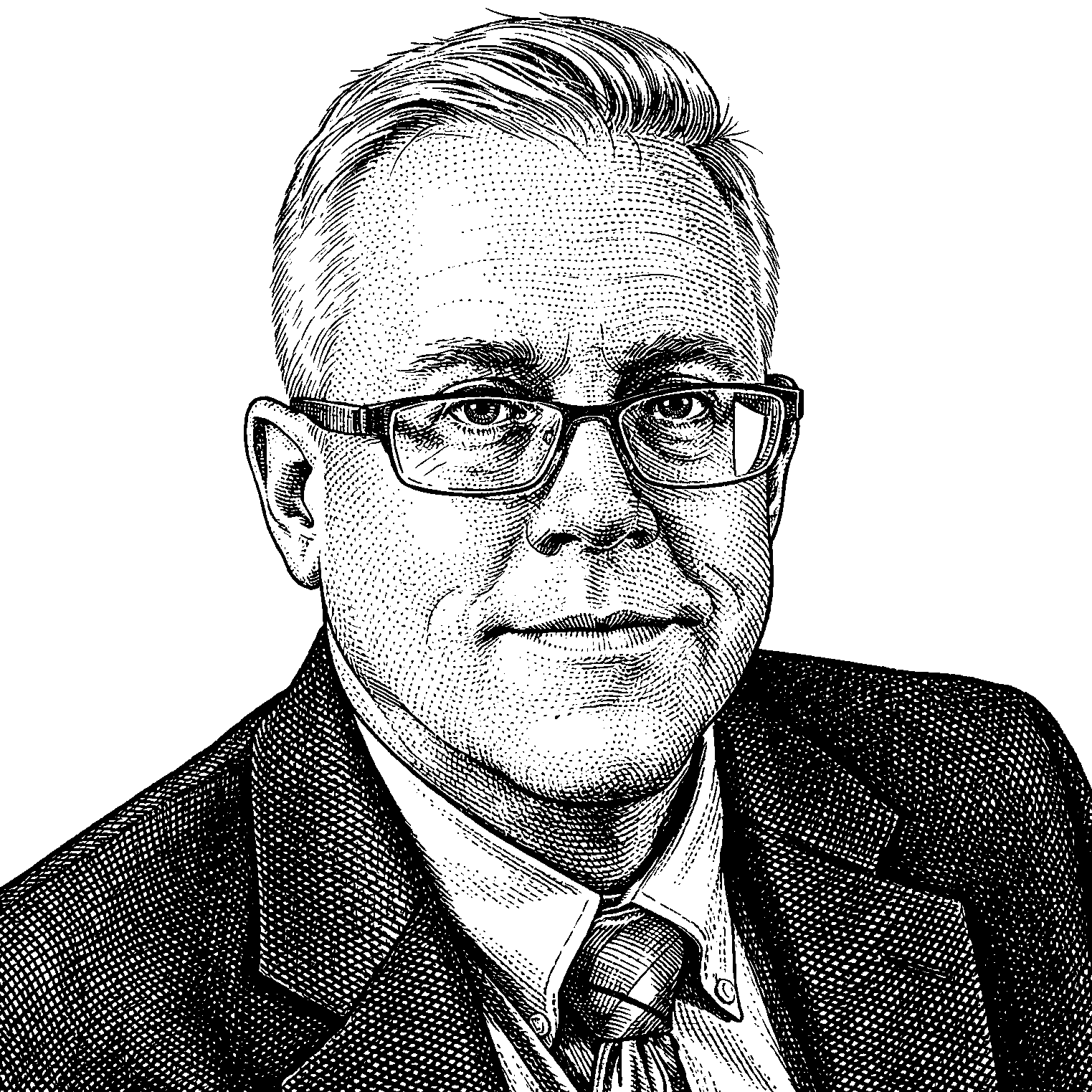
James J. Hughes is an American sociologist and bioethicist who serves as the executive director of the Institute for Ethics and Emerging Technologies. He is a leading advocate for democratic transhumanism. ¶ Hughes earned his PhD in sociology from the University of Chicago and has taught at Trinity College in Hartford, Connecticut. He is the author of Citizen Cyborg: Why Democratic Societies Must Respond to the Redesigned Human of the Future. ¶ His work explores the compatibility of religious and transhumanist views of metaphysics, consciousness, and human transformation. He argues that many religious traditions, including those that emphasize theosis or human divine potential, share common ground with transhumanist aspirations for human enhancement.
Transcript
James Hughes
In 2012, when I was last here, if you watch the video. There was at five minutes before I finished my talk, the screen suddenly goes dark. And I’ve always considered this and told the story that I am a total presentation pro because what I had done was I had a Diet Coke here on the thing, and I poured it into my laptop five minutes before the end of the talk and fried the laptop completely. And I just looked at it and I kept on going with my talk and pretended like that was the end of the slides, but I just had a little bit more to say. And none of you were the wiser, so I am totally a pro. But I’m not going to do that today. I left the water down there.
James Hughes
In 19, when was it? 1995? When I was 14. My mother suddenly developed the symptoms of what seemed to be schizophrenia. She had severe abdominal pain, undiagnosable. She was hospitalized, put in a mental ward. She was given six electric shock treatments, electroconvulsive therapy. And after six weeks, doctors finally, her 14th doctor who looked at her. Finally, did a test for what’s called acute intermittent purfuria, which is a liver disorder. the British king when we were separating from them. He had this disorder and it is difficult to dis to diagnose.
James Hughes
But she was eventually diagnosed, and she, when she was all better, she at first had a religious epiphany while she was having these various psychotic breaks, so that led to me being. dragged around to every alternative church in Columbus, Ohio for a while, which did not improve my opinion of religion, unfortunately. And then she also went on a crusade to educate doctors about the physical things that could cause apparent psychiatric illnesses. But she reached out to some geneticists at Johns Hopkins University. And back in the late 70s, they wanted to do a large assay of all of her relatives to figure out who had inherited this disorder, this acute intermittent purphuria. And we gathered about 60 of her relatives and discovered the first study that showed the 50% inheritance of AIG. And I just then sat on those records. She died in 1979 in a car accident, and I sat on those records for another decade. And then Johns Hopkins had better tools, and they contacted me and other people who had been a part of the study in 1990. and went a blood. And so I pulled out all those records and all the things the work that she had done, and then I realized because I was a computer geek and the Internet was getting going. I realized that there were tools for tracking family history, tools that were most, for the most part, invented right here. And so I started to put all of our family tree into those tools. And quickly discovered the addictive nature of family history.
James Hughes
And how many of you do any family history? Any couple? Okay, some of you. Okay. That’s a very addictive process.
James Hughes
But that led to about 10 years of work on my part of sharing my GED files, putting up web pages with all the family tree up there, and then Googling for new people. Back then it was Mozilling, or I forget what we’re even using, but Altavisteing for new family tree connections that we could make. And the addictive nature of it is that as soon as you discover something, you get that little dopamine burst, and then two more empty cells pop up. And so you have yet more empty cells to fill in that family tree. And for that project, I had about, I don’t know, about 5,000, I think, people by the time I was done with that 10 years of addiction.
James Hughes
And then my aunt, who was 68 or something, she said, I have something to tell you. I was talking to someone in Baltimore, Ohio, a tiny little town that they’d grown up in. And she said, I was talking to this lady and telling her that you were doing family history research. And she said, Well, did he find out anything about the Hickelgruppers? And she said, Who are the Hickelgruppers? Oh, well, turns out that my grandfather, her father, had been conceived while his father, my great-grandfather. Was barnstorming around the country as an itinerant preacher, and he came back 10, 11 months later, and there was a baby there. And everybody in town knew that it couldn’t have been his, but it was probably the guy across the street. So I’d done research on the Wagners back to Switzerland and back to Adam. And so I felt like, what was the point of all that work? So I gave up.
James Hughes
But of course, everything keeps getting better and better, and the data keeps coming online, and my interest in DNA and genetic disease hasn’t gone away. So I signed up for Ancestry, Ancestry DNA, MyHeritage. I still have all those records in the software. I was in 23andMe. And it turned out we had a couple other instances of misattributed paternity in my family. A family member who discovered that he was part Jewish when he thought he was entirely Italian, and it turned and that led to an uncomfortable conversation with his mother. And another close relative who always suspected something about his son, and eventually the DNA test revealed something about that connection. So this has become a big topic in my life personally, but also as an ethicist. I’m very interested in this topic as an ethicist. I have about 10,000 ancestors mapped in this family tree software now, and some of those trees go back to about 800 AD. And when I look at this project and what it would take to even just catch up with all the possible things I could add to it today. I find it completely overwhelming.
James Hughes
And so finally, because of these misattributed paternity cases, I started to think, well, this is kind of a quantum or cumulative uncertainty that goes as you go backwards in time. And so, at what point does it just make no difference at all that someone is a purported ancestor of mine in terms of a genetic connection? That the genetic connection may, in fact, be completely hypothetical at a certain point.
James Hughes
So just to show you here, this is AncestryDNA. com. Those of you who don’t do this, founded by two BYU grads. Apparently, they got their start as entrepreneurs in digitizing all the LDS Scriptural records and publications. And then they branched out and started absorbing different genealogy and then DNA companies. And they will provide you, if you give them DNA and a family tree, other people who have DNA and family trees in there, they will show you the DNA connection to your purported first and second cousins. And also, whether there’s a family tree that you can look at, and whether there’s any shared surnames in those family trees. So, you can begin to stitch together at least these closest connections.
James Hughes
And I got contacted the other day by somebody who said ancestry. com says we’re first cousins. I don’t know who my father was. I’m from southern Ohio, like I am. And the connections on our father’s line. And I’m like, my grandfather was catting around? Really? I mean, I find it hard to believe he was deaf. He was a failed farmer and factory worker, and he went to church every but okay, you know, whatever. So the family history is revealing lots of secrets nowadays.
James Hughes
If you go into this tool, which I think is an AI runs this out of some mountain here in Utah, but Family search, and this is how much I’ve done of my family tree, 21%. And the relief that I’m feeling now about Giving up on everyone before the fifteenth century is that I don’t have to complete that and do the rest of those ten thousand, which would probably be twenty thousand by the time I’m done.
James Hughes
But these are the kinds of situations that if you plug in your DNA or your Your family tree into this database says, Well, there’s a Moses Turner McMurray and there’s a Moses T. McMurray, and they were born in the same day in the same place. But if I scrolled down here, it would show that they have different mothers. Okay, what do you do with that? One family tree says this one mother. Well, you could write a dissertation on the legitimacy of the different family records that led people to come to the conclusion that this was his mother or this was his mother, and I’m not prepared to do that. If I could just write off a whole bunch of my ancestry, that would be great.
James Hughes
This is just my most immediate family. Here we have Russell Dewey Wagner, he was the one who was conceived not by Benjamin Franklin Wagner, but by somebody else. And David Henry Blake back there, I’ve got some kind of problem, and there’s multiple Samuel Wurzes that I have to figure out and whether they were actually married to. Rebecca Bamberger, and this is just three generations back, right? And every generation you go farther back, the data gets worse and worse because the records are thinner and thinner. And it turns out that there’s like five Joseph Smiths in one particular tiny little town in colonial America who married Jane Does, and so you don’t really know who’s who anymore.
James Hughes
So the statistics of this is kind of interesting. This is an estimate of the cumulative effect of misattributed paternity on generation. If you if the research on mis attributed paternity, of course, it’s difficult to study, but there are some studies here and in Europe About what percentage of birds are actually not parent-expected events. And You were leaning on the laptop. Okay. Misattributed paternity events. In these studies, they are between 1 and 5 percent. The ones that are the highest that you sometimes see, like 30 percent, that’s where people suspect that there’s a mistreatment, you know, that they’re not the daddy, or somebody suspects they’re not the daddy. And of course, then you’re going to get higher. You’re going to get 30%, something like that. But if it’s just 1% of our ancestors who had misattributed paternity, that means that after 30 generations, There’s a 30% chance that someone is not actually your genetic ancestor. Now, the 35 generations is a long time. So that doesn’t really do it for me. But if you add in the factor that the records get bad before the 19th century, that we really don’t know very much about these families
Speaker 2
Then I would put it closer to 5%. And after about 15 generations, so before the 16th century, most of these connections are entirely hypothetical.
James Hughes
Now, do I really care? Because, I mean, Benjamin Russell Dewey really thought he was Benjamin Franklin’s son. That he grew up in that family. And do I really care that there is a genetic connection? I mean, if I’m trying to figure out the inheritance of something, obviously it’s important. But I’m a sociologist, so the issues of what’s important about families for sociologists are myriad.
James Hughes
This is Mary Beth Whitehead. She was A surrogate mother 30 years ago, and one of the first test cases for whether surrogacy could be legally upheld. She was a wealthy couple. Went to her and said, Would you bear our child that the father’s and mother’s DNA were used, but none of Mary Beth’s? You can do this. In all kinds of ways now. But in this particular case, it was entirely genetically the couple’s child, but Mary Beth was the birth mother. And when she gave birth, she had signed a contract, but when she gave birth, she said, I don’t want to give this one up, I want to keep it. And it went to court, and the judge had a couple decisions to make. Does the contract trump everything else? Does the genetic relationship? Trump everything else? Does the social tie of bearing a child for nine months trump everything else? Or what he decided was a fourth option, which was the best life for the child. Which I can understand the logic, but that basically means if there’s ever a conflict between a wealthy couple and a working-class woman like Mary Beth Whitehead. She’s not going to win, right? Because the wealthy couple is always going to be able to give the better life. So they get the wealthier couple, which was also the genetic relationship and also the contractual relationship. They won.
James Hughes
But so, this is an issue in bioethics. It’s an issue. Elizabeth Warren recently got in trouble. She did a DNA test to try to clear up this issue of whether she had any Native American heritage. She found that she did have some Native American heritage, whatever that means. And people immediately jumped in her case, said, Well, yeah, but you’ve never lived, you’ve never experienced what it’s like to be a Native American. Okay, well, okay, but if it’s just if being a part of an ethnic group means just having the experience. Then what about Rachel Dolezal in Seattle, who lived for 20 years as if she was African American until her parents blew her cover and said she’s actually a white woman? She lived the African-American experience, but she’s not considered African-American. So I consider this a very fraught set of issues.
James Hughes
When the feds made multiracial a category in 2010, The MABCP was very worried about it. Before 2010, all federally funded institutions had to come up with one racial category for everybody. And then the Fed said, well, that doesn’t make sense. You can be a little bit of this and a little bit of that. And so we’ll ask everybody everything they identify with. And then the ones who identify with more than one will call multiracial. Well, about 60% of Native African Americans have some kind of white ancestry because of the rape of their slave ancestors. sometimes free slave, free African American marriage, but often rape. And it turned out that after we made this change, very few African Americans took the option of saying Okay, I’ve got, you know, 10% white ancestry, I think, so I’ll call myself multiracial. The majority of African Americans continue to identify as African American. So there’s been a lot of concern about the effect of this kind of genetic genealogy on our racial identities, our family identities, and so forth.
James Hughes
I think that this, one of the lessons for me about transhumanism, one that as someone who’s left of center, I’m constantly You know, throwing grenades across the parapet at the libertarian transhumanists and saying, look, we can’t just roll all these technologies into society. Without some concern about the ethics and some regulatory oversight of what they’re doing. The consequences of having a false positive or a false negative Report from one of these gene testing companies about having a lethal illness, Huntington’s disease, or early onset Alzheimer’s or something. Is enormous. It’s an enormous consequence. We don’t want just anybody getting it. And if you do get one and it’s accurate and you get it as an email from a company instead of as a conversation with a healthcare provider. That’s pretty consequential too. We started dealing with that back when home HIV testing was first proposed, that we didn’t want people to be told that they were HIV positive without being able to have a conversation with someone about it.
James Hughes
This issue of mistaken paternity and adoption. Now, when all the cases around me I just found amusing. You know, my grandfather, I thought Well, good for my great-grandma. I mean, I don’t care that she was catting around. You know, my brother’s situation was a little bit different. So there were some, but. I understand that the people who do have these kinds of unexpected informations about their family backgrounds. it can be quite traumatic. There’s actually a bunch of Facebook groups devoted to care and support of folks who have these kinds of discoveries.
James Hughes
But at any rate, just on that point, I think over-the-counter or direct-to-consumer gene testing needs regulation. I was a little annoyed at how sweeping the FDA was when they shut down 23andMe’s ability to provide Medical information, but my experience with medical information has not been, has not, you know, for instance, I have celiac disease. 23 in me told me I had a lower risk of getting celiac disease. Now in that particular case, completely inconsequential, but evidence that there might not be as much going on there as you might think.
James Hughes
Now I’m a Buddhist, and Buddhism is not pronatal. Buddhism does not believe that you have an obligation to have children. And it does not especially venerate the dead in qua Buddhism. Now, Buddhism, like every religion, every older religion, Has absorbed a lot of things from the native cultures as it spread around the world, and it has absorbed the veneration of ancestors as it spread around the world. But in original Buddhism, the meditations that you were given about these kinds of matters were You should think about your mother because your mother’s love is an example of the love that you should have for all creatures. Okay? So meditate on the mother’s love. You should think about the inevitability of death, but not necessarily about the dead. You shouldn’t be thinking that much about the dead. And you should be thinking about the interconnectedness of all beings. And so it’s a kind of if you just focus on your own family, either your living family or your dead family, you’re kind of cutting yourself off from the interconnectedness of all beings.
James Hughes
There is in traditional Indian cosmology a notion of a ghost realm, the Preta realm. And that realm, the beings who are consumed with hunger and envy and life can be condemned to that realm to live for a long time. with enormous ocean-sized bellies and tiny little mouths. And so we should be thinking about the sufferings of the ghosts in the Pretoralm. Um but this is a matter of the reincarnation cycle. So if your dead relatives end up in the pretoralm, well really that was on them, you can be compassionate for the fact that they weren’t better in in their human lives so that they could end up in a better Realm, but it’s really, it’s not, there’s nothing you can do about it. There’s no amount of rituals that you can do to get them out of that realm. If you, in the Tibetan tradition, there is a tradition of talking to a corpse for seven days as their spirit begins to go into the next realm. And so there’s the Tibetan Book of the Dead that you read to them. And it says, What you’re going to see now is a manifestation of all your sins. It’ll look kind of psychedelic. You want to go past that, go through the door. It’s like a video game instruction. It’s like you have to find the secret key, and then when you get to the secret key, eventually you’ll get to a better rebirth. And when they fail, they end up as an animal or tree frog or whatever.
James Hughes
So, Buddhism did not have a traditional veneration of the dead, but I do show you here a shrine, this is a Vietnamese shrine, where in China, which had a strong Confucian tradition, China influenced, and China does have a strong Ancestor veneration tradition. Chinese Confucianism influenced Buddhism to pick up this tradition for Vietnamese, Korean, Japanese Buddhism. But just to return to this idea, if our genetic, so our family history connections, I would argue, dissolve into quantum uncertainty after a couple centuries.
James Hughes
Our genetic connection is no more able to be reconstituted. We obviously have the genetics of everyone alive, but there’s no way to take. Any person’s genome and then go and work backwards and say, well, you were definitely the so-and-so of so-and-so because It’s a random, you know. Every generation kind of randomly shuffles all those genes and we really don’t know how to make those connections to the past. So for me, this process of reflecting on the flow of time and the flow of history of Europe, for my case, Europeans and how they ended up in this continent. Is a matter of connecting us to all of life, connecting us to the flow of life on Earth, connecting us to the origins of the human species.
James Hughes
As I’d like to point out, we’re connected to bananas as much as we are to some other species. And the idea of any particular set of genes, I mean, To every other human being, we’re connected like 98% of our genome, we’re connected 96% of our genome to the great apes. So, when we talk about the genomes that Specifically identify particular kinds of people. It’s all pretty much nonsense. It’s made up.
James Hughes
About seventy-five thousand years ago. There were only 10,000 of us breeding pairs of Homo sapiens. We’d gone through the Toba volcano explosion. Things had gotten really bad environmentally. And we made it through that, and thank you. I think just reflecting on how hard life was for the last two million years since we invented fire and all the Generations of our ancestors that had to pass on: here’s how you make a flint tool, here’s how you keep a fire going. Just reflecting on this for me is a part of venerating my ancestors.
James Hughes
About 7,000 years ago is the point at which every human who had descendants, we are all related to everyone who had descendants at that point, right? So that’s the identical ancestors point. And this is the joke here. So, what’s your biggest strength? I will either be an ancestor to all living humans someday or to none of them. And that’s true of all of us who have descendants.
James Hughes
About 3,000 years ago is the point at which, statistically, all living humans have at least one common ancestor. So the point at which, even if Japanese and Irish people, they still have a little bit of Irish, a little bit of Japanese, and a little bit of Irish. So there’s common ancestry. A thousand years ago is the point at which at least all Europeans have a common ancestor. And part of this is that, as you know, as you go back each generation, you have a doubling. The transhumanists are big into exponents, by the way, the power of exponents. But each generation you go back, you have a doubling of your ancestors, and the population keeps getting smaller. So at some point, you have. way more ancestors than there were people at that time. And so basically you have lots of multiple lines of ancestry.
James Hughes
For me, an example of that’s the Deauvilles, the Huguenots who settled in Virginia about three two hundred fifty years ago, slave owners. And I’m descended from three or four of the siblings in one particular family of the Dovilles because all of their descendants intermarried in different Dovilles. And as your ancestry DNA software keeps reminding me, this couple both have the same surname. Yes, they do have the same terminal. They were part of the same extended family, basically, the same Doville family.
James Hughes
Now, these are the results that I got back from Ancestry DNA, My Heritage, and 23andMe about my ancestry. And you would think that something like, Are you British? Would be a straightforward question. But here, Ancestry DNA says I am 61% British. My heritage says I am 50% British. And 23Me says I am 34% British. I think it’s here. My heritage also discovers my hitherto unknown Ashkenazi Jewish ancestry, which was not appearing in any of the other. Oh, there’s Ashkenazi Jewish 0. 2%, and here it’s 4%. So basically, nonsense. Entertaining nonsense, but for the most nonsense.
James Hughes
Now, redeeming our ape cousins. I’ve been thinking about the question of our connection to the great apes for a long time because I consider how we treat the great apes today to be a portent and a test case for how we might treat our post-human descendants. In other words, what does it take to be a rights-bearing person in our society? If it takes a certain kind of cognitive set of skills, A certain kind of with-it-ness in the brain, then a lot of our great ape cousins have that. They have the ability to recognize themselves in mirrors, they can deceive one another, they obey economic rules in their transactions. There’s whatever you want to come up with, we’ve been able to find it in Great Apes. What we miss
James Hughes
That they have is that they didn’t go through the same kind of great filter that we did about 75,000 years ago, and that great filter appears to have robbed us. of a lot of the evolutionary richness and diversity that our great ape cousins have. So for instance, they’re much more resilient to cancer than we are. And so, one of the things that we might be able to learn and recover from this shared lineage is that what we can figure out now, we’re sequencing all their genes, we’ve sequenced our genes. We have to be able to figure out what those sequences were and take them and put them back into our genome. So, not planet of the apes scenario, not a, you know, hopefully we won’t get hairy along with it, but Cancer resilience, I think. Most people would like to have a little bit of that.
James Hughes
This is Elizabeth Fohnes Winthrop Feake Hallett, born 1610. She’s purportedly, well, who knows now, but she’s purportedly my 14th great-grandmother. She emigrated to the New World in 1631, helped found Greenwich, Connecticut. She was the niece of the Puritan governor, Winthrop, John Winthrop, and he arranged for her first two marriages. Her first husband died. Her second husband lost his mind and just disappeared. And because she’d already been married twice, and that was already unusual in the Puritan colony, she was not given an annulment for finding a new husband. And she said, Well, screw that and she went to New Amsterdam and married yet a third guy. And the Puritans issued a fatwa on her that she was to be arrested and brought to justice for This crime. And she escaped their clutches and settled in what’s now Greenwich, Connecticut, and purportedly became the first European woman to own property in New England. In North America. But she was a cause celeb. She was notorious in her time and was referred to as that Winthrop woman. And there is this hysterical novel, The Winthrop Woman, about her time as a cause celeb.
James Hughes
Now, when I first discovered her early on in my research, and I was delighted. She’s exactly the kind of grandmother I’d like to have. You know, a free-thinking, independent, didn’t bend her knee to the church authorities. Sexually free. I kept looking for the, as apparently a lot of white people do, if you read the research on how we use these genetic things, it’s like You pick and choose which of these identities you want to have. And for a lot of white people, we consider whiteness boring. So we’re looking for that little bit of exoticness, that little bit of color. And I was never able to find a Native American or any other kinds of color. But at least Elizabeth Foens Winthrop, she was particularly rebellious. So I embraced her.
James Hughes
So one of the reflections here, I think, is, and I really appreciated your comments this morning about grappling with the complexity. The often unpleasant complexities of our family history, and trying to understand what it means for us about our own forgiveness of ourselves and our world, but also how we can forgive and grapple with them. And so a lot of our ancestresses apparently have at various points miscegenated or had relationships with people that they weren’t supposed to. Everyone outside of Africa is the result of some cross-species miscegenation, right? One to four percent of us, everyone outside of Africa carries one to four percent Neanderthal DNA. They were another species, right? So some of our grandmothers, some of our grandfathers were willing to look past that heavy eyebrow bridge, the different language and customs of this entirely different species. And miscegenate with them, and who knows what benefits we may have accrued from that. So I redeem them. I forgive them. I do not consider it a problem that they miscegenated. I do not consider it a problem that my grandmothers may have been more sexual. Liberated than their times would have permitted. Some of them were not sexually liberated. Some of them were victims of rape. Some of them were treated as chattel slaves. And I have to grapple with that, you know, that we are all the result of generations and generations of problematic People treating each other badly, generations of genocide, generations of slavery. I have slaveholders in my family.
James Hughes
Now, there’s a philosopher. Lighten it up a little bit. Not talk about miscegenation, slavery, and rape, but lighten it up a little bit about this quantum uncertainty business. One of the philosophers that’s kind of like Buddhist philosophy is a guy named Derek Parfit. And he wrote a book Reasons and persons, where he argued that our relationship to ourselves over time erodes, that it becomes probabilistic. And your Comments this morning, Lincoln, you were referencing some of these ideas about how much connection do we need to have to our future selves in order to consider ourselves really connected, right? It’s a probabilistic thing. We don’t have all the same atoms at any one point to the next. Our memories are incredibly flawed. And so what’s the relationship of an 80-year-old to their two-year-old self or their three-year-old self? Obviously, an 80-year-old still remembers more about that three or four-year-old than most other people remember about their experiences. But it’s become pretty tenuous, you know, by the time you get to an end of life.
James Hughes
Now, for a transhumanist, it’s an even bigger problem. Because for a transhumanist, we’re not talking 80, we’re talking 8,000 or 80,000 years. All the changes that we expect to come over the course of a lifetime. All the decisions, well, my processing space is pretty full right now. I think I’m just going to dump all those Years of depression that I had back in the 2120s. And you know. And so and maybe I t when we get married, we’re going to have as part of our marriage contract not just joint checking accounts, but joint marriage memory accounts where I get to remember all your dirty secrets, you get to remember all my dirty secrets, and then we have a kind of joint Borg personality in our marriage. And then there’ll be libraries where, well, I’m kind of tired of living and so I’m just going to turn all of my memories and leave it in the library. And after 50 years, when I’m not embarrassed by any of that stuff anymore, anybody can just go and take a stroll through my life that they want. What will it mean to have personal identity in that kind of a future, right? We will be merging ourselves into a great pool of data about all of the past. And all of the distinctiveness of our per individual personal stories will be preserved but also merged with everyone else. I consider that a very optimistic possibility about what it will mean to have a continuity of human civilization in the future. all of our streams pouring into this sea of post-human civilization, and not being terribly concerned that we maintain our individual identity as a part of that.
James Hughes
So, just as in the past, we don’t know who our genetic ancestors were, we don’t know who our family history ancestors were. In the future, it becomes pretty fuzzy too. There’s a kind of quantum erosion of our personal identity in this future that I imagine.
James Hughes
I think there’s also change in values over time. Now, I don’t pretend to be an expert on LDS doctrine, but Although I will point out that I think it does say in Doctrines and Covenants that every herb is given unto man for their benefit, and next Saturday is 420 days. But at any rate, LDS doctrine, I think, says that you can baptize the dead if they would have received the gospel. I wonder, I paused at that. I said, what does it mean to imagine that your ancestor who was born, you know. During the War of the Roses, or who was a passionate Catholic, or who was a Lutheran or something, would have received The LDS Gospel. I don’t know what I’m sure some of you can enlighten me, but I don’t know exactly what it means. But I think one of the things that we can be sure is that
James Hughes
A, they were covered with fleas. Most of them had intestinal parasites. They never bathed. Their clothes stank. They were ignorant. They couldn’t read. I don’t think we would have had a lot to talk about, us and our ancestors. I grant them. They passed on those flint tools for a couple million years. They kept those fires alive for a couple more years. Thank goodness that they did that. But I don’t think I would really have them over for Thanksgiving dinner.
James Hughes
And so I think the values relationship is very problematic. I think most of our descendants are going to look on the fact that we eat meat as abominable, right? I still eat meat, but. I think most of our descendants are going to look on the various values, the way we treated one another today, the genocides, and I hope that they do. That they have a higher moral standard than we have today, right? Values change just like genes, just like society changes. So I think we have to embrace this uncertainty about values. What does it mean for us to try to ensure a better future for beings in the future where we don’t even know what they’re going to value, right?
James Hughes
What if we said we want to make sure that that we maintain the sexual union of men and women as the only way that children get made. Well That’s not even agreed upon today by all of us. But maybe 50 years ago, if we’d had a transhumanist meeting, that would have. . . Oh, yes, okay, well, we want to do all these other things, but of course, babies should only be made by men and women. That’s, of course, a given. But maybe next year it’s going to be: well, should babies be only made by humans? Well, what about the chimp human marriages? Or what about the robot human marriages that are going to come in the future, et cetera, et cetera? We can’t anticipate. You know, today it’s why do you walk around with your phone in your hand all the time, kid? In the future, it’s going to be why are you walking around with that? Chip in your head all the time, kid? And why are you plugged into the overmind all the time, kid? And why are you in the quantum flux all the time, kid? Why can’t you, you know, come back into your body every once in a while? We just can’t imagine what these conflicts are going to be, right? So I think our relationship to our future becomes very uncertain and it’s liberating in a way.
James Hughes
We don’t have to take on such a responsibility. This is a momentous time. This is a time where we could blow up the planet, where a plague could wipe out the prospect of a future human civilization. People like Nick Bostrom point out that the moral weight of those kinds of decisions are enormous, that every possible Multiple trillion superhuman descendants that we could have could be stopped in this century by decisions that we make. That is an enormous moral responsibility. We have to ensure the continuity of civilization. But how much do we have to really ensure that our values continue in the future? And how much do we have to just let go of that, knowing that they’re going to change?
James Hughes
So I would ask you, as with me and as with Michael Ann. And unless we if we bring back our ancestors, we may have to apply a little moral enhancement. And we used to debate this when we debated uplifting chimpanzees and great apes. One of the famous exchanges we had was, well, apes like to argue by throwing poo. If we tried to make apes smart enough to be a part of our society so they could go to university and get a law degree and argue their rights before the Supreme Court. Would they have to stop throwing poo at the Supreme Court? Because that’s really part of their cultural heritage, you know? Is it like cultural imperialism to tell them not to throw poo? Or is it just moral enhancement, right? I think a lot of our ancestors would probably need a little moral enhancement if we bring them back, Lincoln. We’ll have to see what happens.
James Hughes
But some of our ancestors committed s genocide. I had ancestors in Salem during the witch trials. I haven’t been able to. Find any witches, so they were on the other side. They were the side watching the witches getting hung. I had ancestors who owned slaves, and I had ancestors who were in the anti-slavery movement who were Quakers. I had ancestors who fought on the wrong sides of history, and most of my ancestors fought in wars that none of us have any sympathy for either side for, because we don’t think that either side had any reason to be killing each other. And most of our ancestors would have had values we considered barbaric, and I want to redeem them. I want to appreciate the things that they, the sacrifices that they made to get us here without having to embrace all of their sins.
James Hughes
What’s our duty to our future generations? I think just as we struggle to embrace our ancestors, we have to struggle to embrace the possibility that our descendants are going to be so, so radically different from us. and not be worried about it, and do what we can to ensure that they can make the choices that they need to make, by not destroying this planet, by being responsible stewards for the civilization that we are in charge of today. This rare, rich earth, which is the only intelligent life that we know of yet in this universe, we need to act like brothers and sisters to one another today in order to ensure that future. We need to be stewards of this creation.
James Hughes
Again, not an expert. This is the original Joseph. Joseph F. Smith is not some grandson of Joseph Smith. Is Joseph Smith the original Joseph Smith? Nephew? Okay, good. I’m glad I asked. Because I was going to say, as Joseph Smith said, well, that’s not the right one. But this Joseph Smith said.
James Hughes
Men cannot worship the Creator and look with careless indifference upon his creatures. Love of nature is akin to love of God. The two are inseparable. And in DNC, can I call it DNC? Yes. Excellent. DNC 49. DNC 49: For behold, the beasts of the field, and the fowls of the air, and that which cometh of the earth is ordained for the use of man for food and raiment, and that he might have it in abundance. But it is not given that one man should possess that which is above another, and wherefore the world would lie in sin and woe be unto man that sheddeth the blood, or wasteth flesh, and hath no need. That sounds to me like an endorsement of the Green New Deal, but of course you have to make up your own mind whether it really leads there or not.
James Hughes
One of the things that transhumanists get charged with, or at least anybody who talks about germline genetic engineering or changing the genome of the future. They say, look, you have an obligation to pass this along and not screw it up for future generations. I agree. But how would you Feel if your father or mother said to you, You know, this this 1959 Studebaker, it’s it’s a Family heirloom, and we want to pass it along to you just as it was, right? We could have replaced the tires, we could have tuned up the carburetor, we could have put oil in, but It’s just as it was in 1959. It’s a patrimony to you. I don’t think we’d appreciate it very much. Here’s the family home. We haven’t done a thing to it in 100 years. I don’t think we’d appreciate that very much. We know enough about the genome now to start making some improvements in the genome.
James Hughes
We have inherited genetic diseases, inherited propensities to depression, inherited propensities to cancer. And we know enough, there was a gene experiment announced two weeks ago where they changed 1300, no, 13,000 genes with one CRISPR. With one genetic intervention. Now, one of the things that people keep saying to us is: you can’t genetically engineer greater intelligence because Intelligence is a multifactorial, multi-polygenic phenomenon. There’s many, many genes involved in intelligence, true, but there’s probably only about two dozen that actually make a big contribution. And now we have the capacity to change a whole bunch of genes at once. Now, I wouldn’t recommend doing this to your kids. I think that we need to make sure it’s safe, we need to make sure it’s effective, we need to understand some of the consequences. But we could do it to the great apes. I think giving them the gift of speech might be what we need to pay back for the sin of destroying all their habitats and eating them for a couple of million years. So, giving them the gift of speech might be exactly the kind of payback they need. I think we can improve the genome. And just another transhumanist bug a bear is a movie like Gattaca.
James Hughes
Gattaca, by the way, if you’ve never seen it, it’s a movie about a guy whose parents are hippies. And so, even though in that future they could have improved his genome and removed a lethal heart defect that he had. They decide, oh no, we’re just going to let nature take its course with him, not with the older brother. I got smart by, or got smart with the older, younger brother. But he decides he wants to be an astronaut. And in this future, apparently all technology has improved around genetics, except you can’t fix broken hearts or you can’t fix the genomes in somebody’s body. You can’t give them a heart transplant. You can’t give them an artificial heart. But he still wants to be an astronaut. Okay, well, someone today had a condition which was going to kill them in a couple years. And they tried to sign up for NASA, they would be told no. And I don’t think any of us would have a problem with that. But this particular guy, he says, well, what do I need to do to become an astronaut? I need to hide my genetic status. So he hi he buys blood and hair and skin from this guy who has perfect genome, and he he’s able to go into space and die as he intended in space. Okay, well. A, the ethics of the story are really, really nuts.
James Hughes
And B, the science doesn’t make any sense. This is what, 100 years in the future, we’re able to repair broken hearts today. Right? You know, all of these imaginations about what the consequences would be of us changing the genome for our descendants, Presume that we can’t change it back, right? If we take out sickle cell anemia, yes, it will increase the possibility that you will get what? What’s the disease? Huh? Now it’s not blood clots, it’s some oh, see the sleeping sickness, right? So, okay, sleeping sickness, this scourge of the modern world If there’s giant mosquitoes that come about in the future and they all carry sleeping sickness and we’ve removed the sickle cell anemia, well, yeah, we could put it back. Right? Or we could do something better than sickle cell anemia to cure this particular problem. So at any rate, I think we have an obligation to improve our genetic patrimony.
James Hughes
Our descendants, as with values, they will have the option to change their own genes. If they want to change it and change it back to what we were, if they want to go back to being Neanderthals, they say, Oh, all these Homo sapiens were A false turn. I like my Neanderthal grandparents. They’ll be able to do that, right? They’ll be able to rewind it as far as they want. They could become sea squids if they want to. We do not have to worry about passing along an unimproved genome. What we have to worry about is our kids and our grandkids and what we pass along to them.
James Hughes
So, in conclusion, Lincoln told me that I was supposed to also expand as much as possible on transhumanism, but maybe I’ll leave that for question and answer. I think I’ve raised a couple different topics that we could discuss.
James Hughes
But Dogen was the founder of a school of Zen in Japan called Soto Zen. And this is Dogen’s Vau. Buddhas and ancestors of old were as we. Should sound a little bit familiar for theotic religious folks like you. In the future, we shall be Buddhas and ancestors. Revering Buddhas and ancestors, we are one Buddha and one ancestor. Awakening Buddha mind, we are one Buddha mind. As they extend their compassion freely to us, we are able to realize Buddhahood and let go of the realization. Thanks.
Speaker 3
We’ve got ten minutes to talk. If I can turn the microphone on, can you hear me? No. Hello? We’ll try. Hello? Now it’s working. Okay, we’ve got about 10 minutes because we’re back on schedule. So we take a handful of questions. Who has one?
Speaker 4
Thanks for the presentation, James. It’s fun that a long time ago, I happened to read the book about your ancestor, Elizabeth. You did? Yes, I did. And as a matter of fact, I just found it online and downloaded again because I want to read it again. She was a very interesting uh woman and I’m happy to know her the same. And now, at some point uh you say that uh if we could somehow bring Elizabeth back to our world, there could be problems because her values might not be exactly like our values. and our world is very different, so she won’t understand uh much of it. But well, I don’t remember too much about the book, but I do remember one thing. She was certainly very smart, and from what I can remember, her values were not that different from mine. She was a person who I would be very happy to meet. now and call a friend. So if somehow and I’m going to say a couple of things about that later in the afternoon, if somehow we could bring Elizabeth back I think that would be a very good idea. Don’t you think so?
James Hughes
Philip Jose Farmer, a science fiction author, he wrote a series of novels called River World, which is a wonderful kind of meditation on this prospect. Basically, some alien species has the capacity to rewind history, capture all the mental states and body types of all of our ancestors, all the way back to the beginnings of Hobo habilis, I think. And they create this enormous world that has a river running through it, and they create different little settlements and habitats. And in each settlement, there’s 60% of people for one time and place. 30% from another time and place, and 10% random from every place else in time and history. And of course, what happens in most of these settlements is that immediately the 60% kill the other 40%. But sometimes they don’t, and sometimes they figure out how to live together and survive. And I think it would be a fascinating thing to try to figure out You know, how many, like my Huguenot ancestors who fled persecution in France and came to the United States and then became slave owners, You know, how many of them were really just about religious freedom and were well ready to embrace religious pluralism in the new world? And how many of them were hard like the Puritans, you know, hardcore, I want to create the kingdom of God on earth, and if you don’t do what I say. I don’t know. I mean, I presume that there’s a distribution in every human population of people who are relatively Ready to live and and let live, and people who are not. And so it would be a very interesting question. But yeah, I think probably you’re right that Elizabeth Fones Winthrop Halleck Feek would have been someone we could have gotten along with pretty easily.
Speaker 2
So that’s what context. Okay. Well, she’s already got a novel. I mean, what more do you need?
Speaker 5
So earlier on in your presentation, you were talking about some of the additional complexities that happen when researching family history. who was raised versus born from and things like that. I wonder if you could comment on do we need something like an additional rethinking Of family tree modeling itself, like something more like a true graph where you can annotate relationships. in ways that would express that history rather than just an annotation on a previous model that was purely biological that we’re finding doesn’t quite work as well anymore.
James Hughes
Well, obviously, we’re in a generation where all of these models need to be rethought anyway, because we have, you can have a mitochondrial donor, you can have an egg donor, you can have a sperm donor, you can have the birth mama, and then you can have the people who raise the kid, and those people. People could be three, four, five, six, seven people in different kinds of relationships. So the nature of family is already changing in this generation. And I think it was back then too. I mean, if you, if, you know, some of my ancestors had, you know, four or five spouses because the mortality rate was so high, you know, that. And so over time, if your unit is an extended family all by itself, what does it mean to necessarily say, well, this was the appropriate mother and this wasn’t? Of the appropriate mother. So, yes, I agree. And that’s what I’ve been trying to do with the limited availability of the software: is say, if you think that there were two mothers in that family and each of them could have been the mother of this child, I’ll take them both. Yeah, I’ll take all the mothers you got. Thank you, James.
Speaker 6
I’ve got three quick points. I trust the question will jump out of one of them. If not, just comment generally. About a month ago, Salt Lake City’s largest convention center hosted Roots Tech. which was a sprawling 100,000 plus square feet of convention space, which was a kind of cross between the Library of Congress and one of these gigantic home and garden shows. where every vendor had about 10 or 20 feet of table space to attract passing visitors. And it was very well attended. My father and I went. And just know that’s a really big deal in this part of the country. The value that I took away from it, though, is each of these vendors tried to market something to me about extending my memory of my lost ancestors. The greatest value to me was just my own reflections on my ancestors. Not all the memorabilia that helped me make gigantic wallpaper hangings about them. It was the experience itself and my going to the event was the value to me. Second point I wanted to make was ancestral DNA advertises widely on network television here, and there’s a prominent Commercial. It begins the commercial by someone saying, I’m German, and here’s all my German paraphernalia that I’m wearing. And the commercial ends 60 seconds later when he realizes he’s actually from Scotland. And now he’s got a kilt on and the bagpipes and all of that. So he transforms over the commercial from one set of loyalties to another. And to me, I mean, I enjoy both cultures, the German and the Scot. Ancestrally, I’m not either one, but I just enjoy the learning of that process. Last quick comment. I’m a public school teacher. I’m with the youth all the time, 14 to 17-year-olds. In the public schools around this area, raith and race and and ethnicity and skin color have have just fallen away as unimportant. It’s all about personality and personal energy that creates groups of kids to hang out together. And nothing like Mississippi burning, I mean, that is as far away from the mindset of today’s youth as one could imagine. So comment generally.
James Hughes
Sure. Well, you just reminded me that I think it was 23andMe before the last World Cup. They advertised take 23andMe to figure out who you’re supposed to root for in the World Cup. And I tried to find that ad, and I think they must have gone out and tried to scrub it, because they realized what a terrible, terrible idea that was. I’ve always thought that this kind of DNA ethnicity stuff would kind of erase or erode ethnic identities because A lot of these white racists who take the test to prove that they’re 100% European, we’re going to find that they had a little bit of something else going on, and so on. The evidence is still mixed. I think the best evidence that I see is that people are just very selective about what they take on board from these Tests about which things they’re going to identify with. If you don’t want to identify with the Ashkenazi Jew, you don’t identify with that. If you want to identify with the 1% Native American, you do identify with that. It’s all pretty much as ethnicity is already something that you make up as you go along. You know, in terms of the actual actual groups we should identify with, I think that Maternal haplogroups are probably the only one I would really hang a peg on, which is that, you know, about 70,000, 80,000 years ago, there were these identifiable mitochondrial eaves. And the various variations in maternal mitochondria indicate the various splits as we went into Europe and Asia and so forth. And if you want to identify with an ancestral who happened to have a unique mitochondrial mutation that ended up more in Europe than it did in China, I don’t have a problem with that. But I do worry in this context, in the global rise of right-wing populist, anti-immigrant, racial populism today. That these kinds of tests could feed into the wrong kinds of things. And that’s why I make this point, that they do not tell you anything about your racial identity.
Speaker 3
We’ve got one more question right here. Last question.
Speaker 7
So I just wanted to know if maybe I just misunderstood something or I wanted to know if you see a fundamental sorry, a fundamental difference At the beginning, you stated that there should be some kind of regulation or a biopolitics related to like genetic testing. But then at the end, you said that we should be freely able to kind of like be involved with like our genetic like mutating like mutating ourselves or like being able to freely do that. Do you see a fundamental difference there? Or Like they require different kinds of ethical frameworks?
James Hughes
I think there’s a really hard ethical legal question about what should people be able to do their own bodies. When we talk about going to a doctor, going to a cytogeneticist and saying, I want you to fertilize a dozen eggs, do a test on each of them, tell me which one’s the smartest, and I’m going to pick that one. That may be up to you. That may be your right as a parent in terms of your right of reproductive freedom, but it’s also up to that doctor About whether it fits within their code of conduct. And it’s up to society to determine if that particular transaction is a danger to those children and to future generations. But in terms of if I say I want to make sure that my children don’t have depression, so I’m going to buy a kit and inject CRISPR into my testicles to make sure that all of my sperm Will always shoot without that particular defect. I think there’s a harder case there because I think if you’re allowed to kill yourself, and I argue for the right of people to end their own lives. If you’re allowed to kill yourself, why can’t you change the genes in your own body? So, I don’t know exactly where to draw the line about changes to our own bodies that might have reproductive consequences, as most of them do, you know, exposure to toxins and so forth. But I think as soon as you begin to involve the company that sells you that syringe of CRISPR, that is a particular transaction that has to be governed by our laws and regulations. And the only regulation I want to put on it is I want everyone to understand the risks. I want them to know if it’s safe and if it’s effective and if it does what you think it does. And so if you know if if there’s a risk of cloning right now, cloning is Would take about 200 pregnancies before you could theoretically get a healthy human clone out of the process. I think that’s completely unacceptable risk. I do not think anybody should be cloning humans right now. The Chinese are beginning to experiment with human CRISPRing. You know, there’s this experiment that was done to CRISPR HIV resistance into these Two girls and may also have increased their intelligence because this particular genome variation is also related to greater intelligence. Was it the right of the parents to do that? I don’t know, but obviously he screwed up because he’s in prison. So the Chinese were not happy when it became an international incident.
Speaker 2
Anything else? Is that it?