The Compatibility of Religion and Transhumanism
James Hughes argues that transhumanism—particularly its embrace of enhancement technologies—is broadly compatible with world religions when these traditions are open to setting aside literalist interpretations. Drawing on his background in Buddhism and Unitarianism, he examines metaphysics, theodicy, soteriology, and eschatology across traditions, contending that concepts like theosis in Mormonism and evolutionary progression in Hinduism and Buddhism resonate with transhumanist aspirations. Hughes distinguishes between "transhumanism" as a thin commitment to human transformation and "Transhumanism" as a specific Enlightenment ideology, suggesting that religious communities can integrate the former while maintaining their spiritual identities.
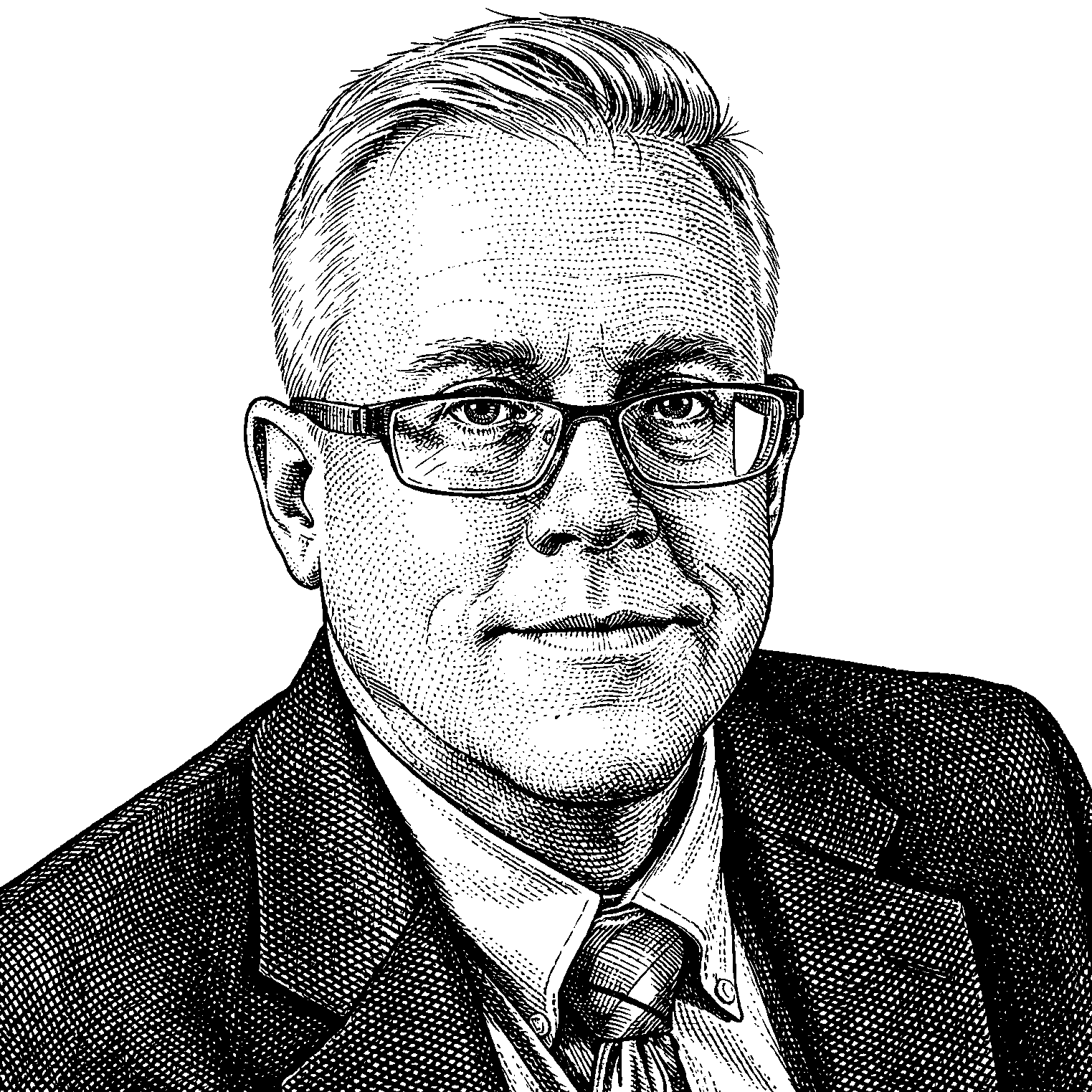
James J. Hughes is an American sociologist and bioethicist who serves as the executive director of the Institute for Ethics and Emerging Technologies. He is a leading advocate for democratic transhumanism. ¶ Hughes earned his PhD in sociology from the University of Chicago and has taught at Trinity College in Hartford, Connecticut. He is the author of Citizen Cyborg: Why Democratic Societies Must Respond to the Redesigned Human of the Future. ¶ His work explores the compatibility of religious and transhumanist views of metaphysics, consciousness, and human transformation. He argues that many religious traditions, including those that emphasize theosis or human divine potential, share common ground with transhumanist aspirations for human enhancement.
Transcript
Speaker 1
We’re going to now introduce our final keynote speaker for the day, Dr. James Hughes. Dr. Hughes is the founder of the Institute for Ethics and Emerging Technologies and is also a bioethicist. And he is a sociologist at Trinity College in Hartford, Connecticut, where he teaches health policy and serves as interim director of institutional research and planning. Dr. Hughes holds a doctorate in sociology from the University of Chicago, where he has the Maclean Center for Clinical Medical Ethics. He’s the author of Citizen Cyborg: Why Democratic Societies Must Respond to the Redesigned Human of the Future. and is working on a second book tentatively titled Cyborg Buddha, which I’m very interested to read. Since nineteen ninety nine, he’s produced a syndicated weekly radio program, Change Surfer Radio, and we’re very happy to have him with us. Thank you, Dr. Hughes.
Speaker 2
You might have to open up the port. I’m not giving a signal. Yeah, they didn’t auto-detect. Let’s see what happens. Got it. Okay.
James Hughes
Well, first, I want to give you my spiritual bona fides. Is it up there? There it goes. I was raised Unitarian and became a Buddhist when I was about 16. Joined a group of Tibetan Buddhists in My hometown of Columbus, Ohio. And when I got to college, I started a meditation group. I wrote my bachelor’s thesis on Pentecostalism, spent four months in Pentecostal churches. Speaking in tongues or attempting to speak in tongues. I then went to Sri Lanka and ordained as a monk here for a while. working with a Buddhist development organization in Sri Lanka, and then moved to Japan where I studied Zen and eventually realized that I didn’t have any talent for Sanskrit or Chinese or Japanese, or any of the languages I would have to had mastered to become a Buddhist scholar. But my family and I continue to participate with the Insight Meditation Society in Barrie, Massachusetts, which is a Theravadan Vipassana Center. And I have returned to the faithlessness of my parents and also involved with Unitarians. And I Sing in the Unitarian choir and I teach Unitarian Sunday school and do a variety of other kinds of things.
James Hughes
So I have a spiritual trajectory of my own, and when I was Making the transition from being Unitarian to becoming a Tibetan Buddhist, one of the things that stuck in my craw may be familiar to some in this audience, which is that there’s a tradition in Tibetan Buddhism called the Turtan tradition, which is that A lot of the teachings of Tibetan Buddhism were basically invented about a thousand years after the Buddha. And one of the ways that the Tirtan Teachers would validate their tradition is by saying, I’ve had a vision from the Buddha. There were certain teachings that he couldn’t give at the time. 2500 BC. So he flew up to Tibet and he landed and he planted some teachings in this mountain or that hillock or someplace. And they’re hidden there. They’ve been hidden there for a thousand years, two thousand years, but I have had a vision from the Buddha exactly where they are. I’m going to go find them, resurrect them, and these will be the new dispensational teachings. So the Turtan tradition is one of the many things in Tibetan Buddhism that are difficult for a secular Unitarian to kind of swallow. And eventually, I realized there were some Tibetan Buddhists who saw things like that as quaint ideas that were irrelevant to the tradition itself, that the value that you got out of it was praxis. And it didn’t make any difference, what kinds of supernatural ideas were being proposed, even reincarnation. And there were others who really took that stuff seriously and thought it was central to Everything. Eventually, that was one of the reasons why I left Tibetan Buddhism, is because there were far too many who took all that kind of stuff seriously, and far too few who were able to put it aside and adopt a An empirical, scientific, rational approach to religion. And it’s one of the reasons why I gravitated towards Zen and Vopashna and back to Unitarianism.
James Hughes
Now, as I’ve begun to dig into our historical tradition and understand where these ideas, these Unitarian and other kinds of ideas that I grew up with Came from, I’ve begun to understand that this is a long 400-500-year dialogue within the Enlightenment philosophical tradition. And it has pre-Enlightenment roots. Of course, as well. But that within the Enlightenment, there were some who were atheists, some who were secular, but there were also people who were trying to ground religious faith. In science, rationality, empiricism, they were trying to make a scientific, empirical argument for Christ or God or something, some aspect of religion that they thought was valuable. And it has that dialogue, that 400-year dialogue, has resulted in a number of different kinds of accommodation. Around the world. There are some who have said, la la la la, stick my head in the sand. You know, the world was created 6,000 years ago. And there are others who have said, okay, we’ll do it. We’ll throw out everything that’s not compatible with science and religion. And there’s everything in between. People who say, well, throw out 75% and keep this peace, and so on.
James Hughes
For me, what was compatible was traditions like rationalist Buddhism, like Unitarianism. But there are also certainly, I recognize, traditions like liberal Christianity and Judaism, where many people are focused on praxis. Was pointed out. And the supernatural aspects of the religion are irrelevant to them. They don’t believe in them. They’re not really important. So, from this point of view, I think that it is possible, as has been suggested by several speakers, to have a spirituality without supernatural. And this is an important recognition that we could have an appreciation of the mytho, what I call the mytho-poetics of a religious tradition. I consider myself a Buddhist because I like to think in Buddhist terms about things. I like Buddhist metaphysics. I like the Buddhist tradition. I like Buddhist languages. I consider all of those things the mythopoetics of my spirituality. I don’t have to believe in reincarnation to appreciate those things. The effort to live a meaningful and ethical life, not required that you be religious, not required that you be spiritual, but this is in a constituent element of spiritualities. An openness to altered states of consciousness, to the possibility of peak experiences, as you pointed out. And an openness to the possibility of a radically transformed human condition, the notion that we As a humanity, could have a radically transformed future. I think all of these elements can be incorporated into a sufficiently post-Enlightenment, clarified spirituality of many different sorts. So, that we can have a rational transcendence, a rational approach to transcendence. And I think many advocates of spirituality from the Enlightenment were looking for that. that, some kind of rational transcendence. And I think that transhumanism is one strand of that claim to a rational transcendence.
James Hughes
You see, for instance, here Condorcet’s from his final essay. He says, Nature has set no term to the perfection of human faculties. The perfectibility of man is truly indefinite. And the progress of this perfectibility, from now onwards independent of any power that might wish to halt it, has no other limit than the duration of the globe upon which nature has cast us ca and of course he if he understood about cosmology, he might have not even said that.
James Hughes
Now, I’m a sociologist, so I’ve done a lot of survey work on the beliefs of transhumanists, the beliefs of people who call themselves transhumanists today. And with the tip of the hat to Max’s very important distinctions between transhumanism and transhumanism, I want to pursue that distinction a little bit. There are a core set of ideas and memes that go together to define what people, most people around the world who call themselves transhumanists. So they’re an enthusiasm for enhancement technologies. Humanism and secularism is one of those aspects. Scientific and technological optimism in general, the focus on personhood as opposed to humanness as being the basis of value. And a strong assertion of individual rights, reproductive rights, cognitive liberty, and body autonomy. Most transhumanists share those. So that’s a very coherent and very specific enlightenment set of values that came out of a very specific historical circumstance. But as Max pointed out, simply advocating for one or another or a bundle of enhancement technologies to wanting to become transhuman, believing in the possibility of a post-human apotheosis of some kind. That doesn’t necessarily come with any of that enlightenment baggage. So, transhumanism can be distinguished as a much, much thinner ideological commitment than transhumanism. And so I’m going to pursue that in this talk.
James Hughes
Now, another aspect of our Enlightenment heritage that we’re still struggling with. Is that the Enlightenment focused on reason as its prime value? And reason, I think many Enlightenment philosophers from the beginning have discovered. is a pretty thin gruel on which to base one’s life. When you use reason to dig down in your life, why do I do the things that I do? Why is something good or bad? Why is something beautiful? There’s a lot of questions that reason doesn’t get you very far with. And so, reason for me is like this house. It’s a beautiful house. It’s a well-constructed house. But it’s floating up there. And you can desperately try not to look out the window and realize that you’re just floating there in midair. But eventually, if you’re a serious person, you realize that reason is not the summa bonum of a human life.
James Hughes
So, my thesis will be that transhumanism is probably compatible with a lot of world faith. It doesn’t necessarily, it may in fact be the fulfillment for many people of their faiths. But transhumanism. is a much more specific Enlightenment set of ideas, which is only compatible with specific kinds of spiritual traditions that are open to jettising and setting aside some literalist beliefs that they’ve inherited.
James Hughes
Now we’re not a, the transhumanist movement is not a church with anybody who defines it. It’s a conversation. It’s an acephalous movement. That is, it doesn’t have a head. And as a consequence, there are lots of transhumanists around the world who define themselves in all different kinds of ways and don’t really care what the Transhumanist declaration said, or what the transhumanists’ frequently asked questions say, they pull out one piece or another. So when I survey transhumanists over the last decade about their religious beliefs, And the most recent one was the 2007 survey of the World Transhumanist Association membership. As in previous surveys, about two-thirds of them said that they were secular, atheist, humanist, or agnostic. And these are people from 100 different countries around the world. About 40% from the United States, about 25% from Europe, and everybody else from everywhere else. But almost a third said that they were spiritual or religious of some kind. So you had 5% spiritual, 4% Protestant, 4% Catholic, 4% Buddhist. Religious humanists, pagans, Unitarian Universalists, Mormons, Hindus. Lincoln’s sure that there’ll be more Mormon transhumanists now if we were to do that survey, and I hope to do it again. We’ll see. But there are obviously people who say, I don’t care what you say, I’m a Muslim and I’m a transhumanist. So go figure it out. And we have been trying to encourage that dialogue over the years.
James Hughes
This is not the first religion and transhumanism meeting. We held one in 2004 at the University of Toronto in conjunction with a Transvision Conference. There was a seminar that the Templeton folks held in the UK about transhumanism and religion. We’ve published journal articles about it. And there is, as has been mentioned, the The MTA, which was until recently an affiliate of the World Transhumanist Association, and then the IET Cyborg Buddha Project as examples.
James Hughes
So, I’m going to briefly go through a couple elements of religion and talk about how they, those elements, within those aspects, metaphysics and soteriology and so forth. There is no necessary contradiction between at least this thinnest interpretation of transhumanism, and argue that eventually we will see the syncretism Of transhumanist ideas and technologies and aspirations into religious views in what I call trans-spiritualities. So again, the areas I want to briefly examine with you are metaphysics, theodicy, soteriology, and eschatology. And I threw in, as you were talking, I should be addressing praxis as well. But I don’t think there’s very many examples where Transhumanism is going to be incompatible with praxis. I mean, if you can think of one, let me know. But I think my argument would apply to praxis as well. So let’s start with metaphysics.
James Hughes
Transhumanism as an Enlightenment philosophy makes a strong claim that there isn’t a soul, that what’s important is a pattern of information that creates our personality. of intelligence, that this kind of pattern can be recreated in other um uh substrates, as as Julio was saying of And as a consequence, that the value that we ascribe to persons should not be distinguished by human versus non-human, because that’s an irrelevant. distinction irrelevant category, it should be whether they have that pattern of self-awareness that we consider to be valuable.
James Hughes
Now, there are theologians who’ve looked into this question about whether this makes transhumanism incompatible with religion. For instance, Teds Peters has written a great piece about this, about ideas of the soul in Christianity. And he argues strongly, and I don’t know why this isn’t more widely known, but he argues strongly that, in fact, the idea of the soul in Christianity is not one of an immaterial substance, that it is in fact a relationship between The human and the divine, and that you have to be a conscious being in order to have that relationship, and that therefore the traditional Christian understanding of the soul is pretty damn close to the transhumanist understanding of what’s important in a human being. So, whether you believe in an immaterial substance of the soul or not, at least some versions of the soul could be compatible.
James Hughes
Now I also have this question. In the traditions that believe in creatures such as angels, they can’t then be strictly speaking human racists, what I call human racists, believing that only humans could have value because Don’t angels have value? Can’t you get in trouble if you whack an angel? Wouldn’t that be a sin? And therefore, and since angels aren’t human, then it’s Possible to be something other than human and have value and have a personality. So, I don’t know, that’s a theological question for those of you who want to address it.
James Hughes
Now, there’s the question of hubris, and the question of hubris has come up several times today. Now, Ted has pointed out, Ted Peters has pointed out, that hubris can’t in this book, Playing God, that you reference. That hubris can’t be a problem for Christians with transhumanism, traditional Protestant and Catholic Christians at any rate, because traditional Protestant and Catholic Christians argue that God is omniscient, omnipotent. And beloved, we’ll leave that aside. But at least omniscient and omnipotent. So, how could possibly a man take on the power sufficient to challenge the Creator and one of the universe, right? You can’t do it. You have to have an Olympian. a Greco-Roman understanding, a Manichaean understanding of religion in order for hubris to make any sense at all as an idea, because I’m suddenly going to take on the powers of God and challenge God. Well, you’re just you’re you’re just an idiot, you know, if you’re a Christian and you think anything like that. That. So hubris can’t possibly be a problem. Now, maybe it’s a problem for Mormons. So I’m still waiting for the church to find out about you guys. It’s not a problem.
James Hughes
The metaphysics of Hinduism and Buddhism aren’t a problem for transhumanism, because Hinduism and Buddhism are very open to the notion of an evolutionary interpretation of human trajectory, that you know we uh that we will exist over uh many aeons and that uh we will eventually evolve to different kinds of states of being, and that those states of being could be various kinds of heavenly realms. And so, like with Mormonism, the notion of eternal progress in Mormonism, there’s a strong compatibility, theoretically at least, between that kind of evolutionism. Now, you got really exercised about the notion of human-animal hybrids.
James Hughes
And I just want to point out that I think that the reason that human-animal hybrids are stick in the craw, so to speak. Of the Abrahamic tradition is because of this notion that God created humans, and then God created animals, and the humans were in charge of the animals. And some are very explicit about it. Like Jeremy Rifkin, when he was trying to get Christians all riled up about genetic engineering, he said, they’re going to violate God’s species boundaries. God created these species boundaries, and they’re going to go be mixing everything up. Well, the anxiety about race mixing, right, is an ancient one. We understand where it comes from. It’s where the Levitican laws come from, right? There are certain things that swim in the sea, certain things that eat cud, and the two things shall not mix. And if you find an animal that it swims in the sea and eats cud, then it is impure, and it is no cusher. So those kinds of Levitical thinking about things, we understand why we get our ideas of purity and impurity from that, but it’s not rational, right? It’s not rational to say that just because we’ve violated species boundaries, we’ve somehow done something impure, immoral, against God’s will. It’s about how we treat them. That’s where your point was absolutely correct. If we do this simply to create a race of slaves, as some have proposed, that would be a horrible thing to do. And the same might apply to robots, and we’ll have to really grapple with that question. Just point out again: in the Hindu-Buddhist tradition, the idea of human-animal hybrids, again, pretty central.
James Hughes
You know, you’ve got here Ganesha as a human-animal hybrid. Horrible story how he became one. But uh his dad basically whacked him and then had to put him back together again. But um uh we’ve got lots of human-animal hybrids in the Buddhist Hindu tradition, so they should be particularly open to that.
James Hughes
Now, the metaphysics of birth and death has often been a problem. So, certain ideas of ensoulment, when does the soul come into the body, certain ideas of when the soul leaves The body, and are the things that you’re going to do to muck around with birth and the things that you’re going to do to muck around with death going to somehow interfere with God’s plan for how you enter and leave your body? Well, if we can interfere with God’s plan in any way, setting that aside, there are some pretty culturally specific ideas. So, for instance, Tibetan Buddhists believe you shouldn’t walk around with the body. for about a week so that the it can completely the soul could completely detach from the body and make its reincarnative transition And Jews have a similar kind of idea, although I don’t know where the soul goes after that, but anyway, they leave the body there for a while. So there’s a certain anxiety in certain religious traditions about doing things like organ transplantation and so forth. Forth, about doing things like cloning, about whether you might be screwing around somehow with the ensoulment of a being. Could you end up with something that didn’t have a soul if you made a clone? Others, like Rabbi Brody, he says, nah, cloning is a mitzvah. Cloning is a good in itself. Anything that helps people have babies, it must be good, right? So, I think that’s a pretty rational approach, myself. And he says the same thing about death as well. Anything that keeps people alive, that’s pretty good too.
James Hughes
Now, we also tend to be pretty open, at least the liberal-minded Enlightenment transhumanism tends to be pretty open-minded about things like alternative family structures. Maybe we could have. you know, replace parenting with just a race of robots or something so we don’t have to take care of the smelly urchins anymore. We’re open to all those kinds of possibilities and traditional Christian and other faiths have pretty narrow ideas about what kind of family. You’re supposed to have. There are some places there where we conflict. But in the most strict sense, the notion of just the use of technologies, Orthodox Jews, Orthodox Amish might be able to use IVF. I don’t know if they use IVF. But you know, I don’t see necessarily contradictions between those kinds of worldviews. So, again, would brain scanning or cryonics, you know, so say you believe that after a person dies,
James Hughes
Their soul goes to heaven or waits for God or whatever. And you freeze their body. How does that necessarily interfere with God’s plan, right? So, if you’re trying to stay alive until the end of time, say you believe that all the souls are going to be resurrected and they’re going to meet the judgment day. Wouldn’t that happen if you were frozen just the same, if you weren’t frozen? Might that just not interfere with things at all? Being cremated apparently doesn’t interfere with it, at least we don’t believe it does anymore. People used to, and that’s why there used to be opposition to cremation. But now most Christians are okay with cremation, and they should probably be okay with freezing as well. So as I said, I’m pretty down with the idea that life is a blessing, life is a mitzvah, so anything that keeps people alive is probably a religious, at least a religious good, if not an obligation.
James Hughes
And you see some pretty interesting dancing, actually. If you read people like Brent Waters, Christian bioethicists, who are trying to argue against transhumanism, they have to do some pretty fast dancing to say, well, we’re for everything that stops. Sickness and illness and death, except when you get over here. When you get over here and you start talking about immortality. Okay, well, I can take that off the table. Let’s take immortality right off the table. And we’ll just say, let’s keep everybody alive for another day until they don’t want to anymore. And then they can stop. And if we can agree on that, then we’re fine. Body loathing and body worship.
James Hughes
You know, we get accused of both. How is both possible? Right? We either loathe our bodies or we love our bodies. Now, I confess there are transhumanists who love their bodies. And there are transhumanists who loathe their bodies. But transhumanism as a philosophy is not guilty necessarily of either sin. So, and I would point out that there are spiritualities that focus on the body.
James Hughes
There are spiritualities like Taoist yoga and magic. That was all about trying to achieve physical immortality through magical rituals and pills and exercises and so forth. So there are spiritualities like Neo-Gnosticism, where they did loath the bodies, there are spiritualities where they Worshipped the bodies. So you could have body-loathing transhumanism consistent with one, and body-worshipping transhumanism consistent with the other, and everybody else consistent with something else. Now, I want to pause briefly and just say about my Buddhism.
James Hughes
People often ask: Buddhists are supposed to be accepting sickness, aging, and death. So, what’s your problem? Why aren’t you out there accepting it? Well, accepting sickness, aging, and death. Adopting the Buddhist middle way does not necessarily mean that if you’re standing in the street and you see a bus coming at you, you say, Oh, I’m accepting of sickness, aging, and death. I’m not going to walk out of the way of this bus. You have the capacity to avoid sickness, aging, and death in your life. And the Buddha thought it was a good idea to do so. Monks were prescribed to carry around the medicines of the time. They were not supposed to just meditate there on their sore tooth. If they could take an analgesic, they were allowed to do so. The point is, there are certain things which you can’t escape. The things that you can’t escape are the things that you accept. It’s like Niebuhr’s Serenity Prayer. It says, Give me the power to accept the things I can’t accept. The power to, or what is it? It’s the strength to accept the things I can’t accept, or strength to change the things I can, something like that. I’m not an alcoholic, so. The strength to change the things I can’t accept, and the wisdom to know the difference, right? That’s the problem. A lot of bioconservative Christians and others are arguing you should accept everything because Trying to get rid of any of these sickness, aging, and death things, that’s a bad idea. Well, that’s not a good spiritual approach. Now, quickly, theodicy.
James Hughes
Why is there evil and suffering in the world? If God’s an all-knowing, all-powerful person, this is a classic question. Why is there evil and suffering? Well, Buddhist Hindu answer: it’s a karmic rewards and punishments. Okay, so say we invent some technology that allows me to live for 200 years. Does that violate the law of karma? No, if you really believe that, if you really believe in karmic rewards and punishments, it means I did something really great in my last life. We all did, because we all got to live 200 years. So good on us, right? We did something great. If we get whacked, that’s bad too. So Karmic Rewards and Punishments doesn’t tell you anything about whether you should be adopting transhumanist aspirations. Learning through suffering, there will always be suffering.
James Hughes
This is the point. Say we get rid of cancer. You think there still won’t be suffering? Say we get rid of depression. There won’t be suffering. There will still be suffering, especially in the existential sense. The Buddhist sense of suffering is dukkha. It’s the unease of existence. It’s not something that you get rid of because you can have powerful analgesics to keep you from feeling your sore tooth, right? That’s not the suffering we’re talking about. It’s a different kind of suffering. And you don’t get rid of it just by having a better lifestyle. Seeing the world as perfect.
James Hughes
Now, this might be incompatible as a spiritual worldview with transhumanism. If you think the world is absolutely perfect as it is, But I don’t know very many spiritualities that actually argue for that. Even when Buddhism argues for that, it says, well, it’s perfect, but at the same time, you have to help everybody who’s suffering. So get used to the contradiction. Very few spiritualities say you shouldn’t change yourself, you shouldn’t change anything about anybody else, you shouldn’t help anybody. Everything’s perfect the way it is. Manichaeanism.
James Hughes
This is, I think, fascinating. Tom Horne is a Christian whack job. Read his blog. You’ll understand. He thinks that we transhumanists. Are creating angel-human hybrids to serve Satan in the end times, and we’re trying to open a dimensional gate to the Sethuloid universes so that the demons can come through. And somehow he’s still certain that the book of Revelations is correct, and Christ is going to come down. And whack all the bad guys, so why does he care in the first place? But at any rate, it’s a Manichaean worldview. There’s a titanic battle between good and evil going on. It’s not really a Christian worldview, people have pointed out. Because if you’re really a Christian, Satan is under God, not an equal to God. But at any rate, if you’re a real Manichean like that, wouldn’t you want to have the same weapons? Right? Wouldn’t you want to have the super intelligence? Wouldn’t you want to have Max Morris physique? Right? So you want that stuff. It’s good.
James Hughes
Now, I would point you to Mark Walker. He’s one of the leading theologians of transhumanism. He did his PhD about eight years ago on this. And he makes the strong argument that there’s a tradition, I can’t pronounce it, but it sounds like Arianism. It’s not Arianism, but something like Arianism or something like that. There’s a tradition within Christian theology that argues that the reason that there’s suffering in the world is because it’s a part of our learning process to become like gods. Theocystic faith or theocistic interpretation of theodicy. It says the explanation for suffering is that you have to figure out why you’re here, become like gods, and fix everything. And be a co-healer of the world with God, exactly what you were saying. So I urge you to take a look at Mark Walker’s argument for that And only when we become like God could we have a mature commitment to God’s plan. So if you say, oh, I understand God’s plan and I’m committed to it. You don’t know what you’re talking about. How could you possibly understand God’s plan? What arrogance to say you understand God’s plan and you’re committed to it? You can’t possibly understand it yet. You want to become like God first in order to say you understand God’s plan and commit to it.
James Hughes
Finally, soteriology. Soteriology is the aspect of religion of what we’re supposed to become, how we’re supposed to develop as people. The moral perfection, the transcendence in this life, the afterlife, and so on. Now, I have argued, and the goal of the Cyborg Buddha Project is to try to figure out how advancing neurotechnologies allow us to improve virtue in our lives. And again, Mark has written good stuff on this. So we are understanding the neurophysiological basis of compassion. We’re understanding altruism. We’re understanding aspects of sociability and We’re understanding addictions and how we become fearful and courageous and all the different kinds of virtues that we might want to maximize. And my goal, my hope is that we will develop ways integrated with our spiritualities of using these different kinds of technologies to become the kind of people we want to be, that we’ve always wanted to be. And have not had the strength simply through the crude meditative and self-discipline and wearing the hair shirts and the whips and all of that, those kinds of technologies were crude. We will have better technology. To improve our personalities.
James Hughes
Now, the dark side I do want to mention: Al Moeller is the chancellor or something of the Southern Baptist Seminary down there in Texas. And when he heard that there was growing scientific evidence that there’s a genetic basis for homosexuality, he said, well, if there is, then we’re just going to have to use that technology and fix it. Those homosexuals with that technology because that would be a good argument for genetically engineering kids. I was against it till now, but once you figured out that it was the homosexual thing, then I’m for it. Well, that’s not such a great thing, right? We don’t want to create a world in which all of our moral attributes are necessarily engineered from the beginning. That would be a kind of technological engineering solution that we don’t want to have. So those are the things that we’re dealing with with the cyborg Buddha process.
James Hughes
And theosis. I added this slide after Daryl’s talk this morning because I had not been using that term. But theosis, wonderful idea. Eschatology, my last idea here.
James Hughes
I think this is what originally probably attracted the Mormons to transhumanism: the notion that Transhumanist ideas, the singularity, these kinds of aspects of transhumanism, could be a fulfillment of historical prophecy, of expectations about what the coming world might be. Now, there’s a long historical tradition of techno, of millennialism, and our contemporary techno-millennialism, I think, has all of the strengths and weaknesses of that. for some, for those who are more depressive, a complete certainty that there are apocalyptic things coming down the pike, that there’s nothing we can do about it. And for others, a complete certainty that there’s a utopian future right around the corner and that all we have to do is just, you know, we can lay down our tools in the fields and manna will fall from the heaven. And you see this when you especially look at those who expect this AI singularity. An artificial intelligence is going to pop out of a box somewhere. and create an absolutely wonderful utopian world. A messianic world, and solve all of our problems. Now, I think that there are more humanistic versions of this.
James Hughes
There’s the global brain interpretation. We mentioned I just zapped my slides here. There’s the global brain interpretation. I’ll finish without slides. The Taylor Deshardin interpretation. Of this. But the interpretation that I think the Singularity Institute, people like that, use. Is a particularly unfortunate one because it it really uh it breeds a certain degree of reservation about human agency in the world, because if we’re just waiting for the future AIs to do all this work for us. So my summary is that we’re not incompatible.
James Hughes
Transhumanism is not incompatible with The eschatologies, the soteriologies, the philosophies of various worlds’ religions. Especially at the narrow level of technology. The technologies themselves can be incorporated into all these phase
James Hughes
We heard about the simulation hypothesis. So, the notion that there could be these post-human gods, as you have argued in your work. Taking the simulation hypothesis a couple steps further and trying to work out what some of the other implications might be. I’m not so convinced that benevolence itself is You know, that being able to survive as a species means that you’re going to be benevolent towards everybody else And create other universes. But at any rate, the simulation hypothesis is an example of if you take one particular technological aspiration or expectation and follow it out. you can come up with a scenario that’s compatible with specific religious traditions.
James Hughes
I think it’s a more difficult challenge to try to figure out the compatibility between the transhumanist tradition in its full current ideological complexity and other religious traditions, but I think that’s happening as well. Buddhism, liberal Christianity. And so on. So I think that the future is going to be very interesting. I think we’re going to see a wide variety of accommodations and incorporations of transhumanism with religious ideas, and I’m looking forward to it. Thanks.