Hacking Religion and the Ten Year Game
Jason Anthony, a religion journalist and games designer from New York City, serves as editor of America's oldest religious magazine. His experiences during 9/11 profoundly shaped his perspective on faith, leading him to explore what he calls "next generation religion." Through The Ten Year Game project, Anthony investigates how emerging technologies and shifting cultural paradigms might transform religious practice and spiritual communities in the coming decades.
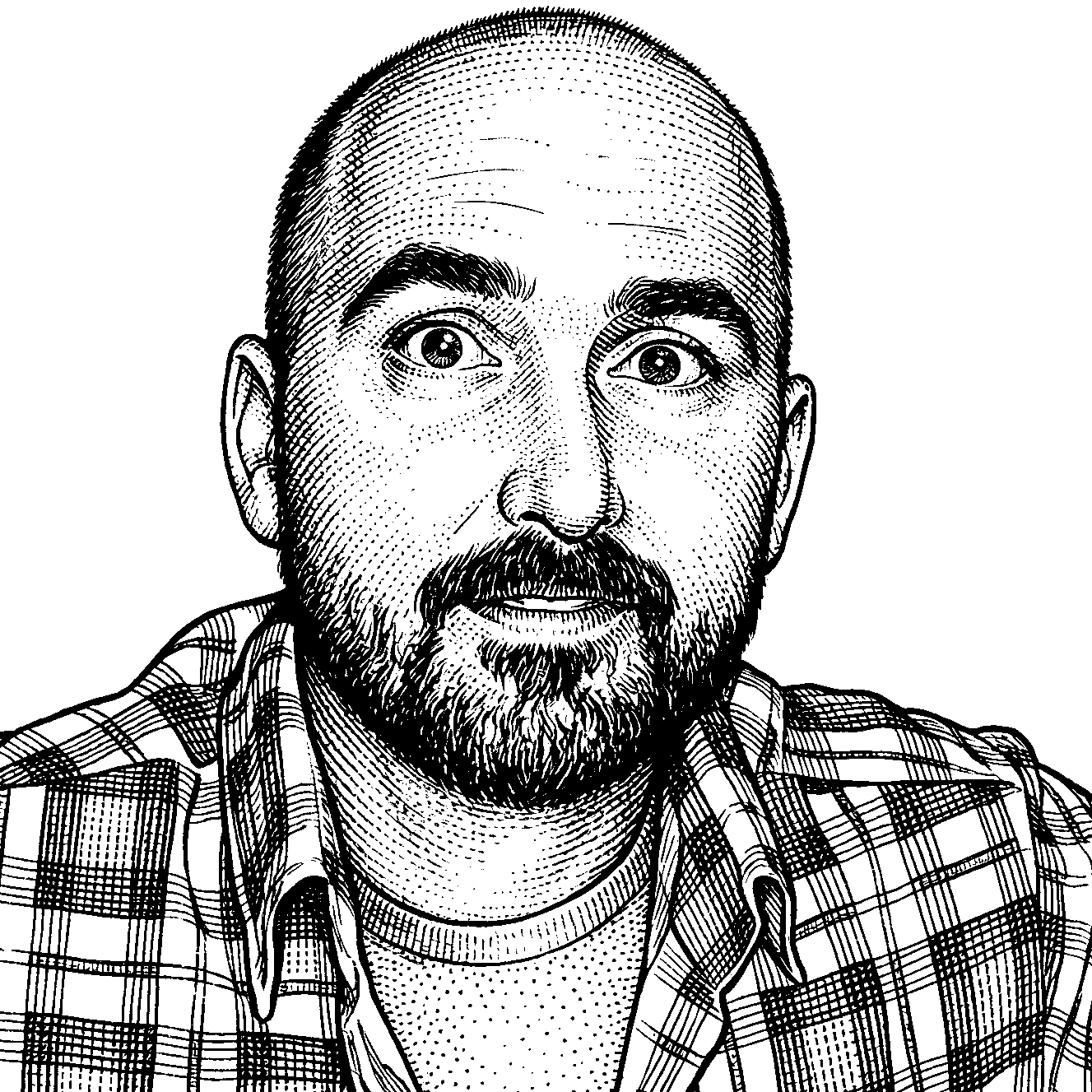
Jason Anthony is a religion journalist and games designer based in New York City. He brings a unique perspective to discussions of next-generation religion, shaped by his diverse experiences and intellectual curiosity. ¶ Anthony’s career has spanned various aspects of the media landscape. He has served as the editor of America’s oldest religious magazine and written extensively about the national faith landscape. His observations and reflections following the events of September 11th at the World Trade Center—where he witnessed the intense religious reactions and motivations—led him to delve deeper into the study of religion. ¶ Driven by both personal experience and the evolving media landscape, Anthony’s work now extends to the realm of game design. This exploration is epitomized by his project, “The Ten Year Game,” an initiative through which he explores future religious frameworks. Anthony’s involvement in business writing and familiarity with both legal and illegal gambling traditions further enrich his understanding of complex systems and human behavior, lending a multifaceted perspective to his projects.
Transcript
Speaker 1
Our next speaker is Jason Anthony. Jason is coming to us from New York City, and Jason is a religion journalist and a games designer. Jason has served as the editor of America’s oldest religious magazine and has also written widely about the national faith landscape. And his experiences at the World Trade Center on 9-11 led him to explore next generation religion through his project, The Ten Year Game. Jason. Thank you.
Jason Anthony
Thanks. I would especially like to say thank you to Michael and Lincoln first for having this talk in a library, which will become uh relevant as to why that’s interesting um in in a second here. But also for not using PowerPoint presentation, so I don’t feel like I’m breaking the streak here. Thank you so much for the biographical introduction there.
Jason Anthony
We talked a little bit earlier today about mythology and creation myths. And I can look at my own creation myths in a sense of a couple of cataclysmic sort of destructions. One, of course, was being at the World Trade Center on September 11th. I was a theater reviewer at the time, working part-time, sort of setting up events around town. And I was in the courtyard setting up a food tasting that was happening on September 12th. And it was just an intense day.
Jason Anthony
I had grown up atheist, agnostic, and not only the impact of the religious motivations behind September 11th, but also the sort of religious reactions to 9-11 that I witnessed in the city, the prayer booths along Broadway. Peoples returning to their temples and synagogues and mosques in quests for meaning became deeply puzzling to me. I didn’t understand what religion was. So I ended up sort of going back to school to become a religion journalist. So that was the first sort of destruction.
Jason Anthony
The second destruction is the destruction of the print journalism. model. I’ve been very lucky to continue to work as a journalist, but I have been forced to move sort of beyond religion journalism in the past Couple years. A magazine that went out to people who went to casinos came up. I work at the Time Life Building, and uh one of those magazines uh sort of needed an editor. And uh part of my past I for several generations my family has been involved in uh gambling in legal and illegal Ways. And so they were in luck.
Jason Anthony
They found a dude who could write and knew about casinos, which got me really thinking about games in this sort of interesting way that’s Going to kind of fold into this project we talked about. And then, most recently, in the last couple of years, business writing, there’s been a lot of that that’s sort of just come across my place. Again, we’re as there are fewer journalists in the building, we’re all sort of acquiring new specialties. And one of the questions in covering stock markets earlier, stock markets have come up in a couple of talks today, is this experiment.
Jason Anthony
The Wall Street Journal did it for about 14 years, but there was this axiom that. Monkeys throwing darts at a wall of stocks would outperform experts selecting stocks, right? And the Wall Street Journal actually, they sort of had computer generated monkeys for a number of years, but there was actually a monkey dex that that was started at one point, a six-year-old female chimpanzee named Raven. Was actually trained to throw darts. And what they found is, as a matter of fact, corrected for a number of factors. These monkeys could, in fact, outperform the experts.
Jason Anthony
Now, are these exceptionally smart, gifted monkeys? Probably not. One of the theories as to why these monkeys could do it is that we are, in a sense, inhibited by our intelligence when we look at complex systems. A primary fallacy that comes into play is that we believe that an increase in information translates into an increase in knowledge. That is to say, we’re looking at an incredibly complex system. We have a little bit more information, and so we think we know more, but in fact, that information may be in a completely wrong direction. Information, maybe a very finite amount of information in a very infinitely complex system. And so we are biased by that in a way that monkeys tossing. Darts are not.
Jason Anthony
What this plays into is one of my favorite definitions of religion. Quite frankly, I don’t know what spirituality is. I tend to think of it as a personal form of religion. My thinking is always sort of about the social institutions of religion, so you’ll forgive me if I bias in that direction. One of these beautiful definitions of religion that I really like, I find very workable, it’s from a scholar, Gilbert Murray, who was looking at this. Span of religions in the ancient world is that religion is how we engage with what we do not know, not just with our brains, but with our bodies and our social institutions. and with each other. Not only what we do not know, but what we cannot know. And you’ll see the relevance there to a complex system like a stock market.
Jason Anthony
We’re talking about sort of blue sky transhumanist experience in which sort of more and more becomes possible. Well, what’s happening tomorrow in your life? Are we ever going to be in a state where we’ll know that basic piece of information? Or is the world that we inhabit so incredibly complex that there will always be swaths of our lives, very va vital swaths of our lives? that we cannot know. So religion is this holistic way that we engage with what we cannot know.
Jason Anthony
There’s another definition of religion that I just want to run into really quickly because I think it’s been brought up so many times today. One of the first psychologists of religion wrote a book in 1902, I believe. And I’m gonna massacre his name, Herne Mourier, something like that, Ernest Mouisier to the unfrenchified. He wrote about what he considered to be the Religious impulse, and it was a very influential book, and it has influenced a lot of religious thinking. And that is that what religion does in the individual and in culture is it creates a unity. Again, we live in this incredibly complex system, and religion creates, as Michael pointed out, as many speakers Today, I pointed out this sort of through line, this narrative, this manageable unity of meaning that we can encounter. With.
Jason Anthony
How does religion do that? One theory also widely talked about. Is in two ways. There’s logos and there’s praxis. Now, almost everything that we’ve talked about today has been logos, right? Logos is what we believe, and praxis is what we do, right? Logos might be There is no God but Allah, and Muhammad is his prophet, or that the Jews are the chosen people, or America is the site of the new Zion, or Brahman is Atman, these sort of beliefs that help us to create this unity and help us to confront the unknown.
Jason Anthony
But there’s this whole other side to religion, this side of praxis. What we do with our bodies, right? And I’ll just list something: baptism, fasting, pilgrimage, yogas, incubations, all of these ways that we practice our faiths. With our bodies.
Jason Anthony
And what we find when we look at the praxis side of religion, and I love the term that was brought up earlier, let me see if I can quickly find it. Rituals as performative algorithms. Fantastic, I love that. What we find when we look at the logos side of the equation is that logos Is in fact robust. It gets shared across traditions.
Jason Anthony
Something as simple as fasting, as simple as not eating. Now, dieting. Dieting makes sense, right? You know, you want to slim down, look suave so you you don’t eat. But fasting is this absolutely counterintuitive thing. You know, why would the organism not want to eat? And yet it is this incredibly robust meditation that gets paid. From faith tradition to faith tradition. And so you find it in almost every faith tradition today.
Jason Anthony
And you can see how something simple like that can help in these very fundamental Objectives of religion, right? Helping us to confront the unknown and helping us to integrate on a very non-mental level, right? The fact That through going through a simple process, you are taking into account in a meditative fashion. You are listening to everything that’s going on. You are putting a stop to the normal course of events by taking on a counterintuitive course of events and sort of evaluating and finding a place For what’s around you, right? So there’s been a lot of interest in my work in praxis. Let me just skip over to the games side of this equation, because I think that that’s mostly what I do.
Jason Anthony
Just to get a sense, would you consider yourselves sort of by show of hands Games players out there. Okay, good. It’s robust. I thought Transhumanist Conference, we were going to get some serious gamers out there. But maybe to sort of make that argument a little more robust, I’ll run down some things.
Jason Anthony
There’s, of course, console and console gaming, sort of computer gaming. That’s gaming in one sense. Engaging in these simulations like the Sims, we’ve talked about that today. But there’s also board gaming with the family. There’s casino gaming, there’s playing a lottery, right? There’s watching sports, there’s being obsessed, having a favorite sports team to watch. There’s reality television. If you’re a fan of American Idol or Project Runway or Top Chef or Survivor or The Bachelorette. You know, that’s all games thinking, right? If you have applications on your iPhone, your phone, or your iPad, games that you pass the time with, that’s games playing, right? If you’re on Facebook, And you check in on Foursquare, you’re the mayor of the student union. That’s games playing.
Jason Anthony
As a matter of fact, we are becoming a ludos-based culture. We are slowly having games begin to integrate themselves into every part of our experience. Why is this important in the Context of religions.
Jason Anthony
Games are the consummate art form of uncertainty, right? You write a story, you paint a picture, and you end up with something. But the point of a game, the point of a well-engineered game, is to not have a fixed answer, is to have a An element of uncertainty, an outcome that can go either way. Win or lose, or your team wins or lose, or your In collaborative games, no one wins or loses. So if we look at religion as this way that we confront the unknown Games are the art form of the unknown, and there’s a very close kinship.
Jason Anthony
Well, my gosh, this sounds heretical, right? Games and religion, games are frivolous. Religion is very important. What a terrible thing to say. I would posit to you that in history, games in religion have been very, very close.
Jason Anthony
You can go to the exotic examples like the Tanawatu peoples of Easter Island who selected their religious leaders through games. Some of the only extant buildings in Mesoamerica, uh uh the the Aztecs and the Mayans, are these Ball courts on which these sacred games were played. Of course, every two years we have the Olympics. There was no religious meeting of uh religious events beyond a certain Stature in Greece that was not represented by games. In the Christian tradition, you also had this sense that God could speak through games if There were decisions that needed to be made, questions of right, jousts would take place, and God would be assumed to sort of take this hand.
Jason Anthony
In the way that games are this art form of uncertainty and religion is this way that we face uncertainty, games balance skill and chance, what we have within our control and what we don’t have within our control in a way that brings them very closely into line. with with what religion is and what w what what religion does.
Jason Anthony
That being said, uh something that we have been uh trying to do i in New York um is establish what a next gen Religion might look like, right? We’ve heard a lot of theory today. This is just a dance into absolute silly practice. We start playtesting in the spring, and I hope you all will check out our website at tenyourgame.
Jason Anthony
But basically, we are operating on these presuppositions of what religion is and what religion does, and trying to establish what a cool religion might Something that sings the human experience in all of its dimensions. And it’s basically taking praxis, which we talked about earlier, that ancient and robust part of religion, not belief at all. I hear a lot of people talking about I’m a believer, I’m not a believer. It’s interesting how little. Belief actually plays into religion.
Jason Anthony
There was a great study that came out this week that showed that atheists and agnostics knew far more about the beliefs of religious systems. Than believers did, right? You take someone in the middle, I call it the middle 80, the middle 80% of the pews in a Methodist church or an LDS church or a A mosque, and what they actually know about their faith, the sort of granular level of their faith, is surprisingly little. What people tend to identify with their faith is, as I phrase it, not the why and the what, but the who and the how, the people you’re with and the things that you do together.
Jason Anthony
Just not to go into this, belabor this praxis versus Logos too much, but there’s this Jewish saying that as much as the Jews have preserved Sabbath Sabbath has preserved the Jews. This act of engaging in the Sabbath, in resting every Friday, has preserved the Jewish tradition more than the theology has. That praxis is more ancient, more robust. And what happens when you look at praxis, at Sabbath in particular, it can be played as a game.
Jason Anthony
Female team has to get to the home base 18 minutes before the sun goes down and light candles. The Arav is drawn around a certain area. You walk in Manhattan. There’s a fishing line that goes down Sixth Avenue. It marks the air of central Manhattan. You’re not allowed to carry your keys outside of that home base area. You have to observe during the 25 hours of the Sabbath the 39 milchot, the 39 things that you’re not allowed to do. And there’s a beginning and there’s an end. There’s penalties if you violate what happens during the Sabbath. So, our starting point with the ten-year game is that praxis, this central part of what religion is. Can be played as a game.
Jason Anthony
So that’s what the 10-year game sort of goes out on. The human soul is divided into 10 teams, and each of those teams has a mission for a year and a special obstacle that they set to the other teams. They collaborate on a liturgical calendar that is played through over the course of the year. And then at the end of the year, those People change, you change teams so that over the course of 10 years, you’ve played on each one of these 10 teams.
Jason Anthony
Now, how on earth do we Divvy up the human soul into ten arenas. I think that’s interesting and has a lot of bearing on what got talked about today. There are a lot of people who tried to divvy up the human soul. Myers-Briggs dichotomies, there’s the four humors, there’s the Eneagram, there’s the five-point model. A lot of attempts in history. Astrological chart to sort of divvy up our experience into discrete component bits, right?
Jason Anthony
The one that we use is an example, as soon as you go out these doors, we use the Dewey Decimal System. to decide what these te these ten teams are. He came up with a system that every single pursuit, interest, ability, or field of knowledge that we could possibly write a book about, that we could possibly express Had a place in this system. And so each of these ten teams embraces one of the ten Dewey Decimal divisions and sort of takes that as their sort of metaphorical focus on that one-tenth part of themselves.
Jason Anthony
The history section is about memory and storying. The technology team is about finding our biological way back to our progenitor Homo habilis, this wiring in ourselves to be able to affect The world around us. Michael talked about storying, and that’s the fiction section of the library: this ability to absolutely stray from what is real into what can be. Philosophy, social science, you can see that each of these has a sort of a metaphorical dimension. And in fact, what we find is that each Of these ten aspects of who we are, what our interests are, have had rich manifestations in the world of religion.
Jason Anthony
You look at history, for example, this idea of memory. That team, it’s up to them to sort of create a secret mission and a praxis based on this idea of history and memory. Well, they look into Mexican religious history, and you look at the Day of the Dead celebrations, right, where we remember those who’ve gone before. Or you look at Confucianism, which is largely a religion of history, looking at a time that was ideal in China’s history, looking at those history books, honoring the dead through certain rituals.
Jason Anthony
Let me come up with another social science. We’ve talked about some of these today earlier. We talked about story and we talked about empathy. I would say that the social science area of the library, that team. Their objective is to look at the ways that we sort of care for one another and interact with one another. And of course, religion is full of these praxis: the Sikh praxis of Langar, of Serving food for other people. The ancient Greek practice of xenia, of hospitality, is rich with sort of praxes.
Jason Anthony
So that’s sort of what we’re doing right now. We’ll start playtesting in the spring. Check us out at 10year. tenuregame. com if you’re interested in a little bit more of how that’s sort of happening. I just wanted to briefly wrap up. I think I’m already over my time here. With
Jason Anthony
How this might fit into a transhumanist future. I think that there are challenges, which we brought up earlier If we do self-perfect, if we do transcend our current abilities, what are our spiritual challenges? Obviously, it is to bring in the diversity of the human experience. It is to find a new integrity with an increasingly confusing self and other. And as Max Moore pointed out, it’s about finding a way to spend that next five billion years, right?
Jason Anthony
I’ve got five billion years to fill. You know, am I going to sort of work on my he actually? You mentioned working on your tennis game, which I which I love. You know, a golf game, I think you mentioned. Games are increasingly, as we become more able, more self-sufficient, more removed from our animal selves, games are a way to engage one another, to introspect, to face that unknown, and to integrate these ten diverse Biological legacies that we have, a way to find one song for these ghosts that echo in the three and a half billion years of DNA that we can Along with us. Thank you very much. I appreciate your time.