The Resurrection of Scott Cahoon An Exploration of Tomorrow’s Mormonism
The speaker presents a speculative fiction concept exploring a future Mormon practice of “redeeming the dead” through technological resurrection. In the story, a man named Scott Cahoon dies in a car accident and experiences a near-death vision where he encounters his ancestors stretching back through human evolution to single-celled organisms. Upon awakening in the year 2432, he learns that a future religious community has been systematically resurrecting their ancestors by compiling their life data—a technological fulfillment of genealogical work. The narrative serves as a transhumanist myth, offering a telos that combines traditional religious themes of ancestral connection with emerging possibilities for digital preservation and resurrection.
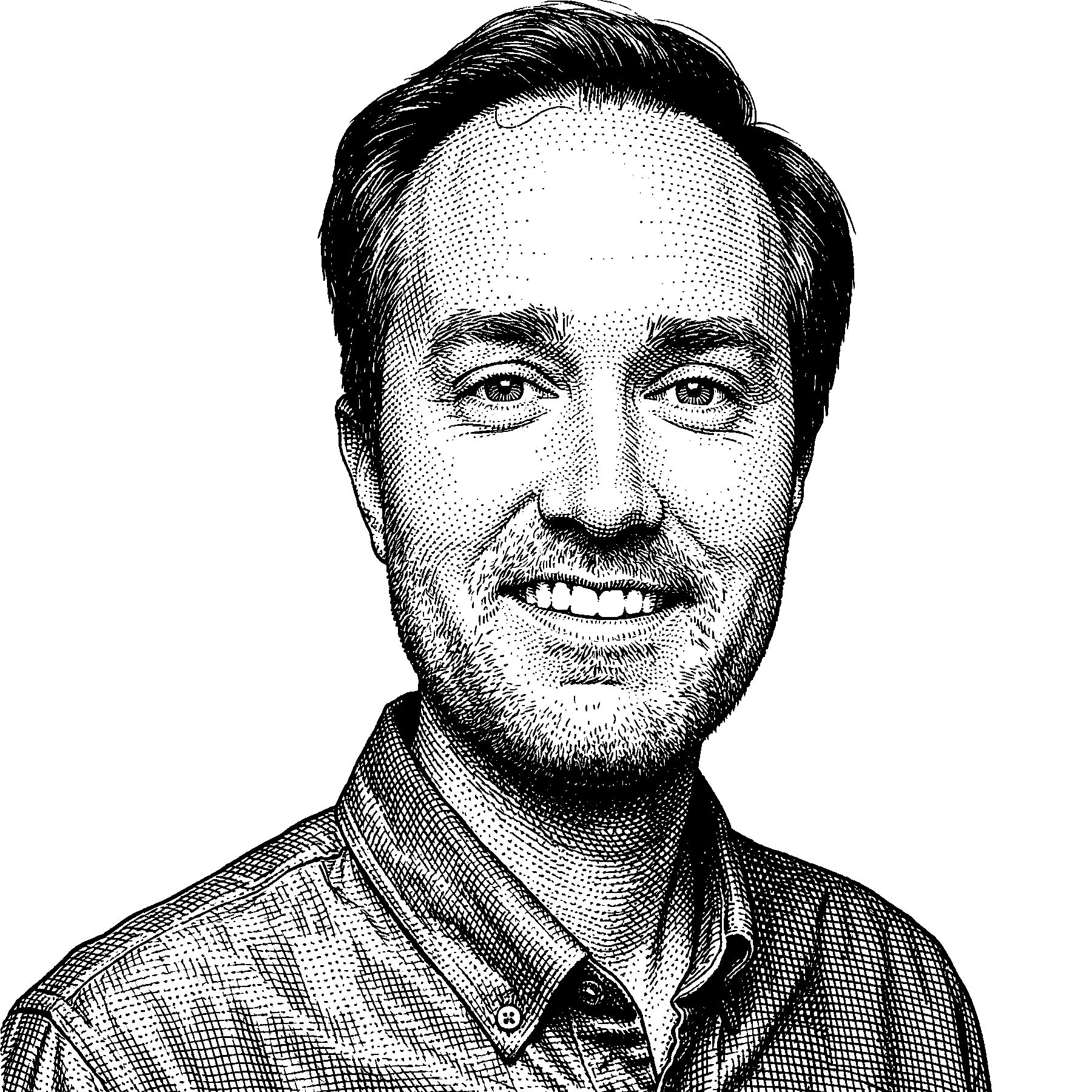
Jon Ogden is an author, educator, and entrepreneur focused on the intersection of faith, family, and technology. He is the co-founder of Uplift Kids, a platform providing families with a lesson library and curriculum designed to foster spiritual health and well-being within the home. ¶ Ogden is also the author of When Mormons Doubt: A Way to Strengthen Relationships and Live a Quality Life, a work that explores themes of faith, doubt, and community within a Mormon context. His exploration of religious belief as a potentially modular system, similar to an API, suggests an openness to integrating diverse philosophical and spiritual traditions—a perspective that aligns with the Mormon Transhumanist Association’s interest in exploring how technology and innovation can enhance human experience and spiritual development. ¶ He holds a Bachelor’s degree in English, Literature, and a Master’s degree in Writing and Rhetoric, both from Brigham Young University. Ogden lives in Provo, Utah, with his spouse and two children and writes regularly at johnogden.com.
Transcript
This story starts with a search for wisdom. And I was driven in part by this quote by Isaac Asimov: The saddest aspect of life right now is that science gathers knowledge faster than society gathers wisdom. And I feel really strongly about this. My appeal the appeal of transhumanism to me is the call to deepen our ethical stance. Even ahead of the technological stance.
And I’m very interested in this idea from Thoreau, where he said it would be worthy of the age to print together the collected scriptures. or sacred writings of the several nations, the Chinese, the Hindus, the Persians, the Hebrews, and others as the scripture of mankind.
So this project kind of came in the wake of a of a faith crisis for me. I was interested in finding spirituality and kind of deepening those roots and finding the essence of spirituality, spiritual health. And so I took Thoreau’s recommendation and just started reading widely.
I’m inspired also by Umberto Echo. You were formed by little scraps of wisdom. Lao Tzu says, To attain knowledge, add things every day. To attain wisdom, remove things every day. Rumi says, don’t be satisfied with stories, how others have gone, how things have gone with others. Unfold your own myth. Jesus, if you bring forth what is within you, what you have will save you.
Mary Ann Evans said, it was George Elliott, what do we live for if it is not to make life less difficult for each other? So the strong sense of ethics that can motivate us.
Mary Oliver said, I was surrounded by the beautiful crying forth of the ideas of God, one of which was you. I find that compelling.
And I also find, in conversation with that, Ursula Caleb Gwynn’s quote here: I talk about the gods, I’m an atheist. But I am an artist too, and therefore a liar. Distrust everything I say, I am telling the truth. Oh, it’s so good.
Toro Imoi said, People tend to listen when they see your soul. But they don’t see it, they don’t. Listen.
And then I’ll end with this one for this section. The poet Hefez said: Now that all your worries proved such an unlucrative business, why not find a better job? That’s so good.
Um so I created uh I did this for three months. Every day I would release new bits of wisdom, and it didn’t land. The project didn’t go well. I’ve been writing other stuff and it was doing far better. This project didn’t go anywhere.
So I kind of came back to the drawing board: like, okay. I don’t know what went wrong, but this didn’t connect. There could have been a hundred different variables, but for whatever reason, it didn’t land. And so
I started thinking about, well, what is a, how could something like this actually, a project like this actually work? And one idea, at this point I’m just in the idea phase. So one idea is to create a new myth and This is also part of my interest in transhumanism, is that I view it as a potential new myth that can give people purpose in life and a telos, a direction to head in. And so this is a stab at a myth. I don’t think that there will be a that there is a single myth that will work. There’s a single myth period, but I think there are many myths, and this is an attempt at one myth.
So, this is the story of a guy named Scott Cahoon who died in a car accident. And I’ve noticed, if you go to the best-selling Mormon books on Amazon, many of them are stories about near-death experiences. I don’t know why, but people find these interesting. And so Scott Cahoon has a near-death experience.
He wakes up in the hospital and he is interviewed by a doctor after the doctor checks his vital signs. The doctor says, Do you have any recollection of what happened? Between death and now. And Scott Cahoun says, Yeah, I had a vision of the afterlife.
And he says, I woke up and I found myself surrounded by loved ones. And I was able to talk to them and See their faces, and it was overwhelmingly peaceful to have a reunion of loved ones. And he says that he saw his mother, he saw his mother and was able to talk to her and embrace her.
And then something strange happened. He saw his mother’s mother, and his father’s father, and his father’s mother, and he started seeing His ancestors over time. It wasn’t just the people he knew in person, but his ancestors going back. And it went throughout his whole history.
His family was from a small town, Richfield, Utah. And they settled here when the Mormon pioneer ancestors came, and he saw the first time that they came to Richfield and settled it. He saw their parents who crossed the plains. He saw the first time that somebody in an area right around Palmer, New York, found Mormonism for the first time. and his ancestors who crossed to America. And it kept going back through England, different parts of France, Italy.
He saw the first time that one of his ancestors held a book, a printed book. He saw the first time that one of them heard a symphony. He was able to see his ancestors just face to face as they experienced what they were experiencing for the first time.
He kept going where he was able to see the first time that one of his ancestors was part of civilization. The first farming, for the first time that one of them held a coin in their hand. He saw the first time that one of his ancestors saw fire. That was created by humans.
And I kept going back till where he was able to see his ancestors even before they were the human species. Millions and millions of years, the first primate and experience what that was like. The first mammalian reptile, and then the first fish, maybe with bony appendages, before it ever came up to land. And it kept going to where it was a single cell, and he was experiencing this whole chain of evolution and just feeling it as time went on.
He then came to a book when all was when it was reduced to single cells. He came upon a book and was able to Go forward in time, back through, and see the wisdom of the ages. And in this sense, there are two senses of redeeming the dead. One In experiencing the full ancestral line, and another in actually the compilation of the writings of those who have come before.
Well, he told this to the doctor, and the doctor said it worked. And Scott Kuhn said, What do you mean? He said, What do you mean?
He said, This is something that we’ve been doing as part of our religion, is redeeming the dead. And we’ve been compiling data from those who are our ancestors, and we’re recreating them systematically. And it’s the year 2040 to 2432. And you’ve been resurrected. We’ve compiled your All your data from your life, and to the best of our ability, we’ve recreated you just as you were. And you have the option now to accept To keep living um or to be extinguished and uh
The doctor is a bit of a rebel. He’s he’s kind of interested in the religion but not fully converted. And he tells Scott that There’s another sect of our religion that doesn’t force extinguish people that reject them. But our numbers are growing far stronger because we we enforce it upon everybody who’s who’s resurrected and um so you can you can decide and um
That’s essentially the opening of the story. Scott has to decide whether to accept, and then, once he does accept, what he does thereafter.
That’s it. Thank you.