Ecofeminism and the Divine Feminine
Kathryn Knight Sonntag examines the interconnected silencing of women and degradation of the natural world through the lens of ecofeminism and LDS theology. Drawing on Clarissa Pinkola Estés's work on the wild woman archetype, she argues that patriarchal structures have severed both women and nature from their essential wildness, with devastating spiritual and ecological consequences. Sonntag traces the divine feminine through ancient Israelite temple worship, identifying Asherah—the tree of life—as the exiled Heavenly Mother whose wisdom once sealed creation's sacred interconnections.
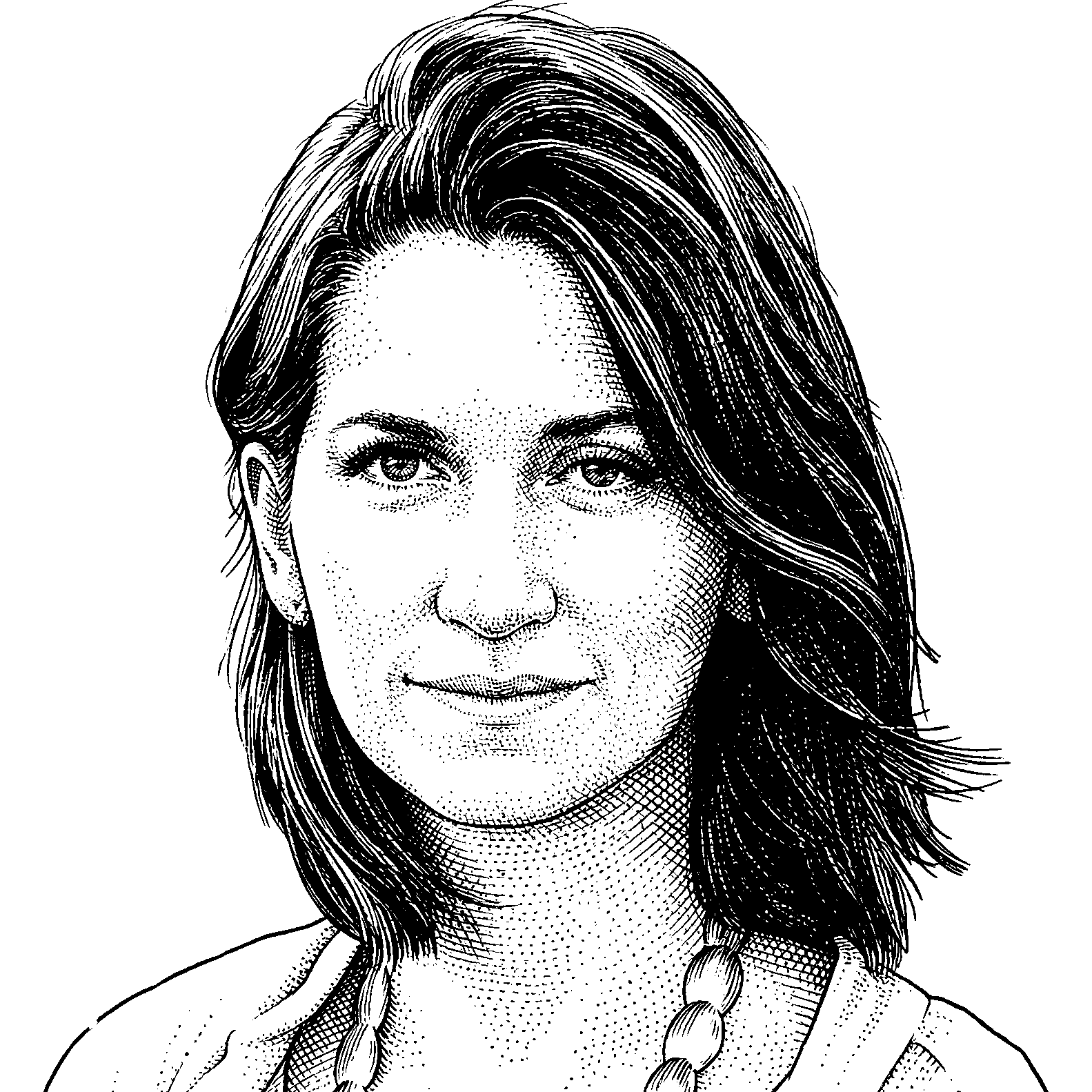
Kathryn Knight Sonntag earned a BA in English and a BS in environmental studies before earning her MLA in landscape architecture and environmental planning. Her thesis focused on the role of the transcendent in landscapes and greatly informs her creative pursuits. She works as a freelance writer and landscape designer, and serves as the poetry editor for Wayfare Magazine. Her work centers on language as a powerful technology capable of manipulating ideas, transforming concepts, and achieving a specific vision. Sonntag’s scholarship builds upon ideas related to the role of language in shaping our understanding of the world and our relationship to it. ¶ Sonntag’s research delves into the archetype of the Divine Mother and the necessity of returning to her wisdom for the planet’s restoration. Drawing from thinkers like Elaine Showalter, Ursula K. Le Guin, and Jungian analyst Clarissa Pinkola Estés, she examines the suppressed experiences of women and the consequences of disconnecting from what she terms “wild nature.” Sonntag argues that a limited, male-centric view of nature has contributed to environmental degradation and that amplifying the voice of women is crucial for healing the world.
Transcript
Kathryn Knight Sonntag
I’m going to be building on some of the ideas that Ben Blair presented at the beginning, specifically about the role of language and creative works and prophecy in Earth’s renewal. Language is a universal technology. It is used to manipulate ideas, create and transform concepts. design, explore, and analyze in order to achieve a purpose or vision. We know that there is power in the vision uttered, in the word made flesh. This presentation speaks of language as creative power, specifically as the missing urtex and archetype of women, the Divine Mother, and the necessity of returning to her wisdom for Earth’s renewal.
Kathryn Knight Sonntag
Imagine two circles, largely but not completely overlapping, the center a tall oval of convergence, and on each side facing crescents. One of the two circles is the dominant element of culture, men, the other the muted element of culture, women. Both the crescent that belongs to men only and the crescent that belongs to women only are wilderness. However, as Elaine Scholwalter explains All of male consciousness is within the dominant, the circle of the dominant structure, and thus accessible to or structured by language. Women know what the male crescent is like, even if they have never seen it, because it becomes spoken culture, the histories and mythologies of a people. These myths shape ideologies surrounding built and natural environments.
Kathryn Knight Sonntag
What is understood in the twenty first century as nature is really a curated environment built around industrial needs, urbanization, and selected areas of wildness, the boundaries of which are ever eroding. The earth’s wildness has no place in nature, which has become man’s property.
Kathryn Knight Sonntag
But the experience of women as women Their wilderness crescent is unshared with men, utterly other, and therefore to men unnatural. In the words of Ursula K. Le Guin, this is what civilization has left out, what culture excludes, with a dominance called animal, bestial, primitive, undeveloped, unauthentic. What has not been spoken and when spoken has not been heard. What we are just beginning to find words for our words, not their words, the experience of women.
Kathryn Knight Sonntag
For dominance identified men and women both. That is true wildness. Their fear of it is ancient, profound, and violent. The misogyny that shapes every aspect of our civilization is the institutionalized form of male fear and hatred of what they have denied and therefore cannot know, cannot share, that wild country, the being of women.
Kathryn Knight Sonntag
If conceptions of nature are built around just one crescent of human experience, male. It is clear that the intergenerational repercussions of woman’s dismissal and subordination, her separation from her own wild nature, reverberate in every facet of her being, affecting the health of the world.
Kathryn Knight Sonntag
A lodestar in restoring the voice and psyche of women is Jungian analyst and cantadora Clarissa Puncola Estes. For over twenty years, Doctor Estes researched the archetype of the wild woman. and not wild in the word’s pejorative sense, meaning out of control, but in its original sense. A wild woman strives to live a natural life when full of innate integrity and healthy boundaries. This facet of the female psyche is primal, but has been twisted and hidden by the forces of culture. She remains, however, in the traces of the myths and folk tales of many cultures, instinctual and visionary. Consequently, Doctor Estes is keenly aware of the devastations of the female unconscious that accompany women starved of these attributes.
Kathryn Knight Sonntag
Doctor Estes gathered women’s own language to describe the grim symptoms of a disrupted relationship with the wildest force of the psyche. They include feeling extraordinarily dry, fatigued, depressed, muzzled, frightened, without soulfulness, shame bearing, chronically fuming, compressed. She contrasts this desiccated sense of being with the attributes of the mother wolf, fresh with blood, making tracks and herding her brood through wilderness with authority, nature in her unadulterated form.
Kathryn Knight Sonntag
It is impossible to separate what has been done to women from what has been done to the land. Both are distrusted and removed from their wildness they are feared, tamed, and contorted into noble forms, into extractable resources. Because the essential networks of interconnection that define the sanctity of the earth and women are muted, rigorous scientific study that gathers enough understanding of ecological systems to honor and protect them. is ignored in the face of lust for immediate gains that cut at the last roots of the living world.
Kathryn Knight Sonntag
The pride behind this wanton destruction of eternal networks In the physical and spiritual spheres of the wild is the same pride that removed Heavenly Mother from her temple throne and attempts to accelerate the silencing of women.
Kathryn Knight Sonntag
Social and economic structures that promote this commodity based view of the natural world have not been kept from influencing the world views of LDS Church members and the church’s own institutional structure. Unfortunately, this contributes to a spiritual and cognitive dissonance toward the land and the true substance of divine feminine identity. A full appreciation of these aspects is necessary for a full restoration of the gospel, one that plants the mother tree in the temple as the giver of life and the healer of the environmentally degraded world.
Kathryn Knight Sonntag
As long as the institutional structure of the Church of Jesus Christ of Latter-day Saints remains a patriarchy. Its behaviors and correlated teachings will uphold the mistreatment of women and nature by defining them as appendages of men, to be tamed and used, not to be heard or understood. Hearing women and valuing their voices dissolves the pride that sustains all patriarchal structures, which are inherently telestrial and where equality is impossible.
Kathryn Knight Sonntag
The patriarchal lens of the Church creates tension around LDS theology that attributes all living beings with a soul, with an individual purpose and identity, that promises their celestialization along with Earth’s. Instead of carving out a unique paradigm that honors and sustains the ecologies connecting all living beings on the earth, the church has largely taken on the attitude of dominance identified men and women. that the earth is to be used as those in power see fit. What follows is an underlying belief by many of its members, compounded by eschatological theories, that things will go as they will for the earth and there isn’t much to be done to stop it.
Kathryn Knight Sonntag
This fatalistic view of the earth creates a disconnect from the rape and abuse of the land and of women. It is sad but inevitable, and only discussed peripherally. The beauty of the earth is mentioned in songs and occasionally over the pulpit, but there is little talk about the spiritual consequences of its destruction Relatedly, there is little official discourse about the abuse of women in the church. When stories surface, they are immediately buried under counter accusations and victim blaming. Over and over again, women have to fight to be heard and to have the power of the patriarchal institutions on their side.
Kathryn Knight Sonntag
As patriarchy fears the creative powers of the wild, it fears the creative powers of women and their voices, that cast a spiritual warning toward collective abuses of their bodies and the body of the earth. There is no room within the walls of any patriarchy for women to speak as women, to voice their primal and primary roles. Consequently, women wild with desire for their birthright are opening paths of understanding to Heavenly Mother. Saints across the globe are seeking and finding answers on their own through personal revelation and creative works that are becoming the greatest force for entering for ushering in exiled lady wisdom.
Kathryn Knight Sonntag
Women preside in the rites of birth and death, tend to children, the sick and elderly, and are therefore a constant reminder of the inevitability of death, representing the unknown and uncontrollable. As Sherry Ortner states, because of woman’s greater bodily involvement with the natural functions surrounding reproduction, she is seen as more a part of nature than man is. Yet, in part because of her consciousness and participation in human social dialogue, she is recognized as a participant in culture. Thus, she appears as something intermediate between culture and nature. lower on the scale of transcendence than man. This hierarchy bleeds into the mindset of LDS men and women.
Kathryn Knight Sonntag
The cosmological failings of the correlated gospel include an omission of woman’s true realm: her powers, her voice, her dimensions. Likewise, Heavenly Mother is faceless, nameless, voiceless.
Kathryn Knight Sonntag
Even Mormon feminists have been caught within the constructs of the Church’s patriarchal framework when articulating in the words of Taylor Petrie, Mother in Heaven’s identity and roles in order to represent their own needs and desires, of the ideal woman and their calls for reforming the theology. What does women’s heaven look like spoken from their own lips? What is the soul of their creatress like? In short, what is the character of their own spirits? There are more answers available than have been given space in L D’s discourse. They have not entered with full force into the discourse because Mother is still missing from her Temple home. as a source of women’s spiritual orientation and nourishment.
Kathryn Knight Sonntag
Mother is a tree Her roots reach down into the underworld. Her body is the flesh and blood of the present, the passage between life and death. Her branches pass to the heavens. She represents eternal life in the most primal sense, as the preserver of the interrelationships of all beings and the earth around them. She knows everything that lives by name, why and how each came to be. She is the tree of life, the axis mundi, the vertical marking of the center of the cosmos. The conceptual and ceremonial center.
Kathryn Knight Sonntag
The tree of life has always been a symbol of the divine feminine. Specifically, in the Old Testament, the tree is the representation of Asherah, an Israelite goddess. She is the lady in the temple, the source of fecundity and eternal life. Christ is her fruit.
Kathryn Knight Sonntag
Asherah was one in a family of gods, worshipped in the first Jerusalem temple and part of a larger council of gods. This family included the father, the highest, the mother, the consort goddess Asherah and personification of wisdom, and the son called the Lord. The removal of Asherah from the Holy of Holies of the temple was the removal of the Urtext of women, the sacred script that unfolded their role in salvation. It was the rejection of the ecological wisdom encoded in the everlasting covenant.
Kathryn Knight Sonntag
According to Bible scholar Margaret Barker, the sins of Jerusalem that Isaiah condemned were not those of the Ten Commandments. but those of the Enoch tradition, cry, rebellion, and loss of wisdom, W.
Kathryn Knight Sonntag
Lady Wisdom spoke from the cosmological center of the Israelites, from her home in the Holy of Holies. about the mysteries of creation. She was remembered as the bond of the everlasting covenant, or in other words, the seal of creation. The everlasting covenant was given to all living beings as a way to preserve the connections forged on the earth and with earth eternally.
Kathryn Knight Sonntag
Margaret Barker continues, the prophets linked covenant not to the Lord’s exclusive relationship to his people, but to the Creator’s relationship to the creation. Breaking the everlasting covenant means destroying the fabric of creation. It is a rejection of the feminine aspect of deity, her admonitions, and eternal wisdom.
Kathryn Knight Sonntag
Isaiah prophesied that during the last days the earth would be cursed because of the earth also defiled under the inhabitants thereof because they have transgressed the laws. changed the ordinance, broken the everlasting covenant. Therefore hath the cursed devoured the earth, and they that dwell therein are desolate
Kathryn Knight Sonntag
As the seal of creation, Heavenly Mother’s continued exile from the temple and from the religious and cultural life of contemporary saints is in partial fulfillment of Isaiah’s prophecy. Her return to her rightful place in the temple will give women their divine archetype back and speaking grounds for not only their place in LDS cosmology, but their place in healing the world. Her return will signify a restoration of humility and love for all that is wild, that will bring her offering as life giver and eternal center of the actualized principles of wisdom to fruition.
Kathryn Knight Sonntag
To enter the Holy of Holies into the promises of celestial glory, a unified, holistic view of the entirety of creation, is to reverence a wild and mysterious Mother. To learn the purposes of creation, to contemplate the darkest abyss in order to discern the most brilliant light, it is to be entrusted with the understanding of the paths of everything that lives.
Kathryn Knight Sonntag
What Moses actually saw on Sinai, as remembered by Baruch, the scribe of the prophet Jeremiah, was in part the transformation of the mountain into the Holy of Holies. a consecrated space where Moses saw the creation of the world and learned the law. These revelations were the mysteries of godliness, the wild heart of Heavenly Mother. This was Moses entering into true wildness.
Kathryn Knight Sonntag
He was shown the measures of fire, the depths of the abyss, the weight of the winds, the number of the raindrops, the suppression of wrath. the abundance of long suffering, the truth of judgment, the root of wisdom, the richness of understanding, the fountain of knowledge, the height of the air, the greatness of paradise The end of the periods, the beginning of the day of judgment, the number of offerings, the worlds which have not yet come, the mouth of hell, the standing place of vengeance, the place of faith, the region of hope. the picture of coming punishment, the multitude of angels which cannot be counted the powers of the flame, the splendor of lightnings, the voice of the thunders, the order of the archangels, the treasuries of the light. the changes of the times and the inquiries into the law.
Kathryn Knight Sonntag
Approaching the mother tree in order to partake of Christ, the fruit, is to enter into the way of all abundance. The Creatress with Ell and Yahweh will usher souls into eternal life who are trusted with the mysteries of creation, to better understand wildness as the vast web of interconnections and relationships. to energies, matter, and souls.
Kathryn Knight Sonntag
The fathers’ and the mothers’ evaluation of their children will be based on the doctrine of Christ, to become as little children The roots of the word innocent mean to be free of injury or hurt. In Spanish it is understood to mean a person who tries not to harm others and who also is able to heal any injury or harm to herself.
Kathryn Knight Sonntag
All children are wild. All were wild once and lived in the wild country of the mother tree. She has prophesied to return. It is time to usher her in. Thank you.
Speaker 2
I’m seeing some clapping reactions. Thank you so much, Catherine. That was really beautiful. I almost don’t even want to say anything. I can just only let it sit for a second. But we do have some questions for you. At least I see one so far. And we can also take comments if people want to just sort of. Say something back.
Speaker 2
The first question that we have is from Lincoln Cannon. Lincoln wants to know your thoughts on whether or not wildness is inherently good. And if it’s not, like, does it matter? And if it is, how are you going to distinguish between good and evil wildness?
Kathryn Knight Sonntag
Yeah, that’s a great question. The way that I use it in this Presentation specifically was sort of in the context of understanding One’s true nature and understanding the boundaries and the interconnections and the sort of essence of that. I think you have to also take into consideration that we’re operating from like a Mormon theological standpoint in a fallen world, in a telestial world. And so sort of the laws that apply to our natural sphere may not be the full realization of the laws of interconnection and ecology that Would be sort of the celestial version of what true wildness is. But I think that to understand it better, we have to we have to be much more willing as humankind to place ourselves in a horizontal framework with the rest of creation rather than at the very top, sort of looking down and Thinking we understand fully how and why things operate. Does that answer the question? You’re muted, Michael.
Speaker 2
Sorry. Maybe even seeing ourselves, I think when I hear you say horizontal, seeing ourselves as part of nature, not separate from nature. Yeah.
Speaker 2
I’m going to go to Rebecca Bateman next. I also see that we’ve got one from Caleb and Jennedy. Rebecca Bateman, she wonders if you can talk a little bit more to your thoughts on like when we bring that tree back into the Holy of Holies, what does that look like? How does that manifest? Can you put some maybe more concrete language around that?
Kathryn Knight Sonntag
It sure. Um, I sort of envision a whole different uh Organization, I mean, if you’re talking about the gospel itself versus the organization, I guess we have to start there. When I Started reading some texts and outside sources about sort of temple theology and understanding how the language, specifically in the scriptures, has been changed. To sort of mask the role of the Divine Feminine in temple ceremony and ritual and symbology, it became much more clear to me that A restoration of the divine feminine in that holy of holies of spaces would help sort of balance and Help us to understand the role of men and women in sort of the balancing act of creation and how we come together to. Make something whole and to allow creation to reach its full potential. As the seal of creation, so Ashra in the Holy of Holies, the divine feminine symbol in the Holy of Holies, was seen as the creatress. She was seen as the seal of creation. The throne that held Christ. And so there’s this power and this identity and this understanding of Priesthood of high priesthood, and that I think we because we have sort of chosen many times through history, most recently with Joseph Smith, to sort of say no to Zion and say no to a higher law as a people collectively. That’s been sort of a hidden path and a Sort of a mysterious path, I guess, to entering that space and really understanding and qualifying ourselves to understand what creation is, all of its purposes and how women specifically fit into the role of salvation. Does that help, Rebecca?
Speaker 2
Great. I have one question that I think is kind of a fun question. And then I’ve got a couple of people with their hands raised as well. Greg Moeller. Says that the implications of your presentation were wild, but your so the implications are wild, but your presentation itself was a little sober. And so, as someone with the Tigger personality, He’s wondering what wild personal expressions are the norm for you.
Speaker 2
Oh, for me, in terms of just how I’m living. Maybe ask me the question one more time. How do you personally manifest wildness in your life? Oh, okay. Got it.
Kathryn Knight Sonntag
I think right now a lot of it is Being more comfortable not knowing things, being more comfortable in a realm of Um, mystery and doubt and uncertainty, and um Speaking out a lot more than I have before and trying to find more courage in my expressions And I think it goes hand in hand too with what I think all prophets have done and what they’ve all called us to do, which is to ascend on our own journey to God directly, unmitigated. And that’s essentially what the temple ceremony sort of instructs us to do in a ritual way. But I think we have gotten hung up culturally in thinking that, oh, actually, if we just get all the things that we need in this life, ordinance-wise, we’re good to go. When in reality, if we don’t Turn our hearts to God, male and female, it’s useless. It’s of no avail. And so I think that Trying to ground myself in what is real eternally and being on my own ascension path is the best way that I can honor what is truly wild and authentic inside of myself, and help others to have the courage to do that as well and sort of strip ourselves of the cultural identities that don’t really serve us.
Speaker 2
That’s beautiful. Let’s go to Blair Osler next. She wants to ask you something unmuted. Please.
Speaker 3
Okay, so hi Catherine. So first, tons of praise. Your book is amazing. I love it. I read it twice. It’s so good. Thank you.
Speaker 3
So I love that you’re bringing up the part of the divine that is underrepresented. And what I’m noticing from some of the comments in here is that True wildness came when you said we should put the tree in the temple. And to me, that represents. The overlapping and inner mixing of the natural and the technological, the feminine and the masculine. You basically just queered the narrative in that sentence. And so, in so doing, that’s where I think we see the real wildness coming from. This idea that these polarities that are seemingly in opposition to each other aren’t. They can come together. And so my question for you is, is that, well, one, I just love that you’re bringing up the underrepresented side of The masculine and feminine because feminine is totally unrepresented. But is there more room for? I want to call them cyborg women. So women who became women through technological means, someone like myself, we talk about natural birth delivery, natural everything. Nothing about that was natural for me. It was technological. So it literally was, where do cyborg women fit in this narrative?
Kathryn Knight Sonntag
Explain to me a little bit more about how it was technological for you. Sorry.
Speaker 3
No, totally. That’s a great question. So for me, I couldn’t have children without technological means. I would be dead, and my children would be dead. Okay.
Speaker 3
So, womanhood for me means death. Natural womanhood is death. And so I don’t like that story. I don’t think that’s a good story. And so I consider myself a cyborg woman of sorts, or the intermixing, the queerness, the intersex of it. It took masculinity to make me a woman, right? So, my question is: where do these cyborg women fit in here that were just Not totally natural women?
Kathryn Knight Sonntag
Yeah, that’s an excellent question. And I think the more that I sort of study and contemplate things. The more that I, I don’t know that I really hold on to, like, I hold on to the idea that, like, embodiment of a of a female and a male deity is possible because anything’s possible. But I think I’m trying to I’m feeling more like the idea of a feminine aspect and a masculine aspect harmonized. Inside any one soul is the answer. And I don’t know what that looks like specifically for any one individual, right? Like that’s such a profoundly intimate and individualized thing. And so but I do feel like the balance of those perspectives and those ways Are behind things being harmonious, if that makes sense. But that’s an excellent question and something to like explore forever.
Speaker 2
That’s beautiful. And I love, Blair, how you bring that aspect back in about complicating the narrative. And just so everybody knows, we because we started This session a little bit later, but we’re moving along really well. We’re going to start our next breakouts in the next six to seven minutes. So we’ve got time for a couple more questions. I’ve got one from I still see Genedee’s hand raised, but before that, I’m going to go back up to Caleb because I think he was first.
Speaker 2
Caleb asks, Like, do you see a relationship between patriarchal power structures and like scarcity and competition? And on the other hand, do you see a relationship between matriarchal and like post-scarcity? You guys just speak to that a little bit about how the gender dynamics play into scarcity.
Kathryn Knight Sonntag
Yeah. I’ve been reading recently a lot of works by native women authors about like matriarchal societies and how There was this degree of harmony and balance within the societies that has not really existed in any other form. And We see them so rarely in the world’s history that I think it’s hard to, like, to really know in like a postmodern context what everything would look like. But I do feel like this desire to have things equally dispersed and You know, like divided between people is at the heart of what we claim to desire at Zion, that if there’s this desire to all be on equal footing as much as possible, to give everyone the possibility of moving ahead on their own trajectory and answering their own basic needs and allowing for Rising together essentially, that, yeah, like the way that women need to be incorporated into that structure is paramount. And we have never really ever been given a chance to do that because I think At the heart of it, it means the patriarchal orders, these power structures have to dissolve. And so we really have to ask ourselves as societies, are we willing to like not be the one who climbs to the top? you know, like, are we really going to like let go of that pride and that ego and be on equal footing with each other and love and care and compassion rather than you know, like having top 1%, 10% of individuals in the world run the world and have the majority of resources and have the say about what happens to the natural world and what happens to women. So we’re trying to Move collectively from a telestial worldview to a celestial, and it’s a battle. It is the battle. So Whether or not the and this is I’m just going off on a tangent now, but whether or not like the institution of the church will ever allow for that, I have my doubts. And so being able to sort of separate what is the heart of the gospel, what is the heart of Christ’s message, versus what we as Humans have built around that, I think, is work that every individual has to do.
Speaker 2
Thank you so much. Okay, we’ve got our final question from Jennity. Go ahead and unmute yourself.
Speaker 4
Yes, thank you. And just so that you know where I’m coming from. I am an atheist, so I have no issues with your critique of the Church of LDS. You may well be correct in that I kind of see it as not my battle to fight. But what I would like to challenge is This opposition that you’ve posited between the male and the female, and the characterization of Male influences as being the source of all of this ostensible oppression. My counter to that would be: aren’t we all a lot more alike? then we are different in the sense that we inhabit the same world. We’re all human. We’re all subject to very common vulnerabilities of Frailty, disease, mortality. We all face material scarcity. We all have psychological flaws and cognitive biases. And isn’t it better for all of us, male and female and other, to unite and try to overcome? those flaws. And by no means am I advocating for patriarchy here. I think it’s a good thing that women have many more rights and opportunities than they had in the past. I think that should continue to be the case. I think there are some advantages that women have that I would like males to have. For instance, women live longer on average. The oldest super centenarians have all been women. I would like to know how you do that. Even in this current pandemic, the statistics are showing women are a little less likely to die of COVID-19. I would like to know how women are able to do that as well. So isn’t it more isn’t it more productive to say we’re all in this together, we should respect our shared humanity, we should look for common goals and Ways of achieving these goals in collaboration.
Kathryn Knight Sonntag
Yes, and I hope it was clear that I was not Generally, speaking about men and women and not wanting it to be divisive, that I was talking specifically about men and women who have this dominance-identified mindset. that they have this worldview or this framework where what they want and what their end goals are is what the natural world is here for. So that can be men and women, right? Like this isn’t just men versus women, but the historical facts are that men have largely developed culture, language, have codified everything, have been the ones to lead society for the majority of the hist you know, a po a modern a postmodern world. So there has not been harmony, and that is part of the problem. There has not been harmony between a masculine and a feminine perspective. Women are just beginning to feel like they can speak out. And, you know, this is evident in the fact that most, like, the number one perpetrator of murder against women is their own like their own partner. So there is literally encoded in women’s biology this fear of being killed, of being persecuted, of being abused, because they speak from a place of wildness, a place of intuition, a place from their own heart. So women desperately want this. Women desperately want a world that is safe for their children and a world in which we truly recognize with our behavior. that everything is interconnected and our actions have consequences that affect generations. So whether or not men in this patriarchal structure, which is Infused in every, literally every organization of the world, are willing to step aside and sort of reevaluate a structure in which women are equally incorporated, we’re just going to keep being at odds.