Keynote: Little Democracies Everywhere: Empowering the Collective and Individuals
Crypto journalist Laura Shin explains how Decentralized Autonomous Organizations (DAOs) function as “little democracies everywhere,” using tokens to coordinate collective ownership, transparent governance, and rapid collective action. Drawing examples from Constitution DAO, Friends with Benefits, and Gitcoin, she illustrates how these blockchain-based communities can empower individuals while serving shared values. Shin acknowledges the challenges—venture capital influence, whale dominance in voting, and governance gaps—but argues that DAOs represent a new model for organizing human cooperation that naturally attracts diverse participants, including a surprising number of women-led groups.
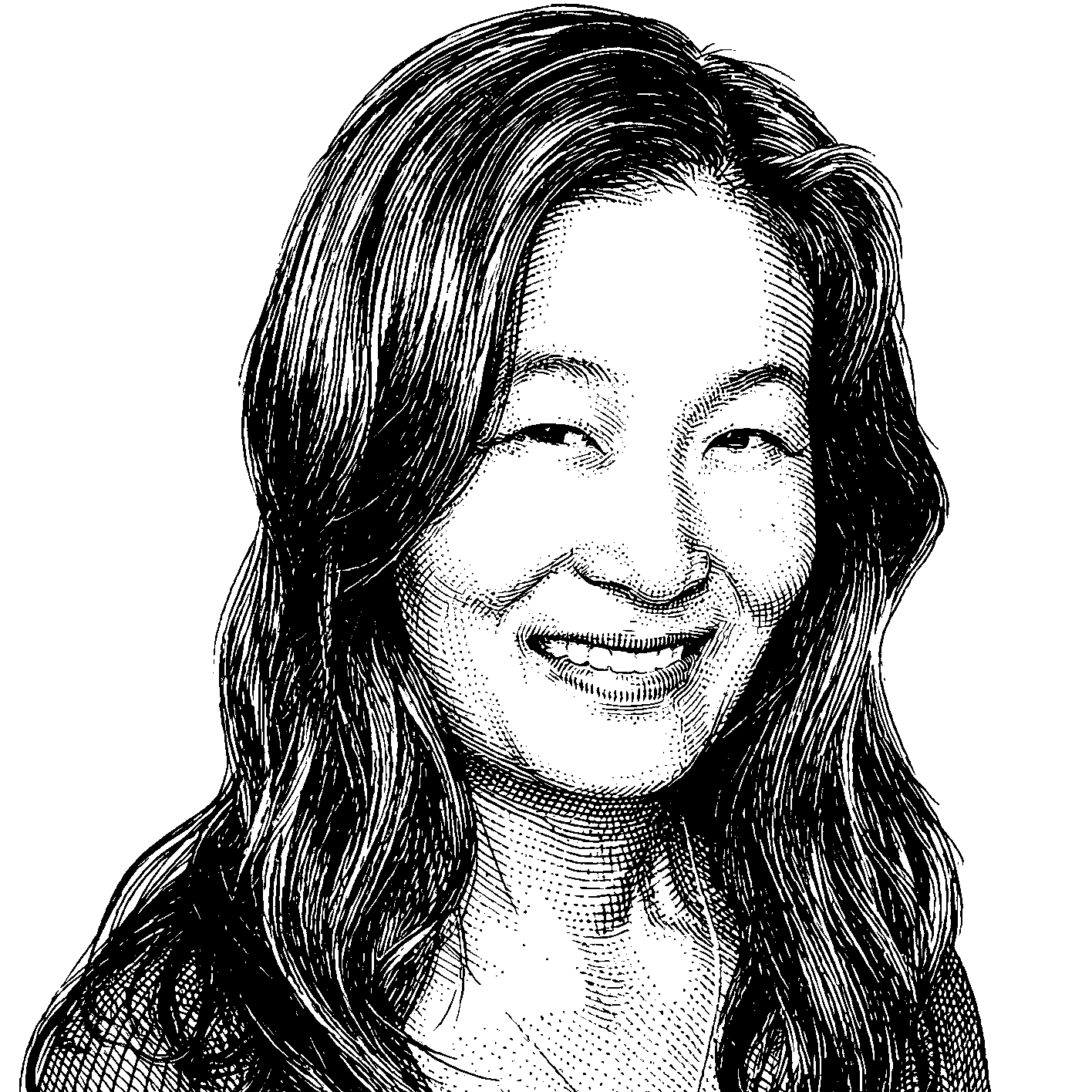
Laura Shin is a prominent crypto journalist and the host of the popular podcast, Unchained. Her work focuses on the intersection of technology, finance, and decentralized systems, making her a relevant voice for the Mormon Transhumanist Association conference. She brings an understanding of DAOs (Decentralized Autonomous Organizations) and their implications for collective action and individual empowerment—a topic relevant to transhumanist ideals of distributed governance and community building. ¶ Shin was a senior editor at Forbes, where she distinguished herself as the first mainstream journalist to cover cryptocurrency full-time. She is the author of the book The Cryptopians: Idealism, Greed, Lies, and the Making of the First Big Cryptocurrency Craze, offering a deep dive into the early days of the crypto world. Her insights into DAOs, blockchain technology, and the future of decentralized systems are well-informed by her work. ¶ Laura Shin graduated Phi Beta Kappa with honors from Stanford University and earned a Master of Arts from Columbia University School of Journalism. Her academic background combined with her practical experience in the fast-evolving world of crypto positions her as an insightful commentator on the technological and societal trends shaping the future.
Transcript
Speaker 1
Our technology keynote speaker is Laura Shin. Laura is a crypto journalist and hosts the crypto podcast Unchained. Formerly a senior editor at Forbes, she was the first mainstream journalist to cover crypto full-time and is the author of the book. The Cryptopians, idealism, greed, lies, and the making of the first big cryptocurrency craze. Laura graduated Phi Beta Kappa with honors from Stanford University and has a master Of Arts from Columbia University School of Journalism. Laura Shin.
Laura Shin
All right. Hi, everyone. Nice to see all of you. Thanks so much for coming today.
Laura Shin
So, my talk is titled Little Democracies Everywhere: How DAOs Empower Both the Collective and Individuals. Chase Chapman is a recent University of Mission graduate. And when she was in college, she imagined she would kind of go the typical business route. She was thinking maybe she would do management consulting, investment banking. Maybe along the way, at some point, she would end up in private equity. But not even a year out of college, she’s actually living a very different life than what she imagined. And the reason is that when she oh, sorry, this is here. Is this better?
Speaker 1
Yeah, okay.
Laura Shin
Pull it down. Like that. Oh, yes. Okay, now I can even hear myself. Okay. All right.
Laura Shin
So, even a year out of school, she’s actually living a life very different from what she imagined. And the reason is that when she was in college, she started getting into crypto. And she then ended up deciding to found a crypto startup upon graduation. And interestingly, as she was working more in crypto, she actually realized that she was working with a lot of decentralized autonomous organizations or DAOs. Now, a DAO can be really any kind of different group. They’re typically ones that have some kind of purpose or set of values or a mission, and then they organize themselves via a token. So we’re seeing a huge range in the diversity of DAOs nowadays. You might have heard of a really popular one from last fall called Constitution DAO. It sprang up within the span of a week to try to buy a copy of the U. S. Constitution. There are other ones that are social clubs. There are certain ones that try to manage what are called decentralized finance protocols, which are software protocols on the Internet. that basically try to offer the services that financial institutions offer, such as decentralized borrowing and lending or decentralized exchange. And I’ve even heard of a DAO recently that is called Fry’s Dow and is, I think, trying to buy some kind of fast food franchise. So as you can see, there are just a huge variety in the types of DAOs.
Laura Shin
So as she was getting involved in all these different DAOs, she realized that decentralization is really the crypto way. And being the founder of a startup, that’s definitely more centralized. Oh, I think this is like a bit wobbly. Is that what? Yes. Oh, okay.
Speaker 3
Sometimes if you just talk about the angle, but maybe not since those handles need to be tightened to hold the body.
Laura Shin
Okay. All right. The microphone definitely has a mind of its own, but hopefully it will obey now. Okay.
Laura Shin
So she was getting involved in all these different DAOs, and she realized that actually this decentralized way was more of the crypto way. And so what she ended up doing was stepping back from her startup, now she’s an advisor there, and instead she is what she calls a Web3 freelancer. And she says that she contributes to these little democracies. So this actually might sound kind of futuristic, but I actually want you to now think of a much different kind of world, a more analog world. So, just imagine that we have a village of what could actually be all the people in this room. So, we’re all part of a village. Now imagine that every single day at noon we all gather kind of like in the town square and what we’ll do is whenever any of us or for any of the transactions that we’ve Had in the last 24 hours, we will each call them out. And then, what all the members of the village do is we all write those transactions down in ledgers that we individually keep. So, for instance, I might say, oh, okay, so I bought $5 worth of bread from the breadmaker. The breadmaker might say, I paid my neighbor $20 for babysitting, whatever it might be. And for each of those, we all write the transactions down. Let’s say one day I’m sick and I don’t participate in this and my ledger then looks different from everyone else’s. Well, we would then know that majority rules, that the canonical ledger will be the one that majority the majority of the ledgers Show that they all agree upon. So if you now swap out all of us for anonymous computers around the world, that is what a blockchain is. And instead of having these new blocks of transactions every 24 hours, instead we have them every 10 minutes in the case of the Bitcoin blockchain or every 12 to 13 seconds in the case of the Ethereum blockchain, or even some newer blockchains such as Solana will do this every 400 milliseconds.
Laura Shin
So as you can see, this is kind of like a sort of democracy, right? Every individual kind of has their own voice and is contributing, but majority rules. And so you can kind of see how this technology then sort of naturally gives rise to what she calls these little democracies that she is now working for.
Laura Shin
So I am now here going to describe the characteristics that I am seeing. When I’m looking at these different DAOs. And I mean, obviously, this is a very new space, so don’t hold me to this over the next few years. Who knows? These could change quite a bit. But this is, you know, how I see it. Now.
Laura Shin
And so at the base layer, we have the values of the DAO. You know, as I mentioned earlier, this is kind of like that purpose or the mission. On top of that, you have this collective ownership layer, and that’s the token layer. And this is what differentiates DAOs from the startups of the Internet boom, where instead of this company that owns everything, now the users actually are also part owners in these networks. Then on top of that, and not every DAO has this, but definitely the newer DAOs do, they have generally a set of clear processes or some kind of formalized governance system that uses the tokens. And there tends to be a lot of transparency. For some of the earlier, whether or not you want to call them DAOs, but blockchains, such as like Bitcoin or Ethereum, they maybe don’t have this Kind of tokenized governance or clear governance. And so you will hear a little bit about how that can cause issues. And then when you have these characteristics, that helps give rise to Very easy collective action, and something I have definitely learned in my nearly seven years of covering crypto. is that definitely in crypto, when things happen, they move fast. And I think it’s because these blockchains do enable this collective action and it can move very quickly. And then, on top of that, and this actually I think speaks to many of us, you know, who I’m assuming most of us are American in this room, and this is sort of the pinnacle of this, is that all of this, when you have clearly articulated values and a sense of ownership and these clear processes, transparency, that also then gives individuals a sense of autonomy and ownership and freedom.
Laura Shin
So, I’m going to start with this first layer, describing this values layer. And as I mentioned earlier, every single one of these DAOs will have its own mission or values. And as I mentioned, they really can vary. And so they will begin kind of by articulating what is the purpose, what is the reason for our existence.
Laura Shin
So one example that we have here is that Constitution Dow I mentioned. Earlier, it made headlines quite a bit in the fall, so you might have heard of it. This is what the web page looked like at a certain point back when it was raising money. And so you just have this screenshot here, but further down the page, they had written some text, and one of the sentences was decentralization and cryptocurrency, or Web3, have created structures that allow people to self-govern with unparalleled levels of autonomy and freedom. Again, those characteristics I was talking about at the top of the pyramid. It’s fitting that we use the technology to honor and protect the greatest historical tool for human governance, the U. S. Constitution. So they were saying, you know, our mission is to Steward this copy of the U. S. Constitution that they were trying to buy, which unfortunately they failed. But even during that time when they were making that effort, they had a bunch of museums and other public Institutions reaching out to them that had resonated with that mission.
Laura Shin
And when I interviewed Chase on my podcast, I had asked her a question. This was not meant to speak to this values issue, but. I just asked her, oh, so if these are decentralized groups, if you have, let’s say, two different people in the same role, let’s say they’re both business development people. But one of them is living in New York and the other is living in my hometown of Cleveland. You have two very different costs of living. In a centralized company, typically the cost of living would determine compensation. So, how would you handle that in the Dow? And she didn’t answer the question directly. She said, What would matter is that the Dow would articulate what the values are from the outset, and then everyone would know that that is how decisions would be made. So, when you kind of join the DAO, this is kind of like what you’re agreeing to. And then, as long as people agree on those values, then later on, if there are questions like this, then it kind of obviates conflicts.
Laura Shin
So about that, we have the token layer or this layer of collective ownership. And this, as I mentioned earlier, this is where people turn just from being users into user owners. So many of these DAOs have their own coins. And for instance, this is a social club DAO. It’s called Friends with Benefits. And in order to be a member of the DAO, you have to own FWB tokens. And depending on the number you own, you get different perks with your membership.
Laura Shin
Here’s another DAO called Pleaser Dow. And this actually has a very interesting origin story. There was an NFT artist who was doing kind of a big NFT drop. She was dropping this artwork that was going to be associated with one of the major DeFi protocols, a very popular one called Uniswap. And someone tweeted, hey, I would love to go in on buying this with a bunch of people. So they just whipped up a DAO, they whipped up a coin, the Peeps coin. And now essentially this DAO, the purpose of their existence is to just collect NFT art that sort of speaks to their values. And so another artwork that they bought was the only NFT that Edward Snowden has sold, which is called Stay Free. And it’s just. The text of a court decision saying that the NSA did violate the law with its mass surveillance activities, and he released this as an NFT. When they explained why it was that this was one of the many NFTs they bought, they said that stay free expresses that cypherpunk ethos of transparency for all, which, as you know, is another one of these characteristics that I’m talking about.
Laura Shin
So, something that has been interesting to me is that this notion of kind of the collective or work that will kind of benefit a group This is actually kind of attracting a slightly different kind of person to crypto. And as I mentioned, I’ve been nearly covering this space for seven years, and I have a popular podcast. I will tell you that the vast majority of the audience is male and has been for a very long time. It’s ever so slightly becoming slightly more female, but it’s still like far and away, very, very male.
Laura Shin
And what I found out recently was that there is this new tool called Syndicate DAO, and they recently launched these Web3 investment clubs. And they naturally ended up attracting quite a number of women DAOs. And they didn’t mean to do it. I will explain. So the Web3 Investment Club is basically a group of 99 people or fewer. that again, you know, are organized by a token and what their purpose is, is to kind of share expertise. So maybe, let’s say all of us are in one of these investment clubs and maybe that woman right in the front is like an NFT expert and so she is kind of tasked with helping do the NFT investments. And maybe this man in the ray up front is really good with DeFi and kind of knows what DeFi investments to make. So they will then make these decisions for the group and the group will invest together and we all kind of share in the profits or the losses also, we have to note. And but it’s this kind of ethos of a rising tide lifts all boats. And so when Cineca Dow went to launch with its initial cohort, They found that half the DAOs they were launching with were either female-led or all-women DAOs. And they did not intend to do this. And when I asked them how that happened, they said You know, we actually were just looking for groups that were kind of mission-aligned, values-aligned. And when we went to lunch, we suddenly realized, oh, half of them are female-led, and it’s very unusual in crypto. They didn’t mean to do it, and I think it shows that again, these values in DAOs are, you know, this kind of sense of like group ownership is something that’s really baked in, and I think it’s attracting a new kind of person.
Laura Shin
However, I don’t want to paint the picture that this is all as rosy as it sounds, and there’s definitely a lot of kinks that need to be worked out. So at the moment, there’s a big argument raging in this space about the role of venture capital and VCs. And this is a cartoon that somebody tweeted out kind of criticizing the participation that venture capital has been making in the space to basically profit from these new coins that are being launched. And so what can happen, there’s like two ways that a coin can be launched. One is to do it more like Bitcoin, where you just launch in the network And there’s no pre-mined coins when you start. Now, a pre-mined coin is often what happens in these coins that do have the venture investment, the early team and the investors, and anybody who participated in that. in that buildup before the public launch, they will be rewarded with coins that have been minted by the software even before they’re publicly available. And then they’re allocated out. If you think about sort of like equity in a startup, it’s sort of that conception, except it’s for these tokens that will become liquid very soon. And so there’s essentially this debate between what some people disparagingly call the VC coins, and then other people call a coin like Bitcoin a fair launch coin, one that doesn’t have this pre-mine. So how like whatever it is that will be the ideal way for these coins to launch in the future, I think remains to be seen. So I don’t want you all to think that this is all as democratized as it sounds like in the ideal world. Clearly, there’s debates over how to do this.
Laura Shin
The next layer after this is the clear Process layer. This is where you have the rules around how to govern, you have transparency, and a number of these different protocols have different ways for managing their governance. So one of them that is actually in its 13th round of providing funding and has dispersed $50 million in funds is something called Gitcoin, Gitcoin DAO. And what they do is they fund public goods. And projects will make proposals to receive funding, and then the Gitcoin Dow Foundation will allocate funding based on how their members vote. And they have funded things such as open source projects or journalism. I even noticed in the latest round, there are projects for tackling climate change or for contributing to the war effort in Ukraine.
Laura Shin
Now here’s the thing. People often talk about blockchain based identity, how in the future we might have that, but since we don’t right now, a lot of these token voting systems are literally just based on how many tokens go to a specific vote. or a specific proposal. And since even a wealthy person could, for instance, make themselves look like many people by spreading their funds out amongst different wallets. They try to just kind of offset the influence that whales have in these systems. So whales are people who have such a large amount of tokens they can either Sway the price, or in the case of these proposals, they can sway the outcome of the votes. And so, what they have done is they created this website called WTF as QF. And the QF stands for something called quadratic funding. And quadratic funding is their kind of workaround to try to mitigate the influence of whales. And it’s a really interesting system. What will happen is that, let’s say, there’s one proposal that receives one vote from ten different entities, as you can see here in this first example. And then under that, the next proposal has received ten votes, ten votes, but from one entity. So when Gitcoin goes to allocate that money out, roughly 90% will go to the one that has many more entities voting for it. Only 10% will go to the one where it’s a single entity, but they just have, frankly, more money. And when I spoke to the founder about this, he explained quadratic Funding as a way of optimizing the preferences of the poor and the many over those of the rich and the few. I found to be an interesting philosophy, and I think there’s a lot of different ways that people are managing the governance right now. So we’ll continue probably to see more experiments.
Laura Shin
But now I’m going to tell a story of one of these DAOs that maybe doesn’t have such clear governance. Many of you might have seen my book, which I think is, yes, I do see people with the book, The Cryptopians. And it tells the history of Ethereum. And I have a slide here showing the Ethereum kind of like founding group right when they met, like the very week that they all first met. And at the time, the creator of Ethereum was a teenager. He was just days away from turning 20. And so he clearly did not have a lot of management experience. And so when they were trying to figure out how to allocate the pre-mine, which by the way, also he had been influenced by others to even have a pre-mine because he didn’t want to have one. But he said, instead of trying to determine what every individual’s contribution is going to be, why don’t we Just kind of divide the money sort of equally. And what that meant to him was for that allocation that was going to the people who contributed between the inception of Ethereum until the crowd sale. they would just divide the amount of pre-mined ether equally between each of the months. And then for each of the people contributing during those months, they would either earn One portion or half a portion for point for 0. 5 for half-time work and then 0. 25 for part-time work. So what this meant was basically kind of the same hourly rate for everyone, and one of the main coders of Ethereum would still be annoyed years later when he would recount how that meant for one of the months. When he worked full-time on Ethereum, there was a carpenter who was building a wall in the house where they were all living and building a desk and just doing carpentry type work. And that person received the same amount of ether for that month. And so because people felt that this wasn’t fair, there was just kind of a lot of grumbling about it. And a year later, when they went to finally allocate that money out Somebody went to Vitalik again, trying to change the system, saying this isn’t fair. And Vitalik had a veto on the foundation board. And this person said, We at least need to bring this up with the board. But Vitalik said, I have the veto, and I’m not going to change my mind on this because we’ve already promised these people this. I’m not going to go back on my word. Therefore, I’m not going to bring it up to the board. Meaning, essentially, he didn’t follow. the clear processes that had been laid out. What this led to was the person who was disgruntled airing their grievances on Reddit about how much individual people were earning. And so then there was this very public discussion around How much ether these different people were getting based on what their contributions had or had not been to Ethereum. Definitely not an ideal situation for any organization. It was obviously slightly scandalous. So that’s what happens when you don’t have clear processes or when they’re not followed.
Laura Shin
So when you have these characteristics, the values, the collective ownership, the clear processes, that enables collective action. That is what enables these groups to act on that mission or those values that they have laid out. And a lot of different DAOs are trying to do things such as tackle tragedy of the commons type issues, or they will just do things that in a previous world, a centralized company might have tried to do. But they’re going to try to do it now in a decentralized way using a DAO. And a good example of this is one decentralized protocol called the Graph. And the graph is basically trying to be a Google for blockchains, except they’re doing it without a company that has a C-suite and a board and is hiring all these different workers in different roles and different departments. The way they’re doing it is they’re creating this decentralized protocol that has a coin, and the coin has different incentives baked in to try to get people to contribute to the network, to these different services that they want to have on the network. So if you just think about the purpose would be something like the way that we can search on Google for, for instance, the population of Utah or something. On the graph, you could query something like: How many Ethereum smart contracts have more than a million ETH in them? And so there was one company that started off actually trying to provide the same service, but they were doing it in a centralized way as a startup. And I interviewed this company, Streaming Fast, and they said that they began just trying to do things that a normal company would do to get clients, to get monthly recurring revenues. And they did this with their kind of closed source proprietary technology. But of course, in this crypto world, in this Web3 world, they were not getting a lot of customers. And meanwhile, they were seeing all these headlines about the graph getting All this investment, and they were attracting all these different people working with them. And so finally, they realized we cannot compete against this decentralized protocol and this group. of people, however loosely organized they are via a token, because the incentives are just too strong to join that network as opposed to working with our little company. So they threw in the towel and they decentralized. They now are service providers on the Graph Network, and instead of chasing these monthly recurring revenues from Companies and having their technology be closed source, they’ve open source everything and they earn graph tokens and they feel like owners of the graph network. They’re user owners, they’re also service providers of it. And they said once that happened and once they adopted that crypto ethos, then they saw their business take off. People began using their technology, reaching out, wanting to work with them.
Laura Shin
So this now gives us the last piece of this, you know, what I talked about, the pinnacle of this pyramid. And when you have these clearly expressed values, when you have these user owners that have that sense of ownership, when you have clear and transparent processes. not only can the group act, but individuals are also empowered to act, and they have a lot of autonomy and freedom and that sense of kind of entrepreneurship.
Laura Shin
And so certain people, like a great example would be creators. So I’m a fan of Kings of Leon, and they were a band last year that became the first band to issue their own NFTs. So before NFTs, a band like Kings of Leon would make money, for instance, from streaming services. And you may be very well aware that these streaming services pay fractions of a penny for every stream. And a lot of people talk about how a lot of musical artists just cannot make a living from that. And many of them end up depending on touring. But even for touring. At least where I live in New York, when a popular band comes to town, I know this from experience, you can go on there at the minute that the clock turns to whatever time the tickets are going to go on sale. And they will sell out within that minute, and most of the tickets will go to scalpers. And so then the tickets will be resold at whatever the true market price is of those tickets, whatever the real value is of those tickets. And you know who’s going to get that money? It will be the scalpers, not the band. The band itself is not actually getting the market value of what they’re offering. So there are a lot of problems that creators have, but NFTs enable them to transact directly with their fans in a way where there’s many fewer middlemen, or perhaps none at all, depending. And so what Kings of Leon did was they had multiple tiers of NFTs, and the most exclusive were, I think, there were only six that they offered at the time. And they were ones that would unlock for you kind of like lifetime tickets, front row tickets, for as long as Kings of Leon exists. and you will get kind of, you know, a chauffeured driving a limo to the concert and VIP access. Then there was a middle tier that was probably less expensive, less exclusive, and then there was kind of the mass tier, which is actually where I bought in. And yes, I could have just added the new album to my streaming service. Yes, I could have done that. And then they would have earned pennies or dollars or whatever from my streams of that. But, you know, I have this emotional connection with them. And frankly, as somebody interested in crypto and who likes Kansas Land, I thought, this is the first time this in the years that I’ve covered this space where something that I’m actually interested in in my personal life kind of intersects with crypto. So I just sort of had to own it. It was like this emotional Moment. And that’s where the vast majority of people bought in. And so when you think about how King Silian was kind of able to capture What fans were willing to pay at multiple different levels. I mean, that’s really a new model for creators.
Laura Shin
But you don’t have to be a creator to kind of capitalize on The top of this pyramid that I’m describing. You can be, of course, like Chase Chapman. You can be a business person. You can be a Web3 freelancer. You can contribute to these different DAOs. You know what the rules are. You can find ones that align with your mission and your values. And you can find your own place and contribute to them.
Laura Shin
So I do not know what the future holds for someone like Chase. I mean, she obviously hasn’t even been a year out of college, so who knows what her future career will look like. But I do think there is something new and interesting that is rising up out of these DAOs. And I do think, especially, you know, I imagine for many of us being American and like living in a democracy, I could imagine that these values and the way these function could be quite interesting to a number of us. I would urge you to either try to contribute to a Dao somehow, or if that seems a little bit out of reach for you, I would urge you to instead just think about how you could Taoify your life. How could you express your values or the values of the people you’re working with more clearly? How could you make processes more clear and transparent? How could you make things more democratic and enable the collective to act together more easily? Or see how you and others might have more freedom? And that is that’s my talk on DAOs. So I think I’m supposed to answer questions. I don’t know if there’s a mic for the oh, right there. Okay, go ahead.
Speaker 4
All right, great. All right, we’ll do. Thank you so much, Laura. That was a fascinating talk. And I really loved the stories that you gave and the analogies. They really helped a person who’s not an expert to understand. So, thank you. Thank you.
Speaker 4
I’ve heard a couple of other questions, and I hope that we’ll keep asking these questions either in our own minds or here at the microphone all day to every presenter. Because I think it is the most important question about, you know, how do we make this how do we make this the future that we want And that is, how do we program social justice into DAOs so that they become a feature and not just a hopeful bug? We’ve had a couple people answer and say, oh, well, it just so happens that these things lead to democratization and empowerment of the masses, but it’s not really a feature, it’s a bug. I think most of us would rather see that a feature. We’d rather see that built into it, baked into it. So I’d like to know. I think that’s how we will compete with China and with authoritarian regimes and strongmen politics in the future, is if we can empower the little people and the people that aren’t people, the animal people, the plant people. That are just as important to the health and sustainability of our ecosystem going forward. How do we give them tokens? How do we give them a vote? And I want to know if you have any gut feelings about how we can do that with DAOs.
Laura Shin
You know, this is such a difficult question, so I’m definitely not going to kind of pretend like I have any answers here. I will say, though, that I think a lot of people are working on these issues, and I think, frankly, what’s probably going to help is trial and error. I don’t know if people followed what happened with Brantley Milligan of the Ethereum naming service, but he had some tweets that expressed discriminatory views. And so then later there was a vote whether or not to remove him from his directorship at this foundation. And it really goes back to that processes issue because what ended up happening was he was the single largest holder of ENS tokens. and he did not abstain from the vote. And he had a large enough number of tokens that he actually swung the outcome in his favor, and so he was able to keep that position And so people were just upset by the fact that he obviously probably shouldn’t have participated in a matter that involved himself, but he did. And the issue there was, of course, they didn’t have any rules that would have prohibited that. And that is something they’re probably learning now. Okay, going forward, you probably should have some kind of rule where if the vote involves you, then you can’t participate. So I think it’s more about kind of establishing what those rules are from the outset. But I like for instance, every time I do my podcast, I have this checklist that I run through before I start recording. And sometimes people, guests will say to me, Oh, this is a really smart checklist. And I’ll just laugh to them. I’ll be like, Oh, you know, you’re listening to a history of all the mistakes that have ever been made on the show. And I imagine that a lot of DAOs will have to go through a process like that, that there will be mistakes that will be made, and then people will learn: okay, going forward, it’s probably best if DAOs incorporate this or that. And we’re even seeing that when it comes to smart contract security. There have been some very famous hacks in the smart contract space. And again, I think it’s one of those things where going forward, people know never to code things a certain way because then it will be vulnerable to a hack. So, you know, I can’t claim to have any really good answers for you now. I think probably what’s going to happen is there’s just going to be more issues like these, and then over time, they will become more More they will fit more that ideal that people aim for. Oh, okay.
Speaker 5
Yeah, quick question. Where should I go to learn about DAOs? Like maybe a reference, the different kinds that are set up. Because I want to set one up myself and I loosely understand things. I’ve been a blockchain developer for a while. Yet, I don’t know very much about DAOs.
Laura Shin
So there’s a number of different resources. Actually, Chase herself has a podcast called On the Other Side, and it’s all about DAOs. I think there are other ones like I know well, so Rabbit Hole, I think, has both a podcast as well as it is a organization that teaches people about crypto and you can earn crypto there. Frankly, also, there’s certain websites, like there’s a website called DeepDAO, and they just kind of give a lot of stats on different DAOs. But if I were you. I might just look at the list of things there and kind of how they’re breaking things out. And then you could probably just click through the links and just see interesting DAOs and ones that appeal to you. But frankly, other than that, I probably would just keep up on crypto news because DAOs are just They’re a part of all the crypto media, you know, Coindesk, the block, decrypt. And frankly, what it might be is you might read an interesting news story about a DAO that sort of resonates with you that you might want to get involved with. Because some of the like, you know, Chase’s podcast tends to be a little bit more in the abstract because she since she works in DAOs, it’s more of a You know, how do we handle HR issues and DAOs or that kind of thing? But I do think just if you’re following the news, you might naturally find certain DAOs that appeal to you.
Speaker 5
So, Deep DAO and Chase’s podcast.
Laura Shin
Yeah, yeah, which is called On the Other Side.
Speaker 5
Thank you.
Speaker 6
Yeah, so thanks for your talk. I found it interesting the example you gave of Edward Snowden selling an NFT. And I wasn’t familiar with it, so I had to kind of look it up. Now, it kind of raised a question in my mind, because this is piece of artwork based on a court ruling, right?
Laura Shin
Yep.
Speaker 6
And uh a court ruling would be something that would kind of be in a sense owned by everybody. So I was wondering if you see a role for NFTs for things that are owned by not just a particular community but by everybody. And if there is a role for NFTs in that situation, what is it?
Laura Shin
So a couple of things. So first of all, and actually, so you might want to just stay there because I might ask you a clarifying question. It was an artwork made of the text, so it was kind of, it’s a little bit different from saying it’s an NFT of just the text. It was an artwork, but then I’m sorry, the second half of your question was how we can make NFTs of things that people collectively own.
Speaker 6
Right. So I mean, we kind of think of, well, I will buy an NFT or maybe a DAO will buy an NFT. Is there a role for NFTs for everybody? Like is is there any kind of a sense that an NFT would be owned by everybody? For things that should be owned by everyone?
Laura Shin
Um that’s a really tough question. I So let me just think about it on stage. My sense is that since a DAO members are organized by a token You would then need to have some kind of DAO where everybody on the planet has an ownership stake in that DAO, which would be a token. Given just sort of the state of the world and everything and people’s varying interests in this kind of thing, I can’t imagine that there would ever be a DAO where everybody would own a token of it. Yeah, that.
Speaker 7
There is fractional ownership of NFTs, right? So maybe that kind of partially gets there. I just thought I’d throw that in. So you can have NFTs that are owned by more than one individual, right?
Laura Shin
Yeah. Yeah, but yeah, but for the whole planet to own, it would. to fractionalize into seven billion people and to actually distribute to all the seven billion, I just I don’t know, seems challenging. Um, okay, so yes?
Speaker 8
Thank you. And I want to ask if you know how can DAOs help improve journalistic integrity? And do you know of any projects that is underway?
Laura Shin
Wow. How DAOs can improve journalistic integrity. Well, I don’t know of any DAOs that are working on that specifically. I do know of a media DAO that is launching or has launched. A number of the crypto media have joined together for that, but I don’t know if their mission is around integrity. I do know that Gitcoin has funded a number of individual journalism projects, but Again, I’m not sure if any of those, the mission has been around integrity. But maybe if that interests you, you could try to start one. So.
Speaker 8
Well, thank you for sharing your voice on it.
Laura Shin
Yeah.
Speaker 9
Hi, Laura. Thanks for the talk. I really appreciated your pyramid structure that you laid out for us. You talked a little bit about Some of the learnings that DAOs have encountered as they’ve discovered gaps in processes and so forth. One of the things that I wonder about is. You know, at the bottom of the pyramid, you have these values, and you talked about this question around, you know, what happens when conflict arises, and the idea that these values are supposed to then Provide a foundation on which to mitigate the possibility of conflict. But as I look at how values of societies also evolve over time, I think about the changing values that were originally enshrined in the U. Constitution regarding slavery or misogyny, and that obviously there’s a process built in to be able to adapt to those. Do you know, given the fact that immutability is such a key piece of blockchain technology, about processes that are built into DAOs To account for changing values, changing processes, and evolving that over time in a DAO?
Laura Shin
Yeah, actually, what I would say is that something that Chase talked about is She feels like in her work with DAS, what she’s realizing is that it’s important to realize kind of what needs to go on chain and what doesn’t. And so there are a lot of tools that are being used that are not tools that have anything to do with the blockchain, frankly. So for instance, she was telling me actually that the way compensation is decided at one of the DAOs she works at, it’s a tool called Coordinate with a P. Ape in, as if you know that expression in crypto. And what they say is that they provide payroll for DAOs. And as far as I understand it, Kind of logs transactions that you’re having as you’re working in the DAO, and then people that you work with kind of vote. I don’t know if vote is the word, but they sort of collectively determine what you should be paid for your contributions to the DAO. This is not something that’s happening on chain. And so I think when it comes to probably these things like the values, I think a lot of that probably is happening off chain. And so that allows for that flexibility. Hi.
Speaker 10
On the cultural side of crypto, some of the things you’ve talked about with DAOs and other things, I think there’s a lot of really positive developments. but there’s kind of a negative side as well. I’ve seen that I feel like crypto and the financial side of it can seems like enhance tribalism. I’ve seen you the victim of that a couple of times. Once when you said you don’t own any crypto because you want to stay neutral and a lot of Bitcoiners had harsh things to say, and then more recently, some stuff from the Cardano community. I’m just curious what you think things we can do to mitigate the negative aspects culturally of crypto?
Laura Shin
Wow, that is a big question. You know, I this goes back to what I was saying about how those Web3 investment clubs just naturally they ended up being half Women-led DAOs. When I was talking to those women, they were saying, oh, there’s just something about the setup of this that just really resonated with me and my peers. And frankly, that to me is kind of a less tribalistic notion. It’s this, oh, we’re going to do this together as a group. We’re going to help each other out. So you’re right that kind of more in the pure crypto world of just the individual coins, it can be quite tribalistic. The thing is though, so here’s my personal take on that. I actually, I mean, granted, so I also have a slightly privileged position because since I’m a journalist, especially early on when I was covering for Forbes, if I, you know. called somebody up and I said, Oh, I’m gonna write an article for four people were generally on really good behavior with me, you know. Um but I actually feel like in general, the rhetoric online doesn’t always match kind of how people behave in person and so I mean, I guess that’s probably true for any area. So I’m not saying that crypto isn’t tribalistic, obviously, but I do feel that the perception that you get from social media is not exactly the same as it is in real life. But I do wonder, as I talked about in my talk, I do feel like this notion of this collective and we’re all helping each other out, if that might kind of be a good Way to counter the tribalism. I think we’ll have to see. I don’t really know.
Speaker 11
Hi, Laura. Hi. I really enjoyed your podcast recently with Chase Chapman on articulating values. for DAOs. And I wonder if you had thoughts on the recent Juno proposal, which voted to take away funds from a well who had Sybil farmed the airdrop to receive Juno tokens. And I was wondering if you had thoughts on how they should go about maybe fixing like issues like that using values they’ve been talking about, making like a bill of rights built in into the chain.
Laura Shin
Yeah, I tweeted about this because this was incredibly fascinating to me. So a couple of thoughts. And I should also say I did not look into this super closely because I saw people tweeting back at me like, oh, you should look at this Proposal and that proposal in this forum chat and whatever. And I didn’t have time to go into all that. So there’s probably a lot of nuances that I missed. But the first thought that I had was, wow, that’s that’s I don’t know, there was something a little bit breathtaking about that to see the collective come together and kind of punish this entity. However, I also thought, well, the more I look into this, it does look like they were kind of cheating. So, you know, obviously in our society, when people do things that are kind of outside of the rules, they run the risk of getting punished. And so another part of me was like, well, in that case, maybe the governance kind of worked because then this model did enable the collective to express their values. Granted, it’s not in an ideal way. I think what would have been a more ideal situation here would have been if the Farming or the whatever the scheme was where they had kind of cheated to get these coins, if that had already from the outset been built in a way where you couldn’t cheat. To gain extra coins. So then that might have just prevented the whole thing. So that’s kind of what I thought. But I do mean to look more into that. And now that you asked me this question, I will do it later. If you see me tonight at dinner, maybe I might have new thoughts on that. We’ll see.
Speaker 3
I think that’s all we have time for. So thank you.