Apotheosis and Perpetual Progress
Max More, a founder of the transhumanist movement, reflects on the spiritual dimensions of transhumanism and its humanist roots. He traces the philosophy’s origins to Renaissance thinkers like Pico della Mirandola, who articulated humanity’s capacity for self-creation and transcendence. More distinguishes between static notions of perfection and the dynamic process of perpetual progress—the ongoing drive toward growth, improvement, and self-transformation. He addresses common criticisms, including claims that transhumanists hate their bodies or that extended lifespans would render life meaningless, arguing instead that meaning emerges from continuous development rather than fixed endpoints.
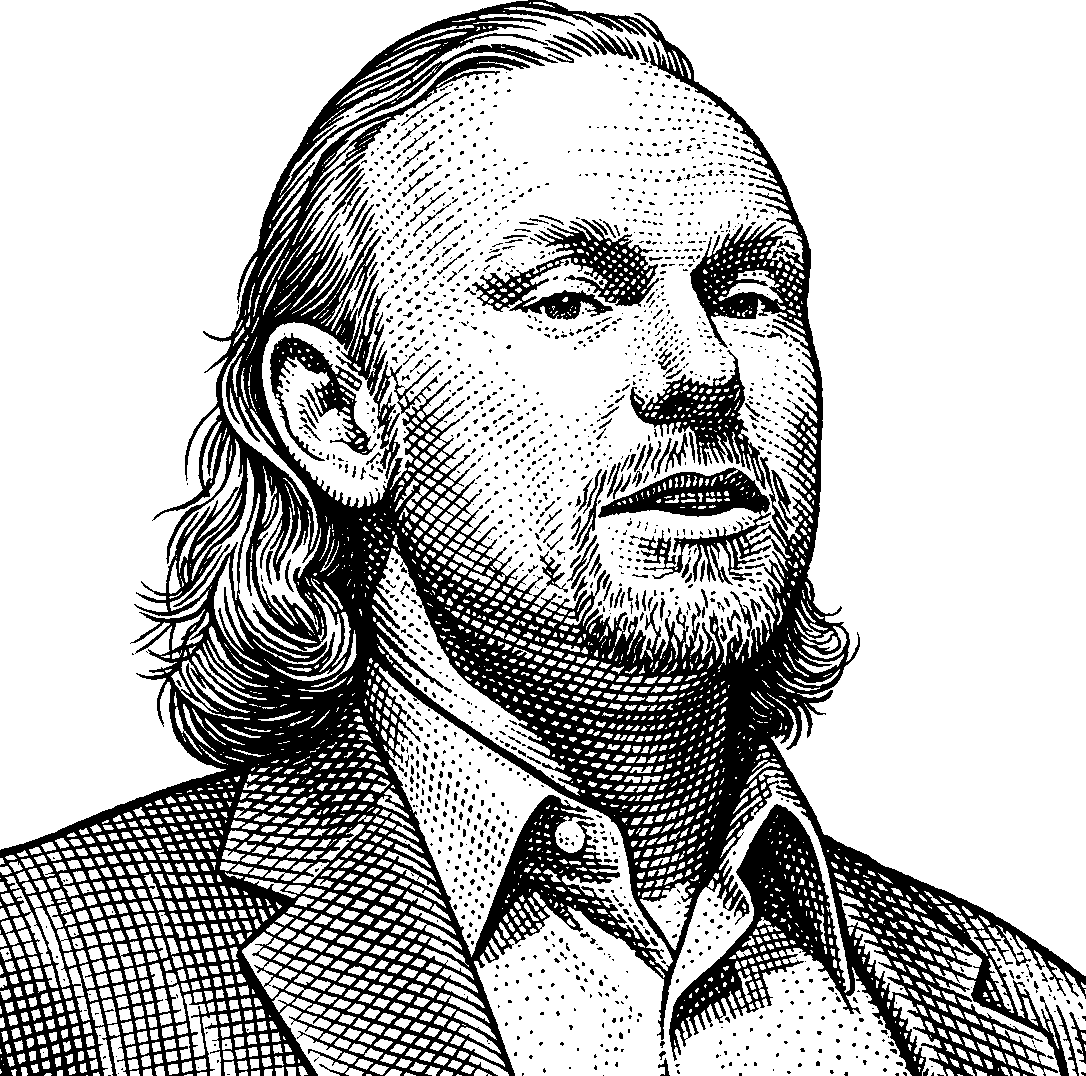
Max More is a prominent figure in the transhumanist movement. While his recent work has focused on decision-making and guiding progress through policy, his early work explored the spiritual elements of transhumanism. He sees transhumanism as encompassing both technological advancement to overcome human limitations and a continuation of humanist ideals from the Enlightenment. ¶ More is known for his work on the concept of Extropy, defined as a metaphor for increasing order, information, intelligence, well-being, and creativity—the opposite of entropy. This concept embodies the idea of continuous improvement rather than static perfection. He explicitly addressed transhumanism within the context of religion, agnosticism, atheism, and the search for meaning in his 1989–1990 article, “Transhumanism: Towards a Futurist Philosophy,” published in Exodus Magazine. ¶ More views transhumanism as a dual endeavor: one aspect aims to transcend human limitations through technology, altering genes, biology, and neurology to overcome limits to lifespan, intelligence, and emotional capabilities. The other emphasizes transhumanism as an evolution of humanism, rooted in Enlightenment ideals.
Transcript
Max More
However, religion of course is not the same thing as spirituality. I have never abandoned an interest in spirituality. And I do believe that transhumanism has clear spiritual elements.
Max More
So, this talk is kind of interesting for me to do because it takes me back about 20, 23 years or so to the themes I was most interested in back then. More recently, I’ve been working on. uh issues in decision making and uh and guiding progress and policy making.
Max More
But twenty twenty three times one of those came to be called perpetual progress. Um so originally it was ban I think bandless expansion, but some people said that kind of gave the impression that you wanted to pave over everything in the universe. So uh we changed that to perpetual progress.
Max More
So the idea of extropy, which is not a technical term, is meant more as a metaphor for the opposite of entropy, for increasing order, information, intelligence, well-being, creativeness. all those good things in life that from the beginning embodied the idea of a continual endless process of improvement, not a state of static perfection.
Max More
So it really takes me back to that, and it takes me back to the article I wrote back in 1989, 1990, which is published at Exodus Magazine, called Transhumanism Towards a Futurist Philosophy, in which I actually very explicitly put transhumanism in the context of religion, agnosticism, atheism, and the search for meaning. And I’ll be talking a bit about some of the ideas that I had in that paper there. Okay.
Max More
So first of all, what is nobody’s actually really so much time to actually define transhumanism, perhaps it’s not necessary. A couple of speakers very rapidly ran through a couple of the ideas. But one way to think about transhumanism I’m going to skip ahead because I decided it’d fit better up here is one way to think about transhumanism very simply is it’s really Got two very large chunks that go together, both of which are very complicated. But you can think of transhumanism as both transhumanism and transhumanism. And I’m going to be talking more about the second of those trends, humanism.
Max More
By transhumanism, what I mean really is the idea in transhumanism that Through technological means and careful planning, we can overcome fundamental human limits, limits to human lifespan, limits to human intelligence, limits to our emotional sophistication, and so on. Sharing with other people who believe in ameliorating the human condition some similar ideals, but going beyond that to attack fundamentally the limits on what it means to be human.
Max More
So that’s transhumanism and that and for that technology is essential. You can’t really move beyond the human condition in this sense unless you can alter the basis of the the genes, the biology, the neurology that makes us human, that both enables and limits our humanity.
Max More
But the other aspect of transhumanism is transhumanism, that transhumanism is really the heir to humanist ideas in the Enlightenment. So I’m going to come back to that in a minute, the idea of humanism being an important root in informing the spirituality of transhumanism.
Max More
So spirituality then is not the same as religion. I think probably it’s not very controversial to say that. Most people separate those two fairly well these days. And it’s a fairly blurry term. It can mean a number of different things.
Max More
But I think for many people, spirituality implies a concern with your deepest values, deepest values, the things that give your life meaning on a fundamental level.
Max More
And it sometimes can be combined with the idea of the sacred. If the sacred is not specific or religious, but is a spiritual notion, that can really mean That which is set apart from the ordinary and which is worthy of veneration of some kind. And veneration not necessarily meaning prayer or belief that has an external root.
Max More
So really it’s all about having it’s all about core values, fundamental values, the things that are most important, finding those things that give meaning and value to life. So in that sense, I see no reason why transhumanism shouldn’t be entirely compatible with spirituality.
Max More
So, a little bit about the humanist roots of transhumanism. And here I’m going to violate the laws of public speaking and just read you a little bit of something, though I won’t be the first to do that today. This is a classic early humanist, and I kind of picked this one because he’s one of my favorites, and because he was a religious humanist. So this is a person who I think had clear transhumanist views in some sense, kind of undeveloped pre-technological sense really, was definitely a humanist but was also a a Christian. This was Pico della Mirandola. Writing in 1486.
Max More
So let me just read you this passage by him because I think it nicely encapsulates both transhumanism and transhumanism, both those two aspects. So you can tell what religious tradition he’s coming from here while he’s making a statement that sounds very much in line with the kind of ideas that we share. The setting of this conversation is the craftsman, as he refers to God, explaining to humanity what the deal is, how he’s set him up, what is the situation in which humanity finds itself.
Max More
And the craftsman says Neither a fixed abode, nor a form that is thine alone, nor any function peculiar to thyself, have we given thee, Adam. to the end that thou, according to thy longing and according to thy judgment, thou mayest have and possess what abode, what form, and what functions thou thyself shalt desire. The nature of all other beings is limited and constrained, within the bounds of laws prescribed by us. Thou, constrained by no limits, in accordance with thine own free will in whose hand we have placed thee, shalt ordain for thyself the limits of thy nature. We have set thee at the world’s centre, that thou mayst from thence more easily observe whatever is in the world. We have made thee neither of heaven nor of earth, neither mortal nor immortal so that with freedom of choice and with honour, as though the maker and moulder of thyself, thou mayest fashion thyself in whatever shape shape thou shalt prefer. Thou shalt have the power to degenerate into lower forms of life which are brutish. Thou shalt have the power, out of thy soul’s judgment, to be reborn into the higher forms, which are divine.
Max More
That probably sounds more like a, apart from a bit of the language, more like a Mormon speaking than a Christian, probably. But you can see, even in that tradition, he found room for the expression of this idea that. Instead of the traditional Christian relationship with God up here and us down there and us being utterly different in nature and us being essentially corrupt and relying on God for salvation, instead, as we heard in the first talk, This discussion of theosis that humans can actually participate in the divine. We can become self-creating, give ourselves our own form. and challenge the limits to our own nature. So he was definitely a sort of a proto-transhumanist humanist. Now
Max More
Oh, and I should probably say that other aspects of humanism humanism informs transhumanism in not just the idea of progress. and these ideas of being able to recreate ourselves and the world, but also by a strong emphasis on Enlightenment ideals of reason, technological progress, science, and challenging authority. So I think those will all fed very strongly into transhumanism.
Max More
Now, what is the relationship then between these concepts? Many people have assumed for a long time that if you’re a transhumanist, you’re automatically an atheist. And it’s certainly the case, I think, that most transhumanists would probably identify themselves as atheists. a fair number as agnostics.
Max More
I never liked the term asnostic myself, although I wish it’s worth distinguishing between. Atheism can mean and is quite commonly used, I think, unfortunately, to mean a denial of all gods, a belief that there definitely are no gods. Now I think the more defensible form of the term is a theism without theism, just means a lack of theistic belief. Someone who doesn’t have theistic belief is an atheist. It doesn’t mean they can prove that no God exists, because the first question is which God are we talking about? You’d have to disprove all possible gods you could think of. So it doesn’t really require that.
Max More
Now agnosticism too is two quite different ideas. There’s a kind of a philosophical agnosticism which essentially says Again, A, meaning without Gnosticism, essentially knowledge, it can say that we cannot know whether there is a God or not. And of course it could be applied to other areas of knowledge. That is, it’s making a very strong philosophical claim, but we cannot know. No matter what, we will never know whether there is a God or not. It can never be established.
Max More
That seems like a very dramatic and bold claim to make. The softer form of agnosticism simply says we lack knowledge. Not that we cannot know, but I lack knowledge, and so I’m not going to commit myself one way or the other.
Max More
Now, as to many gods, I’d have to be an agnostic because I hadn’t even heard of many of the god concepts, probably. In fact, recently I was reading a really excellent novel by Neil Gaiman. Who I recommend to everybody, in his book American Gods, I found it a little bit frustrating because it broke up the flow. I had to quite frequently stop and write down names of gods I’d never heard of, so I go Wikipedia them. He has some of the well-known ones of Norse gods. Odin is one of the characters there, as you find out. But he has, and apart from Anansi, the African spider god I already knew, but there are many kind of obscure Celtic gods and other gods from around the world. And I had to go look those up. So I couldn’t be a, I couldn’t prove that they don’t exist. I couldn’t even make a statement about those because I never heard of them. So
Max More
Now, if you did discuss them, I would probably end up not believing in them. I would probably lack theistic belief, but I wouldn’t necessarily be able to disprove they exist if their existence doesn’t really contradict anything I can observe in the world.
Max More
I would say I’m an atheist in the sense of the traditional Christian kind of God who is all-powerful, all-knowing, and all-good, for the usual reasons, the problem of evil, and so on. I just don’t think that kind of being is consistent with what I observe. But as for the rest, I certainly wouldn’t think I could disprove them. I might just lack belief because it doesn’t seem particularly plausible.
Max More
No more plausible than if someone said, well, is this three foot tall green elf who lives on the moon and secretly manipulates the minds of all the heads of state. Can you prove there isn’t? And I should say, Well, got me there. No, I can’t. Doesn’t mean I believe in them. I will be one kind of atheist about that, but not necessarily the other kind.
Max More
So transhumanists have tended to be atheist or agnostics, but If you think again about the distinction I made between transhumanism and transhumanism, you can already see why there might be an opening for not only spiritual belief but possibly religious beef belief in transhumanism, especially if you focused on the transhumanism part, because that doesn’t really say anything about the basis of your beliefs, whether they should be based entirely on reason or empirical evidence. whether you should have a component of faith mixed in, and exactly how you define those tricky concepts in the first place.
Max More
As we’ve seen recently, and as all the discussions we’ve had so far today have pointed out, you can actually, especially if you emphasize certain aspects of religion, you can find quite a few compatibilities. between certain religions, perhaps especially perhaps Mormonism and perhaps Buddhism, and as we’ve even seen, perhaps even Christianity, on a certain interpretation. So it’s it’s I don’t think you can give a simple answer as to whether transhumanism is compatible with religious belief.
Max More
Um Certainly, psychologically, it clearly is because there are people who are combining it. So on a purely sort of psychological level, they are compatible. I think on a psychological level, just about any two beliefs you can find are compatible if somebody wants to find ways of combining them.
Max More
Logically, there’s going to be another question. Again, I think it would depend on what you think you can prove and disprove and where you think the boundaries of doubt are.
Max More
And I’m going to come to the simulation argument later on, which has already been mentioned. That’s a very interesting kind of New take on essentially a theological argument, which tries to rely entirely on rational premises and rational argument to establish something like a traditional theistic belief. So you can’t really say, well, belief in God has to be irrational, has to be based purely on faith, because there you have an argument which quite explicitly is a reason-based argument, which ends up with rather similar conclusions.
Max More
So, although I am an atheist in regard to the traditional Christian God, and lack of the hard kind of atheist and a soft atheist, lacking belief in all the other gods. I can quite see how transhumanism can be compatible with religion. And I begin to think that may not be such a bad thing. If you’d asked me twenty years ago, I’d probably have said, no, keep religion out of transhumanism. But now maybe I’m just getting being a softie in my old age, but I see a lot of really nice people I like who are religious, and I’d rather they incorporate transhumanist ideas into their religious thinking than not. So I’m not seeing this incompatible and I don’t think it’s even an undesirable mixture.
Max More
But one thing that hasn’t been mentioned very much, and I’m not really going to discuss it much either today. is the critical issue, I think, of rationalism versus fideism, reason versus faith. That really crosses over the distinction between religion and non-religious transhumanism Again, because you can attempt to support religious beliefs with reason, or you can accept them on faith, and there are people who I think actually accept certain empirical facts about the world on faith rather than reason.
Max More
Any example I will bring up will be controversial, but we’ve seen plenty of examples. Maybe if one fairly non-controversial one would be The people who insist that Obama is not an American citizen, to me it’s very hard to see how that there’s any evidence-based belief of that. But maybe that’s just because I haven’t looked into it. But it seems pretty implausible. There are certain ideas, and I’m not just picking on one side of the political spectrum, on all sides of the political spectrum, people accept beliefs I think very strongly, certainly either not based on evidence or on an extremely selective reading of evidence. And they hold those beliefs far more strongly than I think is justified by the evidence.
Max More
So the reason faith distinction is not the same as the one between religious belief and non-religious belief. They can cross over. I think any kind of sophisticated understanding of the relationship then between transhumanism, which has tended to be explicitly a rationalist philosophy, and reason and religion has to take that into account.
Max More
Okay, so um just say a couple of things about transhumanism and gods. I find Tarot Given’s talk extremely interesting, and I’d like to follow up on some discussions of that. One problem I have with Some attempts to bring religion into transhumanism, or vice versa, is the concept of God or gods, in that
Max More
It’s quite common actually for transhumanists who are not at all religious to talk about us becoming God or becoming like God. And The concern I have about that is that the concept of God has traditionally been something that’s grown up from centuries in the past, from millennia in the past, and I think I I raised it in his talk Feuerbach’s view that God is essentially a projection of human nature. I think Feubak actually said the self-consciousness of man freed of all discordant elements. So human beings have the ability to reason, to create. to act in the world, to do good things. God is that on steroids to the maximum. God is all-knowing, all good, able to do everything. So essentially, Feuerbach was saying that God is just a projection of human nature, magnified and perfected, removed, all discordant elements removed and perfected.
Max More
Well, if we’re going to have perpetual progress, that seems like a rather limiting notion of God. Maybe God is too limited an idea, at least in the sense traditionally conceived. Because maybe our current concepts of maximum wisdom, maximum goodness, maximum ability to act in the world are not the limit. Maybe we can do better than that.
Max More
We’re trying to imagine those possibilities from our limited Human brains, which is not very promising given that we’ve got these three pound pieces of fleshy meat in our heads. It’s kind of peculiar we can think of anything useful at all. And to think that we can think of some ultimate Concept of God that can never be improved upon, that I think is dubious. I think the very idea of perpetual progress, if you really do support that idea of perpetual progress, we have to have the idea that we have revised Revise our ideals as we go along, and our very concept of God or of a perfect being will also be revised as we go along.
Max More
We can imagine perhaps different beings. And in fact, I think that science fiction, rather than theology, has done a better job of imagining possible gods. They’re usually not quite on the level of the ultimate god, but There’s quite a variety of them from the good old familiar Jupiter brains or Matryoska brains, some of you may be familiar with, which are, in the words of Hitchhagger’s Guide to the Galaxy, brain the size of a planet. And then there are more distributed intelligences where God is not really a unitary being, neither is it a society, it’s something in between, in some interesting sense. So, you know, there’s a lot of discussions in science fiction of god-like beings, which actually quite often are more interesting than the theological discussions, which again tend to just project linearly human abilities and magnify them.
Max More
So that’s one of my problems with the God concept. Not wanting I actually tend to want to discourage talk of gods in transhumanism, regardless of whether someone’s religious or not. I think we can probably do better than that, or else we have to redefine the term or make it very clear we don’t necessarily mean any of the traditional conceptions. And after all, many of the traditional conceptions are not very enlightening or inspiring.
Max More
Especially some of the older versions, the Old Testament God, for instance, seems like a petulant child, or as I put it, one piece I wrote, a cosmic sadist. Seems to like to set things up to torture us and cause us enormous problems and not really to help us out very much. So, certainly, those conceptions of God are not very inspiring.
Max More
Now, obviously, there are more sophisticated ones. But they tend to be a little bit light on details. They use terms like ineffable and other kind of infinite terms or terms beginning with I, usually, which really means, what it really means, when someone says God is ineffable, what they mean is, I have no idea what God is like. Except, of course, in Catholicism, that doesn’t stop them from going on to list a couple of dozen attributes of God. They say, yes, God is ineffable, cannot be known, is beyond all knowledge, but God is also this, and this, and this, and this, and this. benevolent and so on and so on. So that’s kind of an interesting, I think, contradiction there, or at least a tension.
Max More
The other aspect of God, as I mentioned earlier, was this idea of the simulation argument. We’ve already touched on that one, so I’ll try to deal with that rather briefly. How many of you are familiar with the simulation argument? Okay, so probably most most of you. This has been around for quite a while in various different forms, although it’s a bit more recently been associated with Nick Bostrom, as was mentioned. He’s pretty doubt in the most sophisticated and well-developed form.
Max More
Essentially, the argument is that, well, his conclusion, let’s start with the conclusion, is that it’s somewhat likely that we are living in a simulation, that this world is not. The real world in the sense of the fundamental level of reality, that we’re actually a simulated world created by a higher being who to us would seem godlike. Having the ability to create laws of nature and alter them, and at least in principle, to intervene, even if they apparently don’t do that as far as we can tell. And why did you get to that conclusion? Why is that likely?
Max More
It’s a little bit different from the traditional cosmological argument. or the ontological argument or any of those causal arguments. What the argument essentially is saying is that you have to accept one of three different conclusions. You have to either accept that we will destroy ourselves before developing the ability to create these simulations, As James was saying in the last talk, you can project computer trends and you can see we’re already doing a lot of simulation now. It seems pretty plausible that with vastly advanced computer power, we will be able to do these simulations. So one option is that we’ll never reach that level, we’ll wipe ourselves out somehow.
Max More
Or we will reach that level, but for some reason nobody will want to do these simulations of worlds and with people in them. And the argument why that’s not reasonable to accept is that, well, if you’ve got billions of people with different interests and purposes, surely at least some of them will want to simulate those worlds, have their own kind of mega-second life. And maybe we’re in one of those worlds.
Max More
And so the third alternative is that we are living in a simulation. Now Nick, I believe, puts the gives his very precise sounding estimate of 20% probability. That we are living in a simulation. I agree that that’s kind of pulling the number out of a hat. I don’t know how you really get that number.
Max More
But it’s one of those questions where you can’t really be an atheist about it because how can you disprove that? There is an actual logic to the argument. It seems to you have to give it at least some probability. One kind of doubt I have about that, and again this is very speculative.
Max More
I tend to believe that we are improving as we go through history. I do believe in perpetual progress. Not constant progress. Clearly, we take big jumps back every so often. Obvious things like Stalin and Hitler and so on, and many other shorter run things are less drastic. We do take big steps back, but I’m a firm believer that we have improved throughout history. Our moral behavior has improved as well as our level of wealth and sophistication.
Max More
And I think that’s likely to continue for all kinds of reasons that I can’t go into. And so it does seem to me that makes it less likely. And we can’t possibly imagine what will really happen decades in the future and centuries in the future. But it seems to be increasingly that people running simulations
Max More
that have people in them who suffer would be strongly discouraged. And it’s impossible to say whether people could do it anyway without being monitored, because we don’t know what kind of technology there would be. But I think people will be less likely to do that on their own, and probably other people would discourage them more strongly. So it’s kind of a different version of the problem of evil, if you like, is that I think that we’re going to better ourselves and we just wouldn’t look very kindly upon someone who ran a world even like this one, because I think this world is very, very far from perfect, and I think everybody would disagree. There’s horrible amounts of suffering which are not caused by people’s own choices, some of them are But a lot of it’s completely just unfortunate circumstances, quite apart from natural disasters, just finding yourself in the wrong place at the wrong time.
Max More
And I can’t imagine simulating a world like this if I could do better. And I think I could do better if I was a super intelligent being. And I can’t imagine how much better someone with a lot more resources and smarts than I had would be.
Max More
I think if you sat down and thought about it, if you had the ability to run the simulation, you could think now of ways of improving this world if you had Power to change the rules. You could build in certain things which we can imagine technologically we could do that would save people’s lives, reduce suffering. I mean, just take some one narrow little thing. Think about torture. Wouldn’t it be nice if you could remodel the world so that at some point, it doesn’t have to be instant, but at some point people just stop feeling pain when they’re being tortured. So, you know, maybe give the torture 10 minutes. Because maybe there’s some useful purpose in torture. I don’t know. I don’t see one myself, but maybe there is. So I give them ten minutes, but then say, have a cutoff switch, design the redesign the human brain so that after ten minutes You know, he’s like, oh, are you going to cut this finger off now? Okay, go ahead, it’s not a big deal. Then, you know, they’ll kind of remove the incentive for torture. That’s kind of like a very, very simple, very narrow little solution. And you could probably fake it out to look like it was not a special intervention, but something about the structure of our brains, right? If you’re that capable. And I’m sure there are many other problems that even we with our very limited brains can imagine solving.
Max More
So I don’t think it’s likely that this world is a simulation. But again, it’s impossible to really know the future. Maybe there will be a lot of unpleasant, crazy people, or people like Walter on Fringe, if anybody watches that, who kind of is pretty much amoral and just likes to conduct scientific experiments and is fascinated by the outcomes. He’s not actively malicious necessarily. But you know, there is an example of a kind of a god, if you want to call that a god, the simulator of the world, the great architect, who we can’t disprove and is a possibility.
Max More
Of course, that does raise questions as to how should you behave if you are living in a simulation. Something which I’m not going to get into. Robin Hansen came up with one answer to that question.
Max More
He said, if you’re living in a simulation, You don’t want to be shut down, so you should make your life as interesting as possible. Because if you’re boring, then you may just get shut out of the simulation. I’ve had enough of these guys. Do something interesting, create something worthy. I guess it doesn’t have to be a good thing, but make yourself memorable or interesting. I guess it’s better to be a good thing if if you’re assuming the simulator is basically good. But I think it’s pretty much impossible to answer that question. But it does leave room for a certain kind of God.
Speaker 2
Okay, how am I doing for time? Okay.
Max More
Oops. It’s up on the screen, but not on that screen. Let’s see, am I going?
Speaker 3
I have to be selective in what I cover here then.
Max More
Okay, so I’ve already talked a little bit about the concept of extropy, so I’m going to kind of I guess I’ll probably skip over this, but this idea of apotheosis, theosis or apotheosis, becoming godlike Again, for lack of a better term, continual perfection. That idea is built into the concept of extropy, which was my version of transhumanism from the eighties and the nineties. Which I’m going to move on a little bit from there.
Max More
One point I do want to make about that, again, I want to reinforce this idea Quite often, critics of transhumanism, I found, have a couple of misconceptions about it. At least I’m pretty sure they’re misconceptions. One is that they talk about transhumanists as believing in perfection. Now I don’t think transhumanists, at least I don’t, and most of the people I’ve talked to about it who are sophisticated on the subject, don’t believe in perfection, they believe in perfecting.
Max More
Being perpetually growing and improving, that’s a good thing. That’s what I value, and that’s what’s part of the concept of extropy. So, extropy is not about seeking perfection unless you understand that to mean a process of perfecting. Really, it’s all about instead, it’s all about striving, growing, improving, pushing ahead.
Max More
If I had more time, I’d give a whole historical perspective on that from everybody, including Henri Bergson with his Hilan Vital and Aristotle with his views of growth and how that’s part of his idea of excellence. It’s a rich historical tradition to that idea. I think there’s a kind of a contrast between Plato and Aristotle in this respect, and you can see those two throughout history and their influences.
Max More
Plato is very much. The guy who believes in perfection, that there’s another realm out there, a platonic realm of forms in which everything is perfect and abstract, but the physical world is kind of a dirty, grubby, poor imitation copy of it. Whereas Aristotle was a bit more of an empiricist and instead looked at how this is the actual world and how we tend to grow and improve as we go along. One way in which I’m going backwards in life, unfortunately, is that two years ago I didn’t have to put on reading glasses to read my notes. So this is one process of deeper effecting, unfortunately.
Max More
Part of the idea of extropy also was the concept of dynamic optimism, or practical optimism. Some people didn’t like dynamic optimism because they thought it sounded like a Tony Robbins idea. But so I kind of made it a bit more boring, practical optimism, but a lot of people still like dynamic optimism.
Max More
But the idea of that is, again, to emphasize this idea that not only should we expect the future to be better, but we should expect it to be better because we’re going to make it better. We can’t just sit on our backsides and expect Higher powers, whether they’re governments or gods or any other form, to make the world better for us. Each of us individually have to get out there and work on the technologies, on improving our relationships, improving our social institutions to make the world a better place.
Max More
So optimism, I think, is a plausible perspective. And as I said, I’m a big believer that we do have progress over the long term. I see other people that are sort of taking up this theme more recently because it’s very unpopular, basically. It’s popular to cry doom and gloom about everything these days. But recently, it’s been encouraging to see a few people on more on the same wavelength, like Matt Ridley, his book, The Rational Optimist, came out recently, which is very much kind of in tune with the perspective I like to take. He doesn’t really address so much the the kind of spiritual transhumanist aspects, though. Okay.
Max More
Okay, I’m going to skip through that one because of shortage of time. I was already going to talk a little bit about the some ideas in some at least some versions of transhumanism of This idea of self-transformation, which again was one of the principles of extropy, this emphasis on the idea that we have to work on improving ourselves both by current technological means and by inventing new technologies to fundamentally improve ourselves. And this idea of what I’ve called the optimal persona.
Max More
I tend to not like that term so much anymore because optimal again sounds like an endpoint. So I guess an optimizing persona would be more like it. Really, an idea of yourself, your very identity at the core, as being a person who changes and grows, not someone who you identify. Not someone who identifies with anything static or fixed or any current beliefs or practices, but someone who’s always thinking about how to improve on those things. Which doesn’t mean doing it fanatically every second or every day because you wouldn’t get anything done, but periodically reevaluating your life and your priorities. I’d also talked a bit more about the Aristotelian tradition, which fits into that, but I’ll move on.
Max More
So I want to say a little bit about meaning, mortality, and limits. When we talk about the idea of perpetual progress, perpetual improvement, a number of things come up. One of the most obvious ones is the specific application of that to the human lifespan. Most humanists, or at least half of humanists, I think probably a lot more humanists than most religious people, don’t like the idea of, I don’t really like the word physical immortality, but indefinitely extended lifespan. I actually rather like the term super longevity, which I think Wired Magazine was the first to use. Because super longevity sounds like a superpower. And I’ve always wanted superpowers. Super longevity is a good one.
Max More
I prefer it to immortality. Because I don’t think we can guarantee at this point literal immortality, if you really mean literally endless life. And immortality can also have the connotation that you cannot be killed, that you’re kind of stuck with it. Which, you know, I’m not sure. I’m pretty sure I want to keep living for a long time, but I don’t know if five billion years from now I might have said, you know what? I’ve done enough. I’ve had enough. I might want to check out at this point. I like to have that option, so I don’t want it to be enforced upon me like, you know, some punishment from the gods. So that’s one of the t reasons I tend to avoid that term.
Max More
But interestingly, many of these people seem to think that An indefinitely extended lifespan removes meaning from life. I’m sure you’ve all heard this from Leon Cass and all these kinds of people, Francis Fukuyama. Bill McKibben, with his book which says it most succinctly of all, enough. I like his title, it’s a very very effective anti-transhumanist title, Enough!
Max More
So I have the exact opposite reaction. When I’m driving down the street, I see the side saying, yield, every time I want to shout, never! But for the most part, yeah, these critics think that you’ve got to have enough, you’ve got to draw the lifespan to an end at some point. Now where it’s not very clear, because it used to be around twenty years old, back in Paleolithic times, then it used to be in the forties, just a century ago now. We’re living to around eighty. And Muslim don’t say, well, we’ve got to kill all the 81-year-olds, because obviously 80 is okay, but 81, that’s just no good. Your life suddenly loses all meaning on your 81st birthday. So they leave it very fuzzy as to when is too much.
Max More
And they tend to sort of apply the idea of an infinite life. I think one of the problems is they seem to think of the idea of an infinite life and then say, well, what are you going to do with infinity? Which I think is a very stupid question. Because you don’t have to plan infinity right now. You don’t have to go down and get out a large, you know, big chunk of notepaper this thick and say, okay I’m going to start by planning the next five billion years and then this afternoon I’ll plan the next five billion and I’ll keep going to infinity. Oh my god, how am I going to fill all these notebooks? Well, that’s just stupid. You’re not going to do it that way because, first of all, by the time you get down, your plan will be out of date when you actually get to that point. Things will have changed. The interests you had will probably have changed into something else.
Max More
Uh maybe one of your goals was to unify physics, but dash, in fifty years someone already did that, damn. I’ll have to find something else to do. Um Maybe you want to become an expert golfer, but in seventy years nobody’s interested in golf anymore, so you move on to something else. So you can’t plan for infinity. What you can expect is that you will change over time and hopefully in that positive direction of growth.
Max More
So, because I’m going to probably have to skip over this a little bit so we stay on time, I would refer you to my 1990. article on futurism toward a post towards a futurist philosophy, where I do discuss a bit more a kind of a transhumanist idea of the meaningfulness of life based on perpetual progress and improvement. So, I don’t think I’m really gonna be able to go into that discussion very much right now. It’s a real contrasting view to this idea that we need ultimate limits for meaningfulness. I don’t think we do.
Max More
I think we do need temporary limits. We do have to limit ourselves in various respects to any particular time. Because you can’t do everything. You’ll just be a chaotic personality if you try to master everything and do everything and be everything. So you have to choose things and set limits in the short term. But I don’t see any role for ultimate limits for purposefulness.
Max More
There have been kind of two main traditions in this regard. If we think of perpetual progress, it’s not a smooth progression, right? There are different possible goals. The classical goal Is that you grow and change in order to reach a new state of being, a new unified state? And that’s where you kind of stop, and that’s the meaning of that process: you grow in order to reach a certain state. So that’s the classical view.
Max More
The romantic view of progress is that when you reach new unity, the whole meaning in life is breaking that unity to explore new possibilities. Now I don’t think either of those are really adequate on their own. I think true deep meaning in life comes from connecting with various other values that are very important in themselves. And that comes from combining this idea of creating new unities, integrating new things into yourself, becoming a new kind of person, and then after a while shattering that unity and growing again. And that meaning comes from that process, that continual process, to which there is no limit.
Max More
You don’t stop once you reach a new unity, nor have you reached the end when you’ve broken that unity. It’s really a continual process. And it’s a positive, is it a process with a positive direction? If you were just forming unities, breaking them, forming them, breaking them, and it wasn’t going anywhere, you’re just kind of going in a circle, that wouldn’t give meaning to life, I don’t think, either. So I’m talking about This process of reaching a new state, challenging it, breaking it, moving on, recreating yourself in kind of an Eetian sense, and doing that in a positive direction. And I think that can be done endlessly and has meaning. Meaning, therefore, it requires transcending limits rather than respecting them ultimately. Okay, I would have also just liked to have discussed just mention this very briefly.
Max More
Another common criticism of transhumanism that I think is mistaken is this idea that we hate our bodies. People are always bringing this up, and I’m always very baffled by this, because I’ve never heard a transhumanist say, I hate my body. I heard Arnold Schwarzenegger saying that in the movie where he gives birth. That was a kind of a classic line there. But I’ve never seen a transhumanist hating their body. There are some people who there are a few people who seem to act that way because they don’t take care of their bodies, but that’s hardly a transhumanist thing. That’s kind of modern culture, unfortunately.
Max More
But I think transhumanists realize that the body as we have it is not the ultimate form which we can take. We can improve on that. We can already improve it on various ways. both by exercise and diet and also by new technological means. We can repair damage to the body through new technologies. And the future shows much more radical possibilities starting with genetic engineering, neural computer interfaces and implants.
Max More
Nanomachines like the lovely design by Robert Freitas of the I forget what it’s called, the something site. Basically, it packs oxygen into little tiny balls and you put it in your bloodstream, and it lets you run a full-out sprint for 15 minutes without taking a breath, or you can swim underwater for a few hours. Aspirocyte was the name of that one. That’s something already on the drawing board.
Max More
So it’s not that we hate our body, it’s just that we realize that our current human form can be improved upon. And as I kind of expressed in a letter to Mother Nature, which I delivered some time ago. It doesn’t mean we hate nature, it doesn’t mean we hate our biological bodies. It’s just that in fact we think these are amazing vehicles, amazing devices that we have to respect and take good care of. But that doesn’t mean that we shouldn’t try to work on improving them.
Max More
Part of our nature, after all, what’s natural for us is to keep changing, to keep improving, to alter nature itself. I think it would be deeply unnatural for human beings to say Nature as it is is the final word. We’re part of nature. Thank you very much. And it’s our nature to keep on improving it.
Max More
So let me finish up just with going back to good old Pico della Mirandola. Another very much shorter passage this time from his Oration on the Dignity of Man. He said, Let a certain holy ambition invade our souls, so that, not content with the mediocre, we shall pant after the highest. And since we may, if we wish, toil with all our strength to obtain it. Thank you.