Thoughts on Transhumanism and Religion
Natasha Vita-More, a pioneer of transhumanist thought and designer of the Primo Posthuman future body prototype, shares her personal journey from artist to theorist to life extension researcher. She emphasizes the importance of individual stories and first-hand experience over collective assumptions, describing how her near-fatal pregnancy loss in Japan drove her to design solutions for human vulnerability and mortality. Vita-More discusses her current research at Alcor vitrifying C. elegans worms to test memory retention after cryonic preservation—work that could have profound implications for life extension. Throughout, she advocates for building new narratives that bridge transhumanism with religious and spiritual perspectives through shared aesthetics, ritual, and mutual appreciation rather than dictated beliefs.
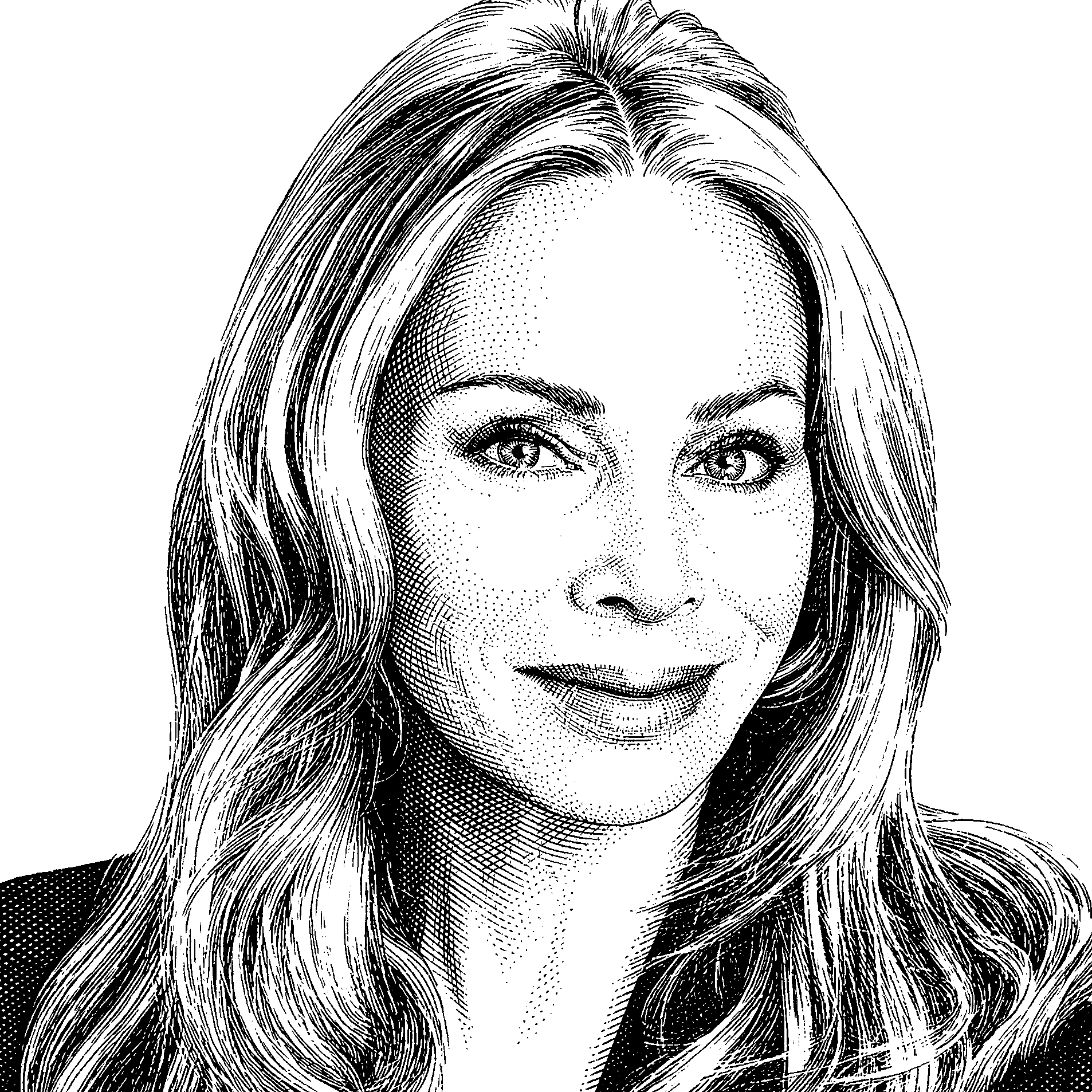
Natasha Vita-More is a distinguished designer and theorist recognized for her pioneering work in transhumanism. She currently serves as a professor at the University of Advancing Technology and holds the position of Chairman of Humanity Plus. Furthermore, she is a fellow of the Institute for Ethics and Emerging Technologies, solidifying her standing as a key figure in the field. ¶ Vita-More’s academic pursuits culminated in a doctorate from the Planetary Collegium, University of Plymouth, where her research centered on human enhancement and radical life extension. She is the designer and author of the influential 'Platform Diverse Body Substrate Autonomous Person.' Her contributions extend to published works, most notably as co-editor of The Transhumanist Reader: Classical and Contemporary Essays on the Science, Technology, and Philosophy of the Human Future (2013). ¶ A driving force in the transhumanist movement, Vita-More authored the Transhuman Manifesto in 1983 and subsequently founded Transhumanist Arts and Culture in 1993. She has also held leadership positions, including chair of the Vital Progress Summit 2004, which fostered crucial dialogue on human enhancement, and president of the Extropy Institute from 2002 to 2006. Her work has been showcased at prestigious venues, including the National Center for Contemporary Arts and the Telluride Film Festival. ¶ While primarily involved in the secular transhumanist movement, Vita-More brings her considerable expertise to events like the Mormon Transhumanist Association conference, reflecting the broader relevance of her insights regarding the future of humanity and the ethical considerations surrounding technological advancements.
Transcript
Speaker 1
We’re excited to introduce our concluding keynote speaker. Natasha Vitamore is a designer and theorist. She’s a professor at the University of Advancing Technology, Chairman of Humanity Plus, and a fellow of the Institute for Ethics and Emerging Technologies. She received her doctorate from the Planetary Collegium, University of Plymouth, where her thesis focuses on human enhancement and radical life extension She is the designer and author of Platform Diverse Body Substrate Autonomous Person. In 2013 She co-edited The Transhumanist Reader: Classical and Contemporary Essays on the Science, Technology, and Philosophy of the Human Future. In 1983, Vita Moore authored the Transhuman Manifesto and founded Transhumanist Arts and Culture in 1993. She was the chair of Vital Progress Summit 2004, establishing a precedent for discussion of human enhancement, and president of the Extropy Institute from 2002 to 2006. She has exhibited at the National Center for Contemporary Arts, Brooks Memorial Museum, the Institute of Contemporary Art, Women in Video, Telluride Film Festival, U. S. Environmental Film Festival. and Evolution Haute Couture, Art and Science in the Post-Biological Age. She is published in more than two dozen journals and a contributing author to numerous books. Please warmly welcome with me Natasha Vidamor.
Speaker 1
Oh my.
Natasha Vita-More
Oh my. Had I known he was going to read the entire thing, I would not have. Did I give you that long thing, that long verbose?
Natasha Vita-More
Hi, everyone. I was trying to gather people from outside in the hallway in because I always think it’s nice the last talk of a conference for the chairs, organizers and team to have as many in as possible. So I was missing the end of the last talk, so please forgive me, speaker. I wish I had heard the last, but I was trying to wrangle. Okay, so here we are, the last talk of the day. Let me get some logistics worked out first. Is this timer correct? This one here that looks like a Colorado license plate. Okay, good. Thank you.
Natasha Vita-More
It is a pleasure to be here, and I want to thank everyone, Lincoln, and the team, for inviting me. I’ve heard so much about this conference and the scholarship. And the dedication to the Mormon Transhumanist Association. So, MTA, tune thumbs up. I wasn’t sure what to talk about, but I decided to use my own experience as a segue into answering a few questions that were presented to me, which I will show in my second to the last slide.
Natasha Vita-More
One thing I’ve gotten out of today from the various talks since I got here just before noon is the use of the term we. And every time I hear the term we, I go, wait, I don’t believe that, or that’s not me, that’s not my story. That may be his story or her story or your story, but it’s not my story. So we all have this type of reaction when we hear we or you. No, wait a minute. We’re moving targets to associations and assumptions about who we are as humans in our lives, especially when it comes to our moral values. And some of the ethical issues that have been touted around for the past 20 years about biotechnology and transhumanism. human enhancement, what we will become, the suppositions and theoretical underpinings of questions that have brought about the postmodernist age to its knees, thank goodness, finally. This is our role, this is our job, to take those who did provoke us and offer solutions to the narrow-mindedness of modernism. But not to discount the Renaissance, the Enlightenment, and the many benefits of modernism. And then, on the other hand, postmodernism has offered a tremendous amount of value in raising the ceiling more interest in feminist studies, gay and lesbian studies, diversity, multiplicity, the issues that face us as a culture.
Natasha Vita-More
It’s our story. It’s my story. It’s your story. It’s our story. And we are in it individually, separately, with our own backgrounds, our own references, our political, religious, and moral dictums based on our experiences. So these form our stories.
Natasha Vita-More
Looking at transhumanism is extremely diverse. I was talking to a colleague earlier today who gave a talk, Julio Pristio. About the fact that we are so diverse, and how delightful that is that we are diverse. We are not of one religion, we’re of multiple religions and views, or non-religions and views. We are many politics, not just one, right or left, up or down. We are growing more varied and collaborative in our thinking. And as we look at the rules and regulations, the guidelines, the statutes that we create in our future, they will be even more diverse than anything we’ve seen in the past. Why? Because we’re becoming more diverse. and we’re accepting each other more readily than ever before. So that’s what excites me. And that’s what I see in culture. And every time I look at each person, I see something different. So in my view, we are not a we, we are an I. We are a you, we are an us.
Natasha Vita-More
Taking that one step forward, see if I can work this. So the goal to build stories based on first-hand experience rather than what someone else did. Let’s not parrot each other. Let’s form our own experiences. Have you ever heard a term used by someone who you think Coined it or came up with it to only find that person read it someplace else, and then think that person coined it or came up with it, only to find it in another book.
Natasha Vita-More
I did that with the term transhumanism or transhuman. I questioned its use and its history, and my mother, who is now 95, and I, back in the 1980s, I think it was 1984 and 19 Somewhere around there. We researched and found the term transhumanism in Reader’s Digest way back in the 1950s. We found it used in Alighieri Dante’s poetry. We found it in even T. S. Eliot’s The Cocktail Party. Very famous poetic story, a play. So that was transhumanize, transhumanar for Italian, but it still means transcending, overcoming something in different ways to be sure, but that’s what we are individually.
Natasha Vita-More
We’re transcending and overcoming something that we See in ourselves that needs to be altered one way or the other, and then we adjust, we adapt, and that’s part of what our species does. That’s what part of life does. So we’re strategic, we’re instinctive, we’re humorous, we have irony, hyperbole, logic, passion, desire, needs, et cetera, et cetera, as our stories unfold.
Natasha Vita-More
One of the most interesting aspects of creating a story is to look at who we are and why we’re here. And probably the biggest story of our time is life and death. Creating synthetic life. Oh my goodness. Wow, who would have ever thought that we could actually create synthetic life? Or that we could defy death? That we could redefine what the meaning of death is, how the word is used, how it’s even evolved looking back over time from when a person was thought dead. What did they do back then at the turn of the century? In graves, they put a bell outside with a string going into the grave just in case someone woke up, because they found a person that they thought was dead was not really dead, just in a comatose stage. So we now regenerate hearts with electricity, zap, zap. We bring people out of comas, we put people in comas, we transfer blood, we grow blood.
Natasha Vita-More
Think about skin. Skin is our largest organ. It protects us. It regulates our body. It’s our thermometer. It also is the first organ to be grown, the first organ to be cloned. the first organ to be engineered, the first synthetic organ. It’s a pretty marvelous organ, is it not?
Natasha Vita-More
But how did this come about? Because of someone’s sad story. We usually design or engineer solutions to problems immediately when we see them. We start thinking. and we get an idea, and then we figure out how we’re going to solve it. Burn victims have suffered over the years, whether it’s from war or fire. They have suffered over years from skin damage, so smart engineering, engineers in science and medicine, developed ways to grow skin and transplant skin, even synthetic skin to help protect people.
Natasha Vita-More
I was looking yesterday at a part of a brain, a prosthetic bone, a skull, for people with a certain disease where their bone becomes very large, maybe five or six inches thick. So instead of having that deformity, you have it cut off and have a plastic skull put on your head. So we’re redesigning the body, redesigning the idea of death, and rethinking life.
Natasha Vita-More
What if you could die for a short period of time and come back? What if there was partial death? What if life could come and go? In different modes, different realities, different platforms, different substrates, as Randall suggested with whole brain emulation and his project.
Natasha Vita-More
So I think about life, we think about for human life, our time frame is a century. That’s not very long when you think of all the things you love to do, and to think, for those of us over fifty, whoops, half of it’s gone if we’re lucky enough to live longer So, in short, if we’re going to extend life, this precious gift that we have, this miraculous thing, this agency, this energy that we’re alive right now. Wow, that is so amazing. How can we protect this? How can we own it? How can we be part of a species that starts developing an incredible respect for our own lives, our identity, our personhood, that we would go to the extreme lengths to develop ways to preserve it. Now that, to me, would be what you all might call a miracle. To me, it’s common sense, for goodness sakes.
Natasha Vita-More
We will do anything to help someone who is dying. We will go to this end of the earth to help our loved one survive an injury or disastrous disease because we love, and love is our gift. It which unites each individual together as a unity. As an understanding, as an acceptance.
Natasha Vita-More
If we’re going to live longer, what are we going to extend? What is this thing that we are in this life? Lynn Margulis said, one of my favorite scientists, a woman indeed, said that, we grew out of the mire as bacterium. A conglomeration of bacteria forming that bacterium, and we evolved over time through that. And yes, indeed, as another speaker said, we are part of the cosmos. We have every element of the cosmos. Maybe not every element, but let’s say if we go down to the most minute aspects of physics, yes, we do, in our bodies, all around us.
Natasha Vita-More
So if we look inside the body, we’re starting to notice ways that we can possibly regenerate it through stem cell cloning, through regenerative medicine, telomerase engineering. prosthetic parts, growing skin, three D printing organs. It’s endless the ideas that are in front of us from innovators thinking about life and preserving life. This is my body, by the way.
Natasha Vita-More
So this person that we are, no matter what your belief system is, this identity, this consciousness. This mind that each one is. What are we doing with it? What’s there? Now, Randall tried to tell us, excuse me, a little bit about it. I can’t move it. Okay, it’s not touched on screen, sorry. Okay, um so let me see if I can pull out or something. So uh pull back in, no, it won’t do it. Okay, there we go. Um this agency that we are
Natasha Vita-More
If we had a meta-brain that could transfer, upload, download, sideways, load our identity, the functions of our brain, what is our mind, the mechanism, functionality of our memories and the processes of our cognition, then would that be us? But without a body, we wouldn’t have our senses and perception, so our body is very important. This is my brain, by the way.
Natasha Vita-More
In thinking about building a new body for life extension And thinking about the brain and the vital aspect of it being memory over time, continuity of personhood from a philosophical concept. We think, okay, we can build bodies because we are doing 3D printing just about of organs, but certainly of elements that are building up to organs’ cells. And if we have robotic AI driven prosthetic parts that are very smart, used in the Olympics, for goodness sakes the Paralympics, if not the whole Olympics. I was in Moscow recently talking about a superhuman Olympics to the Conventional Committee of the International Olympics. It’s going to happen.
Natasha Vita-More
So here you are sitting here thinking how to pull in your value systems, your morals, Mormonism, religious views, and spirituality to new types of bodies. That we’re going to put our brains in, and hopefully our consciousness, and hopefully, those bodies will offer a sensation or perceptual sphere that we will be able to communicate with each other. In ways that we do now, and new ways yet to be seen.
Natasha Vita-More
So what does this mean about death? We’ll have to redefine it, and the tools and the systems developed to expand persons are cross-platforms and substrates. In different types of mechanism, I see as an autonomous process because each one of us has a certain level of autonomy with it. We will decide for each one of us what we want. What you want, I want us. Each individual has a choice. It’s not a collective. It’s not part of a religious practice. It is a responsibility for yourself with your own story and bring it to the fold of your group indeed, but find your own story with it, for goodness sakes, because that is the preciousness of being alive as an individual.
Natasha Vita-More
Okay, so what next? In 1997, I designed Primo Posthuman, the first future human prototype. I had a very strong scientific team. technological team, leaders in artificial intelligence, nanotechnology, biotechnology, genetic engineering, stem cell cloning, philosophy. Engineering, uploading Hans Moravic, Marvin Minsky, Ray Kritz. No, and I didn’t have Ray. No, he came along later. Hans Moravic. Let’s see, Robin Hansen, Eric Drexler, Peter Voss, Max Moore, and others, Gregory Stock, all thinking about what is this Personhood that we’re going to carry on in a different sphere, a cybernetic sphere, a computational sphere.
Natasha Vita-More
So in my work, I took the body, and it did quite well, but it wasn’t enough. It wasn’t my story, it was the beginning, it was the introduction, it was the premise, the prelude. It wasn’t enough for me. But one might ask, why did I do it? And I’ll explain that in just a moment. But the body wasn’t enough because
Natasha Vita-More
Neuroscience and cognitive science started catching up to other areas. And as the explorations into these fields grew, I started working with my brain. I had numerous MRIs back in the 1980s, 1990s, got into stronger abilities with neuroscience, working with the neuroscience team on thinking capabilities, memory loss, et cetera. And the issue to me was memory. And I look at my darling ninety five year old mother who has these memory gaps. I think, what’s going on? What’s going on in there? And then I think of if we’re going to extend life over time and eventually build new bodies, What is this memory that we want to protect? Preserving life, protecting memory. That’s pretty much who each person identifies with him or herself. So, okay.
Natasha Vita-More
Doing my research, I thought, okay, what am I going to do next? What could be the next chapter after having designed this future body? That wasn’t enough for me. So What I decided to do was to take my previous work, let me use the pointer here, if I can, there, feature body design. Body by design, my body, my brain, observe, think, fill in the box, physiology, okay. What can I training myself working with plasticity and my own thinking? I’m a cryonicist, what’s missing? Okay.
Natasha Vita-More
And that’s the creative part of each one of ours journey in our field and our story. What are you not doing that you want to do? Goal, aim, trajectory, creative project, intellectual project, have you been thinking about in the back of your mind that’s been gnawing at you that you haven’t done yet, that you keep putting off? Don’t put it off. Do it now. Each moment that you’re alive is precious. It can be gone at any moment. And I know this. So do it. Don’t stop. I did.
Natasha Vita-More
So I thought, okay, what could I do that would be pick up on someone else’s work that wasn’t finished? What could I do with my interest in this and these areas? And I thought, okay, memory. If it boils down to one nugget of truth, for me that is our memory. Each moment, okay, there’s one, okay, there’s another one. As I look around the room, I see Mike, I see Lincoln, because I’m looking around. Okay, but a moment now, I’m remembering that I looked at Mike and Lincoln and Julio. Okay.
Natasha Vita-More
If that is so essential, and then we tie it together in our brain now this is short-term memory and working memory, but it filters into long-term memory, and we associate it with images. If you’re a visual person like me, if you’re audio, you listen to the sounds, the crunching sounds, the whispering sounds. If you’re a kinesthetic, you have an emotional reaction to the light in the room, the sound of the floor, the feeling that you get. This is our perception. This is our sensory makeup. This is why we need a body. And whatever environment we will be in, we will not be an upload without a body. We have to have an envelope. It’s how we communicate. So, right now, right here, what was missing?
Natasha Vita-More
Memory. So, an experiment had been talked about with siegans with cryonics and memory. Now, coeligans are a very famous nematode worm. And Randall had a picture of one in his slide. It looks kind of like this one down. Oh, right here. I think we had the same picture. Yes.
Natasha Vita-More
This little worm, dirt worm, is so spectacular. It is a connectome. It doesn’t have a brain. It has a whole body that’s made up of neural. It has a neural fabric. It’s a very chemical organism. So, its brain is its whole body. It’s the neurons who are interconnected as a connectome throughout its body.
Natasha Vita-More
Okay, it’s born, it’s very short-lived, couple of weeks, it’s born as a hermaphrodite. Grows in stays a hermaphrodite or is grown a male. Very few males are grown as male to start with. Usually differentiates into a hermaphrodite. It has several short stages, L1, L2, L3, L4, and then it’s an adult and then it dies.
Natasha Vita-More
You can chronically suspend it. It’s been one of the organisms that has been successfully put into cryonics, vitrified. And brought back, very successful.
Natasha Vita-More
So I set up a lab at Alcore Life Extension Foundation and Presented. Of course, I got a grant for it, worked very hard on my proposal. I’ve been working on it for several years with the world’s leading cryo. Biologist, I can’t mention the name, but we’ve been working on this since 19, I mean, 2004. And finally, now is the time.
Natasha Vita-More
I’ve got the lab. I have a lab tech in Spain, who is superb working with me, he’s right there. He’s going to be coming back to help me with this. We are vitrifying this worm and we’re training it. So we vitrify it, train it, vitrify it again. Test it, see if it remembers.
Natasha Vita-More
If our experiment is successful, that will be one small step in my story. It’ll be a chapter. I have my prelude. This will be a chapter. I don’t know what I’ll do after that. I just want to keep on trucking, keep on going, you know? Keep the design work going. So.
Natasha Vita-More
There are times when we change our careers. I’m a designer. I was an artist to start, became a theoretician, bored me, became a designer. Love it. I love design. I see everything as design. It is engineering, it’s problem solving, looking at gaps, looking to find solutions for what’s needed. I’ve no desire for fame and fortune. I only wanted fame as an artist. When I quit being an artist, I’ll let that go. That was kind of a funny joke. But I always wanted to solve problems since I was a little girl. So I found a problem, and I can’t solve it by myself. Certainly, I’m working on the
Natasha Vita-More
The previous work documented scientific research of the particular vitrification process we’re using, which is called cryotop. Cryotop method is used for embryos, very successful. It’s the top method in infertility. The success rate for our C. elegans is very high. We’re using these particular straws that were invented by Ramon Risco, Dr. Risco in Spain. Very successful. We’re picking up the worms one by one. They’re microscopic, so it is not an easy task. And you put the straw in your mouth and you suck it, you got to get it right in a certain area of the straw and hold it there. I do have this on video, but I did want to take your time with it. But it’s incredible to work with this worm.
Natasha Vita-More
They are beautiful to move. And I don’t have a video in here because I didn’t want to take the time for it, but they dance when they move. It’s a beautiful motion. And when they, you don’t know if they’re making love or they’re dancing together or what they’re doing, but I just want to tell you one little story here.
Natasha Vita-More
One of the worms we vitrified last month. and resuscitated. Was very happy we put it in our argar Petri dish and was very still. And if it gets straight, you know it’s dead. But if it starts curling a little bit, that means it’s we still have hope, and you’re hoping that it it lives. You want it to come out of the vitrification, out of the cryonics alive. And it came out fine, it was moving around the argor in the Petri dish, leaving a trail. And I saw two little kind of circles. I thought they were air bubbles. And I said to my colleague from Spain, What is this? Air bubbles. Then I started seeing them move. The worm, the neboto, the sea elegant that we vitrified, that we resuscitated, was pregnant, and laid those eggs in the petri dish when we Put it in there for warming up, warmed it up, put it in the dish, and gave it time to see if it would wake up and come up. And those two little baby worms lived. And it was beautiful. I mean, that’s the moments in life you’re just going, oh my goodness, now, now, that’s life.
Natasha Vita-More
The reason I got interested in designing a whole body prosthetic in 1997 is because I lost my baby. It died inside of me. And it’s a horrible experience to have a life form die inside of you and almost die. I was in intensive care for two weeks in Japan, of all places, where my surgeon stood over me. When I’m in intensive care, you know, give me morphine, morphine. And I could hear him say, look through my English Japanese dictionary that I had in my bag, where they found me on the floor of a restaurant, in a dark, musky hallway, in a restaurant with slanted eyes staring at me. Looking, looking, looking, and said, basically, you may not live. Okay, those words, you may not live. I hear them. Each moment when I look at the human body without looking at your faces, just each body, I know that something could be going on inside of it at any moment that we don’t know about.
Natasha Vita-More
I was at, at that time, the top of my career, but you keep on going, and life is like that. You get at top and then you wait, you kind of hang out for a while, find a new direction, get to the top again. It’s a fun movement, this synthesis of life and the iterative process. But what I it taught me the biggest lesson ever.
Natasha Vita-More
Of course it did, Dub, but it really resonated with me that we’re walking around with In this biosphere of vulnerability, and we are so incredibly fragile That we don’t know moment to moment if cancer could break out.
Natasha Vita-More
And by the way, I’ve had cancer twice, survived it, two different cancers, survived both of them. But we don’t know. So you go to the doctor like me, you have your body checked, everything checked. I’m very focused on health and what I eat, but I also love chocolate and drinking and whatnot. So I have to you know, I’m doing a balancing act constantly. But I want to enjoy life. That’s fun. But at the same time, you don’t know what you’re doing. Could it hurt you here, over there? How much to lift weights? How much not to lift weights? What to do? It’s a continuous process. It is so iterative. It is design. Life is design.
Natasha Vita-More
Not intelligent design, but it is. We are living as designers of our own life, and we can write our stories and build our stories based on our own personal experiences. and find the value and passion in each one of our lives and contribute to transhumanism. From your perspective, that’s what we need. So now let me move on here.
Natasha Vita-More
So these are the questions posed to me, and I’d like to answer them quickly. Time check. How much time do I have? Okay, good, excellent. Okay, so now let me stop here and just ask you all: does anyone want to ask me a question afterwards? You’d rather me just continue talking? How many want to ask me a question? How many want me to continue talking? Okay. If you want to interrupt me, raise your hand. That’s perfectly fine. I do not find that rude. If you yell at me, okay, that that won’t be rude. Okay.
Natasha Vita-More
Um what can religious spiritual groups oh, I have to span out Let me see if I can do it with this. Oh, okay, good, good. Okay. What can religious, spiritual groups, and transhumanists offer each other?
Natasha Vita-More
Stories. Let’s share our stories. We talked about myths today. We talked about understanding. We talked about empathy. We talked about the cosmos. There’s a lot of different rich discussions today. The myth really enticed me. Thank you.
Natasha Vita-More
So we need to build new stories. A new literacy for transhumanism, that’s what you can help with. We need more empathy, we need more consciousness, we need more passion about us as individuals and what we’re doing. How we can interconnect with our own set of ideas. We each have some, we’re a wealth of information, each one of us, with our own personal narratives. This big, big build larger narratives. Okay, so I think that’s paramount. Let’s talk and share. Let’s not dictate to each other or use we too much, and I do it too, so but let’s just be careful there. But let’s appreciate each other for each individual’s experience firsthand. Okay.
Natasha Vita-More
Uh what is the overall strengths and weaknesses of religious aesthetics? I changed the spelling on aesthetics there. And how might they Integrate with transhumanist aesthetics. Oh gosh.
Natasha Vita-More
Okay, I think what I love about religious aesthetics is walking into a Gothic cathedral. Wow. In Paris, walking into the Notre Dame, looking at the rose window, wow, and the gargoyles outside on the roof. The architecture, the vestibule, the choir, oh, the music of religious groups singing is just I mean, it rips at your heart because it just gives you chills all over, especially. I can’t even think, I’m not religious, so I can’t think of the songs, but when I hear them, I know what they are. There’s one, Adia. So sung every Christmas, a Christian Catholic, maybe. But they’re beautiful. So the architecture.
Natasha Vita-More
The stunning style, the sound, the acoustics, like the acoustics in here are really fabulous. The lighting, in many religious halls or spiritual locations. Like a temple, walking to a Buddhist temple, it’s just it just it’s riveting. A lot of the fashion and the style is so beautiful to look at this.
Natasha Vita-More
Ceremony is something that Can influence transhumanism, the ritual. We need more ritual, we need more ceremony. Not in the sense that there’s a master and a slave or a guru and an underling. I think the God is within all of us, this whatever it is. So if we’re part of the cosmos, it’s in all of us.
Natasha Vita-More
Have, oh, and one thing I wanted to say: MTA, you have a darn good designer. Whoever came up with this logo, I mean, hallelujah, praise your Lord. That is amazing design. I love it. The font, I have to know what font that is. Also, the flyer, nice paper laid out beautifully, nice two-inch margins. So these things I notice as a designer: good quality paper, beautiful banner. That is so important because it can be appreciated. So it’s the aesthetics in the structure, architecture, sound, etc. Okay, and the ritual there.
Natasha Vita-More
How might they integrate with transhumanist aesthetics? I think we’d have to be very careful there because I’m someone who doesn’t want to have a guru or, you know, whatever. I want to share. So I think that probably there is a story to share. Let’s open the discussion on that. Perhaps.
Natasha Vita-More
Okay, what is my own narrative story? Well, I think I just told it to you, but as far as spirituality and religion is concerned, my background is I was brought up Episcopalian. I was confirmed in the Episcopalian Church. I left the church when I was 17, maybe 16, because I didn’t want another man telling me what to do. I was a very young feminist in high school. Martin Luther King was assassinated my senior year in high school in Memphis, Tennessee, where I was born in New York, but we had moved there.
Natasha Vita-More
And seeing the way a black person was treated, an African American was treated in the homes of people where they worked. They were treated like Really well. I have to tell you, really well, like nannies and you know, aunts and uncles. But out on the street, I never saw a black person on a bus in Memphis. I never ate with one, never in the bathroom, certainly not in my high school, never at a party. They were not allowed. In our restaurants. So when Martha Luton King was assassinated, I became very radical, and that’s when I became very an activist. That was my first act of activism. Because I was there. It was my senior year in high school. And the rioting in the streets, whatnot. But my second act of Activision
Natasha Vita-More
Activism was about the mentally illed and physically deformed. I did a lot of charitable work when I was in high school. I was president of my sorority and queen of the fraternity. I was very social-minded. You know, the South, you have all these. I wore evening gowns a lot and cocktail parties. Cocktail dresses. But it’s very social-minded. I saw that and the way the blacks were treated. It really bugged me.
Natasha Vita-More
So in Memphis, there was a place called the Home for Incurables, and the people were So deformed that they were not allowed out in public. Well, that would never happen today. It would be politically incorrect to say home for incurables. Incurable? We’re curing so much today, it would be an oxymoron. However, I did a lot of work for this particular institution. My father did a lot of volunteer work for St. Jude’s Hospital, Children’s Cancer Hospital. and I as well for many different organizations, for people that were not born at the level of what we call normal normality by the Western world’s concept of what is normal for the human.
Natasha Vita-More
I was born a little bit sickly. I was sick most of my life. My first plastic surgery was when I was 11 years old. I had a tumor growing in my face. I went to, my surgery was in Chicago, it was one of the top plastic surgeons for this type of growth. Fast-growing bone in my jaw, half my jaw was taken out. Luckily, I was pre-puberty, so my jaw grew back. But I had a I had a sympathy for these people. I understood because I, in the waiting room at my surgeon’s location in Chicago, saw many deformed, irregular looking people early on in my life. So
Natasha Vita-More
That’s another reason, prima post-Human in designing future bodies, thinking about people who are injured in a car accident or go to war and come back with half a body, that this is just crazy. Come on, they need a new body. And it’s beautiful and wonderful and fabulous that we are doing that. Thank goodness to the developers and designers and prosthetics and AI and haptics and neurological connections with the prosthetics. Okay.
Natasha Vita-More
How could technology enhance religious thought and practice? Oh wow, that’s a big one. I think we’ve alluded to it a lot today. You know, just seeing what’s going on in many ways, exploring the cosmos. I’m a very big space activist. I’ve been to space camp, pre-astronaut training in the 1980s. I was hopeful. Nothing happened with the space industry. It’s coming back, thank goodness. But I think that the more we learn about the micro, and the more we learn about the macro, the more we will understand ourselves. looking deeper and deeper, deeper into the molecular and further, further, further out into the cosmos. It’s o but I think the answer to that question is already stated, and I couldn’t say it any better than he did.
Natasha Vita-More
Okay, what are the I’ll read it here. What are the Essential conflicts between science and religion.
Natasha Vita-More
I think the essential conflict is if in science we have to prove. We do our experiments over and over. I can’t just vitrify a worm and train it to do something. Take my word for it. I feel it’s there. I believe. I have faith that it’s. You can’t do that in science. You have to repeat it at least five times. That is scientific discovery. That’s scientific fact. You have to prove it.
Natasha Vita-More
In religion, it’s based on the more the feeling, the emotions, the hope, the dream, it’s our psyche. So we can’t prove what the mind is, but we kind of think the mind is what the brain does, the function of the cognition and memories and everything. So this is all gray area. So that’s the central conflict. Okay?
Natasha Vita-More
It’s like art and design. Art is all about your vision, your work, you know You don’t have an artistic license. You don’t have to prove it. You just do it. And design is all about solving a problem and having a strategy. And seeing that strategy through and results in the iterative process if it keeps on making it better, resolving, resolving. Okay, so what are the essential conflicts and can they be overcome?
Natasha Vita-More
Oh, I can’t wait and see. Yeah, I think that’s already been explained today too, that I probably thinking about all the particles in the universe and understanding if there is intelligent life elsewhere. And is it how will it be? And if we not if, but when we do build AGIs, will they have a level of understanding that will help us better understand our own self? I don’t know. I’m with you on this, you all, or those of you who don’t know. I don’t know. I don’t know.
Natasha Vita-More
And I’ll close with this. This is my book, The Transhumous Reader, which was mentioned in my introduction. It’s an anthology of forty-one authors, and it is I highly suggest it is the first academic book on transhumanism. And the history of transhumanism, the currents of transhumanism and the future, including concepts like the singularity originated by Werner Wingi, Upload originated by Hans Moravik. It has a debate between Remov Kurzwill and Eric Drexler in it. Randall’s in it. Julio’s in it. So it’s a wonderful combination of ideas. So it covers many of the topics we’ve covered today. It’s published by Wiley Blackwell, academic publisher, which is fabulous.
Natasha Vita-More
We were hoping to go with MIT at the last minute. They backed out, but I’m glad because Wally Blackwell is such a great publisher. I’m very honored and proud to have them as my publisher. What else can I say about it?
Natasha Vita-More
I think and I hope that it does provide some solid background on transhumanism and the foundations of it, because there’s so much misinformation out there. There’s a fact that Humanity Plus has that was originated from the transhuman email list back in the early mid-1990s that was um Nick Bostrom added to it and um then James Hughes added to it and World Transhumanist Associate added to it and then took away from it, but not all the facts were accurate because there was back then it was very political and there was a schism between um Certain political views, and I’m so glad we’re beyond that. And that’s a sign that there is intelligent life in the universe. You know, it doesn’t matter what your political views are, for goodness sake, let’s get her done.
Natasha Vita-More
You know, as someone else referred to, C. S. CK CK CS Lewis C. K. Lewis. CK Lewis. Get her done. Okay, so
Natasha Vita-More
Good book. I hope you get it. And I have no more to say about that, but I think you’ll enjoy it. It is a little bit academic and One person on Amazon criticized it for listing all the PhDs in it. But listen, when you’re doing an academic book and your publisher is academic, they want to list all the PhDs. We tried not to just look at PhDs. We tried to look at a scope. And there were so many other authors that we wanted in it. So we will do another follow-up book and pay tribute to the other thinkers here that. We just didn’t have room for then. Okay, so that’s my story, and I’m sticking to it. Thank you.
Natasha Vita-More
Okay, five minutes left. Does anyone have a question? Yes? Yeah, the microphone okay. Oh, yes, oh yeah. We need these mics because we can’t Okay, right. So I would say thanks, and you have to repeat that for the recovery. Can I use your accent when I repeat them?
Speaker 3
Now I want to come back to your last point about the conflict between science and religion. And you made the experiment, you made the example. of your experiment with the worm and said very rightly that science is about experiment and religion is about hope. My point is that there is no necessary conflict between these two things. On the contrary, they do and should support each other because You would not spend all the resources and do the experiment if you don’t hope that the exp that the experiment succeeds. And now suppose the experiment fails. Suppose that you find out that the worm does not retain any memory that it had formed before being suspended, what would happen is that since you hope that eventually you will succeed you will do the experiment again and again and again, and you will do it until it will succeed. And at the end, the experiment will succeed. because of very strong hope that you have that what you’re doing will eventually succeed.
Natasha Vita-More
That’s very well stated. So what was just mentioned is that there is a synthesis between science and religion because science is based on A particular perspective to, it’s driven by an imagination, a concept, a desire to make something happen, or prove something. So, within that is the idea of hope. You hope it’ll happen. So, but you have to put that hope aside and prove it. And if you fail, it’s very sad. You can get pretty depressed about it or sad about it. Some people do, you know. Get very upset about it.
Natasha Vita-More
Where religion also contains the element of science, that there is a search for truth. There is a search for repeated patterns. And we see that very often in a lot of religious lore, where you’ll see something and hope it comes back again in prayer, listening to a message being given to you from God. To answer your prayers, there’s a level of science, and that one could say that if God repeatedly answers you, then there’s a repetition, and you could say that you can measure it quantitatively. I am qualitatively as two as well. But I’m sticking to my story.
Natasha Vita-More
I think that There needs to be a separation between them. And I think that’s okay. I think what you really mean here, and correct me if I’m wrong, is that we need both. They can remain separate concepts, but they do work together and they have to work together because you’re not going to do a scientific experiment without a level of hope and desire. You hope, you know, you have a dream. I have a dream. We all have a dream. You have a dream. Yeah.
Speaker 4
Um, yeah. So I was just going to ask you what you think of the idea that I talked a little bit about earlier, which is that science, maybe without even knowing it, is sort of taking on certain kinds of religious functions in the ways that, for example, scientists often go far beyond just speaking about what they’re discovering to talking about what that might mean for us. Or so religion talks about attributing often tries to attribute meaning to Things that happen to us. And I think science tries to do that too in some ways. What are your thoughts on that?
Natasha Vita-More
Yes, I agree with you. I think that’s very correct. I think it’s science as well as technology, just to throw another Element into the mix, it seems very much like science and technology, if I may, do have this element of What we would call religion to them based on our hope, our faith in them succeeding, and we often talk about Ways, let me rephrase that. There are journalists, I’m correcting myself here as well, there are journalists who often write about those who are interested in technology like transhumanists and futurists as being religious about it, making it the next religion, like the Singularity as being a religious epiphany.
Natasha Vita-More
Uploading and becoming superhuman, wanting to be gods, the myths of gods, man becoming gods or human becoming gods. In that image, and also looking for a type of redemption, salvation, resurrection, all these elements. You could say chronics, for example, or even bringing someone back through. You know, out of a a comatose state or, you know, revamping their heart. Re-energizing people at whatever level, whatever disease, you could say that could be a resurrection of them. So we’re seeing this. in action right now. So we are we are in the story right now.
Natasha Vita-More
We are the science fiction of years gone by. We’re living it. So is that religion? To me, it’s just life. You know, I’m not I never liked saying someone’s a libertarian or a Democrat or a Republican. I’m not any of them, and I’ve never been any one religion after I left it, walked out of the church that day. I want to learn about as many of them as possible and pick and choose the elements that I need in my life to help me live a better life. I think we need to be careful about putting too much faith into a certain technology solving a problem. or a science acting like it knows our future. I think we need to be very careful about that. Yeah.
Speaker 4
I think we’re out of time, right? Sorry. Oh, sorry. Sorry. Another quick okay.
Speaker 5
This one’s actually pretty quick, I think. You’ve worked with Alcor and the cryonics at all?
Natasha Vita-More
No, I’m not. I’m just a I’ve been a member of Alcor since 1991. I don’t work there. No. I was looking for a research lab to to do this Seligans project. I went to 21st Century Medicine. and I looked at other labs and applied for grants and the only grant I got was from Alcor, from the research team, which I was just Delighted with. But it, you know, I’ve been working on this for years. Finally got a grant. And so it is, I built we set it up at Alcor. So it’s Research Center.
Speaker 5
Do you have more than hope? Do you have actual science that specifically Alcor is able to preserve microfeatures that are important? Oh, okay.
Natasha Vita-More
So I can’t speak about Alcor. I don’t work at Alcor, I’m not an expert on that, but I can speak about cryonics or vitrification, let’s say, and C. elegans. That’s my only level of experience. Yes. After you vitrify a caeligin, the nematode, the worm, and bring it back, it moves around. If it’s going to lay eggs, those eggs hatch and they’re healthy life coming out of them. And you can tell by its movement. If it’s jerking, it’s got a problem. It’s a very sensitive creature to the chemistry of the environment. So, you know, like behavior, we study behavior. If someone is sitting here agitated, I’m gonna go there agitated. If you’re sitting there relaxed and looking and smiling, then I know you feel healthy and good, you know. So now.
Natasha Vita-More
If I was a chemist, I would be able or a geneticist, I would be able to look inside the worm at its genes and see the connection between the neurons, what’s going on as far as The chemistry of it. And that’s a whole other area, which would be another chapter by maybe Arizona State University and their biodesign lab. But I’m just working at this one area of it. And yes, it is science. It’s very hard science. Okay, thank you. Thank you.
Speaker 6
Thank you, MTM.