Immunology for the Internet Age
Dr. Neal Davis draws an extended analogy between biological immune systems and the evolving defenses of the internet against predatory actors. He traces the history from the early high-trust ARPANET era through the zero-trust environment of the modern Web, arguing that decentralized technologies—blockchains, DAOs, zero-knowledge proofs, and platforms like Urbit—represent an emergent immune system for human sociality. Davis proposes that cryptographic tools can create "village green" communities of stable, high-trust havens, enabling human flourishing amid the broader adversarial digital landscape.
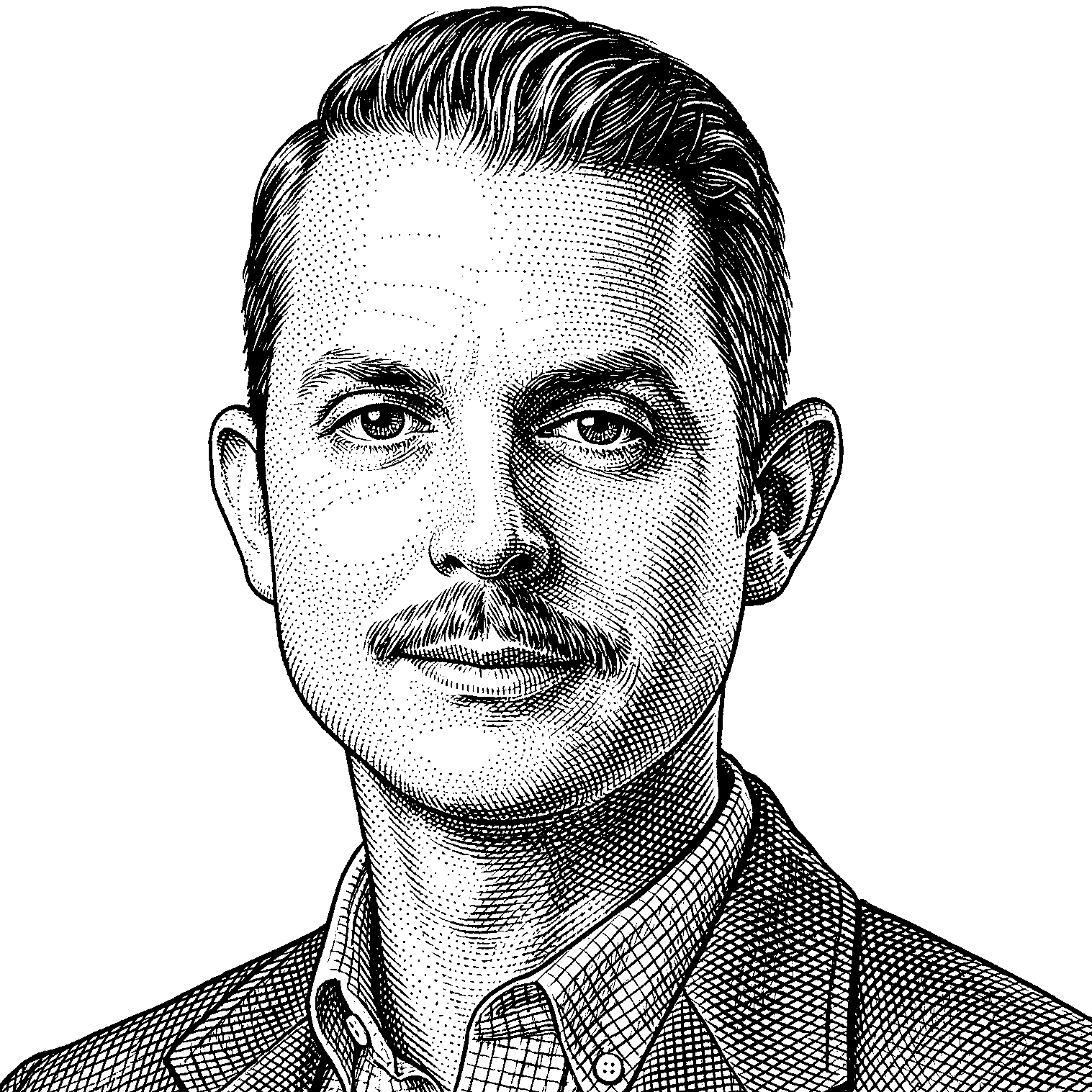
Dr. Neal Davis is a scholar and technologist whose work sits at the intersection of high-performance computing, Web3 architecture, and the philosophy of science. Originally trained in nuclear and chemical engineering, Davis transitioned into scientific computing, eventually earning his PhD from the University of Illinois at Urbana-Champaign. His early career in the physical sciences provided a rigorous foundation for his later focus on the evolution of complexity and the interplay between technology and social trust. ¶ As a dedicated educator, Davis has spent over a decade training engineers and scientists to enhance their research through computational literacy. At the University of Illinois, he has led courses in software development, computational mechanics, and research methodology. His pedagogical expertise extends to his work with The Carpentries, where he has been instrumental in bridging the gap between traditional engineering disciplines and modern computer science. ¶ In the realm of decentralized computing, Davis has become a key figure within the Urbit ecosystem. He previously led developer experience and education at the Urbit Foundation, where he helped shape the pedagogical framework for a new, secure internet. His technical contributions are significant, including the development of the Jock language for Zorp Corp and work on the Nockchain Zero-Knowledge Virtual Machine (ZKVM), both aimed at advancing sovereign digital infrastructure. ¶ Beyond his engineering work, Davis explores the philosophical dimensions of technology through a Mormon Transhumanist lens. In his 2022 MTAConf presentation, Immunology for the Internet Age, he utilized biological metaphors to advocate for more resilient digital architectures. He continues to write on organizational behavior, engineering pedagogy, and the history of the internet at his Substack, Extelligencer, and the Urbit Systems Technical Journal.
Transcript
Speaker 1
Dr. Neil Davis works with the Urbit Foundation on developer experience in the Urbit Web3 ecosystem. Trained as a nuclear engineer, Neal now studies the history and philosophy of science and technology, applied high-performance computing, and science and engineering pedagogy. Dr. Davis also teaches computer science at the University of Illinois at Urtbwana, Champaign, focusing on applied computer science for researchers and traditional engineers.
Dr. Neal Davis
The water above the laptop may be the most dangerous thing we do today. All right.
Dr. Neal Davis
In the beginning, God created the prokaryotes, and the prokaryotes were without nucleus and organelle, and structural simplicity was upon the face of the deep. and Chemotaxis moved it upon the face of the waters. A single celled organism possesses many advantages, notably simplicity of form. Being largely indistinguishable, they have no differentiation or specialization. Prokaryotes often form large colonies, such as the cyanobacteria.
Dr. Neal Davis
Some prokaryotes discovered early on that it paid better to consume resources that had already been processed into usable form by another cell, rather than to process those resources oneself. Thus, predator and prey were born, and they have always exemplified divergent and separable evolutionary strategies. The resulting arms race means that predators are constantly adapting to better extract resources from prey, while prey are evolving to evade, resist, fight, or poison predators. Selection pressures applied at individual, species, and clade levels lead to speciation across deep time. At the Mormon Transhumanist Conference, that may be the most controversial take here.
Dr. Neal Davis
More complex forms seem better able to evade predators, and thus simple symbiotic alliances between differentiated prokaryotes evolved into the eukaryotes and into multicellular life forms. Simpler forms also abounded, including the liminal virus, evasion of pathogenic disease, or disequilibrated colonization by simpler forms of life. Has been one of the primary drivers towards increasing complexity in multicellular life.
Dr. Neal Davis
The Internet began in the late 1960s. It was born in an alliance between the Cold War Department of Defense. And the academic research community. This community had a signal advantage. It possessed strong norms of professional discourse, which shaped the way that the community formed. The nascent Internet generally functioned as a real name high trust environment, if not exactly of peers, at least of colleagues.
Dr. Neal Davis
The Internet evolved as a coordination mechanism. And here we’ll see it gradually evolve from the early 1970s until I think 1987 is the last picture here. Literally, it was a nervous system incarnate in copper and silicon. And this continued particularly through the Usenet days of the 1980s.
Dr. Neal Davis
One hallmark of the Usenet era, as differentiated from the earlier ARPANET days, was a gradually eroding social trust. Spam was invented, and Internet-based scams started to spin up. Pseudonymity gained in popularity as a countermeasure to both of these as well as to restrictions on discourse. The revelation that persistent digital records could affect real world reputation further fueled a cyberpunk obsession with identity control and identity subversion, including hacking.
Dr. Neal Davis
Computer viruses could propagate for the first time, as we look at this spreading here. Although von Neumann and others explored the possibility of mathematical structures which could emulate life or at least produce self-replication, It was not until the creeper virus of the 1970s that self-replicating code was observed in the wild. Like a bacillus in an immune system-free host, code-based computer viruses began to spread from the 1980s onward.
Dr. Neal Davis
The crisis arrived in the form of the World Wide Web, founded initially on the belief of the democratization of information, right? Like we wanted to make information free. the web rapidly became dominated by a handful of large corporations. The reason for this is that user experience was the predominant driver of consumer preference cascades. Any child of the 1990s or earlier can remember back to eBay and MySpace and Friendster and Napster and these waves of technologies that would come forward and shape the way that we interacted with the web.
Dr. Neal Davis
Initially, any of these served as a proof of concept that something could be done, and then it either became the only significant player. Or a killer app came along and started to own the space. In most areas, we don’t have significant competition in the same sense that we did in, say, 1996.
Dr. Neal Davis
Search engines drove discovery and then focused attention asymmetrically. The walled garden approach of AOL and then later Apple and Facebook led to concentrations of users, which tipped the balance from single web page hosts presenting their own idiosyncratic views, on their own servers perhaps, to corporate approved genericity and ultimately censorship.
Dr. Neal Davis
As Internet data sources have overwhelmed traditional media publishing and distribution, the resulting tsunami of information and informatization has swept into every corner of lived human experience and technological societies. The ongoing universal exposure to alien and internally incompatible, incommensurable value systems has undergirded the well-documented crisis of credibility or collapse of meaning. That essentially all Western institutions are facing today.
Dr. Neal Davis
The World Wide Web and its technological predecessors acted as a cultural petri dish of clean agar, which grew every spore and germ which fell upon it. The turn towards a low trust, then a zero trust, environment was inevitable if anything like an analogy with prokaryotic evolution holds true.
Dr. Neal Davis
Megacorporate platforms are in a way worse than a purely zero trust environment because they don’t advertise that the world is zero trust. They lure the unwary into transgressing arbitrary social norms that are fixed globally. and thereby courting the wrath of social media mobs and the loss of access to data and finances and other things held in quote unquote trust.
Dr. Neal Davis
The pre-web cypherpunks were right. Privacy is the power to selectively reveal oneself to the world. If anything, they were too limited. Not only their valued cryptoanarchic open society, but any non-megacorporate society at all requires true privacy.
Dr. Neal Davis
High culture and low culture have both articulated and preserved valuable insights and forms of human flourishing. However, Throughout the twentieth century, and particularly by means of the Consumer Revolution, our lives have been thoroughly colonized by capital and commercial instruments. So-called economies of scale have disrupted smallholders, artisans, and shopkeepers to the extent that these have been virtually eradicated from the modern landscape in favor of plastic and polluting dark satanic mills. Although small-scale provident living has supported gardening, canning, and home production, none of this has survived across a large enough cultural segment. to matter macroscopically. And unfortunately, because it’s anti-capitalist, it’s been tarred as prepper and antisocial and In many respects, all of our physical goods and most of our modes of interaction have entered this post consumer phase. There’s essentially no native culture left, only that forged in the boardroom.
Dr. Neal Davis
What cyberspace and human culture writ broadly needed was an immune system. And in good Darwinian form, such an immune system has been evolving before our eyes. An immune system formally consists of layers with increasing specificity. First, surface barriers, then an innate immune system, and finally an adaptive immune system. The objective of the immune system is to protect the organism, in this case, human sociality and agency.
Dr. Neal Davis
In an immune system, the surface barriers are designed to make it hard for exogenous agents to enter a cellar organism. In our analogy, the primary surface barrier was the match of physical separation to psychological separation. Surface barriers have been finally rendered obsolete by the launch of the World Wide Web. They’re out of the picture for us now. And to the extent they exist today, it’s largely a matter of incredible self-discipline or ignorance or happy accident. You just haven’t happened across the things that are out there.
Dr. Neal Davis
The innate immune system responds nonspecifically to pathogens, right? Something’s trying to come in and colonize a particular human organization, a mind, whatever you have. Any immune system must have a way of deciding what is me and what is not me. Frames an identity problem in a zero trust environment.
Dr. Neal Davis
Users have evolved several ways to uniquely identify agents without reference to legacy systems. Chief among these means is the blockchain. Introduced by Bitcoin for control and transaction of digital assets, and since much exploited beyond that initial design intent. Identity is still fluid in polysemus, but it is also indelibly demonstrable. The individual actor has the capacity to express itself with many public faces or with none. One of these typically enjoys government sanction and liability, but it is no more real than the others, only more legible to regulation and taxation.
Dr. Neal Davis
Another aspect of the innate immune system is the public visibility of code. Since the 1980s, the open source movement has developed an ethic of transparency on epistemological and practical grounds. Summing these up, it’s that you have a right to know and change what code you are running, and errors are more likely to be detected by many eyes. Both of these are aiming at trying to create an ethos of truth. That we’re building models that carve reality at the joints.
Dr. Neal Davis
The adaptive immune system, unlike the innate immune system, responds to specific pathogenic incursions. Particular conditions arise, whether through social, regulatory, military, or other requirements, which must be met with specialized forms that thereafter are in competition with the external factor.
Dr. Neal Davis
For instance, one mega corporate solution to what it perceives as a threat, such as unsanctioned memes, is to attempt to mandate the ultimate traceability of any image’s provenance. This was a Microsoft project a couple of years ago. The Internet immune system thus evolves to further obfuscate legibility and enhance individual control and self-determination by shifting to less traceable technologies such as the interplanetary file system.
Dr. Neal Davis
The point is not whether or not a salient technology such as deep fakes, 3D printed firearms, deviant scientific or political thought, or even DRM-free sharing of copyrighted material can be contained. Our experience with export-grade cryptography since the 1980s and 1990s has already shown that regulatory attempts ultimately will fail. The philosophical question is: what kind of world will evolve? A fait accompli driven by factors beyond any office or individual. The practical question, then, for us is how any particular group of actors can preserve their own agency, autonomy, and ambitive action.
Dr. Neal Davis
The first decentralized autonomous organization, the Dow itself, was created in 2016 as a way of distributing ownership and stake in a joint venture capital fund. The DAO was a new form of organization in that it was essentially a mathematical entity, a set of smart contracts on the blockchain to which anyone had access. The Dow lived up at least to decentralized and autonomous. No money was held centrally, with token-based authentication yielding the right to vote on projects. Having set the criteria for membership and investment, the DAO then operated in a truly democratic fashion until an exploit of imperfectly written smart contract code led to theft, crisis, and the ultimate reorganization of the Ethereum blockchain itself.
Dr. Neal Davis
DAOs have rapidly evolved as a way of distributing ownership and stake in a purely democratic way. The word democracy has been much abused over the past several thousand years, but here I use it in a sense much like the Greek original. The holders of an immutable and indelible token cast their secured votes to govern their polis. Dows represent a resurgence of the city-state, the sovereign city-state, in a new guise. Will this be enough to evade imperializing aggregates which dominate today’s web?
Dr. Neal Davis
Decentralized autonomous organizations, zero knowledge cryptographic proofs Cryptocurrencies, proof of identity systems, and their as-yet unborn kin represent the evolution of an immune system on top of the Darwinian churn of the legacy Internet. The stakes are necessarily high.
Dr. Neal Davis
Possession is de facto ownership, the other end of the stick from not your keys, not your coins. The focus is currently on ownership of money, non-fungible tokens, and similar kinds of assets. But broadly speaking, such systems are going to allow the authenticated ownership of all data and assets one holds, from chat messages to market shares to physical real estate. There may be good reasons to retain the legacy system for some classes of physical or legal artifacts, but at minimum, these will all be in evolutionary competition with purely autonomous constructs. Code is law.
Dr. Neal Davis
Having set the criteria for membership, a Dow can act as the stakeholders direct. The form is still somewhat yeasty today, like cyanobacteria. It doesn’t have a lot of differentiation. And tends to act as a mass.
Dr. Neal Davis
So I predict that we should see further innovation in DAO-like entities. One can imagine hierarchical, concentric, role-specialized DAOs, as well as other taxonomically related forms. Just as one can imagine progressively less organized instances in a chaos-happy Internet. Organization may not even be the word we want to use for a DAO by the end of the day.
Dr. Neal Davis
We must consider all of these modern systems, particularly in a highly connected world, to be competing with each other, interacting at the pinnacle intensity of competence and competition. Any differential advantage that can be exploited to out-compete an adversary in the system not only can be exploited, but should be. Any system which does not have an operational cryptocurrency Dow-like layer, whatever you want to call it, is de facto immunocompromised in the world today.
Dr. Neal Davis
All tools for the individual and collective need to be architected around a zero trust adversarial world. They also need to guard the embers of community that have survived the advent of the World Wide Web and enable new growth.
Dr. Neal Davis
In a nutshell, the early Internet was a cocktail party. By the age of Usenet and the World Wide Web era, the Internet had evolved into a player versus player defect-defect equilibrium. In that kind of scenario, brigading, spamming, and anonymity are rational adaptive behaviors, but they’re not pro-social behaviors.
Dr. Neal Davis
Most of the mega corporations that are operating in the world today are operating under a model of reality in which the consumers essentially atomized krill. To be consumed, to be guided, to be sent through this churn. Like the model, the vision of human agency has been lost. The legacy internet has, in a sense, become a crab bucket, right? It’s always drawing things back into itself in a dysfunctional and frankly satanic way.
Dr. Neal Davis
Communities built on decentralized Web3 platforms such as Mastodon, the entire Fediverse, and Urbit, have stepped back from the purely player versus player world of the globally namespaced social media Internet. These today are starting to have more of a block party feel, wherein one can wander from house to house and encounter some of the same faces in the same or new guise. Conversations can drop and resume anew in very different locales with largely the same composition.
Dr. Neal Davis
Marrying the underlying cryptographic identity requirements of DAOs to communications tools and databases yields a strong, stable solution to the problem of retaining a foothold of personal identity from which to coordinate one’s multifaceted digital life. IPFS, Sovereign Foundation, Tim Berners Lee’s Solid and Urbit all offer their take on this requirement. In a sense, even a signal chat group running its own server is a kind of token-free DAO. The talos of social computing is to recreate the village green, not the penitentiary.
Dr. Neal Davis
Revisiting this thesis here, right? All tools for the individual and collective need to be architected around using cryptographic proofs to create stable, high-trust havens in an otherwise zero-trust adversarial world. The village is a stable long-term tribe, which shares values and assets in common, from which a member occasionally ventures out into the broader social web but always has a home. Every village will grow its own culture, perhaps even its own cultus, enabled by decentralized technologies to protect their assets and precious peculiarities.
Dr. Neal Davis
The World Wide Web has been an extinction-level event for many forms of life, livelihood, and culture. For others, it has offered strange forms of life support and even thriving. With a new immune system evolved and now operational, human endeavor stands on the cusp of a Cambrian explosion, unconstrainable by a rent-seeking boardroom and bureaucracy world that never comprehended the light shining in its darkness.
Dr. Neal Davis
Thank you. And they tell me I have about a minute and a half. I can hear you.
Speaker 3
Thank you. Now it’s on. So, to follow the Eukaryo evolution analogy, would you agree that without a common identity protocol that a single-celled organism is the effective sealing for each disparate identity system, such as Bitcoin, Ethereum, Solana, or Cardano. I think the thing interoperable program is on it.
Dr. Neal Davis
Am I back? Okay. I think that we need interoperable protocols that at a minimum allow them to talk to each other. What I’m really envisioning happening is something like the nucleus evolves. That controls the center of everything and interacts through interfaces with all of the other services that are out there. But that you do have this core part of you I mean, this is very Cartesian, right? Like this idea that you have this thing that is immutably you, and anything inside of it is you, and anything outside of it is not quite you. So you could imagine that there’s layers where you do have this nucleus of the keys that you hold that are the actual thing that are you, but You still have an identity that’s separate from your Bitcoin wallets or your Ethereum wallets. So it’s a lot fuzzier, and the analogy starts to break down.
Speaker 3
Right. I actually think it transfers really well. And the second part of the question, would you agree that a common adoption of a common identity protocol provides a sort of immunological framework where we can implement and backport That definition of view onto existing systems of centralized control?
Dr. Neal Davis
I think that if we end up at that point, we’ll end up at that point by by consensus and by it being a superior platform and experience to do it. I don’t think we should arrive there by regulatory means in particular.
Speaker 3
Can we escape that is my prime question. Can we actually create the new village green without acknowledging what is? Because what is is currently more powerful?
Dr. Neal Davis
Well, I hope that’s one of the things we’re doing here today. All right, I’m out of time. Thank you.