KEYNOTE Neylan McBaine
Neylan McBaine, co-founder and CEO of Better Days 2020, explores how women can live beyond their lifetimes through her work on Utah women’s suffrage history. She identifies six pathways to lasting legacy—participating in dramatic acts, single-minded dedication to a principle, leaving material culture, holding public positions, maintaining written records, and mentoring—illustrated through figures like Emmeline B. Wells, Sarah Kimball, Martha Hughes Cannon, and Seraph Young. McBaine argues that excavating and amplifying these forgotten voices provides precedent and permission for contemporary women, particularly within Latter-day Saint culture, to advocate boldly for themselves and others.
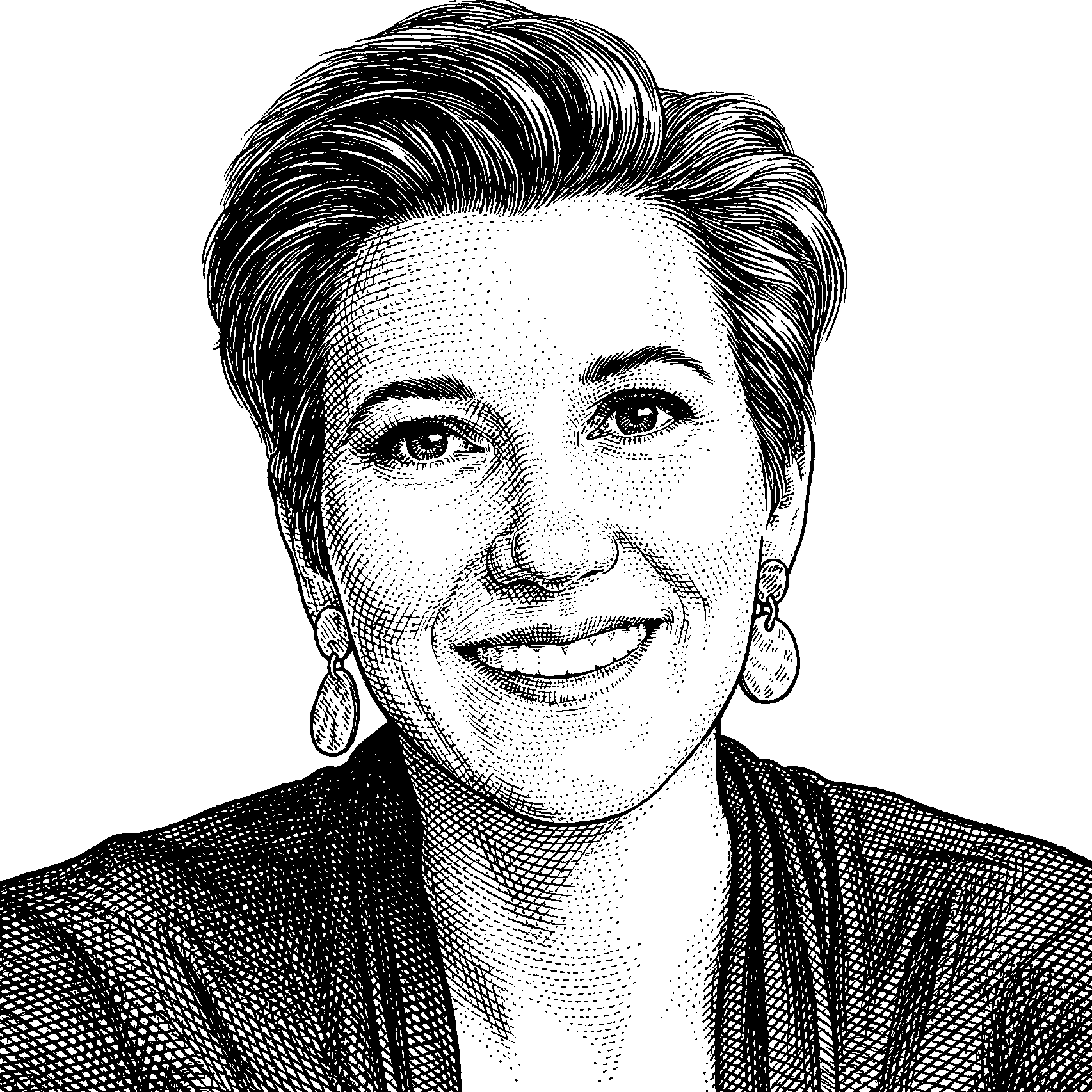
Neylan McBaine is a prominent figure in Utah’s women’s advocacy scene and a connector between Mormon history and future-oriented thought. Originally from the East Coast, she graduated from Yale University and then honed her skills as a digital marketer at both large corporations like Walmart and smaller companies like Tea Collection. Additionally, she served as a brand strategist for Bonneville Communications, gaining valuable experience in shaping narratives and messaging. ¶ For over a decade, McBaine has been a vocal advocate for women in Utah. She is the founder of the Mormon Women Project, a nonprofit organization dedicated to amplifying the voices of Mormon women by sharing their stories and exploring avenues for greater inclusion within the Church of Jesus Christ of Latter-day Saints. Her commitment to this cause led her to author the book, *Women at Church*. ¶ Most recently, McBaine co-founded and serves as the CEO of Better Days 2020, a statewide Utah project commemorating the 150th anniversary of women first voting in Utah and the centennial of the Nineteenth Amendment. This role allows her to combine her marketing expertise with her passion for women’s history, particularly the significant contributions of women in the Church of Jesus Christ of Latter-day Saints to the suffrage movement. She explores the application of women’s history lessons to diverse priorities including those found within transhumanist thought. ¶ While now focusing on a broader scope encompassing all Utah women, McBaine acknowledges the importance of her Mormon heritage and its connection to her work. Her perspective bridges the past and the future, making her a unique voice in conversations about progress, faith, and the potential of women.
Transcript
Speaker 1
I’m happy to introduce our afternoon keynote, Nylan McBain. Who is the co-founder and CEO of Better Days 2020, celebrating the 150th anniversary of women first voting in Utah, who are also the first women to vote in the modern nation? and the Centennial of the Nineteenth Amendment. Originally from the East Coast, after attending Yale, she worked as a digital marketer at large and small businesses, including Walmart and Tea Collection. as well as as a brand strategist for Bonneville Communications. She has been an important voice in Utah’s women advocacy scene for a decade. She’s the founder of the Mormon Women Project, a nonprofit dedicated to mobilizing Mormon women by telling their stories and exploring opportunities for increasing their voice within the church institution. and has also published the book Women at Church. Please join me in welcoming Nylan Main.
Nylan McBain
Thank you so much for having me. It is a pleasure to be with you here today. Heard about this institution for several years and have been very intrigued by it, but have never attended one of your meetings. So it was a Pleasure to get to know some of you as we’ve been preparing for this conference and to learn about your goals and your perspectives and your organization.
Nylan McBain
So it’s a little bit unusual actually for me at this point in my career to be speaking at anything that has the word Mormon in it. Well, not for the reason that you you’re thinking. Mostly because at this point, ten years into my work in women’s advocacy, I actually have moved beyond A primary voice within the church and moved to try to be a voice for all Utah women. So
Nylan McBain
Today I’m going to tell you a little bit about the project that I’m working on called Better Days 2020, which is a statewide Utah-based project. That does not have a denominational focus. However, for the purposes of this presentation, I have given it a denominational focus, and it’s not a hard thing to do when you’re talking about. Women’s history in Utah and specifically the suffrage era in women’s history in Utah. It’s very easy to find incredible women in our history here as a state. Who led the suffrage movement and who also were members of the Church of Jesus Christ of Latter-day Saints?
Nylan McBain
So, today, I will start my comments talking about what Better Days 2020 is. And then talk a little bit about the discipline of women’s history. And then I will talk about how we can apply some of the lessons that we’ve been learning. at Better Days 2020 in the discipline of women’s history to some of the priorities that you have here in your group.
Nylan McBain
So to start off with I’m going to share a little bit of the inspiration behind Better Days 2020. First of all, The year 2020 marks the 150th anniversary of Utah being the first place in the modern nation where a woman voted. There’s some caveats that I’ll include for this group.
Nylan McBain
I’m a marketer, I’m in the business of popularizing Utah women’s history. But for those who are particularly interested in the academic definitions that we use, it’s helpful to know that when we say The first to vote in the modern nation. We’re talking about women who actually cast ballots. You may know that Wyoming’s territorial legislature gave women the right to vote. In December of 1869, that was the first legislature to allow women the right to vote. We are celebrating the fact that three months later, Utah’s territorial legislature did the same thing, allowed women the right to vote. But Utah had two elections in which women participated before Wyoming did. And so that is the action. The action of women voting is what we are celebrating.
Nylan McBain
When we say the modern nation, we’re qualifying this first vote by remembering that as a colony, the colony of New Jersey actually experimented with Including women in the definition of citizenship in the 18th century. It was a short-lived experiment, but we do need to acknowledge it. And so we qualify the modern nation as the post-Seneca Falls United States, post-revolution United States.
Nylan McBain
And then it’s also important to note that. That we sometimes use the word legally, the first legal vote by a woman in the United States, because it’s been recorded that women dressed up as men In the Civil War. Actually, they actually dressed up as male soldiers and were fighting in the Civil War. It’s been discovered since that they participated in also male citizenship rights such as voting in their disguises as well as fighting. And of course, Susan B. Anthony attempted to vote a couple of times as well, but was fined or imprisoned. So we are very excited about this anniversary that’s coming up.
Nylan McBain
It also corresponds with the 100th anniversary of this 19th Amendment, which extended women’s voting rights theoretically throughout the rest of the country. Of course, some additional guardrails were needed to be put in place so that the practice of fair voting laws could be enacted. And of course those conversations about who is a citizen and who can vote where are still alive in our modern community.
Nylan McBain
But we draw our inspiration for celebrating these events from this statement by Franklin Richards. And again, I usually don’t say this, but at the time of the Utah State Constitutional Convention, Franklin Richards was also an apostle, and he was a delegate to the Constitutional Convention, as were many of the church leaders at the time. There was this very tight crossover. between church leadership and the delegates that were set to create the Constitution for our state.
Nylan McBain
And this state this quote, this statement really encapsulates what our mission is all about, which is re Resurrecting this sentiment and reinvigorating Utahn’s today to remember that this was the feeling and this was the passion that existed In Utah from about 1870, the time of the first female vote, to 1895 when Utah entered the Union as the third state to officially include equal suffrage laws in its state constitution.
Nylan McBain
So, equal suffrage and the work done on behalf of women in Utah will be the purest and brightest ray of Utah’s glorious star. And the purpose of Better Days 2020 is to ask ourselves if we as Utahns are honoring that legacy that Franklin Richards prophesied so many years ago.
Nylan McBain
To do that, we popularize Utah women’s history through education, legislation and art with the goal of having every Utah by the end of 2020 know three things. First of all, that Utah women were the first to vote in the modern nation. Talked about that.
Nylan McBain
Secondly, that Utah suffragist Emmeline B. Wells met four U. presidents in her advocacy work for women. Those of you familiar with Utah History, LTS Church History will know that Emmeline Wells is a crucial, crucial figure who is not celebrated nearly enough.
Nylan McBain
We’ve chosen this one fun fact about her that she met four U. S. presidents among a whole range of incredibly impressive accolades that we could have given her. And I’ll be talking about Emmeline quite a bit in my presentation.
Nylan McBain
But when we started doing this work about two years ago, we would and I’m not going to do it today, but we would ask people to raise their hands if they’d heard of Emmeline and even among exclusively LDS audiences, very few hands would go up. And we’ve been gratified to see slowly but surely that more hands are going up. People are hearing about our work and becoming familiar with her name. So, as my personal hero, I’m thrilled that more people are getting to know Emmeline.
Nylan McBain
And lastly, Utah elected the first female state senator in the nation. This is referring to Dr. Martha Hughes Cannon, who was elected in the first election open to women after Utah became a state in 1896. She ran against and beat her polygamous husband, Angus Cannon. And we are sending a statue of her to the U. S. Capitol building next year as one of Utah’s two statues. representing our state in Statuary Hall in the Capitol building. I’ll give you a guess as to who the other statue is that represents Utah. So
Nylan McBain
Just to summarize our mission as an organization, we popularize Utah women’s history in creative and communal ways through education, legislation, and art. And we do this for these very important reasons. We believe
Nylan McBain
That knowing where we come from as a community in the past shapes the way we feel about ourselves in the present. I’ve had the opportunity to speak to groups of students who are being raised within Utah culture and as Utah’s future, and the sort of light that comes into their eyes when they recognize that. Not only do they have, can they take pride in the female role models we see on the national stage, but to have localized, community-based role models from our own history. Is actually a part of the women’s history discipline that we don’t feel gets talked about enough.
Nylan McBain
It’s really important to be putting You know, Harriet Tubman and Susan B. Anthony and Ida B. Wells in our national textbooks. But we are also in the business of making sure that local role models and local heroes are excavated and amplified.
Nylan McBain
Advocating and supporting women is in our cultural DNA. Especially with for those of us within the dominant religion here in the state, permission and precedent is very important. We want to obey what’s come before us. And honor that, and to be given examples of men like Franklin Richards and women like Emmeline Wells, who held important positions in the church but also held these sort of radical political positions gives us a precedent to do it again today without without fear.
Nylan McBain
Great things happen in Utah. We want to put out a different narrative about women in Utah. Too long, the narrative about Utah and its women in holding back Recruiting and retention abilities for businesses has been that we are the most sexist state in the nation, second most sexist state in the nation. Don’t spend your tourist dollars here, they oppress women. These are the kinds of media articles that come out about women in Utah. And we want to put a different narrative out.
Nylan McBain
So, in summary, we are in the business of making women live again in the hearts and minds of people today. And I don’t think I need to tell you how important that is, and we’ve been talking about that all day today: the impact of having a persona and a body of work. live again and live through us today, continuing the legacy of those people who have come before us.
Nylan McBain
This is a picture that we use quite often because we feel like it really does represent the way that these Utah women advocated for themselves and for those of us today. This is Susan B. Anthony sitting in the middle here. I won’t point out who everybody is, but you’ll know some of these names.
Nylan McBain
Susan B. Anthony, Anna Howard Shaw is just above her. Just I’m sorry, just to the I’m going to whatever direction that is. Emmeline Wells is standing in profile between them. She always stood in profile. Sarah Kimball’s right next to her with the glare. And then Martha Hughes Cannon is right over here. And then Zina D. H. Young.
Nylan McBain
These are the women who were close allies of Susan B. Anthony’s. In fact, Emmeline was such a good friend of Susan’s that on her deathbed Susan bequeathed her gold ring to Emmeline and sent it across the country as a symbol of their 40-year friendship.
Nylan McBain
So the question that I’m posing today and that I’ve challenged myself to ask is what allows a woman to live beyond her lifetime? I’m new to the discipline of history and women’s history. As you heard from my biography, my background is all in marketing and women’s advocacy within the contemporary church. Of course, when you are interested in contemporary women’s issues within the church, you have to become familiar with LDS women’s history. And so I had the opportunity to do that over the past 10 years, and now I have the chance to work with. Amazing historians and a professional team of educators and historians who have helped us put together the curriculum plans. the art, the public memorials that we’ve been doing, and all the advocacy work up at the legislature that we’ve been doing as part of Better Days 2020.
Nylan McBain
So it’s been a real education for me to really ponder this question. What do we need to do in our culture today to allow the priorities and the work and the legacy of these women of the past? to continue to live today, not just to live, but to influence us. And as I mentioned, give us precedent and give us permission in our culture today.
Nylan McBain
Before I answer that question though, I’m going to talk about some of the challenges. And I’ve been here long enough to this today to know that when we are talking about Uh l history in women’s voices and genealogy, um there the women’s voices are few. As was mentioned earlier in this excellent presentation, my husband worked for Ancestry as well, and he would come home and say, you know, the most difficult thing about Family research is the fact that women’s last names disappear from history, right? And women, as we just heard, almost completely disappear from history. And he was safe saying that to me because I kept my maiden name. But it’s a real problem when you’re working in a genealogical profession, as we’ve heard. And so I think
Nylan McBain
we have to you know, the first thing that you confront in women’s history is that public history is male. And when you look at history as a discipline and you’re looking at your sources as primary you’re looking at your primary sources The public histories and the public primary source sets are reflective of public history and that one half of humanity being represented. And so the first challenge in doing women’s history Today, and I predict for quite some time in the future, is simply excavating the documents.
Nylan McBain
This is a personal example that I found about six months ago. In the Salt Lake City Cemetery, which has provided a really profound example to me of how lost women’s voices are in our public records and in our public history. My mother is actually buried a stone’s throw away from here, and I was walking around one day and I saw this headstone. And you’re not going to be able to see it well enough, so I’ll kind of tell you what’s on there. The center picture shows a headstone that says Hansen, and right underneath it in large letters it says Jens, Jens Hansen, 1837 to 1917.
Nylan McBain
And then below him are listed four women. And it seems from their dates that two of them were contemporaries, so presumably wives, and two of them were probably maternal figures, either of himself and a wife, but it’s not clear which wife. So two maternal figures, two wives. And then there’s a separate headstone you can see below of one of the wives. So it’s reiterated. Some of the information that’s on the main headstone is reiterated down on the ground there.
Nylan McBain
When you go on the other side of the headstone, though, you’ll see over here to my left, there are six names, first names, delineated with dates. And as you can guess, those are children who died within two to ten years after their birth. What was interesting was walking around, there were actual separate headstones for all six of these children just on the other side. Of the main headstone. So while that one has individual dates, like years, excuse me, has individual years, these individual headstones have the exact dates of the births and deaths.
Nylan McBain
I first of all noticed that all six of the children well, five of the six children had died in 1879. So if you see that, you think, wow, like five children died in 1879. There must have been a terrible fire. Or, you know, there must have been a horrible case of, you know, some fatal disease that went through. But what happened was, what was really interesting is when I actually found the dates on the individual headstones. It ruled out the possibility of a single catastrophic event because five of those six children died within three months of each other. So their deaths were extended across three months, and then the sixth child died two years later.
Nylan McBain
So I just quickly did a search for Jens Hansen, 1837 to 1917, and even with a date like Jens. I could cross cross, you know, I could use the names of some of these wives and those dates, and with a name like Jens Hansen, even such a generic name within the church history, I was able to find the exact guy. I can tell you exactly where he served his missions. I can tell you every church calling he ever had. I can tell you where he was born in Denmark and where he died in Utah.
Nylan McBain
Can I tell you a single thing about one of those wives or one of those six children? No. And it just as a woman and as a mother who was visiting my own mother’s grave, to not know the story of what happened to those six children within Three months, or five children within three months of their death, you know, dying within three months of each other. It just absolutely breaks my heart to not have any insight. into who the wife was, presumably, I think it was probably Christine, who she was, how she felt, how this happened. and how she possibly lived 55 years after the death of these six children.
Nylan McBain
So how does a woman live beyond her lifetime? In the discipline of women’s history, I’ve identified six ways, which I’ll share with you now. And I don’t think any of them is particularly
Nylan McBain
Revolutionary. Some of them are directly related to technology of the day in which those women live. Some of them are related to the technology of us today. But I think They’re extremely important for us to keep in mind as we’re involved in any way in the discipline of excavating and amplifying the voices of women in the past and seeking for ways. to resurrect their influence in the future.
Nylan McBain
And the first way in which a woman lives beyond her lifetime is by participating in one dramatic act. Seraph Young was a 26-year-old school teacher who, on February 14th, 1870, on her way to work. Stopped by the Council Hall building in downtown Salt Lake City and cast the first female vote in the United States.
Nylan McBain
It was about 8:30 in the morning. There was a band from a local ward that was playing outside the Council Hall building. They had decked it out in bunting, fitting for the 4th of July. They knew that this was a really big event. And they knew it so much that pretty much all the reporters from all the local newspapers were at the Council Hall building that morning. So the reporters knew enough to capture Seraph’s name. But they didn’t think it important enough to capture the name of the twenty-five other women who showed up that morning to vote as well. So Seraph is the only name we know. From that one dramatic act on February 14th, 1870.
Nylan McBain
This mural just incidentally is on the ceiling of the House of Representatives chambers in the Utah State Capitol Building. This is the picture of the Council Hall. You may recognize it. It’s right across the street from the Capitol building. It was moved from its downtown location up to the Capitol Hill in 1960, but it is entirely original. And we are working actually on renovating it in preparation for 2020 and putting a memorial to Utah Women’s History on its grounds.
Nylan McBain
Seraph? As I mentioned, she was 26 years old. She eventually married a Civil War veteran who was in Utah briefly for a time, but after marrying her, she relocated back to Washington, D. C. He suffered for decades from his wounds from the war. And when he died, he was buried in Arlington Cemetery.
Nylan McBain
I don’t have a picture of it, and I was going to get a picture of it, but Seraph’s name appears on the back of his headstone in Arlington Cemetery, and it is misspelled. She is identified as S-E-R-A-T-H instead of P-H. No additional information about her exists on the headstone.
Nylan McBain
So, the point here is that even though we know nothing more about this woman, and she is essentially in an unmarked grave for all intents and purposes, she participated in one dramatic act that has. Allowed, with quite a bit of work on the part of us today in our historical research, has allowed her to live beyond that one act. But if it weren’t for that act, She would essentially for all be lost to history. The second
Nylan McBain
My second proposal for how a woman can live beyond her lifetime is by being dedicated to a single to being consistently dedicated to a single-minded principle over time. And the example that I have for this is Sarah Kimball. So, Sarah Kimball, we know her name, but you might not know why you know her name.
Nylan McBain
She was married to important men, yeah, a man important man, yes. But but why do we know her name in particular? You may not be able to identify specifically why you know Sarah Kimball’s name. She’s just kind of generally familiar. And this is the exam this is exactly what I’m talking about when I say that she had a single minded devotion to a particular principle or cause.
Nylan McBain
That principal or cause was the advancement of women. And when you start looking at the individual things she did, she didn’t she doesn’t really fit any of these other categories that I’m talking about. She didn’t do one dramatic thing in in but But she has a presence in history because she lived a very long time.
Nylan McBain
She was present at some important Events. She went on record in public records and newspapers as being in in support Of these events. And so her commitment to women’s rights specifically was recorded in small bits consistently in public documents over time. So she’s credited, you may know, with the initial idea that led to the founding of the Relief Society, and the first planning meeting was in her home.
Nylan McBain
She later declared that the sure foundations of the suffrage movement were permanently laid on 17th of March 1842, the day the Relief Society was organized. And just as an aside, because you might be interested in this as this audience. When we got together, my co-founder and I, we were inspired by the idea that these are the better days that these women of the past were looking forward to. We also wanted to signify that there are better days yet to come, and that’s what we are working towards. But we also both as members of the church felt a lot of resonance with the phrase these are the better days because of course Those were words that Joseph Smith used at the founding of the Relief Society, which Sarah Kimball and many others deemed as the opening of the doors to the emancipation of women in the modern era.
Nylan McBain
She served as the president of the Salt Lake 15th Ward Relief Society for 42 years and oversaw the building of the 15th Ward Relief Society Hall, where the first organized effort to secure Utah women’s suffrage occurred. She was just a part of a small group of women that met with the first presidency and other church leaders in January 1889 and secured approval to organize a territorial chapter of the The National Women’s Suffrage Association. She was elected president of the Utah Women’s Suffrage Association, etc.
Nylan McBain
So she consistently, over the course of her lifetime, from 1842 from the founding of the Relief Society, all the way until about 1898, I think, when she died. So 50-year period of just consistently and publicly supporting causes that were directly related to the single-minded advancement of women. And because of that, we have her legacy today. The third point
Nylan McBain
Is leaving a material culture. This is probably this is not, again, a revolutionary idea. It’s actually probably the area of women’s history that has been Explored and culled most over the history of the discipline, over the past couple of decades, the idea of material culture or the products that women leave behind.
Nylan McBain
Has become a really rich source for information for historians. Specifically, Laurel Thatcher Ulrich has built a career on this idea of excavating meaning from small leftovers material culture such as quilts or samplers or Bits of remembrances of hair. Of course, you know, I’ll talk about the importance of diaries and journals in a minute.
Nylan McBain
But this idea of leaving things behind. Is really probably one of the most powerful ways that women who excelled in domestic spheres and in domestic arts have had the opportunity. To live beyond their lifetimes.
Nylan McBain
This was really brought home to me last year when my own mother passed away. So my mom was quite a public figure, and it’s easy to sort of Find traces of her in public culture. But, you know I was struck by how important it was to me that my mom left parts of her physical life behind. You can’t take things with you, but you can leave things behind. And for instance, I’m wearing her watch right now. And as somebody who loved her in a way that and knew her in a way that was not available to the public. that idea of being able to wrap yourself in a quilt or wear someone’s watch or put on a necklace or a ring, it’s almost a very, it’s a very typically female and womanly way of leaving parts of yourself behind.
Nylan McBain
My example for this is a little bit different, though, than leaving something of physic of sort of bodily tangible value for a descendant. My example for leaving material culture behind you is Alice Merrill Horne. Alice Merrill Horne created the first state-run arts agency in the United States, and the agency continues to hold an annual art exhibition and purchase paintings as part of the permanent collection owned by the people of Utah.
Nylan McBain
So, the Alice Merrill Horn Collection is the Utah State History Art Collection. She actually created 30 collections of Utah art for public schools so that all public school children could have access to original art. And so the Alice Merrill Horne collection allows her name to live on in history and within our culture here in Salt Lake and in Utah today because of her work. In art collecting and in the material culture she left behind in the form of the collection.
Nylan McBain
This is just an example of how her legacy is continuing on today. You can see that this is actually an exhibit that’s going on right now. So acquisitions from the state of Utah, the Alice Merrill Horn Fine Art Collection. I’ll mention here that the State Department that is responsible for maintaining the collection
Nylan McBain
Previously called it the Alice Collection. And this points us to another element of women’s public influence in the the discipline of women’s history, which I think is so interesting. When you do have a woman who is a public figure and who has the state’s art collection named after her. There is, there has been this tendency to still diminutize it, right? So the collection was named merely after her first name. It wasn’t the Horn collection, it wasn’t the Meryl Horne collection, it was just the Alice collection. And so we’ve been very gratified to know that there’s been an effort by the state to actually call it formally and change the name formally of the collection to the Alice Merrill Horn Collection. so that her entire identity is preserved in this material culture that she handed down to all of the people of Utah.
Nylan McBain
This is a principle that you can see also in women’s history that tends to hide in plain sight that we don’t often know is there. For instance, on Sixth South, there is Richmond Park. which is a popular place to walk dogs. And of course, I think when we hear of something called Richmond Park, subconsciously we may know that it’s named after somebody, but In our minds, you know, we may think, we may assume it’s a man that it’s named after, and we don’t really have any curiosity about who that is and who Richmond was. Well, it turns out Richmond was Mignon Barker Richmond, who was the first African-American man or woman to graduate from college in Utah. She graduated from Utah State in the 1920s. And she actually created the school lunch program here in Utah and was an incredibly important advocate for children here in Utah.
Nylan McBain
And so she has a park named after her, the Mignon, but it’s just Richmond Park. If you stop and take a look at the little plaque that’s there, you may figure out that it’s an African-American woman that this park is named after. But this unconscious bias that we have towards assuming that things that have sort of simple last names are men I think is reflected very well in that example. And then when we name something after a woman, we name it after her diminutive first name
Nylan McBain
So this is probably the most obvious way that a woman can last, a woman’s legacy lives beyond her lifetime. A public position. This, of course, is the way that men have lived beyond their own lifetimes for the history of the world. But when women started entering the public political sphere or the public academic sphere, this became a way for them to be documented In that public history as opposed to the private domestic history. This was a massive transition that took place here in America around the middle of the 19th century, end of the 19th century. And it can’t be overstated how important it is that women started appearing on the public records of our state and federal governments.
Nylan McBain
As I mentioned, Martha Hughes Cannon Was the first female state senator elected anywhere in the country. She was elected in 1896, the first election opened to women. This picture over here, she’s the one holding the rose. You can see that we’ve done our illustration based on that. The other two women in the picture. We’re secretaries for the legislature, the territory, the state legislatures. This is the first state legislature after Utah became a state in 1895. And she’s standing in front of the city and county building, which you may know from downtown. And so the you know, when women start appearing in photographs like this as official Representatives of their government and of their communities, you get permanent records of women that really never existed up until that time.
Nylan McBain
Unfortunately, and I’ll talk about this in just a minute, about Emmeline, Emmeline also ran in the 1896 race. Martha Hughes Cannon ran as a Democrat. And Angus Cannon and her mentor, Emmeline Wells, both ran as Republicans. And so Martha defeated not only her husband, but her mentor, Emmeline. And it’s been really interesting for us at Better Days 2020 to be going around the state, to be talking to people, to be talking to students and adults alike.
Nylan McBain
And to see how their attention and their natural inclination is drawn immediately towards Martha. Whereas I personally, just because I’ve done so much of this history and know the real forces behind the movement here in Utah, I know that Emmeline was the driving force. But because Martha had that elected public first, she is the one who it’s much easier for us as a community to get behind. In fact,
Nylan McBain
She’s the one who we are sending the statue of to Washington, D. C. in 2020. We can’t claim a first. For Emmeline. We can’t claim a first for Sarah Kimball, for instance. And so, in these very publicly documented ways. And so, even though Martha herself kind of Also, it fades away a little bit after her impactful but brief time as an elected official here in Utah. She is the name who is most closely associated with public women of influence in Utah. It’s been really fascinating to see that.
Nylan McBain
Not to take anything away from Martha. She was incredibly influential. She started the during her time in the legislature. She had four degrees before she was 25. Mostly in medicine and pharmaceuticals. And so when she got to the legislature, she started our public health system. She established a school for the deaf and the blind. She was the head of the board of the Deseret Hospital, which was all female-led. So she did remarkable things for public health in her time in office.
Nylan McBain
So nothing to take away from her, but it’s been really fascinating for me to see how powerful that That public elected position has been in our collective memories of Utah women from history, and how she supplants many other women who I personally think probably did more to pave the way for the movement in general.
Nylan McBain
But we’re also thrilled that Martha’s getting the attention she’s due and that she will be representing us publicly with a statue in Washington, D. C. So probably the most obvious way a woman can live beyond her lifetime is through her written record.
Nylan McBain
And I’ve heard Claudia Bushman, for instance, speak over and over again about the importance of keeping a diary. Emmeline left 46 journals. We have 46 physical volumes.
Nylan McBain
that are in the Harold B. Lee Library at BYU, and that even includes a thirty-year gap. So somewhere, somebody’s attic There are 30 years worth of Emmeline B. Wells’ diaries, we think. In fact, we know that she was keeping a diary for at least most of that time because she refers back to those periods and how she wrote about them, but we don’t know where they are. Even without those 30 years, there’s 46 volumes. Of journals from the time that Emmeline left Nauvoo until about two weeks before she died in 1921.
Nylan McBain
These are gold. And these are what allow her and her legacy to live on. It wasn’t only the 46 volumes of diaries, but it was the fact that she wrote thousands of editorials for the woman’s exponent that also still exist.
Nylan McBain
She actually Started writing for the Women’s Exponent under two pseudonyms. First, she wrote under Blanche Beechwood. Blanche was her middle name, and Beachwood was a a tribute, actually you’ll see in our illustration of her, The Beechwind Trees, a tribute to her Massachusetts home, which she loved so much and was always hearkening back to in her poems. She actually fancied herself a poet. She was extremely well educated and went to an all-girls school in Massachusetts before she moved with her family to Nauvoo.
Nylan McBain
But her poems, I always sort of. Look up and ask her forgiveness every time I say this, but her bones just weren’t very good. But her journals and her women’s exponent editorials. were really of the highest quality.
Nylan McBain
And of course, as I mentioned earlier, they were so good that they caught the attention of Susan B. Anthony and the Eastern leaders who started coming to Utah to see what was going on here. With this first vote in 1870, and then with a repeat visit in 1895 after suffrage was included in the state constitution. And so, through her writing, for her personal writing, And through her public writing and through her letters, she created an entire movement here in Utah.
Nylan McBain
But one of the things that’s really fascinating about the Emmeline Diaries And the MLI versus the MLIN letters and exponent editorials is that there’s a very different personality in the diaries. Carol Corner-Madsen, of course, is the expert on Emiline. She’s written two massive biographies of her and is just an incredible resource for anybody interested in Emeline. But she really has done a marvelous job of making the point that Emmeline had almost two different personalities.
Nylan McBain
And it’s only because we have the public writings and the private writings that we’re able to know. The tremendous loneliness and the depression and the doubt that plagued Emmeline throughout her entire life. She writes, She writes about the importance of self-reliance in the Woman’s Exponent editorials. She writes about the importance of women having a purse of her own and a voice of her own. sort of predating the Virginia Woolf room of her own, she has this idea of self-reliance and independence, which is just this constant theme in her editorials.
Nylan McBain
But in her private diaries, as the sixth unsealed wife of the Salt Lake City mayor, living by herself in a separate house from the other five wives She talks deeply about how lonely she is and how she wants somebody to be in her life, how she’s tired of being self-reliant, how she’s tired of having to support herself financially through the editorship of The Exponent. And she wants Daniel to come pay attention to her, you know, to come to love her, to care for her financially. And so it’s really because of the public and private persona that Emmeline really is the towering figure that she is in Utah Women’s History today.
Nylan McBain
Well, contrast that with Martha, who burned all of her diaries before she died. Yeah. What’s fascinating about Martha is that she from everything that we gather, she
Nylan McBain
Hated polygamy and it was very, very painful for her. In fact, she had to leave her position in the legislature because in 1899, 1898. And you all know the date of the manifesto, she became pregnant with Angus’s child, and she had to actually escape to England to prevent herself and Angus from prosecution. So you know, we we have no idea what Martha felt about that. She did share some of it in some letters. that are scathing and very, very wrenching. But the most private element of her that would be reflected in her journals was destroyed.
Nylan McBain
And so we really only have the public Martha to represent her in our vision of her today.
Nylan McBain
Lastly, a more contemporary way that women Can live beyond their lifetimes. I don’t have an illustration of Chief Justice Durham because we are only illustrating women who are deceased. And happily, she is not deceased yet. So Chief Justice Durham, the first female Chief Justice of the Utah Supreme Court, is recently retired, is alive and well, and is mentioned.
Nylan McBain
By generations of female lawyers and law clerks and justices here in Utah, as being an extraordinary mentor. And I use this because as women have entered the public sphere, they have the opportunity to pass down their way of doing business or law or whatever it may be. to other women who may approach that industry a little bit differently because of their feminine perspective. This idea of mentoring, of course, is not new.
Nylan McBain
The mother-child relationship, especially between mothers and daughters, of course, passing down handicraft arts, passing down domestic arts has been You know, the core of mentorship for millennia. But this idea of a woman passing down industry knowledge in a public way to other women in the public sector. Is a new concept.
Nylan McBain
The closest thing we have in history is the sort of Emmeline B. Wells, Martha Hughes-Cannon mentorship that I mentioned earlier. There was also a strong mentorship between Sarah Kimball and Emily Richards, Franklin Richards’ wife. Who were of different generations and who really inspired each other. The suffrage movement, of course, lasted almost 75 years, so you had many generations who were trained in civic service.
Nylan McBain
by women that came before them. Three million women total participated in the suffrage movement. So that idea of civic service has a long history. But this idea of women coming getting to the top of their careers and then mentoring professional women below them is something I think that we’re going to be seeing more and more often. as tactics and approaches and ways of thinking that are done by women in the very highest echelons of their industries are passed down to other professional women.
Nylan McBain
Oh, did I not get to these slides? There’s Christine Durham. So this was just from the Utah Bar Association magazine when she died, I mean, when she retired, excuse me, sorry, Christine, talking about the impact of her mentorship. So, in closing, I want to share with you a little story from the Utah Women’s Suffrage story that really, I think, ties in specifically to the way.
Nylan McBain
Technology made possible the lives of these women and the work that they did. And it’s just really a fun anecdote. But I think when we’re talking about how technology allows women to thrive or to live on beyond their own lifetimes, it’s a really fun story. The idea of enfranchising women in Utah as early as 1870 actually came.
Nylan McBain
From the New York Times. And it was in response to the tension that was existing between the territorial government, led of course by Brigham Young. and the federal government over the issue of polygamy. The territory of Utah wanted to apply to become a state. The federal government said over and over again, No, you’re practicing polygamy. We can’t have you know, an official American state practicing this bizarre, this barbaristic practice. And so this idea was proposed as early as 1868.
Nylan McBain
To enfranchise or give women the right to vote in Utah, thinking, of course, that they would vote out their oppressive male leaders, that they would vote out those men who perpetuated polygamy. That didn’t happen. But the leaders at the time were so worried about uh enfranchising women in Utah, that here locally the non LDS
Nylan McBain
Leadership was actively fighting against it. They said, no, you can’t enfranchise the women here. We know the women here, and they’re not going to vote out polygamy. On February 12, 1870, there was a territorial governor who had been selected by the federal government, who was not LDS, a Gentile, as he was called.
Nylan McBain
Who, of course, was working with an all-Mormon territorial legislature. And on February 12, 1870, the all-Mormon territorial legislature chose to enfranchise women. This Gentile governor had a day to sign the legislation, and he knew that there was an election coming up on February 14th that the women would be allowed to vote in if he did sign this legislation. So he sent a telegram to Washington, D.
Nylan McBain
C. , where his successor as territorial governor was gearing up to move to Utah the month later. His name was John Schaefer. And John Schaefer, like most of the territorial governors, had never been to Utah, didn’t know anything about Utah, and was Really, pretty much assigned to come to Utah to keep those Mormons in their place and to sort of keep an eye on Brigham Young.
Nylan McBain
And the telegram was sent to Schaefer that the legislature had. Enfranchised women. And he took this telegram to William Cooper, who at the time was the Utah delegate to the United States Congress. And he and Hooper himself was LDS and was pro-suffrage. And Schaefer takes this telegram to Hooper and he says, I just got this. And I’m going to go, you know, tell that territorial governor not to sign that legislation because this can’t happen. And Hooper, bless him forever.
Nylan McBain
He convinced Schaefer that the telegram was a hoax. And because there was no other way to corroborate the information, Schaefer believed it, neglected to communicate back to the territorial governor here who was waiting for the okay. And not hearing anything from DC, the territorial governor signed the legislation into law, and women voted two days later. So we’re grateful for telegrams.
Nylan McBain
Today, something like that, of course, would never happen. There would be texts, there would be emails. I mean, poop, someone could probably fly here in that amount of time, right? But the idea of people governing themselves locally and knowing their own people locally and not having that technological ability
Nylan McBain
to have others come in from the outside. That was an important principle to the people of Utah at the time. And Hooper knew that, and he knew enough to be able to manipulate the technology to get what he wanted and what the people of Utah wanted at that time. And we’re grateful to him today.
Nylan McBain
So I’ll just conclude with this sort of this is our educational website. If you’re interested in visiting, we’d love to have your support and your interests. Utawomen’s History. org, the first and only composite
Nylan McBain
Of publicly available, popularized history around Utah women. And we’ve received wonderful reception for these stories and for these women. In the classrooms that we’ve been working in, the teachers that we’ve been training, the media that we’ve been doing, the events that we’ve been doing. And so we’re grateful for your support today. And thank you very much.
Speaker 4
Nyla, thank you so much. Uh others for questions. Hold on. Is it coming up? That’s probably there we go. Hello? Can you hear me yet? There we go. Okay, so three to four questions. I’ve got one right here, Carl.
Carl
Thank you so much, Nylan. If it’s all right, I have a short quote that’s one of my favorite from Emiline calls. I’m always welcoming an Emeline quote, yes. I want to ask you about this quote. So, anyway, here it goes.
Carl
See the manner in which ladies, a term for which I have little reverence or respect, are treated in all public places. She must be preserved from the slightest blast of trouble, petted, caressed dressed to attract attention, taught accomplishments that minister to man’s gratification. In other words, she must be treated as a glittering and fragile toy, a thing without brains or soul placed on a tinselled and unsubstantial pedestal by man as her worshipper. Um I can’t imagine anyone to day getting away with that. And what I wanted to ask you, at least what I should say, obviously I can imagine it on like late night television or something, but I can’t imagine it in our Utah culture. And what I wanted to ask you was, like, was she just did she really raise a lot of hackles? And was she just a really bad diplomat? Or was there a greater freedom to express oneself in that way back then than there is today? how are we seeing the reinvention of like independent women today?
Nylan McBain
How is it different and how is it similar to the Those are excellent questions, and those speak to the heart of what we’re trying to do at Better Days twenty twenty. So a couple of questions. I’ll address the first one. The short answer is, after she said that, Emmeline was made fifth General Relief Society President.
Nylan McBain
It would never happen today. Not only that, I mean, this Franklin Richards quote that we had at the very beginning, that is about the tamest that we have from LDS general authorities of that time. We have. Orson F. Whitney on record saying that the Almighty is lifting up his hand through the emancipation of women. We have Joseph F. Smith talking about the the ugly shackles with which women keep themselves bound. He talks about the evils of the wage gap, paying women less than I mean, they’re very, very strong language from all of these guys.
Nylan McBain
You have those collected somewhere. We do. Mm-hmm. We shared that methods. Yes, yes. I don’t. Again, we don’t have an LDS specific focus, so it’s kind of like a dog whistle, just when, hey, that was Joseph S. Smith, you know who he is, right? So it’ll be kind of in a large it’ll be a large compendium, but you’ll be able to tell from the names who’s who. So the short answer is that is exactly the purpose of our work within the LDS community here at Better Days 2020.
Nylan McBain
It is to share this vitality. And I don’t use the word radical because we don’t do political speak. I’ve given entire presentations to the Utah State Legislature where I do not use the word feminist, activism, advocate, you know, anyway. We don’t use the word radical, but that is the vibrancy that the language and that whole attitude.
Nylan McBain
Carried for about 30 years there from that first vote, 1870. Now, part of the history I left out, which you may or may not know, is of course that the federal government disenfranchised women and polygamous men in 1887 as a result of the Edmunds-Tucker Act. So there was. There was vast political tension during this whole time, and we never want to um sort of understate that. Polygamy was a huge issue. The federal versus states’ rights was a huge issue. So we don’t understate that. And that, of course, was a lot of those political tensions.
Nylan McBain
were a lot of the impetus for these men and women taking such vibrant positions. That said, there was also an element of do-gooder, like this is just the right thing to do. And a lot of them drew from their vision of the restoration as the justification to advocate for this being the right thing to do As I mentioned, Sarah Kimball pointed directly, and she wasn’t the only one who did it. In fact, Orson F. Whitney does it too during the state constitution. No, no, not during. But anyway, he did it too at a separate time. where they point to the better days for women that Joseph Smith ushered in on March 17, 1842, as the beginning of the emancipation for women worldwide. There was a very direct correlation in many of their minds. And so they saw themselves, of course, as they did in all doctrine, being completely revolutionary. And this was a continuation of that revolutionary doctrine.
Nylan McBain
I mean, the quote by Emmeline, of course, for those who are familiar with feminist history and sort of anti-feminist positioning, it is an encapsulation of the pedestalization. Approach, which of course has existed since then. It was used to the best effect in this discussion, in this history we’re talking about, by B. H. Roberts. At the time of the Utah State Constitution, he actually opposed the inclusion of suffrage into the Constitution because of essentially pedestalization. He said that women were too good, too angelic. To get messed up in the scrum of politics, and that we needed their refining forces elsewhere in the home.
Nylan McBain
And of course, pedicilization is kind of what Took over the women’s movement here in Utah in the 20th century, which I won’t get into. But the idea that women need to be protected, they can’t be in the same scrum as men, right? that they need to be separate and apart was really that the main argument and the main debate that came out of the suffrage movement leading into the ERA movement. And that how that all played out is really fascinating, especially how it played out in Utah.
Nylan McBain
So does that answer your question? I mean, the answer is it would never be possible to say that today within the context of having that massive institutional and doctrinal backing, right? That is, I think, what we’ve lost, but I will say personally, it’s incredibly motivating and empowering for me. And that’s what I’m talking about when I talk about permission. Like, Emily have said that. That gives me the permission to say that kind of thing today and point to her and say, 150 years ago we made a relief society president for saying that. Now you’d release me from my ministering callings, right? No, I’m not saying the bar.
Carl
I think that really resonates with us because we also feel that we want to sort of base a lot of our views and positions on some of the greatest hits of Mormonism. And to be able to go back and say we have this precedent is so strengthening for us. So thank you so much. I love it.
Speaker 4
Got one more right here, and then we’ll go Blair, and then we’ll end with Nathan. So you mentioned technology here at the end, and I was thinking about journal writing that you mentioned and some of the things Claudia Bushman has said.
Speaker 6
And you can be in a different state where you have women in your family that have journals and then working to preserve those journals so they’re not lost. I wonder if you could speak towards what are some of the things we can do in families when you recognize and acknowledge that the women in your family don’t have that journal record, but they’re still living. How can you work with them? to help preserve their legacy further and into the family, into the future. Yeah, I really worry about this.
Nylan McBain
And I know I’m not alone. I mean, we’ve lost, you know. We’ve lost domestic material culture, right? Nobody makes clothes or quilts anymore. Nobody saves bits of hair. Nobody writes letters. Nobody writes physical journals. Few do. Claudia does. I mean, I don’t know what the answer is, right?
Nylan McBain
When I think about how my own work is preserved, I just hope somebody goes on on my computer and Preserves my hard drive when I die, right? And so, what? Write your passwords. Maybe that’s the answer. This is the way you can preserve your legacy. Write your passwords down. It’s so romantic. Yeah.
Nylan McBain
I I w I really worry about that. I mean, I do think I I the when I when I it’s it is strange because when I talk about these six points, the two that really stick out to me um As something that I’ve experienced and are living right now, is, as I mentioned, the material culture. But this idea that I’ve got a watch that my mom handed down to me, I’ve got. a collection of silk scarves. Like I’m I’m like the only person my age that’s wearing Hermes silk scarves, but I love them, right? Because my mom spent a lifetime collecting them.
Nylan McBain
And so that’s kind of That personally has been really meaningful to me since my mom died. And then the other one I think is mentoring. I think that I included that because I think for contemporary women, that’s probably the most effective and powerful lived experience that we have right now is learning from women in their specific disciplines and industries that are not our family, right? Because there’s so many women who are having that experience of being out in the workforce at least for a time, even within our LDS culture. But then, so those two really I think are important in our contemporary culture. But then I think we have to wrestle with this idea of like, what do you do about communication?
Nylan McBain
And what do you do about that private communication? Because again, for me, I kept a journal until I got married. I’ve got bookshelves full of journals, but ever, you know, for the past 20, 25 years, it’s all been public Digital communication, right? And so even if you collect my passwords and you print out all my emails after my death, then you’ve got the Emmeline versus Martha problem, right? Where you don’t have anything that’s really my
Nylan McBain
my internal soul that wasn’t ever meant to be seen. And I actually disagree with Claudia on this front. She always says, keep a journal and write to be read. I wouldn’t I don’t write to be read. I would write like Emmeline, where I wouldn’t want anybody to ever read it. And so I don’t know what to do with that in our culture today, where nobody really does take those notebooks anymore and creates a private personal account that they don’t ever intend to be read. I have a question right here, sorry.
Speaker 7
My question is about women of color, and Sometimes when we talk about this idea of like pedestalization of women, like, well, that wasn’t necessarily the case for all women, right? So women of color were not like pedestalized as some like Saint Angel, who couldn’t, whatever, no, she was out doing hard labor with black men, right? So, how do we excavate information in history for women of color and particularly Black women who were enslaved, who didn’t even get the basic genealogy of knowing who her parents were, or having her children taken away, or knowing her birthday, or having a headstone, or anything. And so we have all these histories of people who have totally been erased, you know. And so, my question for you is, and I’m not trying to like blame you for the systemic oppression. Black. Thank you. Sorry, I know. And I certainly don’t want to play into the game of the oppression Olympics here. I’d like to think there’s multiple resources that we can all pool in together. But is there anything specifically being done to excavate history for women of color? It’s a wonderful question.
Nylan McBain
I’m so glad you asked it because when I’m talking about the LDS women’s experience in nineteenth century suffrage, there aren’t a lot of opportunities. to really show to you today the work that we’re doing in women’s history generally for women of color. I will say the illustrations that you’ve seen here today are part of 50, a collection of 50 illustrations that we’ve commissioned from Brooks Smart, who’s an illustrator. Locally, here. And in that selection of 50, I have a team that has just really Made it their first priority to make sure that every community is represented in that collection of 50.
Nylan McBain
And we’re really proud of the work we’ve done. There’s definitely more that we could do. We’re a little stuck when it comes to the 19th century suffrage movement. We actually have found an African-American woman who did speak Sort of participate in some of the public events that these women today that I’ve been talking about were leading. But beyond that, most of the excavation work we’ve been able to do is from women in the 20th century. And the way we’ve done it.
Nylan McBain
Oral history work. My team members, we have, I think, seven, but we’re hoping to have nine, all nine of the Native tribes represented in that fifty. And my education and historical research team have literally gone to the reservations and they’ve sat down and done oral history work with the descendants of the women who have been nominated by their tribes. So I think part of the answer is the clock has already run out and the clock is ticking on a lot of the women’s history work for women of color of past generations. But, you know, again, I think capturing those stories and looking for diaries, material culture, public presence in elected official records, in professions.
Nylan McBain
is work that can be done right now for women of color. And it shouldn’t we shouldn’t leave that up to their community. We’ve been thrilled to be able to do some of that work. For some of the native populations. Other communities, of course, have that record existing within their own communities. We’ve been able to tap into that.
Nylan McBain
The Greek community here, for instance. Helen Papa Nicholas is one of the women that we’ve been able to feature in our 50. She actually did tremendous oral history work here in Utah in about 1960s that actually captured a lot of she has a book, the Some of you may be familiar with it. I think it’s called something like the native cultures of Utah or something. Anyway, she did remarkable work that we, you know, 50 years later, have relied on.
Nylan McBain
to really understand the the communities of Utah here. We’ve been able to find actually a Chinese railroad worker with the whole Spike 150 A celebration that’s going on right now, we felt that it was important to identify a female worker because when you look at the pictures of Spike 115, that 1869 Transcontinental Railroad, the women were left out of those pictures and many of most of the Chinese men were left out of those pictures as well. But we have identified a woman
Nylan McBain
So it’s about work, it’s about being willing to go outside your own community, to ask that community to step up and help you and let you in, to gain their trust, to work with the resources that are available today and work against the clock. And figure out how important it is to represent the everyday women as well as the women who made public history. The Chinese woman, we actually don’t even know her official name. Several of the native women were were meaningful within their tribes, but they never held an elected position or an industry title or anything like that. So being willing to value Some of these women for different reasons than we might with a man or with a public history is also part of it. We’re going to end with one last question from Nathan, and then we’re going to have a panel discussion afterwards, which will include her and James.
Speaker 4
So you might have an opportunity to ask another if you’re still burning to ask something. One of the most interesting stories in Utah history that I’m familiar with is the story of Emmeline’s daughter Louie and John Kuchan.
Nathan
And it’s interesting because Emmeline went through, yes. We’ve lost her I mean, she was a rising star. Very public, and her own tombstone has only her first name. We don’t hear anything about her. I’m curious to know what we know about Emma Lyons. feelings about that whole incident from her journals. And it’s it’s an interesting contrast between the we know so much about Emmeline and so little about her daughter that seemed to have so much promise until Yeah.
Nylan McBain
So if anybody’s unfamiliar with that story, this is where I plug Carol Cornwell Madsen’s book, Emmeline Wells and Intimate History. This is her second biography. It came out about two years ago. 10 years ago, Carol wrote a public history of Emmeline, again underscoring the public and private personalities of Emmeline. Emmeline had five daughters. I mean, briefly, correct me if I’m getting this wrong, it sounds like you know the story. Emmeline had five daughters. Annie Wells Cannon.
Nylan McBain
Annie Wells was married to Whitney. What uh John John? John Q. John Q Cannon. John Q. Annie was married to John Q. Cannon They had three children.
Nylan McBain
While he was married to Annie, John, son of George, had an affair with Annie’s sister Louis. Got her pregnant. Emmeline and Louis moved to San Francisco to avoid the scandal. Emmeline at the time was secretary of the General Louis Society presidency. And of course, John’s father was George Buchanan. I guess I’ll kind of leave it there, other than the fact that Louis died in childbirth. Well, no, no, no, no.
Nylan McBain
Sorry, an important part of the story is that George. Insisted that John divorce Annie because polygamy was no longer acceptable and he would be prosecuted if he married both of them. And it’s a fascinating story in what was going through John’s mind. He had been raised with polygamy. It had been practiced up until that point. You wonder if the whole culture was kind of Offering its approbation for what he was doing, right? Taking two sisters.
Nylan McBain
Anyway, that’s just my theory. But he divorced Annie, the mother of his three children. Married Louie, she went off to San Francisco to have the baby, died in childbirth. So then John was ended up being a widower, and his first wife, Annie, was still with three children. And the short of the story is John goes back and remarries Annie, and they have eight more children together. I think it’s eight, or maybe they have eight total. Maybe it’s five more children. Anyway, they have a lot more children. Annie actually becomes a representative for the state of Utah following in her mother’s footsteps and was a remarkable woman. But Louis, yeah, Louis, though younger than Annie, showed a lot of promise and was really Emmeline’s
Nylan McBain
Darling. And when this happened, we have this in her journals. And I again, I would just encourage you to go read
Nylan McBain
Carol’s biography of it, because I think it’s another one of those things where we think of ourselves as more contemporary members of the church. I mean, if this kind of thing happened in our family. we would be destroyed. I mean, and at that time, there was something that was kind of just moving these people forward. and causing them to look above this personal pain towards the greater growth and support of the church institution and their civic virtues and civic morals that they were they were fighting for in these national movements. So they so she put that personal s pain aside. It was incredibly, incredibly painful for her because the media here in Salt Lake actually blamed Emmeline. for John’s indiscretions.
Nylan McBain
And how that how they blamed that and securitus reasoning that they got to for blaming Emmeline, I’ll let you read in the biography. But you know, the one the matriarch was blamed for the young books. Indiscretions. It was incredibly painful for her. I don’t know what more to say than that, but it’s a perfect example of how you have this woman who is literally this national leader in self-reliance. the strength of women, the need for women to create their own identities, to have their own financial independence, while literally at the same time she was dealing with the betrayal of a son-in-law, this devastation of a daughter, and the death of her other daughter in birth. Thank you.