Genetic Technologies and Biodiversification
Richard Harvey surveys genetic technologies from present capabilities to far-future possibilities, covering gene editing, personalized medicine, GMOs, and de-extinction. He raises ethical concerns about the concentration of genetic technology ownership, the mixed blessing of genetic diagnoses like Huntington’s disease, and the potential for personalized pathogens. Looking further ahead, Harvey explores how biodiversification could become a manufacturable resource and how our expanding powers will require new ethical frameworks—suggesting that religious transhumanism, with its tradition of contemplating human-like gods, offers valuable insights for thinking about the ethics of beings who can rewrite entire ecologies.
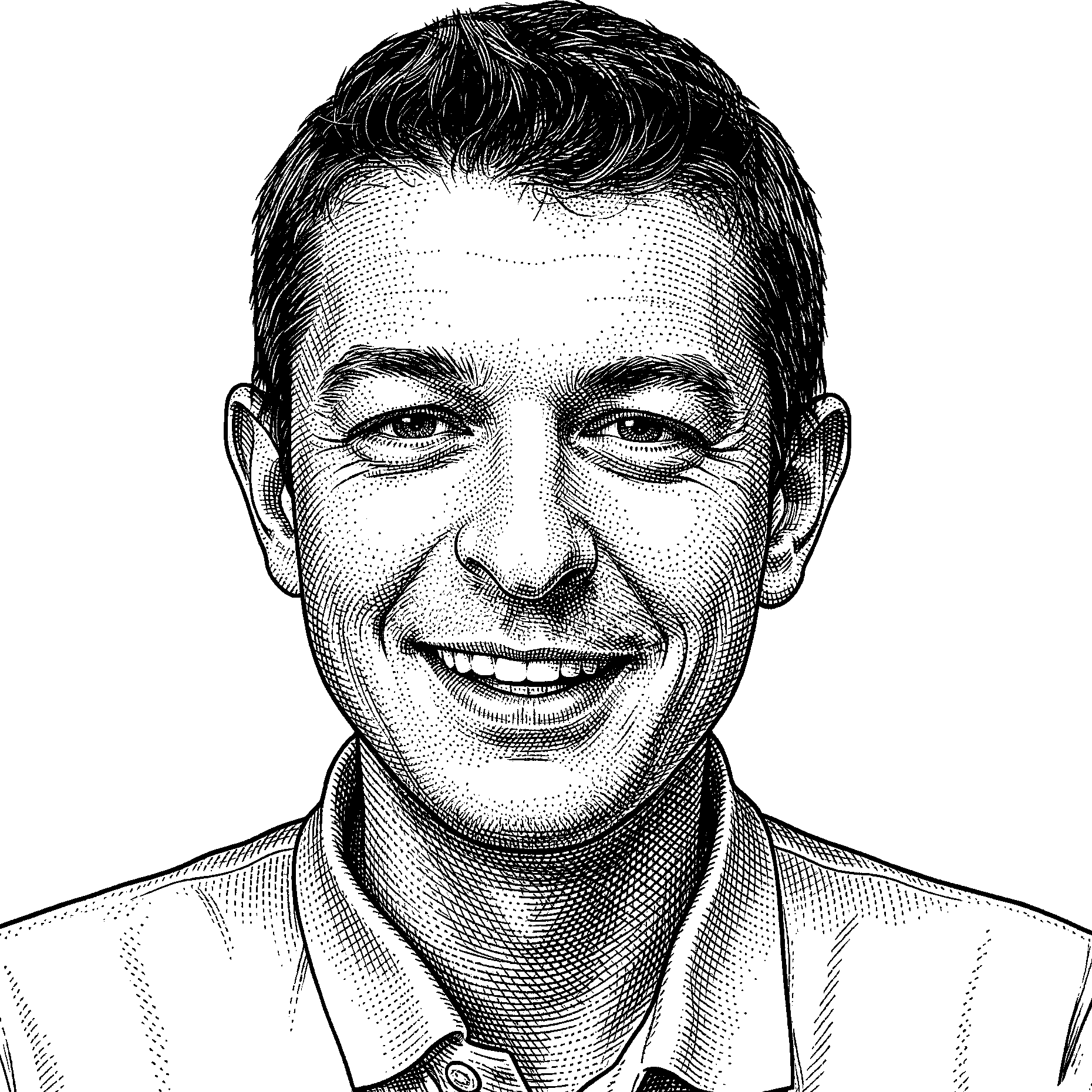
Richard Harvey is a dynamic speaker celebrated for his expertise in genetic technologies. His work focuses on understanding genes—instructions for making polypeptides—and exploring the diverse applications of genetic technologies. At the MTAConf 2020, he delivered an impactful presentation, titled Genetic Technologies and Biodiversification, that offered fresh perspectives in this rapidly evolving field. ¶ Harvey’s interests span a range of topics within genetics, including personalized medicine, germ cell selection, and gene editing techniques like somatic and germline therapies. He acknowledges the potential of genetic modification in agriculture, while also expressing concerns about the concentration of ownership within a small number of organizations. He’s passionate about the ethical implications of individual genetic sequencing.
Transcript
Richard Harvey
Okay, so here we are. Genetic technologies as a category, which I know a little bit about now, tomorrow, and in the next centuries. Okay. So I really want to talk with everybody rather than just talking at you. So I’m going to try and get through this fast, but I’m not very good at that.
Richard Harvey
Okay, so what are genes? Let’s talk about what we’re going to talk about. So, genes are instructions and they tell the body, and I can’t see you all, let me. Okay, now I can see you all, which will make me happier.
Richard Harvey
Okay, so genes are instructions for making polypeptides, which are pretty much proteins with a little bit of extra stuff tacked on. The gene sequence for an organism is basically unique, and they are essential properties of who you are. If you had very different genes, you would be very different. You’d be a tomato or Something else, not necessarily a tomato. Genes are not all expressed all the time, all in the same way in every cell and every individual. And they’re not even uniform throughout the organism. Your different cells have different DNA through mutations that just accumulate in different tissues. You are multitudes. Which is really cool.
Richard Harvey
Genes are also not the only feature of who you are. Even biologically, there’s a lot more going on. Most importantly, this is a very common misinterpretation that we all fall into. Genes are not schematics. Genes do not have all of the information necessary to create an organism. You could not just take DNA and 3D print an organism. That is insufficient information. Okay, so that’s genes.
Richard Harvey
What are genetic technologies? So genetic technologies are pretty diverse, but they’re stuff we do with genes. One category is looking at stuff and figuring out what it does. personalized medicine could look at someone’s genome and develop specific drugs or things for them because of what how they respond to things. We can also observe the genetics of germ cells and decide which ones to develop into full organisms. We can also mess with things nowadays. Gene editing takes the form of somatic gene therapies or germline. Germline is taking a single cell, changing its DNA, and then building your whole organism out of it. Whereas somatic gene editing would be just taking a local region and somehow affecting this subportion of the organism. We can just change how they’re expressed without changing anything. And there’s a lot of really crazy stuff that’s cool. And I’m just acknowledging it exists, but I’m not going to talk about it.
Richard Harvey
So present challenges. GMOs are really interesting and very powerful and the root of a lot of the progress in agriculture. And they’re also pretty much all of the economically important ones are owned by a very, very small set of organizations, which I find extremely dangerous.
Richard Harvey
Another difficulty with genetic technologies comes from genetic sequencing Of individuals and the information that that can give them. I have a friend who was diagnosed with Huntington’s disease, which completely changed their life and their expectations for their life and their decisions. And it’s not clear to her or to Other people in her circumstances that she’s talked with, whether or not having that diagnosis improved her life. This is a pretty straightforward but surprising example of just because you can doesn’t mean you should. Information is not always helpful or appreciated.
Richard Harvey
So genetic screening is the poor man’s super baby, but actually only available to rich people, really. You can just tip get a very, very large number of genetic possibilities, pick the ones that are desirable and exclude potential persons from existing Intentionally instead of accidentally.
Richard Harvey
All right, so the near future, this is what we’re here for. De-extinction is becoming possible. We have Genetic sequences of extinct creatures, and we could try and recreate them. If so, I said that DNA is not a schematic. Just because we have DNA for the passenger pigeon doesn’t mean that we can just create passenger pigeons with a 3D printer, but we have close relatives And after some bootstrapping based on these close relatives, we could have a pigeon have a passenger pigeon DNA containing child, which would in great measure be a passenger pigeon. But it would also bear some of the features of its parent because of the environment it developed in. For instance, you could not grow a passenger pigeon in the womb of an elephant. And that’s really actually important. There are organisms that we could not bootstrap if we got the full sequence of a velociraptor. we would have to start with chickens, and there’s probably just too large of a gap. And so there would be a very long process of slowly creating something Velociraptor-like. Anyway, de-extinction is actually possible in the near future.
Richard Harvey
Ethical concerns with de-extinction are: where do we put them? There’s a reason we killed all the passenger pigeons, and it may have been a dumb reason, but where do we put passenger pigeons? Now. And other creatures who are much less prevalent than they were or extinct. Will rhinos be killed off again? Are we mostly doing a service to poachers if we de-extinct rhinos? And this is connected to something important, I think, to our group of this idea of renewal and returning to a prior state Is a prior state of the earth valuable inherently? Do we have a responsibility to return things to a prior state? And what is the earth? And is the past earth real in the same sense that the current earth is real? And does it have rights to be restored?
Richard Harvey
Okay, so GMOs and concentration of power too. In the future, there may be a vast democratization process where people can start making particularly microbes on their kitchen table. potentially making their own insulin on their kitchen table from yeast, possibly creating a new variant of smallpox. Concentration of power is Really, really hard. And I don’t have good answers. It’s just really, really hard and important. So I’d like to talk about that.
Richard Harvey
So, personalized medicine and your medical records, and intelligence agencies, and how they have access to whatever they want because they’re defending their country, and everyone just bends over to do what they ask. If we can develop personalized medicine, we can develop personalized pathogens, which is a potential tool that law enforcement will want. I’m just telling you scary things, sorry. Write down topics that you think are really interesting, and we’ll talk about them.
Richard Harvey
Again, gene therapy will become far more sophisticated Possibly creating real designer babies. That has huge implications for particularly for barriers to entry for those sorts of activities. And possible futures, biodiversification is going to come up, I promise.
Richard Harvey
Okay, so cloning is not That cool. It’s pretty cool. It’s not that cool. You’re not going to run into your doppelganger because someone cloned you in a lab and accelerated your growth and implanted your memories, except maybe in the really far future. But yeah.
Richard Harvey
Okay, so corporate life. So if you think your boss is a problem now, what about if you were grown Buy your boss to be an experimental subject, or just because they want slaves, and like you don’t have parents, they just created you. Our ethics are not prepared to deal with these sorts of challenges. We don’t have categories to deal with these things about how when person and property start to get very, very similar and start to get entwined. And how much of the brain do we have to remove before they don’t count as a legal person anymore, and we can just do whatever we want to them? People are going to be asking these questions, and they’re very dangerous questions, possibly even to ask.
Richard Harvey
Artificial biology is adding new elements to the genetic code, changing how things are expressed. creating new substrates for life. We really can’t anticipate how far life is going to go and how much we’ll be able to describe it as life, but a lot of it will be relevant to biology. And again, I bring this up because it will defy categories that we currently have.
Richard Harvey
Ecology is definitely going to change in the distant future. So that yeah, this is what you all came for, probably. I don’t know if this is what you came for. But anyway, this is what I advertised: biodiversification As we develop genetic technologies that are tremendously powerful, we can start adding back diversity into populations that have been Hunted or otherwise bottlenecked into having reduced genetic diversity. We can increase the rates of mutations. We can do all sorts of manipulations. We can de-extinct entire ecosystems that didn’t exist. or haven’t exist for a long time and bring them back. It’s biodiversity can be a manufacturable resource in the future.
Richard Harvey
An important feature of ecology of the future is that it really won’t be ecology as we know it anymore. Ecology and other ethics that drive our approach to the sciences. are, in my estimation, value laden, that ecology approaches questions with an assumption of what the right sorts of answers are going to look like and with an most importantly, that’s also not To imply that they’re dishonest scientists. Because engineers go about doing their work with the intention To make things that do things that are valuable according to their value system. Ecology approaches these questions with some assumptions about what humanity’s place is in solving. These problems as a guardian, as a protector, as someone who should shove off. But ecology is approaching these questions largely from an ethical standpoint. About what we ought to be doing and how we ought to be preserving these things, and that we ought to be preserving these things. There aren’t ecologists that advocate for getting rid of Large types of wildlife. There’s the concept of regulation, but there are very, very few ecologists that would call for bringing any species to extinction. There are a few. There’s lots and lots and lots of feeling that we need to not have invasive species because they do things that we inherently see as damaging. A lot of the categories for describing things, invasive species, extinction are value-laden concepts. Invasive species are just bad. So we need
Richard Harvey
An ethics of the future, inspired by the fact that as our powers increase, we may need to rethink what we considered good. This is where I think Religious transhumanism can provide important insights because of this feature that we have that we’re informed by faith traditions And faith traditions, especially Mormon faith traditions, consider the ethics of vastly powerful beings that are human. Our God is Essentially, a human God, and human like us, and human like our future. We need to be thinking about these ethics that we would be abiding by.
Richard Harvey
And that’s resulted in some interesting thought. When we’re trying to figure out what our faith traditions say, About the ethics of gods, that we’re going to have to start worrying about as our power extends to rewriting ecologies. vastly modifying organisms, possibly removing their capacity for suffering, changing what they rely on nutritionally. We need to figure out what our traditions that we’re drawing on are saying and should be understood to be saying.
Richard Harvey
So the typical ethics of faith could be loosely drawn into commandments. That you’ve been told to do things, and those are the things that are right. It’s very deontological. Do this, don’t do that. You get New Testament enhancements and refocusings that I really like, but they’re still commandments. There’s still two great commandments and so forth. It’s pretty straightforward to say, yeah, these ethics ought to apply to us, we ought to be considering these things. It may not be trivial to update them.
Richard Harvey
A category that the MTA is very fond of believing in is aspirational. ethics that, oh, there’s a prophecy, we should go do that. And that’s that’s actually very challenging to To interpret that, oh, yeah, prophecies were given by God to tell us what to do in the distant future. There are folks that hold this position, and I think pretty much appropriately, because these Good prophecies that we like are stating that there are things that are good, that God would do, and that we therefore ought to do. Should that become possible? And there are also folks that are horrified by this and would ask that we stop playing at being gods. And I tell them to pay a little more attention in Sunday school, but their point is well taken.
Speaker 2
The LDS traditions, well, the Mormon traditions. As I’ve explained before, have a lot to say about this idea of just it’s our job to create worlds. And so, Should we start creating more as soon as we can?
Richard Harvey
All right, there we go. So, I don’t know how much time we have left. Let’s talk a little bit. So we got a chat. Richard, can you hear me? I can now, Ben.
Speaker 4
So we It’s time for a break now, but it’s lunch break. So if people want to, they can. If they want to hang in here and ask questions, that’s totally appropriate also. I’ll just formally kind of close this and thank Richard for a great presentation. And then everyone is welcome to stick around here and ask questions. And then we’ll be reconvening in about twenty minutes in the main hall. So, right. Thank you, Richard.
Richard Harvey
All right, Jesus, amen. Thanks, Ben. Okay. Yes, we’ve got questions.
Richard Harvey
So would people really mind if mosquitoes went extinct? This is a huge thing for ecology. There’s this mindset that we need to be really, really careful about. what chunks of our system we just punch out because they’re really inconvenient and they don’t achieve values that we like. And we should probably remember that cows would probably like to just kick out humans because would any cow really mind if all humans went extinct? Robotanist, thank you, Sage.
Richard Harvey
Mosquitoes are important. A question, could we modify mosquitoes to be less harmful to things that we value? And as David Pierce briefly asked in his slides, is a lion a lion if it’s not? just totally wrecking things all over the place. So is a mosquito a mosquito if it’s not sucking human blood and passing disease? And as an alternative definition of mosquito as something that does all that but doesn’t pass disease or irritate my skin, a fair thing for us to impose. So, yeah, but malaria kills a lot of us, and I value human life a lot. So, yeah. We have lots of discussion on mosquitoes and cows. Very good.
Richard Harvey
If anyone wants to Wave at me or unmute and just ask a question or talk about a thing. We’ve got I proposed a billion topics. So Let’s look at genetic technologies and appropriate use of genetic technologies rather than necessarily extinctioning things. Talk about de-extinctioning things. Do we need saber-toothed cats? Well, no, we need a browsing park. This has got to happen eventually.
Speaker 5
Yep, prophecy. But no, there are plenty of amazing things we can do with it. I actually think de-extinctioning is one of the less interesting ones, honestly. We can certainly get a lot of information about species that went before, but what we can do with biotechnologies that goes along, especially in terms of things like industry And developing life to produce all of the things that we’re currently having to do with more complex and difficult to reproduce machines is going to be exceptionally valuable. We’ve already begun to see it with microorganisms, which we can get to produce things like artificial oil.
Richard Harvey
Yeah. I suppose the use of other organisms as instruments for achieving our objectives is kind of hard for a human to avoid doing. That’s A lot of stuff that we do is just oriented around making things that we like happen. And depending on how Cynical and reductionist, you want to be, you can even say, like, oh, yeah, we bring animals into our homes so we can love them, which is just this purely instrumental use. Like love is just an object that we’re trying to maximize. And cats or dogs help us maximize our love expression value. Should we be looking at life as a tool and as a machine?
Speaker 5
I would argue that yes, it’s a specialized machine. I mean, right down to the human body, which we should certainly assign high value to. as a complex machine that can do things and has a special place among the hierarchy that ultimately it’s a bunch of chemistry doing very specific tasks and coming Together to achieve particular goals of surviving and reproducing. That’s what life has done, and that’s what it can do. We don’t understand necessarily how all of it works, but as far as we do continue to understand more and more of it, it all comes back to that same basic concept of machinery. And you could easily demonstrate this with any particular cell. In fact, the fact we have cells and they do things like kill themselves off or build this structure or do that. They have very specific programming in the DNA points further to this idea. Yes. I think I would categorize that as the argument that, well, biology is machines, and so it would just be responsible to see it as what it is.
Richard Harvey
Does it think that’s a fair capture of a short version? Sure. Makes sense. Does anyone want to pretend to be someone who disagrees that biology is a machine?
Speaker 7
That In the same way that we think of machines? I think that’s useful in certain circumstances, but in the wider ecology, I think that’d be so tough to manage because I don’t know like there’s so many influences on any ecosystem that, you know, if we do, you know, make some kind of machine. Like it killing off all the other things that we need to eat or breathe or whatever, you know, could be pretty devastating. And I don’t see how, especially at least here on Earth. we could engineer everything. I don’t know. Maybe that could be possible at some point, but at least right now, I don’t think we even have close enough to an understanding to pull that off.
Richard Harvey
Yeah, I tried to present three time periods in my slides to capture that idea that in the very distant future, we may be able to start considering ecologies as machines that are Internally managed, that we can understand and really deeply manipulate, but we that’s certainly not even in the near term Except perhaps in highly controlled ecologies, so in your desktop bioreactor where you’re producing insulin in five, ten years. So artificial ecologies more naturally match this model of machine, I think.
Speaker 5
Well, that is more or less where my particular interest focus is trying to get entire artificial ecologies to function. Yeah. So maybe that colors my thinking somewhat. I don’t know on the that entirely. It seems that, especially since these ecologies are made up more than anything by single-celled organisms, that the most basic machinery sense would make particular sense because cells really are just responding to the most basic of signals, and they are very fundamental in their components. Yeah, I would agree, fundamental in terms of scale and we’ve managed to find their fundamental the components of these fundamental components. But there is metabolism still are mind-bogglingly complicated to me. That’s only a twenty step system. Yeah, you know. All right, another thing, let’s just random categories in here.
Speaker 6
Oh, John. Yeah. So about the whether or not we consider life to be the equivalent of something machine or at least machinic Do you think the distinction between viruses, which are often presented as nonliving entities and I guess, all other forms of life? Can that be an intellectual tool we could use to go and think about when we’re dealing with something that’s truly mechanical and when we’re dealing with something that might have some kind of ontological difference and therefore maybe Some kind of different ethical responsibility towards. I feel like that’s a really good extension of Ben’s talk. The what? Name of the bear and jungle book. Sorry, I was tracking. No, but can you repeat the question? I missed it. John, can you muse at that direction?
Speaker 6
Looking at multiple categories of life, not just like the animal life and consciousness and experience, but even categorizing viruses as life or nonlife. And we look a lot more machine-like, and do we have this continuum of machine-like to creature-like? Or are there various like sharp lengths, sharp breaks we could go in and identify, like the virus cell division?
Speaker 8
Right. So, yeah, I’ve I’ve put some thought into this. So Descartes thought that animals are, you know, just machines and then, you know, few centuries later, we realized, okay, maybe he wasn’t quite right about that. I think we should have an open mind about whether viruses can feel
Speaker 2
So yeah, I was just wondering, we’re working on the consciousness survey project at Canonizer, building consensus around the best theories of consciousness. And there’s an emerging camp now being called representational qualia theory. But basically, it’s just the general idea that everyone pretty much is unanimous agreement, even Dennett’s Predictive Bayesian coding theory is a supporting subcamp of that. But basically, it has the idea that when you look out in the world and you perceive the world, there’s like a diorama of knowledge in your brain. And half of that diorama is in your left hemisphere, and the other half of that diorama is in your right hemisphere. So, if you have a molecule of red strawberry in your right hemisphere. And a green leaf in your left hemisphere, the corpus callossum, is binding those together so you can be aware of both the redness and greenness in both hemispheres. And V. S. Ramachandran was the first one to propose using a corpus callosum-like bundle of neurons to connect multiple brains together. And this was portrayed in the movie Avatar, where they had the neural ponytails where you could connect it together, which would enable the computational binding Consciousness. So basically, if you’re hugging your loved one, you can only feel half of the sensations. But if you could have a computational binding there, then instead of just two bound hemispheres, you could have four bound hemispheres. And you could feel all of the experiences as you hugged your loved ones instead of just half. And also, if they have inverted red-green qualia, you would quickly notice that and say, oh, your redness is like my greenness. But anyway. I wonder if you guys had any thoughts along that kind of stuff.
Richard Harvey
Um and along with genetic technologies particularly. Yeah. Engineering such an organ is probably really hard. But genetics would probably be the level you’d want to Maybe that would be a level you’d want to go in. I think I would initially prefer to use an electronic interface, but that’s my field of research.
Speaker 2
Yeah, what so y in other words, you say electronic, so a key part of that is the binding, the computational binding. If something is computationally bound into your conscious awareness, you are aware of it. And so and i i in other words, the binding problem, that’s the hardest part. And so so it sounds like you’re saying that that electronics could achieve that kind of binding rather than some
Richard Harvey
Yeah, if we I tend to look at the body as a machine. I fall into the machine camp very squarely, and its magic is that The brain is aware of the stuff that’s in it. If you can tell the brain that it’s two brains, it’ll be aware of the stuff that are in both brains. That would be my guess.
Richard Harvey
I want to because we’re really close to the end of our break, I want to talk a little bit about what ecologies should exist. Because this is a question That it becomes possible to ask, and it’s important to biodiversification, is an ideal ecology, one with radical diversity and radical mutation rates Is it an ecology that serves some aesthetic purpose to the highest conscious beings that exist? Obviously, us and mosquitoes. What ecologies should we have? And what ecologies are bad and shouldn’t exist and shouldn’t have lions killing other stuff? If we get to start making choices, what is a worthy ecology?
Speaker 9
It seems like Prima Fascia, I’m pretty resistant against the possibility of modifying ecology in a way. In any way, like in any substantial way, in terms of like, you know, modifying the actual genetics of organisms, before we actually understand what the mental states of those organisms are like. So unless we understand what suffering is for them, unless we have like very high confidence that we understand that, I would say that I’d be pretty resistant towards, you know, actually like modifying animals en masse or completely radically changing ecology. And so I would tend towards being a proponent of inertia, in that, like, we should try to avoid changing ecology as much as possible from its evolutionary basis. Know, for example, by reducing pollution and climate change. And we can eventually maybe modify ecology dramatically to improve the mental states of animals, only once we have a confidence that we actually understand those mental states.
Richard Harvey
I’ve got a mean question for you. So, future ecologies don’t exist yet. Unless you take a really weird view of history. Future ecologies don’t exist, and we get to influence how they happen. is humans butt out, stop interfering with stuff, let evolution happen, reverse climate change? Are ecologies that spontaneously develop in In some circumstance or another, superior. If there isn’t one that is, well, yeah, this is the one where humans weren’t involved, this is the one where humans are involved. Are there any ecologies that are superior to other ecologies, particularly based on their evolutionary history? Yeah, that’s a good question.
Speaker 9
I’m not sure how that’s mean. Oh, yeah. It’s just saying, like, disagree. Okay.
Speaker 8
I just wanted to mention that like humans are part of nature. We like to think we’re some separate entity. But we are part of that ecosystem. And so it I don’t think we’re doing any favors by saying, oh, like humans are making unnatural decisions. Like we are, by definition, part of nature. Yeah, that’s the hard bit.
Richard Harvey
Is a global warmed globe better or worse? Is the tremendous loss of diversity actually loss of diversity? Or just a different diversity.
Speaker 8
I I mean, I do think that like it is extremely bad. Like we should be. Yeah, we are like Morally obligated to do something about it, um, climate change. Um, and yeah, like, yes, um, but Like, I also agree with what Jeremy was saying. Like, we only have started to understand a lot of these systems that have been in motion for millions. If not billions of years. So, like, we should be very careful, especially when it comes to the genetics. Like, we might think, oh, there’s a gene for switching off pain. or intelligence, but like there might be side effects for that. It’s not like there’s one-to-one mappings between a gene and a and a phenotype. So like we should be really careful. I like David Pierce’s timeline of like a thousand years for some of these. Things. But in the near term, I think if we do understand the science well enough for climate change, for example, which we do. At least I think we do. And we decide we want to do something about that. Like, yeah, I’d be much more inclined to do to take action there in the near term. Yeah. And a stability bias for the near term.
Speaker 5
Yes, humans really like the status quo. It’s not terribly surprising. We came into, and it’s certainly how we tend to operate best. But there’s something to be said for the earth and being in a constant state of change. It always has been. In fact, we wouldn’t even be doing what we’re doing right now if it hadn’t been basically warming somewhat on its own since the last ice age. Or if that ice age hadn’t come and forced us into a different position, or if life itself hadn’t made huge alterations to the climate throughout Earth’s history, which allowed life as it currently exists to be. So, you know, we can make certain an argument that this may be an ideal situation if that’s what humans want to stick with. But we can also look at significant potential benefits coming out of it or the fact that change is necessary to keep life and ecology and everything else going in a positive direction.
Speaker 8
Right. I think with if we look at the two different futures for the end of the century and see like, oh, one where it’s gone up four degrees Celsius and air pollution is terrible, like, versus we’ve kept it relatively the same. Like, I think you could make an argument that there’d be less suffering and more happiness. in that second scenario. But like you said, like, you know, there are other parameters that we could. We should keep in mind and like if like it’s not just about temperature.
Speaker 5
No, and sometimes suffering is a necessary part of these things. We have mass die offs, and immediately after we have huge new changes in biodiversity, life going in whole different directions, dealing with these new scenarios and opportunities that it has. And that has resulted in all kinds of advances, I guess you could call them, in life. and approaches. So is it right of us then to shut that down permanently? Or are we now the cause of it? Because we’re doing what we want to do. We are the drivers of a new shift in the next step, I guess, in evolution or ecology?
Speaker 4
Thanks everyone for a great session. Thanks again, Richard, for this. Thanks, Richard. Thanks all.