Blockchain: Surety and the Hope for a Better World
Dr. Scott Stornetta, whose pre-Bitcoin research constitutes three of the eight citations in the Bitcoin white paper, shares the spiritual backstory of blockchain’s invention. While working to prove that immutable digital records were impossible without trusted central authorities, he experienced a breakthrough insight: “What if we made the entire world the witness?” He frames blockchain as an “inverse panopticon” where collective witnessing eliminates the need to trust privileged authorities. Drawing on Latter-day Saint scripture about surety and abundance, Stornetta cautions against technological utopianism while affirming blockchain’s potential to end asymmetric information access—yet emphasizes that empathy, not technology, is the true superpower that triumphs over every obstruction.
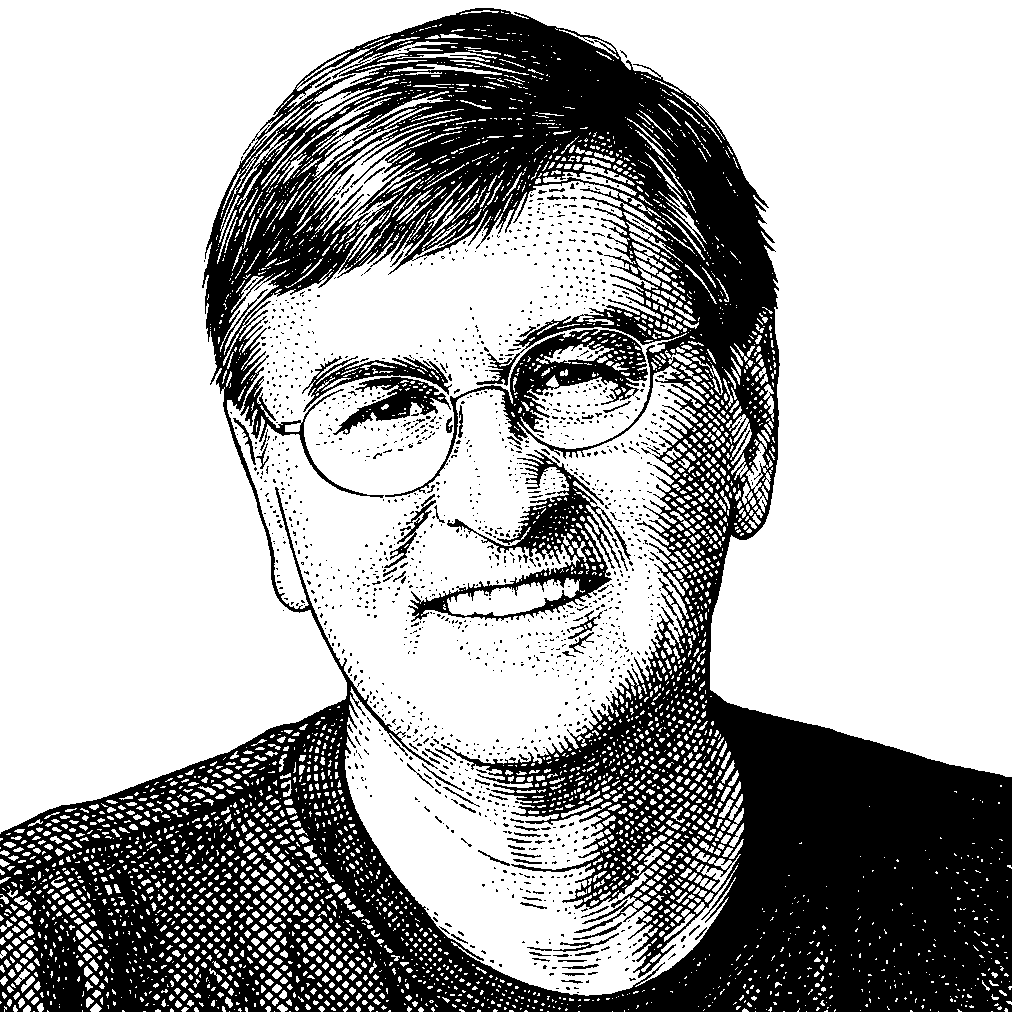
Dr. Scott Stornetta is a blockchain pioneer recognized for his foundational work dating back to 1991. He co-authored seminal papers and patents that predate and significantly influenced the development of Bitcoin and other digital currencies. His contributions are acknowledged within the Bitcoin white paper, with three of the eight citations referencing his research. ¶ Currently, Dr. Stornetta is a partner at Ugin Partners, a venture capital firm specializing in blockchain and AI technologies. He leverages his expertise to advise governments on blockchain policy and serves on multiple boards. He is also a fellow at the Creative Destruction Lab, associated with the Rotman School of Management at the University of Toronto, and a frequent lecturer at universities. ¶ He approaches his work and speaking engagements with a unique perspective, informed by his Latter-day Saint background. Dr. Stornetta holds a PhD in physics from Stanford University and has attended MIT, Harvard, and Brigham Young University.
Transcript
Speaker 1
Doctor Scott Stornetta Is an early blockchain pioneer dating back to 1991. He co-authored a series of papers and patents that laid the foundation for Bitcoin and other digital currencies. Of the eight citations in the original Bitcoin white paper, three reference his work. Dr. Stornetta is currently a partner at Ugin Partners. a blockchain and AI-focused venture capital firm and serves on various boards. He also consults for governments on blockchain policy. Is a frequent lecturer at universities and serves as a fellow at the Creative Destruction Lab. Sounds interesting. Associated with the Rotman School of Management at the University of Toronto. He received his PhD in physics from Stanford University after attending MIT, Harvard, and Brigham Young University. Dr. Scott Scornetta, thank you.
Dr. Scott Stornetta
Thank you. I owe a particular thanks to Carl because I wasn’t originally scheduled to participate in the conference. and he found a way to sneak me in. I’ve often been called on to speak about the pre-Bitcoin origins of the blockchain and how the blockchain came to be. But I’ve never had opportunity to tell it from my Latter-day Saint perspective. So I very much welcome this unique opportunity I will try to be within my time brief if not to the point as they say. I also, however, know what it’s like now to be the last speaker in a sacrament meeting. Because Neil, Evan, Laura, Curtis, and Dr. Tilliman, you’ve taken my best scriptures and my best quotes and I’ll improvise. No, again, there have been excellent talks. Very few points where I would find disagreement with anything that’s been said.
Dr. Scott Stornetta
As Carl mentioned briefly, for those of you that are not familiar with me, the publications that we made pre-Bitcoin constitute the core of the technology that Sotoshi built upon. And many people are surprised to find that there was a blockchain before Bitcoin, but we’ll let it slide. I first found out about the Bitcoin white paper because I’d long since left the cypherpunk community and moved into other areas when I started getting Anonym uh unsolicited email and US mail from people saying, hey, I see that you form the bulk of the Bitcoin white paper references. And I also Googled you online and see that you were a missionary in Japan and that you’re fluent in Japanese. So I was just wondering And I always give people the same answer just to set the record straight on that question. I don’t know how to make it any clearer than that.
Dr. Scott Stornetta
puzzled or surprised to find out that um there’s been a bit uh blockchain in continuous operation actually since 1991. Um and in fact the genesis block to that blockchain appeared in uh the October 13th national edition of the New York Times. announcing the fact that there was now a way to create immutable records that were widely witnessed. cryptographically linked. But if you’re first finding out about this, you’re in good company. Even though this was widely discussed and recognized in publications like Science Magazine and the New York Times. York Times, even Good Morning American, and won the Discover Award for Software Innovation. It uh it seems to have uh fallen away. I don’t know if there’s any of you that understand the concept of a global apostasy, but um Things have been restored. And you’re in good company.
Dr. Scott Stornetta
Two of my favorites. This is Ian Grigg, who is sort of the father of smart contracts. And it wasn’t until we were at a conference. Together last October, where he actually read the footnotes. And I’m not going to quote his distinctly British comment about Where the blockchain came from, but you have it there to read. And then there’s Gary Gensler, whose reply when he first actually read the footnotes and the papers behind them. Who knew? Well, I knew. And again, for those of you that, for those of you that are not conversant with LDS scripture, and perhaps. Think maybe more along the line of Lord of the Rings. Here’s Galadriel chapter 1, verse 7.
Dr. Scott Stornetta
I do want to tell this one story, and it’s quite personal to me, but as I say, I think this is the one audience where it makes sense to talk about. For about a year as I was finishing up my PhD at Stanford and then moved to part of the old Bell Labs tradition. telecommunications research, I had been obsessed with the problem of creating immutable records out of digital data. The fact that we were decoupling the medium from the message meant that anyone could alter a record and make it appear to be something That had never been altered. This was a true obsession for me, or in an LDS audience, you might say it wrought upon me. And so when I got to Belcor, you had the freedom to work on whatever you thought was important, and so I quickly hooked up with. Dr. Stuart Haber, an eminent cryptologist. And we began work on this. But the issue was that all existing systems had the need to trust some sort of central authority or third party. And so we spent several months working on the issue of not only a practical solution, but in the end, one that removed the need to trust a central authority. You know, privileged authority.
Dr. Scott Stornetta
And finally, Stewart pulled me over and he said, You know, Scott, I don’t think this can be done. And I’d still like to get a publication out of this. So, why don’t we prove that it can’t be done? Why don’t we write a proof that you cannot remove central authority trust from a system? And so, it was, in fact, in the process of working on the proof. that we realized how to do it. And it happened in a very unique and particular way. I came home from work one day and my wife, who is Right there, said, Look, I’ve had two young kids all day. We’re going out to dinner, whatever you had planned for. And so while we’re standing in line at the Friendly’s restaurant, a very upscale restaurant for those of you that have been to Friendly’s. I’m doing what obsessive people do, namely not talking to anyone, but in fact reviewing the proof. that it couldn’t be done in my mind. And the basic notion of the proof was we were going to show how if you had two people working on a transaction, they could collude and the only way to prevent it was to have a third party looking over Their shoulder. But what if they were to draw that third party in? Well, then you’d need a fourth party looking over their shoulder. And the reductio ad absurdum was our proof that you always had to include trust in the system. And as I was reviewing this proof in my mind, I said, and so it’s obvious that you can’t do that because it would require you to have the entire world in collusion.
Dr. Scott Stornetta
And it was at that point that I had this notion come to me plain as day. What if we made the entire world the witness? And for those of you that are LDS and have heard then Dr. Russell M. Nelson, now President Nelson, tell the story about being in the middle of surgery and having a picture come into his mind about how to tighten a tricuspid valve failure. I can assert that that happens to any and all who obsess and worry and work on something. To me, the insight to link blocks of records together, widely distribute them, and make the world a witness felt like three pay grades above my level when the idea came. And I’ll leave it at that. But I’m grateful that it’s allowed me to be a participant in the situation.
Dr. Scott Stornetta
How we viewed the blockchain originally was as a kind of inverse panopticon. And I think many people are familiar with Jeremy Bentham’s solution engineering idea of a panopticon. And we felt that why this was a breakthrough was that we no longer needed to trust a central authority, that even one individual could stand up for the Truth. This was very meaningful to me, and the notion that finally, collectively, we hold a power that we never could have had individually. It was a red-letter day for me that That day at Friendly’s.
Dr. Scott Stornetta
I had hoped, in an earlier iteration of this talk, I actually built a custom blockchain for this conference. that I wanted to allow each of you to become a node on through your smartphones. But we don’t have time to do that. Maybe there’s some off time later today for those of you that would like to participate in creating an MTA blockchain. that is unique to how the original blockchain functioned. And then you can all go home with some digital tchachka that is that blockchain. But we’ll see whether that arises in a break or something.
Dr. Scott Stornetta
I want to talk about the initial efforts that we did to bring this out into the world. Because for me, I felt that we had established surety in a way that was truly new to the world. And it was, in fact, this very verse. that inspired us to choose the name of the initial entity that operated the the first blockchain because I truly felt that surety could allow us to hope for a better world. Now there’s problems inherent in that. It’s obvious to anyone that’s read that scripture and pondered it that I’m proof texting. I’m taking the parts of it that seem to line up with what I want to say and sort of rolling my own religion out of it. And it’s not my intent to do that. It’s my intent, in fact, to caution against that effort.
Dr. Scott Stornetta
I’ve been particularly happy to hear People talk about all the optimism that they have for this technology. And I am not myself a cynic. But I would say that The natural man has a way of undoing the hopes and dreams of technologies as if technology alone would make for a better world. And I just can’t think of a better example of that than Orville Wright’s non-prescient prediction about what the airplane would do. The reason people do this is they understand the problems in the existing world. They see their solution as part of Surmounting those, but they are not anticipating the way that the world responds to new solutions to old problems. And again, I don’t say that as a cynic. But I just want to go on record so that 10 and 20 years from now, when some of our dreams are not realized, to not give up Okay, things can go better.
Dr. Scott Stornetta
At the same time, there’s a similar thing that you have to be concerned about, and that is When are we anxiously engaged in a good cause, and when are we just trying to steady the ark? And I would also offer that as a cautionary tale for those of you that are carrying the decentralization banner and its alignment with the restored gospel. Let me just talk briefly in the remaining couple of minutes I have about three things that to me, in spite of those cautions, I think still align with the original desires of my heart in creating immutable records. The first is to understand that better, you’d have to know that myself and a number of the Both early contributors to the blockchain as well as some of today’s leading-edge innovators are building a communal blockchain declaration about what we really think Is at the heart of the blockchain innovation. And this is a quote from this not yet released, you’re seeing it for the first time, this not yet released blockchain declaration. that talks about what we think is really at the essence, at the heart of the blockchain revolution. And I think of For me, some of the wording is there. I snuck in specifically because I had the following three scriptures in mind.
Dr. Scott Stornetta
One, this utter indictment of the world’s current economic state, namely, it is not meet that one man should possess that which is above another. Wherefore, think of the impact of this. The world lieth in sin. And with a blockchain record, you are creating something collectively that no person can hold above another. Second the The fact that we are to create a surplus that becomes the common property that all of us should have equal Claim on to develop our talents and to increase our stewardship. And I really think that some have alluded to this, but I think people still have not grasped. just how much the blockchain is similar to the notion of open source software. Because with open source software, we’re putting the software in the the creative commons. And the blockchain has the ability to do that not just for software, but for all the world’s data. And that, I think, is an enormously powerful economic driver of value creation. Finally
Dr. Scott Stornetta
This 121 verse that I think people can quote more often than the Articles of Faith: We are ending the asymmetry of information as a coercive force. Much of the concerns about privacy really should be relabeled, in my opinion, as asymmetric information access. Okay. Maybe it’s not as catchy as privacy. But this in fact is the way to level the playing field. Let me just close by saying a couple of things, because I know we need to stay on time. This is the bad news. And so by the transitive property, we can still win, but as important as technology is, and What can I say? I love technology. And I’m grateful for the role I had in it. There is a superpower far greater than technology. You know, we see this endless array of Marvel superheroes universe, and each superhero has some different particular trait. But in the real world, the great superpower is empathy. And this is the technology, if you will, that triumphs over every obstruction. And I hope that’s helpful. And we have no time for questions.