Decentralized Law in Practice
Tom W. Bell, a legal scholar at Chapman University, presents his work on decentralized governance through special jurisdictions and open-source legal systems. He describes three projects where he has helped implement ULEX, an open-source legal operating system: Prospera in Honduras, the Catawba Indian Nation's Green Earth Zone in South Carolina, and the Free Society Project. Bell argues that these "common law zones" offer an alternative to traditional nation-states by providing flag-free, internationally recognized legal frameworks that optimize for economic development and individual liberty while respecting the sovereignty concerns of host nations.
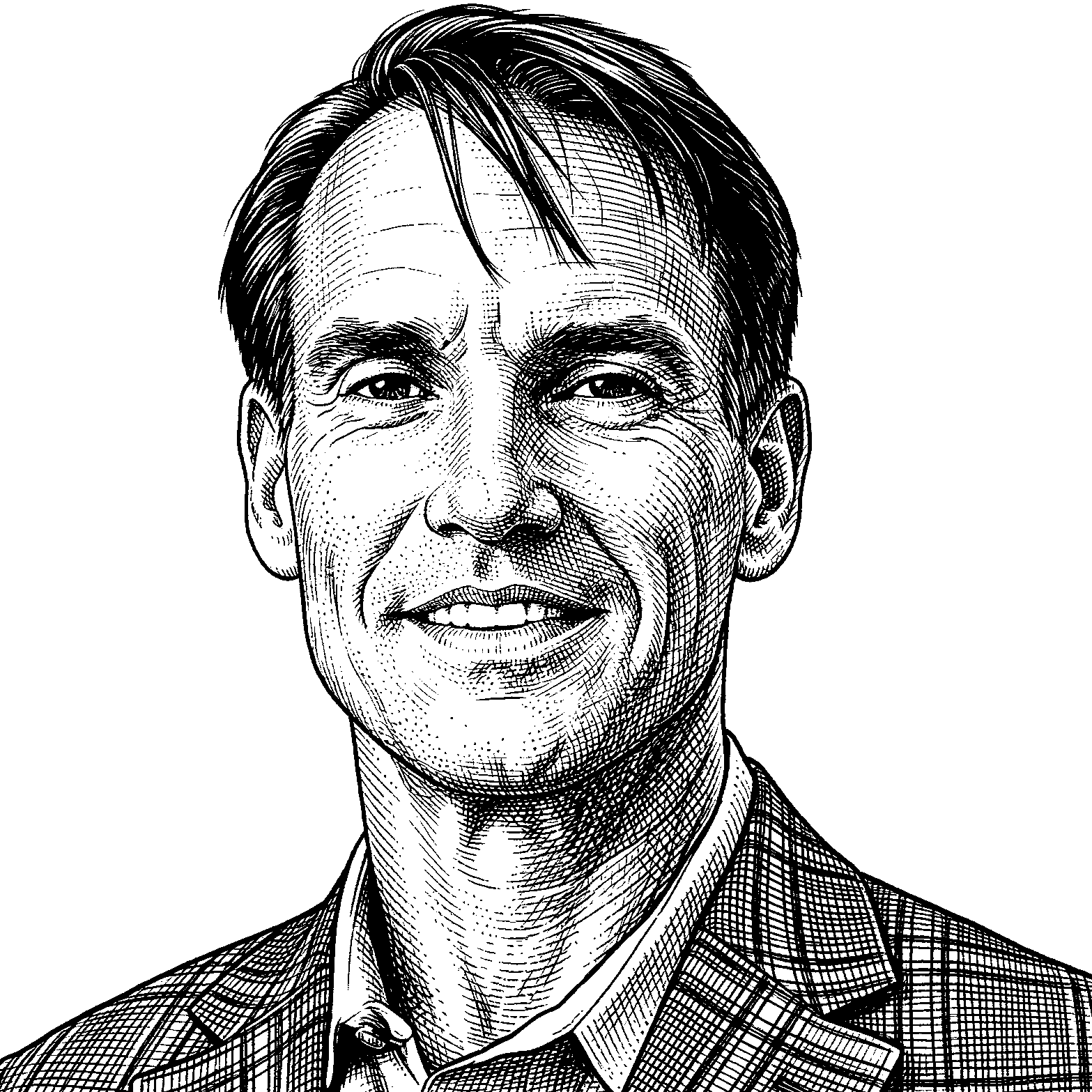
Tom W. Bell is a legal scholar and consultant with a diverse background spanning philosophy, law, and theology. His intellectual journey has taken him from a Methodist upbringing through phases of militant atheism and struggling agnosticism, culminating in what he terms “recreational theology.” He holds a BA in philosophy from the University of Kansas, an MA in philosophy from the University of Southern California, and a JD from the University of Chicago. ¶ Bell currently serves on the faculty of the Chapter University, Bowie School of Law, where he teaches first-year common law courses and electives in high-tech and intellectual property law. His scholarly publications cover a wide range of topics, including copyright, international law, polycentric law, constitutional law, prediction markets, and the Third Amendment. He is also the author of Your Next Government: From the Nation-State to Stateless Nations (Cambridge University Press, 2017). ¶ Through his consulting firm, Archimediate LLC, Bell advises companies developing special economic zones, focusing on the design, installation, and support of entire legal systems. His recent work explores the intersection of theology and simulation theory, presenting arguments for an “authored universe” that resonate with themes relevant to transhumanist and Mormon thought. Bell has presented his views at conferences such as the MTA conference to encourage dialogue regarding the idea of creation.
Transcript
Speaker 1
Professor Tom W. Bell Is a legal expert on special jurisdictions and decentralized communities. He earned his JD from the University of Chicago, practiced law in Silicon Valley and Washington, D. C. and served as a public policy a policy director at the Cato Institute before joining the faculty of Chapman University, Fowler School of Law. His many publications discuss copyright. Internet Law, Prediction Markets and the Third Amendment, and include the book Your Next Government from the Nation State to Stateless Nations. Bell’s clients have included the Prospera Zeti and the Free Society Project. Tom, you’re not going to be able to see us, but we will have time for questions after You speak, and feel free to share your screen if you would like to. And you can also see a countdown timer of roughly how much time you have left. So take it away, Tom.
Tom W. Bell
Thank you. Thank you, Carl. I’m glad to join you all. Wish I could be there in person. I was last with the MTA in 2016. Spoke then about theology. It’s great fun. I’m expecting the birth of my next son imminently, so I couldn’t travel. But let’s talk. I want to tell you about some of my work in the field, which is basically practicing decentralized law. I’m going to tell you about three projects on which I’ve worked: Prospera, the ZA in Honduras, the Catawb Indian Nations Green Earth Zone. And Free Society Project. And the theme that ties these all together is the use of ULEX, the open source legal system. So let’s jump in. I’m going to share my screen now. Make sure that we can all see the same things. I’m looking for what I want now. I probably should have closed out a lot of these browser windows. I’m still looking for the one I want. Sorry, friends. I want to show you first this one. There we go. So if you are, I hope that’s sharing. I don’t see it on my own screen. Hmm. But I hope you’re seeing the webpage for my book, Your Next Governments. Tell you only where to find it. And I will post in the chat when I can links to all of the oh good, you see it, all of the pages I’m sharing today. In fact, there they are in the chat now.
Tom W. Bell
And by the way, if you’re curious what I spoke about in 2016, I’m just going to show you this. You can look up recreate. org. Basically, the premise of recreational theology, which I spoke about in 2016. Is all presented here, but we’re not going to talk about that today. We’re going to talk about bringing peace among people. That’s the goal here: bringing peace among people. So, this in this book, Your Next Government. I discuss some of my work in the field for clients, and I’ve updated it since then with the audiobook version. There’s an updated audiobook version, which is free as far as I can tell. I see $0. 00. So, check it out to get even more up-to-date news about my work in the field. And today, you’re going to get even more up-to-date news. Let’s start talking about Prospera.
Tom W. Bell
This is Google Maps. I’m going to zoom in here so you can see where it is. Now, notice we’re going to be going into Honduras here in the middle of the screen. We’re going to zoom in, and notice we’re in the same time zone. As Chicago. And that’s terribly handy when you’re engaged in all kinds of virtual transactions. We’re zooming in on the island of Rotan off the coast. Of Honduras, and we get in close enough, you’ll see there is Prospera. Now it’s mostly undeveloped. The architects at Hadid Architects are developing some wonderful buildings there. And what do I want to say about Prosper? I’ll say it’s the most advanced special economic zone in the world today.
Tom W. Bell
Essentially, the ZA there, that is from the Spanish acronym for Zones Employo y Deserrolo Económica, Special Employment and Economic Development Regions. The ZA there is one of three that has launched and Like the other ZAs, it is accorded under Honduran law, including their constitution, a great deal of latitude to basically self-legislate. They can pass, indeed have to pass, legislation for everything in that private zone except criminal law. Now they get to enforce their own criminal law, which is essential in Honduras. But they can’t have their own criminal rules unless they’re approved by the National Assembly. And it turns out the Honduran Criminal Code on paper isn’t that bad. It’s not scary at all, no worse than any other countries, at least. It’s the administration of the Honduran criminal justice system that can give you pause, but you don’t need to worry about that in Prospero.
Tom W. Bell
More importantly, for present purposes, is that it is independent economically for the most part from Honduras. They do have to levy some rather small income taxes They do have to pay minimum wage. That’s in the Honduran Constitution. There’s other limits. It’s not go do your own thing. You don’t get to fly your own flag. You don’t get to have your own diplomatic relations. It’s not a sovereign nation. But it has a great deal of leeway, and especially in those areas that foreign investors and people who want to bring economic development to Honduras, all those areas, they care about. I was very pleased to work on this. I’ve been working on Durham projects since 2011, and this was the third of the three projects I worked on, the one that finally got some traction and launched. And in it is the Roatan Common Law Code.
Tom W. Bell
The Rowatan Common Law Code. I’m going to come back so I can look at you. And the Rotan Common Law Code uses ULEX, the open source legal operating system. It uses the substantive rules from ULEX. And to get those substantive rules, I went. Like someone going shopping with a basket to the library, and I pulled off the shelf all of the world’s best, most uniform, recognized rule sets for things like contract law. For things like secured transactions, for tort. I use sources such as those from the American Law Institute, Uniform Commercial Code. They’re all flag-free sources. It’s very important.
Tom W. Bell
You heard Curtis Lockhart from CCI speak earlier about Romer’s approach to charter cities. And I think Romer misunderstood something. Brilliant man did not understand how patriotic people can be, even in places like Honduras, where they definitely have. Problems with their government. But nonetheless, these people have felt a sharp end of colonialism. There is no way, I’m surprised when we miss this. No way they’re going to let a Canadian flag over their soil. Let the Canadians, even Canadians, bless their hearts. They seem pretty peaceful compared to Americans. Even Canadians are not going to be allowed to parade around on Honduran soil waving their flag, saying, Oh, look, we know how to govern better than you. That’s an insult. So what we did with Prospera was we used flag-free sources. Now they mostly come from American sources, not entirely. Some of them are international. But this is important for diplomatic and political reasons. I also happen to think there are better rules, due respect to the Canadians. I think that using flag-free sources gets you away from all kinds of public choice lobbying problems that poison the legal systems of nation states. Let me go back to screen sharing, though. I got more to tell you about. This one I’m very excited about.
Tom W. Bell
This is the Catawba Green Earth. Catawba Green Earth Zone. And this just launched. Here’s a website for Prospero. Check it out. Oh, I gotta say one more thing about Prosper. They have announced the issuance of a cryptocurrency backed by the real estate in their zone. I think they’re the only place on earth doing that. It is a cryptocurrency backed with not just a hard asset, but You know, the most permanent of assets, real estate. Absolutely wonderful. But let’s talk about the Catawba.
Tom W. Bell
The Catawba are a relatively small Native American tribe in a trust relationship with the U. S. federal government. Based in South Carolina. And here you can see where they are in South Carolina. Here we are. And they recently announced the launch of their Green Earth Zone. And here is the press release. Again, you’ll find the link. In the chat. And in the green earth zone, they basically have attempted, and I think succeeded. In creating a set of rules which are optimized for digital assets, cryptocurrencies, NFTs, and other forms of digital Development. They are bringing this to their reservation on what they call server pods. These are containers full of server racks. The whole zone is going to take up less than two acres, 1. 89 acres. They’re going to hook it up to power. It’s going to be a virtual special economic zone. The first special economic zone in the United States, I would argue, and I have studied about this, you can read about it in my book. Very excited about the Green Earth Zone.
Tom W. Bell
Interestingly, for the present audience, I want to observe the Catawba are almost 2A1 members of the Church of Latter-day Saints. Most interesting. Apparently, sometime back in the 1800s, someone did some stalwart missionary work among the Catawba, persuaded them, and now you have friends running the GEZ. I’m very excited about the connections that they can make between those of you in Utah and Mormons all over the world and their zone. Very excited about it. I hope some of you will follow up and find fellowship with the Catawba on that front and others. And surprise, surprise, it won’t be a surprise, the Catawba are basically running Ulex as part of, like Roatan, like the Prosperozetti and Roatan. They’re running that as part of their legal system. I was privileged to work on that legal system. They just launched it. They’re going to be accepting
Tom W. Bell
Really, what you want to do is enter into a treaty with host nation under which two things happen. They secede, or basically, it’s called cessation. They back away from their claims of sovereignty on not much land. We’re not asking for much, a little piece of territory. We basically want to create a private Monaco. Monaco is very small, bigger than the Catawba zone, which is 1. 8 acres, but still very small. So they have we have a treaty of cessation and mutual recognition. So the host country will say, we’re backing off of this zone, this area, this delimited Geographic area, you’re welcome to go in there, and we will recognize you. We’re going to have a treaty of mutual recognition. It will be the first of what we hope will be many recognitions by sovereign countries. You need to be recognized by sovereigns so that you can do things like sail your vessels into their ports and fly your planes to their airports. That’s going to take a long time, but we’re going to start out with friendly relations with our host, kind of our parent country, really. We’re going to be their own little private Monaco. And it turns out there’s lots of countries in the world that would love to have a little Monaco, right? Cheek and jowl with them, bringing in foreign investment, perhaps showing them how to govern better, you know, maybe just being a tourist attraction. It certainly works well for the south of France and northern Italy. They’re close to Monaco. Liechtenstein’s neighbors are very happy with it. We hope to do the same for other countries that have been kind of left out of this new developing area. So, what else can I tell you about Free Society Project?
Tom W. Bell
I’ll scroll down a little bit here, and there’s not much to show. Really, we’re kind of there as a team. And you might recognize some of you who do crypto stuff. You might recognize these two gentlemen. They’re big in crypto. And this zone, like the Catawba Green Earth Zone, is going to be optimized for crypto. And I saw to that because I’m one of the people that’s working on the coding for that. And of course, it uses Ulex. And let’s take a look at Ulex while we’re here.
Tom W. Bell
This is the GitHub page. You coders will recognize what’s going on here. It’s basically open source code, but it’s legal code. Legal code. I’m up to version 1. 2 now. This is a public source image of a plant called Ulex. And that’s kind of our, you know, our mascot is the plant Eulex. It’s beautiful and thorny. And here are the rules. If you want to see the rules of Eulex, here they are. So, the thing about Prospera that’s interesting, sorry, not Prospera, Free Society Project that’s interesting is we’re going to be using the procedural rules as well as the substantive rules.
Tom W. Bell
So, here’s the substantive rules. And those are used in Prospera and the Green Earth Zone. And so, again, you’ll see here: oh, you want some tort law? Here’s some great tort law by the American Law Institute. This is the gold standard for tort law. Great, but those two jurisdictions have their own procedural rules. The idea with Free Society Project is to have a completely decentralized sovereign, as decentralized as we can make it. And so you’ll notice if you spend some time with these rules, look how the judges are formed here. There is no standing court, there’s no marble-pillared Hall. There are no employees of the government deciding claims against the government, which, by the way, is, I think, a salient injustice of most current legal systems. We have employees of the people we’re suing deciding the cases against their employee. Their employer, when we sue the government. Outrageous. That won’t happen in free society. Shouldn’t happen anywhere. And I even have here a pretty carefully articulated appellate system, which can be open sourced. My long-term goal is to upload Ulex and make a platform where people all over the world and all kinds of communities can bring their disputes, find judges, have neutral resolution of their claims against each other. I want to bring peace online. I want to bring the rule of law online. Without the rule of law, there can be no prosperity. In fact, the World Bank says the rule of law is the single largest source of wealth in the world today, and they are correct. And we don’t have that online. I want to help make that happen. I’ll say one more thing and take questions.
Tom W. Bell
I want to flag for your attention a slightly different topic. So I’ve gotten interested in what I call protocol communities, things like Bitcoin, Tezos, Aragon. And you can see here, here’s all the communities I look at in this paper. And this paper basically studies the governance of these, you could call them crypto communities, they’re basically decentralized communities. Assesses them on a number of criteria. For example, are they susceptible to a 51% attack? Do they invite open proposals? Do they put people in privity? So, these are things I think we should care about. And if you want to find out more about that, you can read this paper. This is about totally online communities. I mostly wanted today to focus on real-world communities that are starting to run Ulex. And basically, I want to bring Ulex to these communities as well. But that’s a longer-term project. Okay, I think I’m still under 20 minutes, so I’m going to stop here and see if you have questions. I noticed I have trouble hearing people on the mics, though. So you ask me a question, please get up tight with the mic so I can hear you, okay?
Speaker 3
Hi, can you hear me? I can, thank you.
Speaker 3
Okay, so I have been exposed to a lot of new information and I’m trying to digest it. So if I’m not understanding you, just please forgive me. When you were talking about Prospera, I thought I heard you say something about enforcement would be by the society, but determining policy would not be. So as a Libertarian candidate for governor in Arizona, please help me understand who determines what constitutes a crime and who will determine that.
Tom W. Bell
Great. I have another paper on this. Look for common law. It’s the Illustrated Guide to Common Law Zones in the Journal of Special Jurisdictions. And it talks in great detail about the Prospera legal system and compares it to the legal systems of other common law special economic zones like the Dubai International Financial Center. The short of it with Prosper is they do not get to write their own criminal laws. The Honduran National Assembly has defined murder, for example. Prosper cannot change that on their own. What Prospera can do, in fact, what it has to do is enforce that law on its own. So there will be Prospera security guards who catch murderers. and prosper courts that try murderers, and prosper prisons that imprison guilty murderers. The Honduran government itself will not be administering their criminal code. But they do, they have written the criminal rules that will apply in Prosperous. I’ll stop there. Does that answer that part of your question?
Speaker 3
It does. And for me personally, I it’s safe to say that most people would define murder, you know, the same. However, I guess one of my concerns is because as a libertarian, I’m interacting with Cato Institute on more than one subject. Recently, someone in Cato was Vehemently defending mandated vaccines, for example. And so, you know, we have body sovereignty. At least I think libertarians would agree on that. So again, I’m concerned that About that definition or other definitions such as that. But that’s the end of my question. Thank you.
Tom W. Bell
All right. You can look up the Honduran Criminal Code as I have. I didn’t see anything that was glaringly outrageous. So, but I suggest you do your shopping if you want to move to Prospero. I’m thinking of moving there.
Speaker 5
Well, in lieu of moving to Prospera, what efforts or would you say trains of thought are you aware of that are going to take what we the lessons learned from Prospera, from Catawba To say, hey, you know what, here’s the digest. Here’s what happened. And I know it’s an ongoing effort because this seems very directly applicable to me, even in Utah, where we have. We want to have a trustable voting system, right? And it’d be really cool if we could take essentially the model of Prospera or whatever else. And create a repeatable Ulex style thing for our precincts and have them federate to create this conglomeration of zones, right? So that’s why I’m very interested in what you’re doing and the lessons learned because how do you get one legal system operating inside of another? And That seems a way to fix our voting system.
Tom W. Bell
Well, I’m glad to hear you’re thinking about that. I agree. It’s very interesting. Right now, all I can say is, you know, you might want to check out my book. I have some resources here. I would say connect with the people at CCI. I’m really impressed with their work. I really love their podcasts. And Will, CCI, were you bringing out some new podcasts? I’d love to hear some more. There’s some other people I could hook you up with, but I think that’s a good start. Check out my book, CCI, and good luck, friend. I think we’re all heading in the same direction, and nobody really knows how to get there, but we’re going to explore lots of paths. I think we’ll get somewhere good.
Speaker 5
Cool. Well, you’re doing great work. Good luck. Thank you, sir. Go ahead.
Curtis Lockhart
Hey, Tom, it’s Curtis Lockhart from CCI. Thanks for the plug. Appreciate it. Sure. But I gotta say, your comments about Canada, I’ve kept those in the back of my mind too. So on the Prospera theme, I guess, the other two questions have been About it as well. And I was wondering, you know, you being intimately involved in Prospera with the recent presidential elections last year and the, you know. Know, so I guess socialist candidate winning. How have you guys sort of reacted or adjusted, if you have, to that reality?
Speaker 1
It looks like we may have lost him for a bit. I’m not sure if he heard that. Did you hear that, Tom? Oh, I’m sure he would have had a profound answer. So sorry. Oh, well. Oh, there you are. Oh, no. Come back. Did you hear that?
Tom W. Bell
Yeah, I got it. I got it. Okay. Really quick. I see I’m over. I’m happy, but not happy. I think Castro is going to be fine for Prospera. Why? Because Prosper is already set. I don’t think Castro realized how hard it is to get rid of the ZAs once they’re up and running. She can change the composition of Camp. The sort of board of trustees that oversees the ZAs. But that means there won’t be any approval of new ZA’s under Castro’s watch. Prospera has already been approved, and we set it up. And by the way, I’m no longer active in managing Prospera. I’m just, I have a small equity stake, and I want to see it prosper. But anyhow, they are already in the door. Camp cannot stop them. And Last thing, outside property owners can put their property into Prospera by mutual agreement of Prospera and those outside property owners. So basically, what Castro is going to do is cut off all future competition. to Prospera, and it will be able to expand by bringing in new real property. And I don’t think she’s going to be able to get rid of it. She can slow down the processing by camp, but Prospera has already approved. So she just did a big favor to Prospera. It’s not so great for the Z A system generally. But for Prosper, I think it actually could work to their benefit.
Speaker 1
Let’s have another round of applause for Tom. Thank you so much, Tom. Thank you. Signing off now.