First Principles for a Decentralized Future
Dr. Tomicah Tillemann presents three principles for navigating a decentralized future. He argues that authority—long centralized in governments, banks, and religious institutions—is being radically democratized through Web3 technologies. Drawing parallels to the 1830 restoration of priesthood authority, Tillemann contends that communities will become the cornerstone of value creation, replacing the atomized, surveillance-driven models of Web2. He frames the current digital landscape as a form of feudalism and points to Ukraine's use of blockchain for crowdfunding and data preservation as evidence that decentralized tools can replenish societal trust.
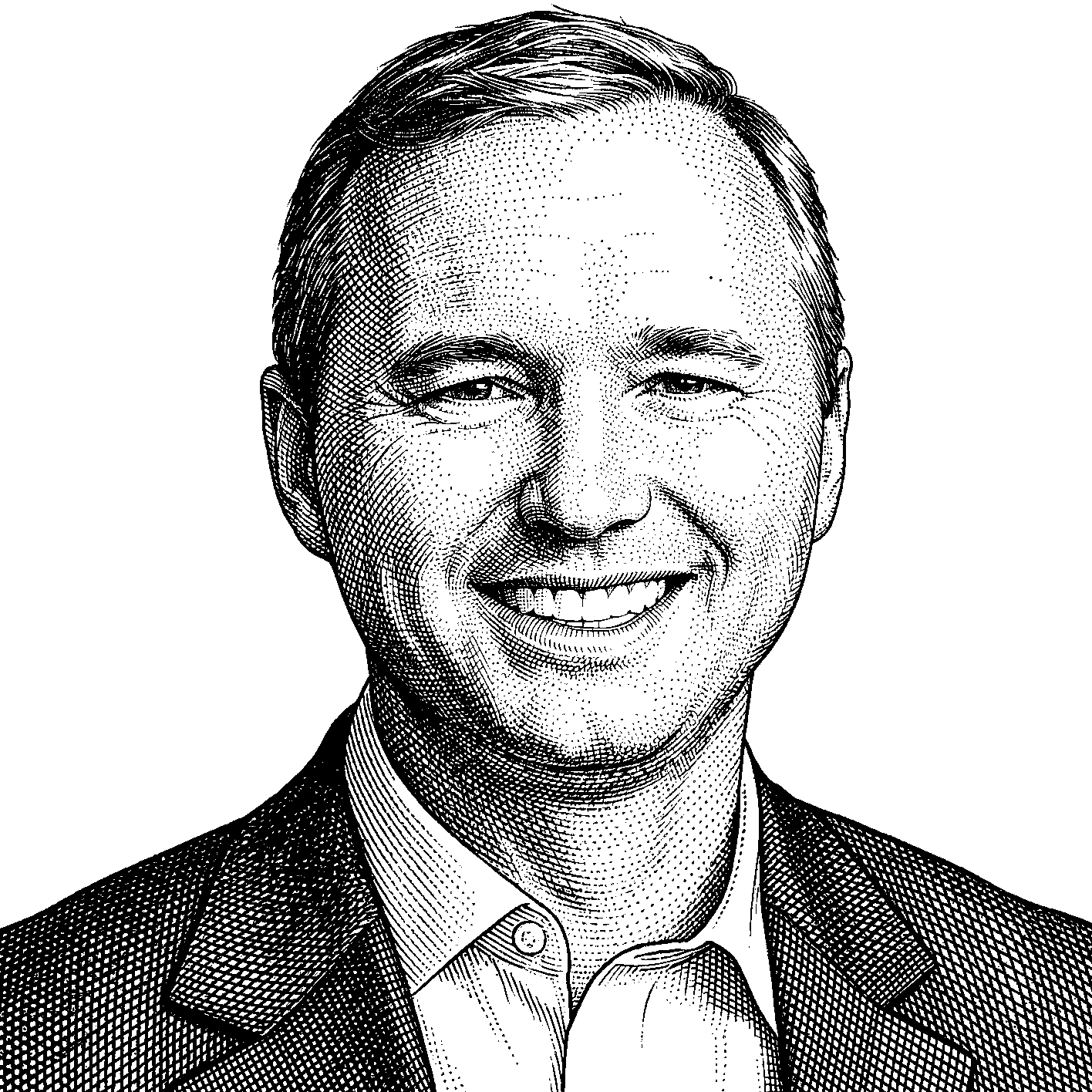
Tomicah Tillemann is a partner and global chief policy officer at KRH Partners, a cryptocurrency venture fund led by former A16Z general partner, Katie Hahn. In this role, he focuses on building the public policy architecture to support the next generation of the Internet. A frequent speaker on the intersection of technology and theology, he brings both spheres together in his work and thought. ¶ Prior to joining KRH Partners, Tillemann served as senior advisor to two Secretaries of State, leading a team that developed 20 major initiatives across 55 countries. He previously served as Hillary Clinton’s speechwriter and spent four years on the staff of the Senate Foreign Relations Committee, working with Joe Biden, Barack Obama, and John Kerry. He has spearheaded programs addressing social impact, finance, and governance challenges on a global scale. ¶ Tillemann’s experience includes serving as Executive Director of the Digital Impact and Governance Initiative at New America, as well as membership in the World Economic Forum’s Center for the Fourth Industrial Revolution, the United Nations World Food Program Innovation Advisory Council, and the Lantos Foundation Board of Trustees. He is also Chairman of the Global Blockchain Business Council. ¶ Dr. Tillemann holds a BA magna cum laude from Yale University and a PhD with distinction from the School for Advanced International Studies at Johns Hopkins University. He is a member of The Church of Jesus Christ of Latter-day Saints and spoke at the MTAConf 2022 about the decentralization of power.
Transcript
Speaker 1
Now I’d like to welcome Tamika Tilleman to the stage, our Mormon keynote speaker. Is Tamika, and he is a partner and global chief policy officer at KRH Partners, a new crypto venture fund led by former A16Z general partner, Katie Hahn. where he builds public policy architecture to support the next generation of the Internet. Previously, Tamika served as senior advisor to two Secretaries of State. Leading a team of experts that built 20 major initiatives in 55 countries. He joined the State Department in 2009 as Hillary Clinton’s speechwriter and spent four years on the staff of the Senate Foreign Relations Committee. working with Joe Biden, Barack Obama and John Kerry. Tamika has led programs to address social impact, finance and governance challenges worldwide. including service as Executive Director of the Digital Impact and Governance Initiative at New America, a member of the World Economic Forum’s Center for the Fourth Industrial Revolution, the United Nations World Food Program Innovation Advisory Council, the Lantos Foundation Board of Trustees, and as Chairman of the Global Blockchain Business Council. He received his BA magnum cum laude from Yale University and holds a PhD with distinction from the School for Advanced International Studies at Johns Hopkins University. Thank you very much to Micah.
Dr. Tomicah Tillemann
Well, let me thank Carl for that extremely generous introduction. It is inspiring to be with all of you here today. I have to say that Knowing that there are this many people who will give up a perfect Utah Saturday afternoon to sit in a room and listen to the intersection. to talks about the intersection of technology and theology, something that brings me great hope, and it should bring great hope to all of you as well. And I really want to extend special thanks to Carl for me. Making this all possible.
Dr. Tomicah Tillemann
I spend a great deal of my time thinking about the future of decentralized technology, and frankly, a great deal of my time thinking about the future of theology. It’s very rare that I get to Bring both of those together. And so I appreciate this opportunity.
Dr. Tomicah Tillemann
In the next half hour, I’m hoping we can do three things. We’re going to try to cover a lot. The first is to explore some big ideas about a future that will be increasingly defined by the decentralization of power. The second is to spell out some principles that should inform our actions as we approach that future. And finally, while I was certainly not anticipating this when I began our conversations about speaking here. A few months ago, I want to discuss how we are seeing these dynamics play out in the invasion of Ukraine, because it is shaping up to be the single most important Important and consequential event of the 21st century, and one that is going to have profound implications on the future that we are going to inhabit. Habit.
Dr. Tomicah Tillemann
This is a lot to cover. Fasten your seatbelts, stow your tray tables. But I’m hoping that you will find, as I have found, As I work through some of these issues, that the destination is both incredibly important and incredibly compelling if we can get the intersection of these themes right.
Dr. Tomicah Tillemann
So first for context, as is often the case in life, technology, and theology, if we want to understand where we’re going, we need to understand where we are coming. From. And so, in that spirit, I want to begin by turning to one of my favorite historians, Yuval Hariri, who I expect many of you are familiar with. With.
Dr. Tomicah Tillemann
And Yaval asks a provocative question, which is: why do we run the world? It could be jellyfish, it could be armadillos, and yet you look around, and we’re the ones in charge. And the answer that he comes up with is an intriguing answer. He says, we are the only species that has figured out how to cooperate flexibly at scale. There are other animals out there, like wolves and dolphins, that have figured out how to cooperate flexibly. Then you’ve got bees and termites that have figured out how to cooperate at scale. We’re the only ones who have figured out how to do both of those things. And it is really our superpower.
Dr. Tomicah Tillemann
Virtually everything of consequence that we We do as a species, the cities we build, the aircraft and the spaceships that we fly on, wonderful conferences like this, are all dependent on our ability to cooperate flexibly at scale.
Dr. Tomicah Tillemann
So this brings us, of course, to the question of: well, how do we cooperate flexibly at scale? And my take on this, which is a slight reframing of what Yaval comes up with. Is that we as a species have figured out how to define a common set of facts and then go out and cooperate, build, and create On the basis of those facts. And we’ve done this using a pretty straightforward process that is now deeply ingrained into who we are as communities and who we are as a species.
Dr. Tomicah Tillemann
We begin by, if you go back into our hot tub time machine, you go back a long ways to the time when we lived in little family groups as hunter gather And at that point, it was very easy for us to come to a common understanding of what facts were. It was very easy for us to come to a common agreement on the core information that defined our Lives. So if we lived in this small little community, you take something fundamental and foundational like ownership, we could all agree on what was Carl’s house, what was Carl’s cow, what was Carl’s hay. and then we would go out and live our lives and make decisions with that common knowledge.
Dr. Tomicah Tillemann
But it gets a lot more challenging to do this as we grow. As societies, and as we become far more complex in our interactions with others. And the way that we have figured out how to solve for this challenge As we have grown as a species and evolved into ever more complex forms of civilization, is that we need to find trusted sources of authority. and use those trusted sources of authority to maintain consensus as our societies grow. And those trusted sources of authority help us adjudicate the facts on which we base our lives. Lives.
Dr. Tomicah Tillemann
The decisions that we make every day are predicated on our confidence in these trusted sources of authority. These institutions and sources of authority take many different forms. We certainly have governments and the rule of law, which we were discussing. Just a moment ago, we have banks and financial institutions that play a vital role. And historically, we have ecclesiastical bodies that have been foundationally important. In the evolution of society, the process of establishing and using authority to achieve consensus is fundamental to who we are.
Dr. Tomicah Tillemann
It is woven into ancient scripture from the property rights that we see outlined in the Ten Commandments and the Old Testament. to more recently detailed descriptions of weights and measures and currency in the Book of Alma. And this pattern even Continues in modern forms of secular scripture, such as the constitutions that lay out the basic rules for how we establish consensus in democratic societies.
Dr. Tomicah Tillemann
And for good reasons as a civilization, we spend an enormous amount of energy and money trying to optimize these systems. I’ll give you just a few examples that are representative, though certainly not perfectly. indicative of the priority we place on this. In the United States each year we spend twenty two billion dollars on establishing the title to properties, just figuring out who owns what property we pay till we’re going to $22 billion a year for that. The U. S. legal industry, which is critically important in enforcing common understanding of reality and adjudicating disputes when they’re Arise takes up about $2 trillion. And if you look at the global financial services industry, which derives a lot of its value from simply establishing ownership and serving as an intermediary between transactions you’re looking at about 22 trillion dollars.
Dr. Tomicah Tillemann
So to put it mildly these are non-trivial quantities of funds that we are dealing with and it’s important to note that these systems do create risk. Real value. Bringing these groups together, bringing a group like this together, requires us to many thousands of times along the way. Use the process of authority and consensus in making our decisions. We had to agree that this library was owned by the city of Provo. That the conference had a certain period of time during which we would be able to use it. That on our way here, we would drive between the lines at certain speeds. and that the value of the funds we use to support this conference is something that we would all have consensus on.
Dr. Tomicah Tillemann
This process of establishing authority is about to undergo a profound change. And you’ll remember back to when we lived in very small groups and we could rely on the collective knowledge Of the group to establish authority and consensus, we’re moving in some ways toward a decentralized reimagination of what that looked like. Decentralized technologies are going to enable, in some ways, a restoration of this ancient capability going forward.
Dr. Tomicah Tillemann
It’s not that intermediaries will disappear, and I would argue that we will still need them in many cases. In some cases, they will even be more important. Such as dispute resolution. But the authority of the bodies that we have historically relied on to achieve consensus is going to be radically democraced. Democratized. And that democratization will introduce new dynamics to our ability to collaborate as a species. Our relationship with authority will change.
Dr. Tomicah Tillemann
We don’t have many analogues for this development in the Chronicles of Human Existence, but I’d like to suggest one that intrigued me. For most of recorded history, as I mentioned, ecclesiastical authority has been one of the most consequential and closely held forms of power. It’s had a profound role in shaping the processes used to define consensus, establish membership in groups, rights, privileges, and behavior. And it has been very tightly held, usually by a priestly class that mandated years of formal study and instruction before anyone could be admitted. Into their ranks.
Dr. Tomicah Tillemann
In 1830, the world saw a new model emerge for organizing ecclesiastical authority. A model that radically democratized access to power, and that democratization of authority enabled new, or if you go way back, restored. understanding of who could perform ordinances, provide theological instruction, and participate in the governance of congregation. Congregations and religious bodies. Its implications have been profound, and this community certainly would not exist in its present form in the absence of that reimagination of authority.
Dr. Tomicah Tillemann
We are about to see some changes with fascinating parallels play out across other fields of human endeavor.
Dr. Tomicah Tillemann
And this brings me to my first principle for a decentralized world. which is that while the sources of authority we use to establish consensus on basic facts are going to continue to matter, access to authority and the ability to invoke and deploy authority are likely to be radically democratized. More people will gain access to a toolbox that has historically been the exclusive domain of a handful of individuals. Individuals and institutions. And they will use that power to shape a new consensus around the facts that provide the bedrock. For our lives.
Dr. Tomicah Tillemann
The democratization of authority will reshape the way industries operate, the way companies function. and communities exist. It will reshape the ways in which we as a species converge on the common narratives that form the basis of our decisions.
Dr. Tomicah Tillemann
This brings us to a second theme, which is community. And the relationship between community and technology. Again, I’m going to go back in time in order to take us forward
Dr. Tomicah Tillemann
By a quick show of hands, and I’m assuming at this point in the day many of you have encountered this, who feels like they have a good understanding of Web3? And where we are on Web3. Some, but not all. So I’m going to go ahead and provide a little bit of context here.
Dr. Tomicah Tillemann
In the late 90s and even early 90s, we saw the emergence of Web One. And Web One was this period of open dynamic prototype. Protocols, we came up with things like email that still consume huge portions of our lives today, and it enabled very powerful new forms of communication. Communication. It allowed us to read information and move information in ways that, as a species, we’d never been able to move information previously. There, however, was a big problem with this world of web.
Dr. Tomicah Tillemann
One, as marvelous as it was in many respects, and that was that it had no sustainable business models attached to it. It was very difficult to make Money using these dynamic open protocols in Web 1. And by virtue of that, everyone came to a rough understanding that we needed a different way of deploying. Deploying this new toolbox. This brings us to Web 2.
Dr. Tomicah Tillemann
And Web 2 coupled the ability to both read information and write information. uh which was a a great innovation. Uh and it provided a new set of business models that made innovation much more financially sustainable and in fact wildly profitable for at least a small handful of of individuals.
Dr. Tomicah Tillemann
But the models that emerged from Web2, the fundamental business model of almost all Web2 platforms, involved gathering highly personal, highly atomized individual Information and using that information to build an immensely detailed profile of who we were as individuals. So that advertisers could slice and dice us into ever smaller groups with the goal of getting us to change our purchasing behavior. And this model turns out to have been immensely valuable for two groups of people.
Dr. Tomicah Tillemann
One, which will not surprise you, is big tech. And the other is authoritarian governments. And it’s brought us to a place where, if you are a human on planet Earth who wants to use technology, today you really only have two options available to you.
Dr. Tomicah Tillemann
You for almost all of what we need to do in the digital realm. The first option is an authoritarian paradigm emanating from Beijing. In which your personal private information is aggregated and used to manipulate your behavior for political purposes. And this is now becoming increasingly important in Russia as well. And the second model is a big tech paradigm. In which your information is aggregated and used to manipulate your behavior for commercial purposes. Neither one of those paradigms, to state the obvious, is compatible with a healthy Open society.
Dr. Tomicah Tillemann
So, this is a real Houston we have a problem moment. Fortunately, we also have a solution, and that solution comes in the form of a new toolbox of technologies that we call Web3.
Dr. Tomicah Tillemann
Web3 technologies are different. They are designed around the idea that individuals should have much more control over our information. that we should have more ownership of the platforms that we utilize. That the digital systems we rely on should be community governed. and that they should give communities a much greater say in how decisions are made.
Dr. Tomicah Tillemann
When designed right, Web3 platforms also enable communities to share in the financial upside. of these technologies in a way that just wasn’t possible in Web 2. 0 for a variety of reasons.
Dr. Tomicah Tillemann
And this is not just community as a generic term. Healthy, vibrant, dynamic communities are central to value. Creation in Web3. They unlock the potential to build systems that solve the underlying issues we have right now. Now, with Web 2.
Dr. Tomicah Tillemann
As we are seeing the emergence of community-oriented digital infrastructure in a handful of countries around the world, we are seeing some jaw-dropping. Gains. They are truly spectacular.
Dr. Tomicah Tillemann
In Kenya, digital payment systems have lifted 2% of the entire population of that country out of poverty. In Bangladesh, citizens have saved two billion days of previously wasted time thanks to the rollout of community-oriented nationwide digital Digital infrastructure. And Estonia, a small nation which has the world’s best digital infrastructure, recoups the equivalent of 2% of GDP. each year. In the United States, that would be the equivalent of a half trillion dollars that we would get back thanks to better access to digital Digital systems.
Dr. Tomicah Tillemann
And it’s important to note that all of the digital frameworks that I just cited are very, very early processes. These are like the 0. 1 iterations of what we have the potential. Potential to build with Web3.
Dr. Tomicah Tillemann
The second principle of a decentralized future is that communities are going to become the cornerstone of Value creation. And this will be, again, in stark contrast to a Web 2 world where communities have merely been a vehicle for encouraging individual participation. So, that platforms and governments can capture individual-level information with the goal of shaping individual behavior. Communities are going to be central to the evolution of a healthy internet. Going forward.
Dr. Tomicah Tillemann
There is, however, one very substantial challenge that we are going to have to overcome on our way to realizing this vision for the future. And that is the deficit, the profound deficit, of faith and trust that is increasingly crippling our societies.
Dr. Tomicah Tillemann
In 1993, one of the world’s great sociologists, Robert Putnam, wrote a book with the catchy title of Making Democracy Work: Civic Traditions in Modern Italy. And I’m sure he never anticipated when he authored that book that it would serve as the basis for a conversation about the future of technology.
Dr. Tomicah Tillemann
But the premise of the book was essentially this: northern Italy and central Italy. Are by and large very wealthy. They have highly functional institutions, high standards of living, and high social welfare. And I apologize to any southern Italians who I’m about to offend by stating this, but southern Italy By and large, it is a lot less functional. And there’s a lot of data to back up what I agree is a very gross generalization.
Dr. Tomicah Tillemann
And Putnam asked the question: why is this? Why do you have two parts of the same country? Two parts of the same society that perform so profoundly differently.
Dr. Tomicah Tillemann
And he looked back at the history, and what he found is that beginning in about 1000 AD, Northern and central Italians had a far more active dynamic, what we today call civil society. People came together and took part in. In politics and social gatherings and institutions, citizens worked through peaceful means to address challenges of mutual concern. That led to a dynamic in which citizens had far more trust in their institutions and critically far more trust in each other.
Dr. Tomicah Tillemann
Institutions evolved to be less hierarchical. And more horizontal. Northern and central Italy created the infrastructure they needed for healthy democratic systems because they designed their society in a way. Way that built trust.
Dr. Tomicah Tillemann
Southern Italy was very, very different. Southern Italy had order that was imposed by outside mercenaries during this period. And they set up a largely feudal system where peasants were controlled by knights and knights were controlled by lords.
Dr. Tomicah Tillemann
And this feudal system had some characteristics that sound very foreign, but I want you to think hard as I describe this. Peasants would go out into the field every day. Create value and send most of that value up to a lord in a manor house. And in exchange, they would be allowed access to some basic necessities they needed to sustain life. and received basic protection.
Dr. Tomicah Tillemann
But they had no expectation of private property, no expectation that they would be the primary life Beneficiaries of the value that they created and not surprisingly they had very little trust in the systems that governed their lives because these systems were not set up for their benefit. The mafia and its continuing corrosive impact on southern Italian society. traced its roots directly to these feudal structures.
Dr. Tomicah Tillemann
And Putnam found that the differences between these governing architectures that dated back a thousand years continued to dominate the differences in the way that these communities and societies perform today.
Dr. Tomicah Tillemann
This is incredibly important to us right now, or at least it should be incredibly important. Important to us right now because we are living in a digital version of southern Italy. We are living in a digitally feudal system.
Dr. Tomicah Tillemann
Every morning we wake up, we take out our phones, the modern equivalent of farming implements, and we go to work cultivating a digital landscape we do not own and will never control. The value of what we create in the form of data and information is sent to digital manor houses in Silicon Valley and Seattle, and it has created a new system that works well for the Handful of feudal lords, but does not work well for the rest of us.
Dr. Tomicah Tillemann
Not coincidentally, the systems that we have seen take root in our country. have had a profoundly corrosive impact on trust and faith in our societies, which is now scraping historic lows.
Dr. Tomicah Tillemann
So we need to ask ourselves the question: how do you break out? out of a feudal system because it’s not easy. But we know what this looks like from history and remarkably the ingredients that were necessary to break feudal systems in the Middle Ages are lining up again. Today.
Dr. Tomicah Tillemann
The first thing you needed was a pandemic, ironically. And the bubonic plague reshaped the value equation around labor. In the same way that the COVID pandemic has reshaped our understanding of the value of digital systems and data. And information. And those of us who have been able to work from home, or those of us that work for companies that utilize digital information, have certainly seen this play out in practice.
Dr. Tomicah Tillemann
You needed new forms of infrastructure to enable people to break out of feudal models. After the Roman roads deteriorated in central Italy The only place that individuals could take their goods to market was to the local manor house. And the local manor house controlled the price and all of the dynamics of the market. With the emergence of new infrastructure and the rebuilding of roads, individuals had options. They had choices. They were able to take the value that they created and find new outlets for that value.
Dr. Tomicah Tillemann
In other communities around the world and around their country, you need new ideas. And in the case of the original forms of feudalism, those new ideas came in the form of of the Enlightenment. You had ideas of private property and individual rights that were profoundly disruptive and foreign to individuals of that day. But opened the eyes to even the beneficiaries of the feudal system that we could design a better set of structures for how we govern interaction between Individuals.
Dr. Tomicah Tillemann
And finally, in many instances, you needed war. And war is obviously a horrific, horrific. Form of human engagement, but it is also the most profoundly disruptive form of human engagement. And it has the effect of forcing people. To question long-held assumptions that have governed societies in the past, you put these ingredients together. and you had the makings of a Renaissance. And I would suggest to you that maybe, just maybe, we are witnessing the earliest moments of a dawning Renaissance today.
Dr. Tomicah Tillemann
The third principle that I would suggest for the digital future is that in order to realize the potential of Web3 technologies, we will have to break out of our current era of digital Feudalism and build systems capable of replenishing the reservoir of trust and faith that irrigates human endeavor. And I take as my evidence for that claim what we are seeing play out in Ukraine over the last few weeks. In the immediate aftermath of the Russian invasion, the government there needed help. help.
Dr. Tomicah Tillemann
Previously relying on legacy systems, this would have been a formidable challenge. And I know this because in my past life, in 2008, I went into the city of Tbilisi, Georgia. Together with Joe Biden, the two of us on a plane, we met with the leaders of that country, which was at the time ringed with Russian armor. And as we came home, the two of us started putting together the underpinnings of what would eventually become a billion-dollar assistance package. To help that nation get back on its feet.
Dr. Tomicah Tillemann
But we recognized very rapidly that getting the resources to people in need. Was going to be almost impossible. It was going to take months and be defined by incredible opacity and uncertainty for individuals on all sides.
Dr. Tomicah Tillemann
What we’re seeing play out in Ukraine is very different. In a matter of days, $100 million in digital assets was crowdsourced from individuals all over the world. Those resources were available to the Ukrainian government almost instantaneously. It took a lot of people working behind the scenes, and I’ve had many discussions with you. Ukraine’s deputy minister for digital transformation, Alex Bornyakov, as they’ve tried to put the infrastructure necessary to do this in place. But the pieces are there, the building blocks are there.
Dr. Tomicah Tillemann
We have seen DAOs, decentralized autonomous organizations, come together and enable communities to support civil society groups, voluntary and nonprofit organizations that are responding to this crisis. And we’ve seen distributed digital data networks like the Arweave platform used to safeguard information that will not only help the Ukrainians in rebuilding, And protect vital documents from destruction at the hands of Russian invaders, but also preserve evidence of war crimes and atrocities for future prosecution.
Dr. Tomicah Tillemann
We’re seeing this play out on a global scale using a new toolbox that we have never had access to before, and it should make us all very hopeful Hopeful about what could happen if we succeed in assembling these new tools in a manner consistent with the principles that I’ve laid out today.
Dr. Tomicah Tillemann
Better systems don’t form themselves. They are formed in a forge that is fueled by the efforts, resources, and ideas of people like all of you in this room. And in the coming decade, we will have an opportunity to decide how we want our systems to evolve.
Dr. Tomicah Tillemann
Will we follow the injunction of King Benjamin? And use them in the service of our fellow beings? Or will we fall into the trap foretold by Nephi and use them instead to get gain, get power, and win popularity?
Dr. Tomicah Tillemann
Let me state very clearly that at the moment the jury is out on how this story ends. We don’t know where we’re headed. It, but we have the opportunity to get this right.
Dr. Tomicah Tillemann
If we hope to realize the potential of this new renaissance, we will need to design digital systems that are better equipped to enable a More humane fellowship with humankind. We will need to embrace the opportunity to decentralize authority. We will need to build systems that establish healthy, vibrant communities as the cornerstone of value creating. Creation, and we will need to work to replenish the reservoir of trust that irrigates everything we do. That is the opportunity we must embrace today. That is the cause that must unite us, and that is the obligation we must honor if we hope to make decisions and build an Internet that future generations will admire.
Dr. Tomicah Tillemann
I look forward to laboring with all of you in that effort and to your questions as we advance our understanding of these issues here today. Thank you. All right, we’ll start over here.
Speaker 3
Thank you, Dr. Tilliman. My name is Lynn Davenport. I have a podcast called Social Impact. I’ve followed your work. And you said a couple of things towards the end that I was going to ask you something different. But you said you were talking about war, and war is necessary. Yes. Not necessary.
Dr. Tomicah Tillemann
Well, I mean, it is one ingredient that can help us put it in. But what do I mean you want war? Yes, totally, totally.
Speaker 3
But war and, of course, this pandemic, they’re both being used. well right now, the pandemic, I believe is being used as a tool to bring in uh the biosecurity state, which is going to force blockchain digital IDs and I’ve got a a specific anecdote in Dallas where I’m from but I was going to ask you d do you not see how this could be very it could be digital in in slave Absolutely.
Dr. Tomicah Tillemann
And we need to be very mindful of that potential set of outcomes.
Speaker 3
And then, so I guess your work with the World Economic Forum, so you see all the stuff that’s out there that says you will own nothing. And you will be happy. And you’ve seen that? I have not seen that. Have y’all seen that? Yeah. I feel like it’s the elephant in the room. We haven’t really even talked about this. And I think it’s something that we need to seriously consider because I think. I think it’s going to build a panopticon. And the Internet of Things, the Internet of bodies, those are all the things that we’re not really talking about. Well, let me make two quick observations on that, because it’s a really important set of questions.
Dr. Tomicah Tillemann
Getting the privacy architecture around blockchain right is probably the single most important thing. Thing that needs to happen over the next five years to realize the potential of these technologies. We are investing in that. We invested in that when I was at Andreessen Horowitz, Katie, and My new firm is tripling down on that thesis. We really need to get this right.
Dr. Tomicah Tillemann
Now, I believe that privacy-preserving digital Identity could actually be a tool that unlocks profound opportunities. It needs to be privacy-preserving digital identity. There’s some folks out there that freak out about any discussion of digital identity. That’s a mistake. And we’re seeing the countries that are starting to get digital identity right, like Estonia, what they’re achieving is extraordinary and something that gives people a lot more control over their information than we have. today.
Dr. Tomicah Tillemann
So you’re absolutely correct. We need to be very mindful of the potential downsides here, which are massive. The worst case scenarios are really, really terrifying.
Speaker 1
Yeah, worst case scenarios. Thank you so much for the questions, guys. We just need to keep it to one question per person. Thanks. And try to keep it to one sentence. Thank you. You can use the semicolon.
Speaker 5
Sorry, I just love that idea. First, thank you for the awesome presentation, and as a good Canadian, my apologies for my pessimistic question. Question from having just finished my own assignment with the OSCE desk at my ministry. When you think about the revolution and war that you mentioned, and within the context of decentralization, and thinking frankly of the past successes of the Swiss Confederation in taking On the Austrian Empire and the American militias in taking on the British. But in an incredibly centralized military world in which, as has been pointed out, there is the potential For vast and immediate destruction. How, in all of these processes, as we make potentially incredible gains at which the potential for centralized power to say, thank you, I would like those gains, and I have guns and you don’t. In what way do we overcome the challenge of decentralizing physical military security power in a decentralized context that doesn’t lead to chaos and doesn’t lead to dictatorship.
Dr. Tomicah Tillemann
I would suggest it’s already happening. And I would guide you toward the writings of Gene Sharp, who writes on civil resistance. And what we have seen in recent years is that Peaceful, and I emphasize peaceful, nonviolent resistance has emerged as an almost insurmountable weapon. against authoritarian forces. It is really, really challenging. And we’ll see how this plays out in Russia. We’ll see how this plays out in other societies. It is really, really challenging for any authoritarian movement. to stand in the face of a principled, motivated, non-violent resistance, which is in many ways an embodiment of an anti-communist. Analog decentralization of power, if that makes sense. Those nonviolent movements have been very successful, statistically speaking. They have not had access to the toolbox that we are developing today. And so I think the exciting thing in my mind is what happens when you can provide principled nonviolent civil resistance with access to a Web3. Toolbox, and what new forms of democratic resistance is that going to enable going forward?
Speaker 5
I thank you for that comment, although I think the people of Hong Kong may have some challenges. Challenges too.
Speaker 6
Please, I’ll come back to you. Please. Yeah. What privacy standard are you most? Optimistic for given that you’ve been looking into this. You mentioned that it’s clearly an area of priority. What do you see?
Dr. Tomicah Tillemann
Yeah, I mean, there are some really, really creative platforms out there. One that I like a lot is called Alio. which is using zero-knowledge proofs to build a new privacy layer for blockchain. But I think it’s going to take frankly More than that. And over the last seven to ten years, in some cases longer, you’ve seen the maturation of a few different technologies that are going to have to be layered. if we’re going to get this right. In addition to blockchain, I would suggest we should start looking hard at tools like differential privacy, federated learning, and home. Homomorphic encryption, each of which encompasses elements of what will be needed to design really world-class data-rich privacy-preserving architecture. Architecture.
Dr. Tomicah Tillemann
And the challenge here is that it’s not just about locking down everybody’s data. If that were it, that would be pretty easy. and we could get there relatively quickly.
Dr. Tomicah Tillemann
In order to compete effectively with authoritarian governments that are proving incredibly reliant on artificial intelligence and willing to utilize artificial intelligence We’re going to have to devise new structures for using data in privacy-preserving ways. We can do this now. So I’m confident, given the tools that are out there, we can get this right. But it is going to require a whole of society effort to succeed. I think that for the first time in the last month, we see a lot of policymakers waking up to this opportunity. And I’d suggest that the executive order that was just issued by the White House on decentralized technology is a baby step, but nonetheless a profoundly important baby step. The right direction. But it’s going to take some work and again some creative layering of technologies if we’re going to get this right. Please.
Speaker 7
The what you say about trust also definitely has an upside and a downside, and I think most of us can uh resonate with the the chaos and the disinformation and the problems that both naturally and artificially have been introduced into a system that seems like decentralization may May actually be exacerbated or exacerbate that issue. Do you have any thoughts or solutions about how to Deal with those problems as we try to decentralize and yet still retain trust in a way that people can act in their own best interest.
Dr. Tomicah Tillemann
It’s a wonderful question and probably deserving of its own talk. Let me cite three quick suggestions that I’ve been noodling. On a lot. The first is the way that we know to build trust, the thing that we know works when it comes to Bringing people together across socioeconomic divides and getting them to have faith in each other is to unite them in voluntary service in civil society. And the fact that we are seeing the advent of community-based digital platforms, where again, value is derived from the community, opens up a lot of intriguing opportunities in that space. It’s really hard to mistrust the person that you’ve just spent a day doing ditch cleanup with in your community. Because you’ve worked together, you know them. Even if you’re very different in other aspects of your life, you have some basis for common ground.
Dr. Tomicah Tillemann
Wards and congregations are the most extraordinary example that that I know of this phenomenon playing out in the real world. We bring people together from many different backgrounds, not so much in Utah where a word is three blocks, but in the rest of the world, we bring people together from many, many different backgrounds. Backgrounds, and we all work together on the same stuff. And it doesn’t matter how rich you are, how poor you are, if you live in that community, you’re part of that community. So, that is one really important thing. that we need to pursue.
Dr. Tomicah Tillemann
The second thing we need to be mindful of is there is a school of thought that has grown up around some parts of the blockchain community that says what this really is is trustless technology and no Nobody’s going to have to worry about trust anymore. I really disagree with that, and I think that’s the wrong way to approach this. We should look at these tools as instruments for redeeming failed institutions. for redeeming institutions that have lost the confidence of individuals and try to rebuild the ties that should exist within a healthy, open dynamic community.
Dr. Tomicah Tillemann
And the last thing I would suggest when it comes to rebuilding trust is we’re going to need to think very hard about the governance of these platforms going forward. The way many blockchain projects are governed right now, ownership equates with voting rights. That is not a system that is going to deliver trust in the long run. That’s a system that’s going to replicate oligarch.
Dr. Tomicah Tillemann
In the investment firms that I work with, we’ve taken a very different approach. So we purchase big chunks of platforms, but then we delegate the voting rights associated with huge portions of our whole Holdings to civil society organizations, to universities, to nonprofit organizations, because we think that in the long run, the decentralization of authority and the decentralization of healthy communities is going to create more value. Value. And ideally, we’re going to need more approaches like that going forward if we’re going to get this right. Please.
Speaker 8
Yes, I just have a question regarding the time that you spent at New America in Bretton Woods too, regarding the ethics of faith-based institutions often Who delivers social services of using blockchain technologies to invest, make investments in human capital finance and how that intersects with your present position in venture capital. Thank you.
Dr. Tomicah Tillemann
What’s the question? So, do you think that churches or faith communities should be investing in human capital finance? Well, I think that is going to be different across different faith communities. I think some faith communities do that. You know, ours does that. We have a perpetual But blockchain. Like putting people like social impact bond finance that’s connected to the Bretton Woods II arrangements that you had
Speaker 8
It’s intra I don’t know is the honest answer because I haven’t thought about it enough as it relates specifically to faith communities. I’ve thought about it a lot as it relates to large asset allocation. So, sovereign wealth funds and pension funds, those organizations should be without question. But that means people need to get their blockchain under surveillance. Just keep your question to one sentence, please, guys. Let’s just be courteous with everyone and give everyone a chance. to join in the conversation. Thank you.
Speaker 9
So I wanted to hear your comments on the the rise of the nuns and religious affiliation. Is that a representation of decentralization bearing out? Or is that a problem that or something that decentralization could actually address?
Dr. Tomicah Tillemann
Well, I would say it’s much more a function in my mind of the atomization we’ve seen emerge in a Web 2 world, where all of the systems that we That we interact with on a daily basis are designed to fragment us and designed to dice us and slice us into smaller and smaller groups that, in many instances, divorce us from community. Communities. I think there are a host of reasons around declining rates of religious observance and religious affiliation, but I definitely think our technology structures haven’t helped. In that regard, ideally, decentralized frameworks can provide some on-ramps for people who are feeling very divorced from communities to find their way back in. Please try to go quickly on this last one.
Speaker 10
What do you think the role of governments is in the face of decentralization? Well, I think the role of governments is going to change.
Dr. Tomicah Tillemann
I think it will continue to exist. I think it will need to exist. But I think the ways in which we approach democracy and the implements of democracy are going to Evolve. Government and democracy at its core is a technology. It’s an operating system. And that operating system is in serious need of an upgrade. And so ideally what we’re going to see is the evolution of a new set of tools that improve the user interface. That we use to translate the aspirations of citizens into the outcomes that are produced by our public Institutions. That’s going to take, again, a ton of work. None of this stuff is going to be easy, but we have a toolbox today for the first time in our lifetimes with the power to provide a really meaningful Meaningful upgrade to the infrastructure of democracy.
Speaker 4
And let’s hope and pray that we get that right. Thank you, Tamica.