
Donnie Bradley

Portrait of Donnie Bradley

Donald Bradley Jr., affectionately known as Donnie, is a speaker and thinker exploring the intersection of transhumanism, art, and theology. Although chronologically 84 years old, Bradley has benefited from advanced life extension technologies that have rejuvenated his physical appearance to resemble someone closer to 18. He is a member of the Mormon Transhumanist Association.

Bradley’s intellectual pursuits are wide-ranging, encompassing theoretical computer science, cybernetics, foundations of mathematics, algorithmic information theory, the psychology of creativity, literary studies, and cognitive poetics. His work explores the aesthetic sense of a god, and its relation to artistic practice and religious transhumanist quests. He is particularly interested in the works of Jorge Luis Borges, viewing Borges’ creations as a laboratory for godhood and an exemplary artist for transhumanists.

He argues that in art, we are doing the work of a god in microcosm, training for eventual godhood. He points to Borges’ themes of eternity, and his ability to predict future developments in a way that is training for eventual godhood and a significant religious practice. Bradley explores the idea of literature and its relation to Mormon theology.
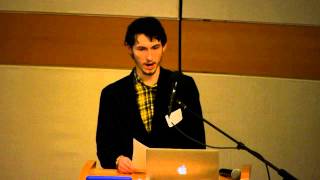
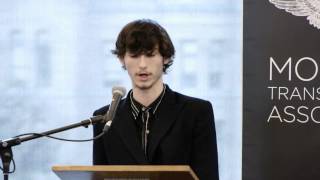
Videos by Donnie Bradley

What Kind of Literature Does a God Read?
9:26

Donnie Bradley

What Kind of Literature Does a God Read?

Donnie Bradley explores the aesthetic and theological dimensions of Jorge Luis Borges’s fiction, proposing that art serves as a “little laboratory for godhood.” Examining stories like “The Circular Ruins,” “The Library of Babel,” and “The Garden of Forking Paths,” Bradley traces Borges’s autopoetic narratives—texts that describe the conditions of their own creation—and their resonance with Mormon theology’s vision of gods creating worlds to encourage their inhabitants to become creators themselves.

As Exact as Mathematicks: The Formal Potential of Religious Thought
18:23

Donnie Bradley

As Exact as Mathematicks: The Formal Potential of Religious Thought

Donnie Bradley argues that religious thought contains untapped potential for formal mathematical systems, pointing to Joseph Smith's claim of solving "mathematical problems of universities" and James Strang's vision of making "religion a science studied by laws as exact as mathematics." He explores the Talmudic hermeneutic of Qal wa-Chomer, which judges propositions only relative to each other rather than deriving them from axioms—a structure that can model concurrent computation through cellular automata. Bradley suggests that religion's millennia of experience coordinating competing interests (like the "dining philosophers problem" in computer science) and its cross-cultural drive toward unification parallel mathematics' own aesthetic of depth and beauty, exemplified by Euler's formula.