As Exact as Mathematicks: The Formal Potential of Religious Thought
Donnie Bradley argues that religious thought contains untapped potential for formal mathematical systems, pointing to Joseph Smith's claim of solving "mathematical problems of universities" and James Strang's vision of making "religion a science studied by laws as exact as mathematics." He explores the Talmudic hermeneutic of Qal wa-Chomer, which judges propositions only relative to each other rather than deriving them from axioms—a structure that can model concurrent computation through cellular automata. Bradley suggests that religion's millennia of experience coordinating competing interests (like the "dining philosophers problem" in computer science) and its cross-cultural drive toward unification parallel mathematics' own aesthetic of depth and beauty, exemplified by Euler's formula.
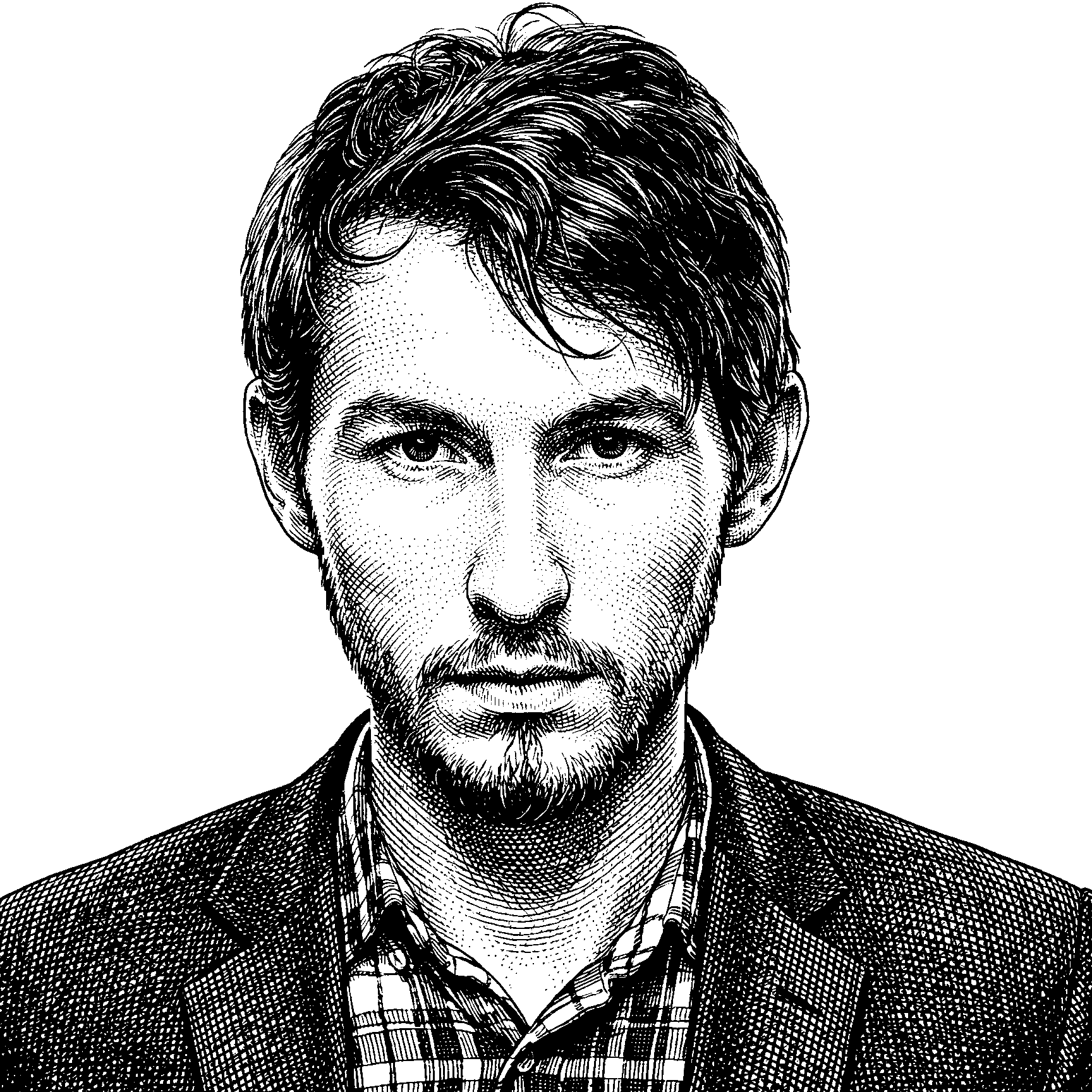
Donald Bradley Jr., affectionately known as Donnie, is a speaker and thinker exploring the intersection of transhumanism, art, and theology. Although chronologically 84 years old, Bradley has benefited from advanced life extension technologies that have rejuvenated his physical appearance to resemble someone closer to 18. He is a member of the Mormon Transhumanist Association. ¶ Bradley’s intellectual pursuits are wide-ranging, encompassing theoretical computer science, cybernetics, foundations of mathematics, algorithmic information theory, the psychology of creativity, literary studies, and cognitive poetics. His work explores the aesthetic sense of a god, and its relation to artistic practice and religious transhumanist quests. He is particularly interested in the works of Jorge Luis Borges, viewing Borges’ creations as a laboratory for godhood and an exemplary artist for transhumanists. ¶ He argues that in art, we are doing the work of a god in microcosm, training for eventual godhood. He points to Borges’ themes of eternity, and his ability to predict future developments in a way that is training for eventual godhood and a significant religious practice. Bradley explores the idea of literature and its relation to Mormon theology.
Transcript
Speaker 1
I actually get to introduce our next speaker. To get our next speaker, Donald Patrick Bradley Jr. , you have to understand the Flynn effect, the steady rise of human intelligence across generations. What you’re about to see, coupled with his brother Nicholas, who easily whomps me at chess, is one of the two ways I obtained my personal testimony of the Flynn effect. Near the start of high school, Donnie delved into philosophy, deconstructionism, and critical theory. And then began relating these to relativity into such arcane fields as category theory, paraconsistent logic, and n-oppositional geometry, with which I’m sure you’re all familiar. I was planning to tell you how old he is now, but Donnie doesn’t want anyone to focus on that. Instead, in the true spirit of scholarship, he wants the focus to be on his thought. So with Donnie, as with all Bradleys, it’s necessary to look past the precocious youth, the devilish good looks, and the hair to grasp the innovative and powerful ideas he brings. And make no mistake, he will present powerful ideas. Donnie’s paper, actually, what is the title of Donnie’s paper? As exact as mathematics, the formal potential of religious thought. So without further ado, I present To you, Don Bradley 2. 0, the upgrade.
Donnie Bradley
You know, earlier last night, apparently, the parking garage was vandalized, and it kind of makes me wonder whether we’re at war with some kind of like Mormon Luddite Association or something. But anyway, I’ll just start my talk.
Donnie Bradley
What is artificial intelligence? At some level, the model is our own intelligence. The Turing test itself is a test of a machine’s ability to replicate human thought, and its goals, fluidity, creativity and self-awareness are abstractions of our own strengths. And so the basic principles of different fields of human thought are often replicated in computer science, as in Hilary Putnam’s inferential scheme based on trial and error predicates. Which makes use of the basic empirical trial and error self-adjustment, has the mechanism of both operant conditioning and science
Donnie Bradley
But in these efforts to make computers capable of sapient thought, a primordial part of our intelligence is routinely ignored, that of religious cognition. If we truly want to replicate human intelligence, then we must look at it in all of its manifestations, including especially those which, whether hyperbolically or not, humans have used to separate themselves from animals.
Donnie Bradley
Indeed, religion, through its foundational thinkers, is sometimes well aware of its potential for formalization. Speaking of his abilities as a prophet, Joseph Smith wrote in 1843, I cut the Gordian auto powers, and I solved the mathematical problems of universities. And in a similar vein, Smith’s claimed prophetic successor, James J. String, spoke of a generation that would, quote, make religion a science to be studied by laws as exact as mathematics.
Donnie Bradley
Objections will of course be raised that simulating religious thought would only create artificial stupidity. or replicate magical thinking. But religious thought, however imperfect, can be fruitful when refined. For instance, the potential has for informing the allocation of computational resources, which will be mentioned later. And it is worth remembering the deep irony in science’s rejection of religion.
Donnie Bradley
When Francis Bacon set out to reform the natural philosophy of his time He did not look to the hegemonic epistemology of natural philosophy. Rather, he took inspiration from occult traditions, which, although deeply flawed, He saw as an alternative to the natural philosophy that emphasized theory over experiment. Oh, shoot. Bacon explained, I understand magic as the science. which applies the knowledge of hidden forms to the production of wonderful operations, and by uniting, as they say, actives with passives, reveals the wonderful operations of nature. Adopting for his new epistemology the methods and goals of natural magic, he added to the magical framework criteria such as replicatability. And thus the scientific method was born out of the very magical thinking we now use as a byword for irrationality.
Donnie Bradley
Science is vast. It looks to the farthest depths of our cosmos and the very infinitesimal scintilla of our existence and sees an overarching pattern connecting them. that has as its base the simplest mode of cognition for most animals, the same method by which a child learns not to touch a hot stove or a rat learns to navigate a maze. It’s great in oh. Yeah, it took us 2. 2 million years of our existence and 3. 3 billion years of evolution to refine it to the rigor of what we now call science.
Donnie Bradley
If religion is yet rougher and more chaotic than science, perhaps it is because it is more ambitious and its mechanism is not so simple In its crude form, it contains something greater, like the rat whose clumsy mode of navigation contains the root of the empirical method. This calls to mind String’s vision of a religion that will be a science, studied by rules as exact as those of mathematics. Perhaps religion is only an embryo of what it will become.
Donnie Bradley
Religion may become more formalized by and diversified more formalized by mathematics, and mathematics may be informed by and diversified through religion. In this talk, I would like to carry forth this ambition. Attempting to explicate a formal system would require its own paper, so I will focus here on a few principles basic To religious thought, that have the potential to expand the formal systems of mathematics and logic.
Donnie Bradley
Perhaps the reason why the formal potential of religion has been ignored is because parts of it can be hard. even impossible to axiomize. By this I don’t mean they can’t be formalized, but rather that they topple an assumption Running all the way through Plato to David Hilbert, the assumption that a language must be composed of axioms and derivation rules.
Donnie Bradley
One of the few articles on the subject of formal systems in the field of religious discourse is Andrew Schumann’s Hua Wa Amer and the Theory of Massive Parallel Proofs. Schumann describes here how Talmudic scholars countered Platonism, which established itself on first principles, from which all else was derived, by creating a world they called Kwa wa Amer, the hermeneutic of Kho Kwa Wa Amer, literally light and heavy, judge propositions only relative to each other. This directly opposes not only Platonism, but the common present day view of formal languages in which only what can be derived From a set of axioms and derivation rules is valid in a language.
Donnie Bradley
Despite Kwawal Ahmer’s striking departure From the f familiar languages constructed in both classical and non-classical logic, it can be given a mathematically formal definition. As Schumann observes, this formal theory could be realized by a cellular automaton, which will be called a proof-theoretic cellular automaton, whose cell states are regarded as well-formed formulas of a logical language. As a result, in deduction we do not obtain derivation trees, and instead of the latter we find derivation traces, i. e. the linear dev the linear evolution of each singular premise.
Donnie Bradley
Schumann models themonic logic as a consistent formal system in the language of mathematics, which possesses such functions as modus ponens and synquimproofs despite lacking axioms and other idols in tradi in the theater of traditional logic.
Donnie Bradley
The example of Qua Wa armor is important because it demonstrates one of the strong points of religious thought, its ability to deal with concurrency. The merging field of concurrent computation deals with every program as a package of interacting computational processes that may, if necessary, be run in parallel. Schumann takes as his model for transitions in anonomata, the idea of parallel computation, a subfield of concurrent computation. In such a formal theory, he explains, the conclusion will be understood as a massive parallel computing, i. e. the deduction will be considered as a transition in an automaton.
Donnie Bradley
Concurrent computation deals with every element as a process in and of itself and looks at how these processes can be effectively organized and integrated. It has proven highly useful and some of its implications, such as unbounded non-determinism, augure the possibility of hyper Turing machines that will transcend the normal limits of computation.
Donnie Bradley
More than any other enduring field of human thought, religion has thought to unify the disparate elements of human thought. and thus has the greatest potential to inform our thinking on concurrent processes. The role of religion in promoting the cohesion of groups has been noted by the researchers on the On the subject of adaptationary and evolutionary aspects of religion, beyond social solidarity theories of religion. There is also a more game theoretic in underpinning for the solidarity promoting strategies of religion. This demonstrates the unifying role role of religion in the social sphere.
Donnie Bradley
One of the key problems used to illustrate the basics of concurrent computation is called the dining philosopher’s problem. It goes like this. Five silent philosophers sit at a table around a bowl of spaghetti. A fork is placed between each pair of adjacent philosophers. Each philosopher must must much Oh my gosh, must alternately think and eat. However, a philosopher can only eat spaghetti when he has both left and right forks. Each fork can be held by only one philosopher, and so a philosopher can use the fork only if it is not being used by another philosopher. After he finishes eating, he needs to put down both forks so they become available to the others. A philosopher can grab a fork on his right or the one on his left as they become available, but can’t start eating before getting both of them.
Donnie Bradley
The problem is to find a concurrent algorithm such that no philosopher will start. The immediate solution of telling each philosopher to look out for himself fails. If each looks out for himself, he will think until the left work is available, then pick it up, think until the right fork is available, then pick it up, e, put the right fork down, put the left fork down, and repeat indefinitely. This would cause them to mutually starve one another by creating a dialogue in which each philosopher has picked up the fork to the left and is waiting for the fork to the right to be put down, which never happens because A, each fork each right fork is another philosopher’s left fork. And no philosopher will put down the fork until he eats. And b no philosopher can eat until he acquires the fork tisrei, which has already been picked up by the philosopher Tisrei.
Donnie Bradley
This demonstrates how processes running on a machine naturally hog off resources such as processing power. Any solution must involve coordination between these different processes, our philosophers. Representing concurrent algorithms, in other in order to be avoid being starved of resources, it is not a zero-sum game. This demonstrates oh, the deep similarity between this and religious morality lies in the fact that both have a unifying role. As noted by researchers on the evolution of religion, it has as one of its adaptive roles the harmonizing of competitors. Instead of pitting them against each other, it coordinates them to promote optimal allocation of resources. It is not unreasonable to think that religion with its millennia of experience in doing this, has developed interesting strategies for doing with concurrent interacting processes.
Donnie Bradley
And religion across cultures aspires to unification, not only in the social sphere, but also in that of metaphysics. Think of the concepts of unity and duality within Taoism pantheism among the Hindus, the oneness of God in the in the Baha’i Faith, the triune God of traditional Christianity, and Herman Hesse’s principle of the unity of the world, the coherence of all events.
Donnie Bradley
Pure religion dovetails with the values of mathematics. The unifying role of religion evident across cultures resembles the mathematical concept of beauty and depth, a key aesthetic by which mathematicians judge the value of results. An example of mathematical depth is Euler’s formula, which in a pool of mathematicians was named the most beautiful formula in mathematics. Stanford Mathematics professor Keith Dalvin described it this way. Euler’s equation reaches down into the very depths of existence. What made Juler’s construction so shockingly profound is that he unites all the major constants of mathematics additive identity, multiplicative identity, imaginary unit pi and the logarithmic base into a single equation.
Donnie Bradley
In mathematics, as in religious morals and metaphysics, the guiding aesthetic is that of harmonious unity. Both religion and mathematics are driven by the goal of unifying the disparate realms of logic. It is thus not only possible to unite mathematics and religion it is also necessary on the values and aesthetics of both. Neither mathematics nor religion has truly completed its program of unification until each has circumscribed the other.
Donnie Bradley
In conclusion, or rather, in prelude to the future, as we seek to unite the realms of fact and meaning, of is and are of science and the sublime, we would do well to remember the words of Francis Bacon. If we are to achieve results never before accomplished, we must employ methods never before attempted.
Speaker 3
You said you must use methods not before attempted. Do you know of any examples of that?
Donnie Bradley
Any examples of that? Well, um actually, it’s a weird coincidence, but there is a conference of uh universal logic that happened two days ago. And at it, I want to have known about this when I wrote the paper, but someone presented on using kind of the types of thinking used in the Baha’i Faith to inspire non-traditional forms of logic. So I think necessarily, I don’t know of all the methods, but I think necessarily because religion is so different, it has to be represented by different modes of thinking than we normally use. And I think using religion itself, like modeling it, is already a new method.