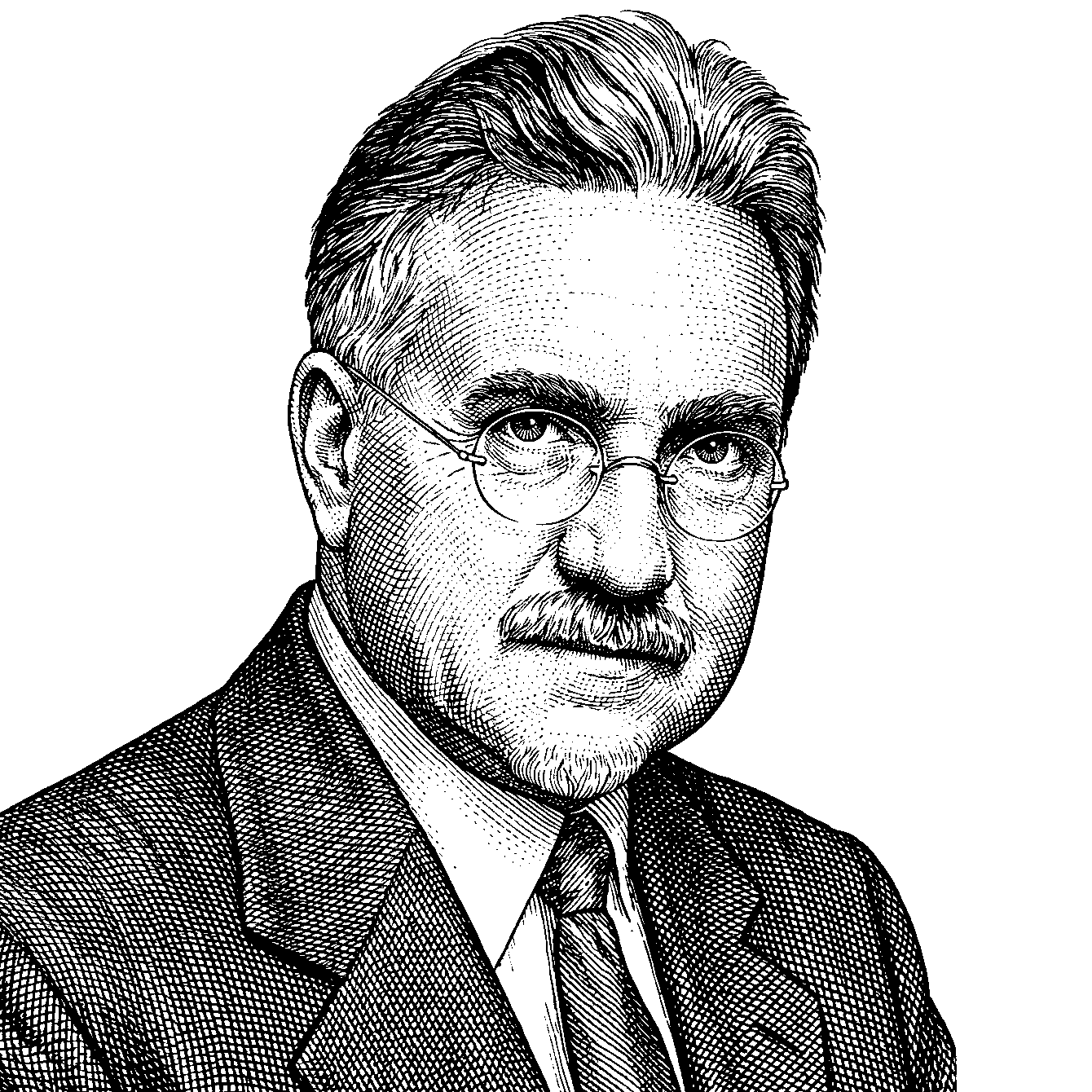
John A. Widtsoe(1872–1952)

Portrait of John A. Widtsoe

John Andreas Widtsoe (1872–1952) was a Norwegian-American scientist and apostle who brought a unique synthesis of scientific rigor and religious faith to his Church service. Born on an island among fisherfolk in Norway, he emigrated to Utah after his mother’s conversion. He graduated from Harvard with the highest honors and earned his doctorate from the University of Gottingen in Germany.

Widtsoe became renowned for his expertise in irrigation and dry farming, serving as director of the Utah Agricultural Experiment Station and later as president of both Utah State Agricultural College and the University of Utah. He was called to the Quorum of the Twelve in 1921 and later served as president of the European Mission.

A prolific author, Widtsoe wrote A Rational Theology and Evidences and Reconciliations, which addressed common questions about faith and doctrine. His marriage to Leah Dunford, granddaughter of Brigham Young, united him with a distinguished Church lineage. Despite personal tragedy, losing four of his seven children in infancy, he maintained a life of faithful service.

Quotations by John A. Widtsoe

Just what forces were brought into operation, or what process was used, to organize the “elements” into an earth is not known. Latter-day Saints are inclined to hold that forces about us, known in part through common human experience, especially in the field of physical science, were employed in the formation of the earth. The progress of science may yet shed much light on the origin of the earth.

One of the leading doctrines of the Church resembles the spirit of the law of universal growth so nearly that one is forced to believe that the great truth embodied by this doctrine [eternal progression] is the truth shadowed forth by the law of evolution. … Joseph Smith taught [with regard to humans] a doctrine of evolution which in grandeur and in extent surpasses the wildest speculations of scientific evolutionists.

Every person must decide for himself, on the basis of the evidence produced, which of these three opinions as to the age of the earth, before Adam, seems most reasonable to him, whether (1) six days, or (2) six thousand years, or (3) many millions of years. Clearly it does not matter to one’s daily welfare or ultimate salvation which view he adopts, except that every Latter-day saint must seek and cherish truth above all else.

The Church supports and welcomes the growth of science . . . The religion of the Latter-day Saints is not hostile to any truth, nor to scientific search for truth.

As science advances and increases, as new discoveries are made, as more complete command is obtained over the forces of nature, the more necessary it becomes that we have a religion to guide us in employing these discoveries. To save the world from science, and to make science the builder of a good world, we must hasten our progress towards the fuller acceptance of God. So, the answer to the question at the head of this article is very simple.

Truth is truth forever. Scientific truth cannot be theological lie. To the sane mind, theology and philosophy must harmonize. They have the common ground of truth on which to meet.

A miracle is an occurrence which, first, cannot be repeated at will by man, or, second, is not understood in its cause and effect relationship. History is filled with such miracles. What is more, the whole story of man’s progress is the conversion of “miracles” into controlled and understood events. The airplane and radio would have been miracles, yesterday.

In our preexistent state, in the day of the great council, we made a certain agreement with the Almighty. The Lord proposed a plan, conceived by him. We accepted it. Since the plan is intended for all men, we become parties to the salvation of every person under that plan. We agreed, right then and there, to be not only saviors for ourselves but measurably, saviors for the whole human family. We went into a partnership with the Lord.

We may go further. Every person born into the earth has claim upon the assistance of the Spirit of God. That is a species of revelation. Consequently, all good achievements of man, in science, literature, or art, are the product of revelation. The knowledge and wisdom of earth have so come.

By recognizing our universe as one of law, order, and intelligence, science has driven fear from the hearts of men. Intelligence acts in intelligent ways. The intelligence at the head of all things may be trusted to act intelligently. There arises therefrom a trust in the things about us. The age-old horror, called fear, which has so long distracted humanity, vanishes. Superstition is laid low.