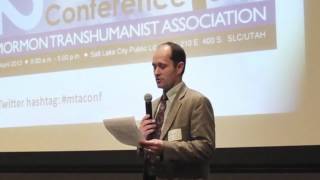
Karl Hale is a speaker at Mormon Transhumanist Association (MTA) conferences, known for his engaging presentations on topics such as the worship of extraterrestrial humanoid deities. His perspective is informed by his background as a member of the Church of Jesus Christ of Latter-day Saints and his reflections on the nature of God.
Before turning his attention to philosophical and theological explorations, Karl spent 15 years in the software and web industries. He holds a master’s degree in information systems and worked as a programmer, manager, and executive. Currently, Karl dedicates a significant portion of his time to motivational juggling—another of his passions.
Karl has been married to Anna Lisa Bradford Hale for 18 years and is the father of eight children. Together, they manage a small homestead, raising their family alongside a diverse collection of animals, including 27 chickens, six goats, six frogs, and one cat.
Karl’s engagement with Mormon theology, coupled with his interest in transhumanist concepts—such as the potential for technologically advanced beings—provides a unique and thought-provoking perspective. He is an engaging and interesting speaker.