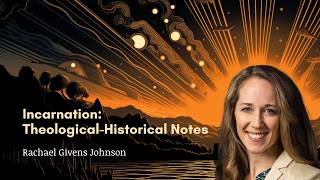
Rachael Givens Johnson is a historian and assistant professor of Interdisciplinary Humanities at Brigham Young University. Her work explores the intersections of embodiment, religious materialism, and transatlantic cultural history. Having earned her Ph.D. in history from the University of Virginia, her scholarship primarily examines peninsular and viceregal Spain during the early modern period, shedding light on the evolving relationship between the physical human body and the sacred.
At the core of Dr. Johnson’s academic pursuits is a fascination with how historical, sensory, and theological shifts impact human experience. She is currently developing a monograph that tracks the changing models of the human sensorium during the Spanish Enlightenment. This research investigates how altered perceptions of sensory experience influenced devotional practices—including the use of physical and mental imagery, religious processions, and sensory technologies—ultimately reshaping notions of subjectivity and intersubjectivity. Furthermore, her scholarly projects extend to late-nineteenth-century transatlantic discourse regarding the deliberate construction of a “modern religion” and the multivalent understandings of “materialism.”
Her academic writings have been featured in prominent journals, reflecting her deep engagement with historical theology. In Eighteenth-Century Studies (2024), she explored reformed social imaginaries of charity, while her 2023 work in the Bulletin for Spanish and Portuguese Historical Studies analyzed shifting conceptions of the sacred and the profane in the Spanish Atlantic. Dr. Johnson’s earlier publications also tackle intriguing intersections of gender and theology, notably her 2015 piece on Mary Wollstonecraft and the “sexless soul” in Religion in the Age of Enlightenment.
Dr. Johnson core beliefs resonate with themes highly relevant to the Mormon Transhumanist Association, particularly the theological implications of embodiment and technological progress. At MTAConf 2024, she delivered a presentation titled Incarnation: Some Theological-Historical Notes, bringing historical and theological depth to contemporary discussions of physical existence, human potential, and divine nature. Her continued engagement with the philosophical challenges of modern technology is evident in her 2025 presentation, “Retrieving the Humanities in the Age of LLMs,” co-presented at Organized Intelligence in Salt Lake City. Additionally, she has contributed to discourse on Mormonism’s unique physical theology, presenting on Latter-day Saint material metaphysics at UC Berkeley in 2024.
Through her teaching—which spans Latin American Humanities, Baroque and Enlightened Catholicism, and the specific study of embodiment and emotion—Dr. Johnson continues to foster a rigorous dialogue on how humanity’s physical, spiritual, and intellectual pursuits intertwine across centuries.