Windy Days
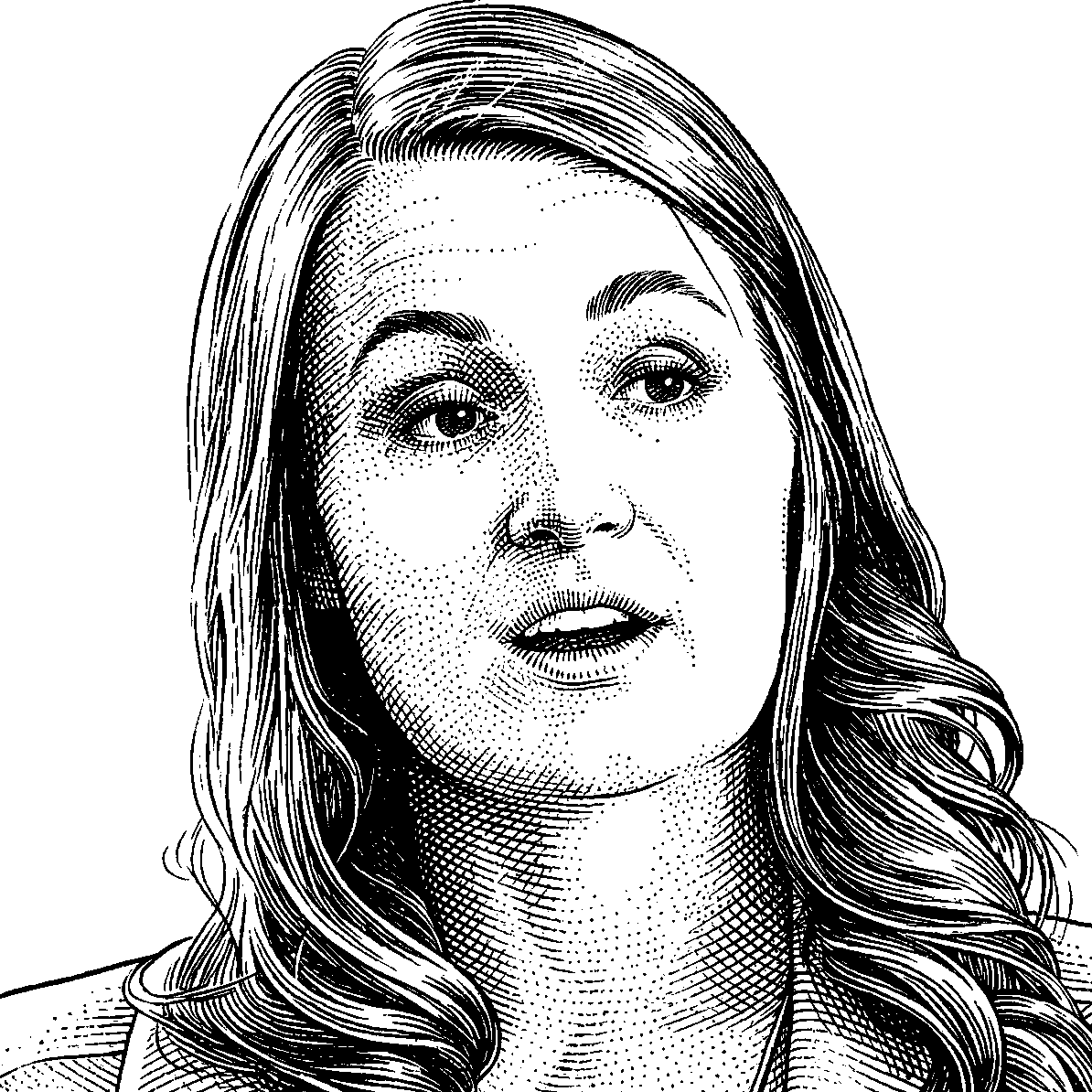
Blaire Ostler is a philosopher, author, and artist whose work explores the intersection of Mormon theology, transhumanism, and human identity. A ninth-generation Latter-day Saint, she has been a notable voice in conversations about the synthesis of religious tradition with technological progress and expanding theological inquiry. ¶ Ostler holds a Bachelor of Fine Arts in Design from the International Academy of Design and Technology–Seattle. Her background as an abstract modern artist deeply informs her philosophical work. Her paintings, characterized by their exploration of aesthetics and form, can be found in residences and businesses throughout Seattle. This artistic sensibility extends to her writing, where she examines the boundaries of traditional categories to explore a more expansive understanding of divinity and humanity. ¶ Ostler is the author of Queer Mormon Theology: An Introduction (2021), in which she engages with Mormon doctrinal concepts such as the nature of the divine, the significance of Heavenly Mother, and the potential for technological resurrection. Her involvement with the Mormon Transhumanist Association has been significant; she served on the Board of Directors for six years and as CEO from 2016 to 2018. Her transhumanist vision emphasizes active discipleship, where humanity participates in the work of God through morphological freedom and cognitive liberty. ¶ Blaire continues to write, paint, and speak on themes of identity, truth, and beauty, exploring the relationship between the human and the divine.
I love windy days. They remind me to have faith in the beauty of things I can’t see. Though the wind is intangible I can feel it all around me, and though I can’t see it I can see continual evidence of its presence. I believe the same is true of God.
Some forces are known only by what they set in motion.
The wind can easily be explained using a basic knowledge of temperature, geography and air pressure, but that wasn’t always the case. There was once a time in history when stories, mythologies and theories arose trying to explain the mystical force of wind. Today, with modern science, the numinous nature of the wind has subsided, but it hasn’t taken away its beauty. Is the wind any more or less real because our understanding of it has changed? Is the wind still not governed by the same laws of physics even though our explanations are more sophisticated?
I don’t believe we are much different than our ancestors. We still use mythologies, theories, religion and a narrow understanding of science to explain what we don’t know. We scramble around trying to make sense of our world and quickly come to definitive conclusions based on our imperfect data. Why do we pretend to “know” science or God when our knowledge of both is so incomplete?
Perhaps there will be a time when religion catches up to science, or rather science catches up with God. Maybe there will be a time when we could live in a post-theist and postsecular world, and our understanding of all things mystical, spiritual, secular, and scientific will seamlessly merge into a single comprehensive understanding of our existence.
I don’t “know” when or if that day will occur, but for now, I choose faith—faith in all the things I do not know, but bring joy and beauty to my life. I have faith in science, religion, history, theories, technology, mythology, ideas, the future and God.
I won’t pretend to know what I clearly do not, but I won’t lose faith in what I hope to know either.