Archive

Transhumanist Advent: The Messianic Pattern
Carl Youngblood
Carl Youngblood

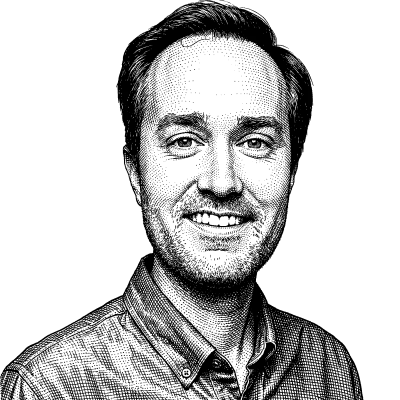
Carl Youngblood co-founded the MTA in 2006 and has served since 2021 as its President and CEO. He is engaged with the Association’s efforts to explore the intersection of Mormon theology and transhumanist philosophy. Among the many initiatives that Carl has been involved with, he has designed and built the Association's current website, which unifies all prior content in a single location using inspiring visuals and animations.

In the scriptures we learn that the Satanic pattern is to vault oneself above all others:

Christlike glory raises others into it.

“Who opposeth and exalteth himself above all that is called God, or that is worshipped; so that he as God sitteth in the temple of God, shewing himself that he is God.” (2 Thessalonians 2:4)

“For thou hast said in thine heart, I will ascend into heaven, I will exalt my throne above the stars of God: I will sit also upon the mount of the congregation, in the sides of the north:” (Isaiah 14:13)

Read more

Transhumanist Advent: Greater Works Than These

Caleb Jones
Caleb Jones

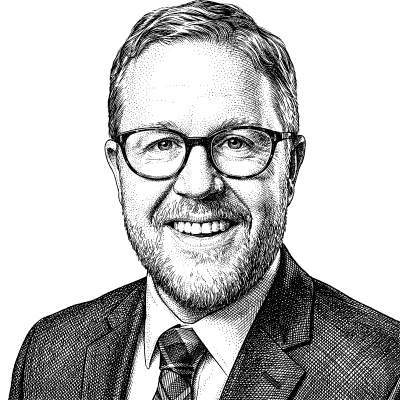
Caleb Jones is a speaker and thinker deeply engaged with the intersection of Mormon theology, transhumanism, and intergenerational connection. His work focuses on the spirit of Elijah, as referenced in Malachi, and its implications for creating faith-based connections across generations, both living and deceased. He advocates for a broader interpretation of this principle, extending it beyond traditional temple work to encompass a reconciliation of ancient wisdom with modernity. Jones draws upon G.K. Chesterton’s concept of the “democracy of the dead” to frame his exploration of tradition and remembrance. He posits that our ancestors, through their artifacts and influence, continue to participate in the present. He sees the redemption of the dead through these artifacts—books, music, laws, traditions—as a collective human endeavor involving various disciplines such as literary scholarship, archaeology, and religious studies. His perspective emphasizes the importance of engaging with the past to inform and enrich the future, particularly within the context of Mormonism and its emphasis on family history and genealogical work. Jones champions seeking a healthy balance and ongoing reconciliation of the hearts and minds of the dead and dying with the hearts and minds of the living, to redeem rising generations.

Giving glory to God is good: celebrating God’s grace, goodness, and love. But God asks us to worship, not idolize; emulate, not adulate. Jesus exemplified and glorified God’s grace, goodness, and love and Jesus challenges His disciples to take upon them these same qualities, not abdicate them to God as an act already performed for us.

Glory becomes worship when it multiplies healing.

“Verily, verily, I say unto you, He that believeth on me, the works that I do shall he do also; and greater works than these shall he do; because I go unto my Father.” (John 14:12)

Read more

Mormon Naturalism

Anonymous

I think one of the great strengths of Mormonism is its naturalism; however, the term is equivocal and “naturalism” is sometimes criticized. Dictionary.com gives (among others) these definitions of “naturalism”:

A natural cosmos leaves God nearer, not farther away.

Philosophy. The system of thought holding that all phenomena can be explained in terms of natural causes and laws. Theology. The doctrine that all religious truths are derived from nature and natural causes and not from revelation.

Read more

Translating Mormon Transhumanism

Caleb Jones
Caleb Jones

Caleb Jones is a speaker and thinker deeply engaged with the intersection of Mormon theology, transhumanism, and intergenerational connection. His work focuses on the spirit of Elijah, as referenced in Malachi, and its implications for creating faith-based connections across generations, both living and deceased. He advocates for a broader interpretation of this principle, extending it beyond traditional temple work to encompass a reconciliation of ancient wisdom with modernity. Jones draws upon G.K. Chesterton’s concept of the “democracy of the dead” to frame his exploration of tradition and remembrance. He posits that our ancestors, through their artifacts and influence, continue to participate in the present. He sees the redemption of the dead through these artifacts—books, music, laws, traditions—as a collective human endeavor involving various disciplines such as literary scholarship, archaeology, and religious studies. His perspective emphasizes the importance of engaging with the past to inform and enrich the future, particularly within the context of Mormonism and its emphasis on family history and genealogical work. Jones champions seeking a healthy balance and ongoing reconciliation of the hearts and minds of the dead and dying with the hearts and minds of the living, to redeem rising generations.

Having spare time on a business trip with a colleague in Orlando recently, we decided to spend the afternoon in Epcot. As went from rides, to lands, and to Spaceship Earth we talked about our lives, families, books we’ve read, and thoughts on science and technology. In this context, our thoughts on religion and futurism came up. He mentioned that he is agnostic and used to be atheist. I mentioned that I am a post-secular Mormon. He was intrigued what a post-secular Mormon might believe.

Translation lets faith speak without assuming every listener shares its grammar.

Read more

A Primer Primer

Ben Blair
Ben Blair

Ben Blair holds a PhD in philosophy and education from Teachers College, Columbia University. He is the co-founder of Newlane University—a platform focused on deinstitutionalizing education. An active member of the Church of Jesus Christ of Latter-day Saints, Blair’s work and perspective explore the intersection of religious community and secular ideals. He is particularly interested in how religious and post-religious communities can work towards shared goals, and he questions the equation of any particular organization with the broader concept of the 'kingdom of God'. Blair, along with his wife, Gabrielle Blair, resides in France and they are the parents of six children. He presented at Sunstone West and is an attendee and speaker at Mormon Transhumanist Association conferences, where he explores the philosophical implications of faith, community, and progress.

Guest Post: Ben Blair, Chief of Special Projects

A primer turns big hopes into words a community can share.

If you have been to the transfigurism site in the last few months, you may have noticed a link to the Primers. Are/were you confused by these? Well, here’s your primer on these primers!

Read more

The Prophetic Voice

Anonymous

My ward snagged the last Sunday before my move to Switzerland to ask me to speak. Given the proximity to LDS General Conference, they assigned me the topic “Come, Listen to a Prophet’s Voice.” Here is an excerpt from my talk, given on September 24, 2017.

Prophecy comforts only after it has learned to unsettle.

Read more

Technological Funemployment

Anonymous

Automation should make room for vocation, not fear.

For years, the spectre of technological unemployment has been exploited as the sociological apocalypse that will require all kinds of new economic interventions like a universal basic income and universal healthcare. (More on those proposed solutions in the future.) This spectre, however, is harmless. It’s a tiny kernel of truth wrapped in a triple-ply fib of fear, uncertainty, and doubt.

Read more

The Gospel of Tron

Caleb Jones
Caleb Jones

Caleb Jones is a speaker and thinker deeply engaged with the intersection of Mormon theology, transhumanism, and intergenerational connection. His work focuses on the spirit of Elijah, as referenced in Malachi, and its implications for creating faith-based connections across generations, both living and deceased. He advocates for a broader interpretation of this principle, extending it beyond traditional temple work to encompass a reconciliation of ancient wisdom with modernity. Jones draws upon G.K. Chesterton’s concept of the “democracy of the dead” to frame his exploration of tradition and remembrance. He posits that our ancestors, through their artifacts and influence, continue to participate in the present. He sees the redemption of the dead through these artifacts—books, music, laws, traditions—as a collective human endeavor involving various disciplines such as literary scholarship, archaeology, and religious studies. His perspective emphasizes the importance of engaging with the past to inform and enrich the future, particularly within the context of Mormonism and its emphasis on family history and genealogical work. Jones champions seeking a healthy balance and ongoing reconciliation of the hearts and minds of the dead and dying with the hearts and minds of the living, to redeem rising generations.

In an early blog post to the Transfigurist, I wrote some thoughts on the relationship to faith, creation, and programming:

Creation becomes divine when emergence exceeds control.

What is particularly interesting about programming is that the creative process occurs in the abstract only. Yes, the program is stored on disk in the form of magnetic variations, but even this is invisible to the human eye and is not the purpose for which the program is created. A program is not the series of characters typed by the programmer. Rather the substance of a program is thought itself, concept described. Working this close to raw thought not just at the beginning of the creative process but all throughout the program’s creation requires a high level of concentration and mental exertion but likewise delivers a high level of satisfaction and joy.

While the details of exactly what ‘spiritual creation’ is may be unclear, this process of creating implementable concepts and structures mentally surely must play a pivotal role. Thus, as we practice and participate in the process of creation and exercise our faculties (mental, physical, and spiritual), we draw nearer to God and learn more about the nature of eternity. This is why programming is, and many other creative processes are, so joyful. The creative process is itself a symbol of Eternity.

Read more

A Vision Worth Believing In: Transhumanism, Driven By Spiritual and Ethical Progress

Jon Ogden
Jon Ogden

Jon Ogden is an author, educator, and entrepreneur focused on the intersection of faith, family, and technology. He is the co-founder of Uplift Kids, a platform providing families with a lesson library and curriculum designed to foster spiritual health and well-being within the home. Ogden is also the author of When Mormons Doubt: A Way to Strengthen Relationships and Live a Quality Life, a work that explores themes of faith, doubt, and community within a Mormon context. His exploration of religious belief as a potentially modular system, similar to an API, suggests an openness to integrating diverse philosophical and spiritual traditions—a perspective that aligns with the Mormon Transhumanist Association’s interest in exploring how technology and innovation can enhance human experience and spiritual development. He holds a Bachelor’s degree in English, Literature, and a Master’s degree in Writing and Rhetoric, both from Brigham Young University. Ogden lives in Provo, Utah, with his spouse and two children and writes regularly at johnogden.com.

If our prehistoric ancestors were to board a tour bus and visit the present day, what would they think?

Paradise has to be chosen, not only invented.

They might delight at the feeling of air-conditioned buildings, marvel at mundane inventions such as doorknobs, be amazed that people walk around unafraid of sudden attacks from wild beasts, and gawk at lawns and manicured gardens.

They might believe, in short, that they’ve arrived in some sort of paradise.

Read more

CRISPR LOVE

Anonymous

Guest Blogger:

Love becomes dangerous when improvement is demanded as erasure.

Gary Lee Parker

I cut my genes for you

I cut myself to keep your love

I trim the edges, rough to smooth

I shape my soul to fit your glove

Read more