Ben Blair

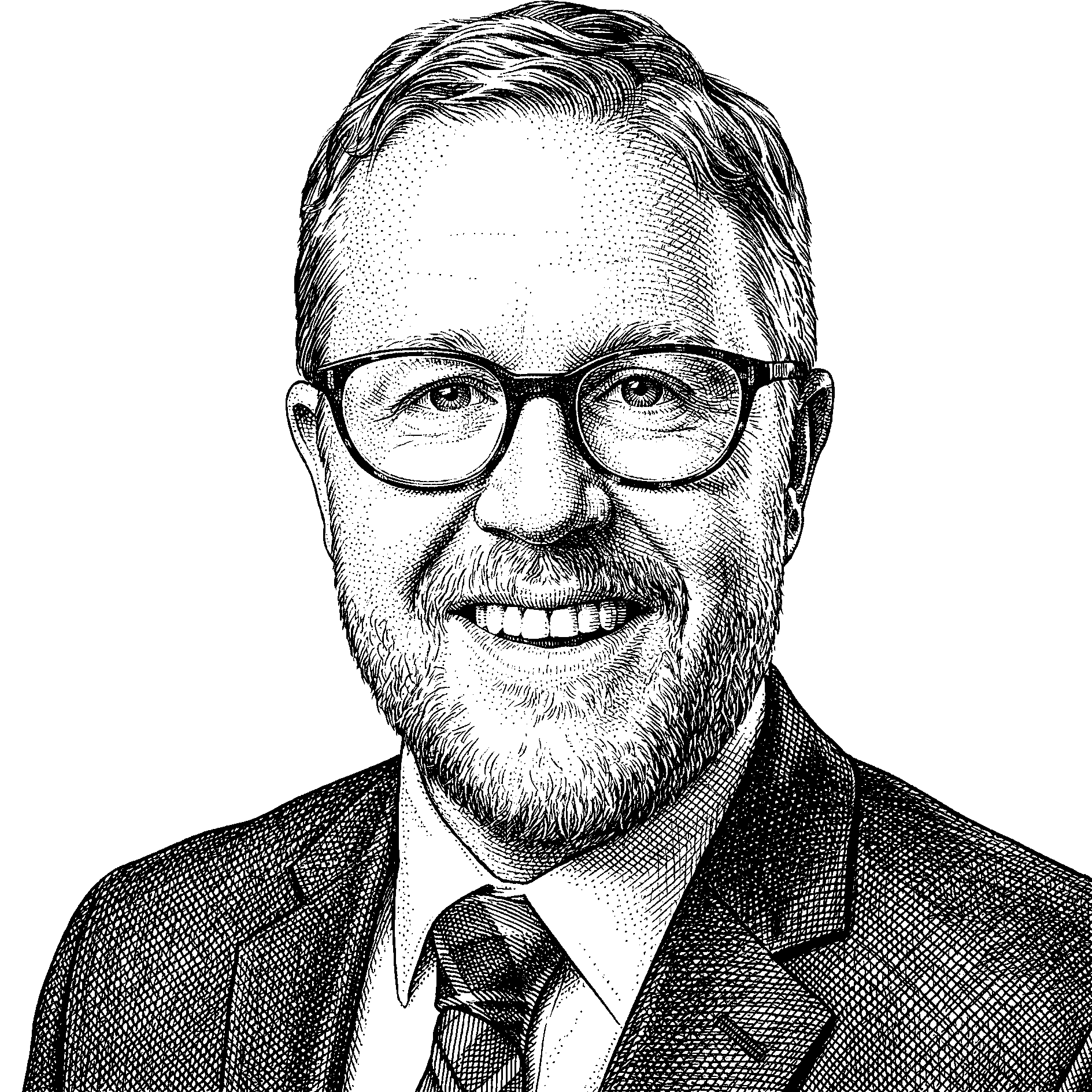
Portrait of Ben Blair

Ben Blair holds a PhD in philosophy and education from Teachers College, Columbia University. He is the co-founder of Newlane University—a platform focused on deinstitutionalizing education.

An active member of the Church of Jesus Christ of Latter-day Saints, Blair’s work and perspective explore the intersection of religious community and secular ideals. He is particularly interested in how religious and post-religious communities can work towards shared goals, and he questions the equation of any particular organization with the broader concept of the 'kingdom of God'.

Blair, along with his wife, Gabrielle Blair, resides in France and they are the parents of six children. He presented at Sunstone West and is an attendee and speaker at Mormon Transhumanist Association conferences, where he explores the philosophical implications of faith, community, and progress.
Videos by Ben Blair

Strangleholds of School and the Path to Decentralized Education
19:19

Ben Blair

Strangleholds of School and the Path to Decentralized Education

Ben Blair, co-founder of New Lane University, argues that traditional higher education holds students in a "stranglehold" through control of cost, scheduling, geography, and student records. He proposes a decentralized model where educational pathways—built from discrete learning objectives—can be created, improved, and verified by experts worldwide without requiring institutional intermediaries. Blair describes how New Lane offers college degrees for $1,500 using open-source resources, self-assessment, and oral examinations conducted via video conference. He envisions a future where curriculum continuously improves through expert competition, instruction is optimized at the learning-objective level, and students own their own educational records.

The Earth Will Be Renewed: Challenges and Opportunities with the Passive Voice
15:07

Ben Blair

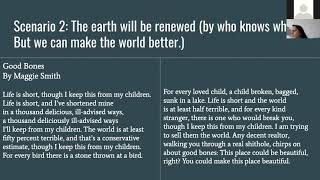
The Earth Will Be Renewed: Challenges and Opportunities with the Passive Voice

This presentation examines the passive voice in the Tenth Article of Faith—“the earth will be renewed”—exploring who the agent of that renewal might be. The speaker outlines three scenarios: God alone will renew the earth, the agent is unknown but we should improve the world anyway, or humanity and our descendants are called to be the renewers. Drawing on Carl Youngblood’s work on prophetic voice and Joseph Smith’s egalitarian vision of revelation, the presentation argues that the passive voice neither names nor excludes any possible agent—leaving room for us to take responsibility. The speaker concludes with self-authored “scriptures” challenging listeners to embrace their prophetic calling, warning that the earth’s renewal is possible but not inevitable.

Appropriating 'But if not'
11:56

Ben Blair

Appropriating 'But if not'

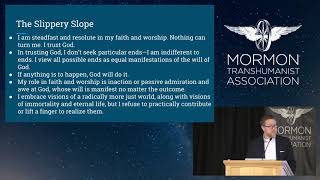
The speaker reexamines the biblical phrase “but if not” from the story of Shadrach, Meshach, and Abednego, cautioning against interpretations that slide from steadfast faith into complacent inaction. While praising the unconditional commitment expressed by the three Hebrews, he argues that faith should not be indifferent to outcomes—particularly concerning justice, immortality, and the redemption of the dead. Rather than passive waiting for divine intervention, he calls for practical action as a sacred expression of worship, concluding: “Our God will deliver us. But if not, know this—we will.”

Exorcising McConkie
27:05

Ben Blair

Exorcising McConkie

Ben Blair and Carl Youngblood share the stage in this dual presentation from the 2018 conference. Blair delivers a series of meditations—“Blood,” “Exorcising McConkie,” and “The Moral Genius of Christ”—challenging passive interpretations of Christianity that delegate all burden-bearing to Jesus, arguing instead for active discipleship that extends the work of Christ through human hands and advancing capabilities. Youngblood follows with a historical analysis comparing early Christian and Mormon innovation—from medieval agricultural advances to the settlement of the American West—with contemporary institutional complacency, urging a return to the audacious, world-changing mindset that once characterized both traditions.

The God of Transcending Narratives
19:47

Ben Blair

The God of Transcending Narratives

This presentation examines how communal narratives function in religious communities, arguing that God consistently bursts self-assured narratives rather than confirming them—as seen in Moses’s life being repeatedly disrupted from Egyptian prince to fugitive to prophet. The speaker critiques both the LDS Church’s institutional narrative and ex-Mormon counter-narratives for missing the "sought goods" that justify any narrative, suggesting that disputes over historical and doctrinal claims miss the more essential question of whether these structures actually deliver salvation. Mormon transhumanism offers a framework where religious aspirations like immortality and eternal life need not remain abstract mysteries but can become serious goals with practical benchmarks, transforming narratives from self-justifying stories into accountable claims measured against real outcomes.

Seek Ye First the Kingdom of God
19:52

Ben Blair

Seek Ye First the Kingdom of God

Ben Blair argues that strong communities are byproducts of pursuing worthy aims rather than ends in themselves. He critiques both religious institutions that equate themselves with the kingdom of God and secular groups that make community their primary goal, suggesting that both miss the driving force of shared purpose. Drawing on examples from the D-Day invasion to the Mormon pioneers, Blair proposes that the Mormon Transhumanist Association’s aspirational vision—working collaboratively toward becoming gods who lift each other up—provides the kind of "work cut out for us" that sustains robust, long-lasting communities.

Come Follow Me: The Instrumental Atonement
20:46

Ben Blair

Come Follow Me: The Instrumental Atonement

This presentation reframes the Atonement of Jesus Christ as an "instrumental cause"—focusing on the behaviors it should promote rather than treating it as an abstract object of worship. The speaker argues that conventional approaches to the Atonement tend toward passivity or self-centered repentance, whereas Jesus's example calls believers to take active responsibility for evil and death in the world. Drawing on Rilke's poetry and contrasting Jesus with Eichmann's refusal of moral responsibility, the talk urges a shift from worshiping the Atonement to practicing it through direct engagement with human suffering.