The Earth Will Be Renewed: Challenges and Opportunities with the Passive Voice
This presentation examines the passive voice in the Tenth Article of Faith—“the earth will be renewed”—exploring who the agent of that renewal might be. The speaker outlines three scenarios: God alone will renew the earth, the agent is unknown but we should improve the world anyway, or humanity and our descendants are called to be the renewers. Drawing on Carl Youngblood’s work on prophetic voice and Joseph Smith’s egalitarian vision of revelation, the presentation argues that the passive voice neither names nor excludes any possible agent—leaving room for us to take responsibility. The speaker concludes with self-authored “scriptures” challenging listeners to embrace their prophetic calling, warning that the earth’s renewal is possible but not inevitable.
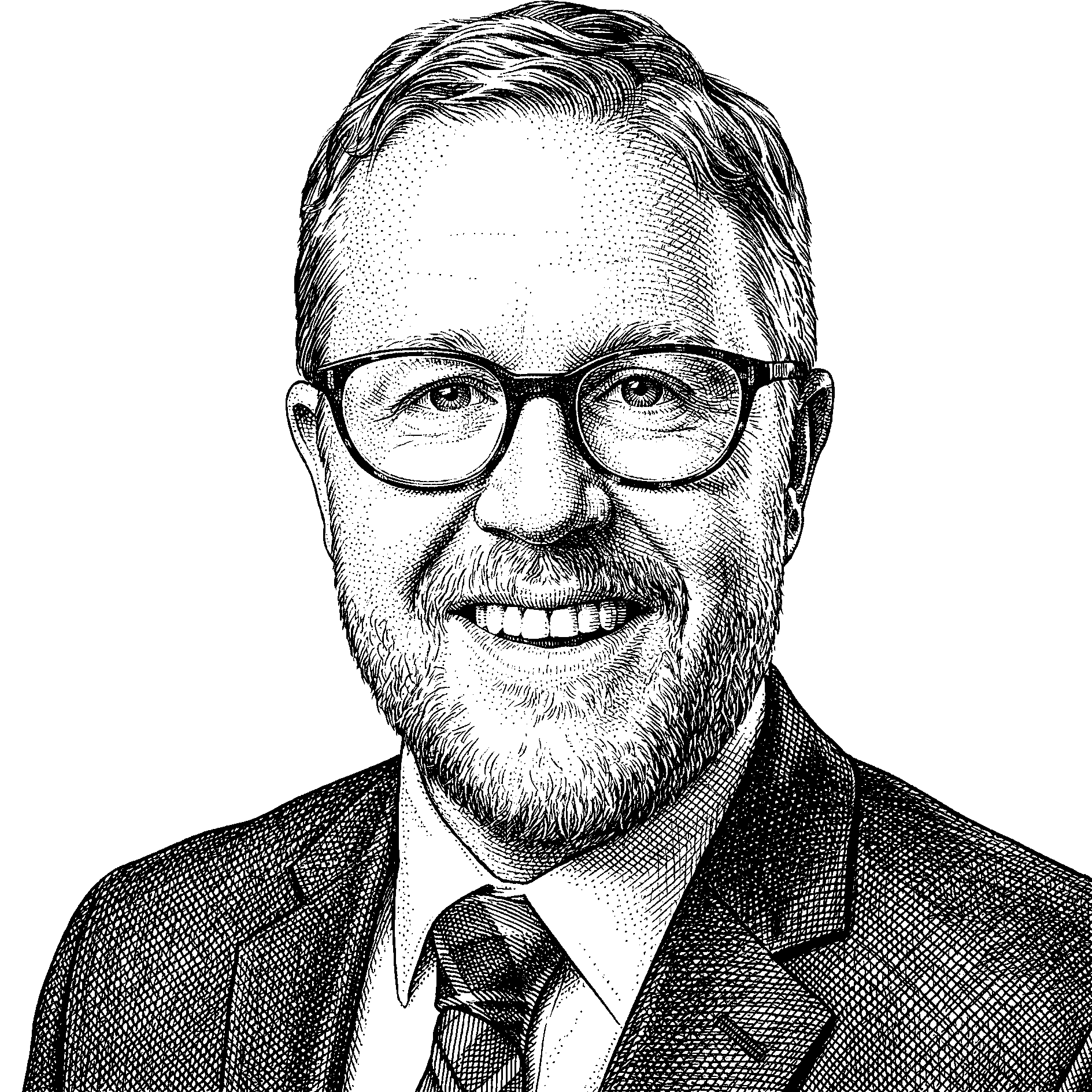
Ben Blair holds a PhD in philosophy and education from Teachers College, Columbia University. He is the co-founder of Newlane University—a platform focused on deinstitutionalizing education. ¶ An active member of the Church of Jesus Christ of Latter-day Saints, Blair’s work and perspective explore the intersection of religious community and secular ideals. He is particularly interested in how religious and post-religious communities can work towards shared goals, and he questions the equation of any particular organization with the broader concept of the 'kingdom of God'. ¶ Blair, along with his wife, Gabrielle Blair, resides in France and they are the parents of six children. He presented at Sunstone West and is an attendee and speaker at Mormon Transhumanist Association conferences, where he explores the philosophical implications of faith, community, and progress.
Transcript
Okay. So this presentation will spotlight the challenges and opportunities with the passive voice in the theme of the conference: the earth will be renewed. And I’ve also changed the subtitle to Challenges and Opportunities with the Passive Voice. Originally, it was Problems with the Passive Voice for reasons that I hope will become evident over the course of the presentation.
So for those who may be unfamiliar, the phrase the earth will be renewed comes from the points of faith that Joseph Smith wrote to John Wentworth, the editor of the Chicago Democrat. Now known as the Wentworth Letter. And he closed the letter with 13 points of faith that have come to be known as the Articles of Faith. And this article, the tenth article of faith, in its entirety, reads We believe in the literal gathering of Israel and in the restoration of the ten tribes, that Zion, the New Jerusalem, will be built upon the American continent. that Christ will reign personally upon the earth, and that the earth will be renewed and receive its paradisical glory.
If you’ve taken a college writing course, and this may even be covered in high school English now, you’re familiar with the recommendation to avoid the passive voice. While the passive voice is not a grammatical error, it can be a signal of clumsy writing that hides the agent. So you can see the examples here. The cat sat on the mat is the active voice. The mat was sat on is the passive voice. And problems with the passive voice that your writing teachers will tell you include that it hides the identity of the agents doing the action. And it’s often long, it’s indirect and impersonal, and it feels evasive.
But the passive voice is your friend when the thing receiving an action is the important part of the sentence. In our example, It’s not just any old planet that will be renewed, the earth will be renewed.
And one obvious thing you can do with the passive, but not the active, voice. is to omit the agent. And this is handy if the agent is unknown, irrelevant, too obvious, or too contentious to mention. And importantly, the passive voice neither names agents nor precludes any possible agent. The article of faith is that the earth will be renewed, but we’re not told who will renew it, and no one is excluded either.
It’s a statement that should spark our imagination for an earth vastly improved from the status quo. But there’s no road map for getting there, and there’s no responsible party listed. This is a good thing. Whatever answers Joseph might have given for the agents and methods at that time probably would either not resonate with his contemporary audience, or not age well, or both.
So this presentation, I’m going to be navigating between three approaches to renewing the earth, arguing for different agents and approaches. And the three will be that the earth will be renewed by God. The earth will be renewed by who knows who, but we can make the world better. and the earth will be renewed by humans and/or our descendants.
In all three scenarios, we shouldn’t lose sight that we’re building a bridge toward the future we can’t help but do so. And important questions for all these scenarios are, with this approach, what sort of future Earth are we working toward? And what sort of future humanity are we cultivating?
So let’s start with scenario one: the earth will be renewed by God. This view is that the earth will be renewed, and God will do the renewing. This view transforms faith into patience for the time God will do his work. God is in charge, and we are at fault to suppose that we can harm or help earth’s renewal.
Here are a couple statements that capture this sentiment for me. I’ve chosen to use statements that focus on humanity’s inability to hinder or thwart God’s renewal of the earth, as this provides a more stark contrast because it explicitly denies humanity’s involvement. And I should note that though these statements definitely have a political edge It’s not the politics I’m arguing for or against, but rather the agent of Earth’s renewal, though I admit that they can get tangled together.
The first comes from a Facebook friend of mine. Perhaps you’ve seen similar statements. He writes, I found that most people who believe in God, regardless of which religion they belong to, have a sound understanding that while they affect their immediate environment, they ultimately cannot destroy or affect their climate. The main reason being that we soundly understand that a God that can create such a vast and beautiful universe most likely wouldn’t make an earth so damn fragile his sons and daughters, or in other words, his own kids, could break it with SUVs.
And the second comes from conservative radio talk show host Rush Limbaugh when he states, If you believe in God, then intellectually you cannot believe in man made global warming.
I know neither of these people would say we shouldn’t do anything to improve the world, but they also make a point to make a clear line for what we can’t and won’t ever be able to do. I’m not going to spend time on this view except to ask the same rhetorical questions I’ll ask the other scenarios. What sort of bridge are we building to the future, and toward what vision of humanity?
I next turn to scenario two. The earth will be renewed by who knows who, but we can make the world better. Expressed through Maggie Smith’s poem Good Bones.
And it reads Life is short, though I keep this from my children. Life is short, and I’ve shortened mine in a thousand delicious ill advised ways, a thousand deliciously ill advised ways, I’ll keep from my children. The world is at least fifty per cent terrible, and that’s a conservative estimate, though I keep this from my children. For every bird there is a stone thrown at a bird for every loved child a child broken, bagged, sunk in a lake. Life is short, and the world is at least half terrible, and for every kind stranger there’s one who would break you, though I keep this from my children.
I’m trying to sell them the world I’m trying to sell them the world. Any decent realtor walking you through a real shithole chirps on about good bones. This place could be beautiful, right? You can make this place beautiful.
To the question, who will renew the earth? this poem doesn’t give a response. It suggests the earth can be renewed, but rather answers, the earth has potential. Let’s work to make her better. It’s inspiring, and it also doesn’t present an affront to either other scenario. Let’s not imagine we can’t do anything, we can make improvements, and let’s also not get ahead of ourselves On its own, it doesn’t answer the question of the agent of renewing the earth. That’s beside the point. But let’s work to improve.
For me, this poem inspires an imagination for possibilities and a roll up your sleeves outlook. At the same time, it outlines the limits of a progressive vision of the future. We can only project so far into the future. We can and should make the world better, but no one will blame us if we don’t.
To this scenario, let’s ask the same questions. What sort of bridge are we building to the future? And toward what vision of humanity?
And I’ll turn now to scenario three. The earth will be renewed by us and or our descendants. Importantly, the passive voice allows for us to read it this way We can likewise read it in a way that matches scenario one or scenario two. The passive voice in the article of faith can provide divine rationale to either side.
We can discern a transition from Maggie Smith’s poem to Scenario Three with statements like this from Elder Holland. If correcting all the world’s ills seems a daunting task, so be it. Go out there and be undaunted. If we cannot look to you to change the world, tell me to whom we should look.
It could be that God will do everything, and Scenario one is right. But it could be that we are the agents. If this is the case, and I believe Elder Holland is pointing in this direction, and that the MTA can make this case. To move the world, including those in Scenario One, it will take prophets of all stripes to wake us up from our dogmatic slumber.
And Carl Jungblood. The tech wizard here pushes this transition, and I also should say a religious futurist of the First Order, articulates what this could look like in a range of forums when he writes. We assume and tell people that their trials and sufferings will eventually be relieved in the afterlife, when actually God is calling us to relieve them now. We assume that all the problems of the environment will be fixed when Jesus comes, when He’s actually calling us to fix them now. We assume that all the messed up Politics and international intrigues that the world now experiences will be resolved when Jesus returns, when he is actually calling us to resolve them now. We assume that we need to follow orders and leave the prophesying to those in charge when in fact God has called all to prophesy.
The This deliverance won’t come in an after life. This world is the one that is going to be renewed, not some other. The passive voice provides an opening, and the Mormon tradition is a powerful tradition for opening up prophecy, revelation, and scripture.
As again, Carl Youngblood has suggested, and I should say, if you haven’t recently watched Carl’s presentation about profits and the need for profits, I would recommend that. And I pull a lot from it. He writes, Joseph Smith’s view of prophecy and revelation was radically egalitarian, and it could be said that the Book of Mormon stands as a witness. That prophecy is a common privilege and even a duty shared by all conscientious souls of every religious persuasion throughout the world.
Referencing again, let’s see. God has called all to prophesy. To move us to renew the earth, we need new scriptures and new prophecies attuned to today. And bridging to a better tomorrow.
Referencing again the Mormon tradition for Scripture, there seems to be a developmental pattern in prophesying and writing Scripture. The pattern is to interpret Scripture broadly conceived according to our own inspiration, to pseudope broadly conceived, to get comfortable standing on our own two prophetic feet.
And if you’re feeling uneasy about steps two and three, I’m with you. I too feel uneasy, and I’m conceiving pseudopegrapha broadly to include conventional the conventional misleading others into thinking that the author of a text is someone other than the actual author, to which we should feel queasy. but also any effort to speak or write with prophetic authority, that I imagine everyone does to some degree. This could include writing poetry, hymns, essays, incorporating scriptural references in our language. In an effort to add weight, etc. Another way to say this is to play around with the voice of Scripture.
And we can see this pattern in the development of Joseph Smith. Early in his development, he interpreted passages from the New Testament that led to the first vision. Later, he translated and wrote words of other prophets in the Book of Mormon and his Bible translation, and then he spoke as a prophet himself through the Doctrine and Covenants, King Follett Discourse, etc.
To work toward a space for these steps, consider these possible scriptures. These represent how I have interpreted scripture according to my own inspiration, but I’ll present them as though they were scriptural, not to suggest that they are scriptural. but as an exercise in imagination and our psychological response to Scripture as opposed to someone’s interpretation. I found justifications for these interpretations in the LDS Scriptural Canon. and through other prophets today, including current leaders of the LDS Church, and also, importantly, people I’ve listened to and learned from in these conferences.
To give the weight of Scripture, I am adding, Thus saith the Lord. I don’t mean to be blasphemous, I mean to simulate, stimulating our Scriptural receptors I know there’s a danger to playing around with Scripture, but I also know there’s a danger to a dearth of meaningful contemporary prophecies and scriptures. For example, when there is a risk of misunderstanding our responsibility for renewing the earth.
So here they are. You will make the beggar rich, and not in a figurative way only. You will free the slave, again not in a figurative way only. You will turn over oppressive practices, and you won’t stop with oppressive practices on other humans. Your love will extend to overturn these practices with other animals, plants, the whole earth, and beyond. You have made the desert blossom as a rose. That was the prologue. You will renew the earth. You will make the earth paradise.
You will think you are not ready, or not worthy, or not capable. But it is your destiny. You won’t merely restore the earth to a previous harmony, you will restore, re-equip, renew to make the earth more habitable, more robust, more resilient. And because I love you, I will leave this to you.
And understand that the stakes are real. You can fail. Earth’s renewal is not inevitable. It is not a done deal. You can also sabotage this future with your actions and choices today, but it is possible.
And as a starting point, we can take the hope of the declarations that the earth will be renewed and recast it as a conditional, contingent on our prophetic voices and actions. Meaningful prophecy today must extend beyond institutional concerns, policies and protocols to global concerns. which we can all feel as well or better today than perhaps any other time in history, working toward the greatest conceivable future world and future humanity.
After all, we are saints, we are prophets, we can write Scripture, and we must mature beyond interpreting Scripture only for our own inspiration. and get comfortable speaking and writing scripture and prophecy, bold and powerful enough to move the world. Earth’s renewal may hang in the balance.
Thank you.