Bodies without End
Chris Bradford, Vice President of the Mormon Transhumanist Association, tackles a theological puzzle: if God has a body of flesh and bones, yet that body can shine, hover, and pass through walls, what does “body” actually mean? He proposes a three-part definition of embodiment applicable across substrates: input (receiving sensory data from an environment), output (the ability to affect that environment), and a reflexive feedback loop (the self-referential pattern that constitutes consciousness). Drawing on Douglas Hofstadter’s work on strange loops and Antonio Damasio’s neuroscience of emotion, Bradford argues that mind uploading must preserve the body map that enables persistent selfhood. He concludes that embodiment extends infinitely in both directions—“bodies all the way down” and “bodies all the way up”—with our substrate perhaps being part of the body of God.
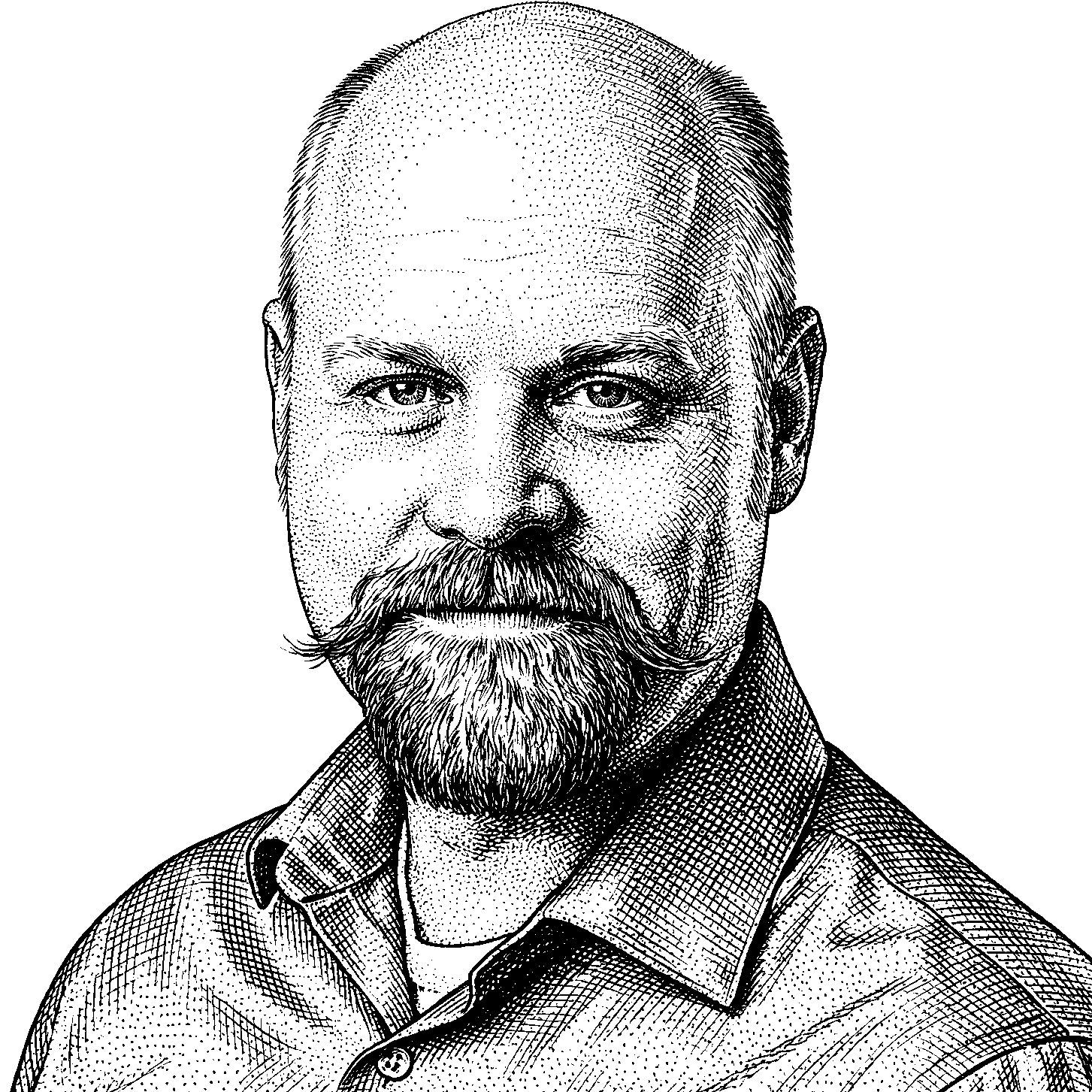
Chris Bradford is a co-founder and former president of the Mormon Transhumanist Association. He has a background in helping people explore and understand their ancestral histories, having worked for a company dedicated to genealogy. He recognizes the powerful impact of understanding and shaping the stories of our past on our understanding of ourselves. His interests include the intersection of transhumanism, Mormonism, and historical narratives, particularly as they relate to themes of memory, identity, and community. ¶ Visiting from his home in Switzerland, Bradford brings an international perspective to the Mormon Transhumanist Association. His conference talks often explore the concept of “redeeming our dead,” drawing parallels between ghost stories, genealogical research, and the transhumanist aspiration to enhance and extend life.
Transcript
Speaker 1
All right. Our last speaker for this morning will be again the Vice President. Of the Mormon Transhumanist Association, Chris Bradford. Chris will be speaking this time on Bodies Without End: Embodiment in a Substrate Independent World. Please welcome Chris back to the stage.
Chris Bradford
Thanks. I’ve really been enjoying it this morning. Looking forward to the rest of the conference.
Chris Bradford
Joseph Smith said That which is without body or parts is nothing. The great principle of happiness consists in having a body. All beings who have bodies have power over those who have not. Mormonism teaches that God is embodied and that our own embodiment is a primary purpose of our existence.
Chris Bradford
But what do we mean by embodiment? BYU Philosophy Professor James Falconer raises some important questions. Quote: The bodies of flesh and bone with which I am familiar do not shine, have blood. cannot hover, can be wounded and die, must move through contiguous points of space time. In short, they are not at all like the bodies of the Father and the Son. So what does it mean to say that the Father and the Son have bodies? When I use the word body in any other context, I never refer to something that shines, can hover, is immortal, and moves through space seemingly without being troubled by walls and doors. Given the vast difference between what we mean by the word body in every other case and that to which the word refers in this case, One can legitimately ask whether the word body has the same meaning in this case that it has in the others.
Chris Bradford
Some of the characteristics Faulkner calls out as atypical of human bodies correspond with transhumanist visions of post-human physical capabilities. Can we find a definition of embodiment that applies equally well to our current experience as to God’s experience, current or future? I suggest that there are three parts to such a definition, which taken together are necessary and sufficient for the concept of embodiment to hold with respect to a given substrate.
Chris Bradford
In electronics, substrate refers to the physical material upon which a semiconductor device, such as a photovoltaic cell or integrated circuit, is applied. In biology, substrate is the natural environment in which an organism lives or the surface or medium on which an organism grows or is attached. Both of these features of substrate are relevant to a concept of embodiment, the material that makes up the entity and the environment in which the entity is situated.
Chris Bradford
The first part of my proposed definition of embodiment is input. To be embodied is to receive input from the environment. Something that cannot be affected by a given environment cannot reasonably be said to be embodied with respect to that environment. Think of disembodied ghosts through which objects pass without effect. As Faulkner puts it, embodiment implies situated openness to a world. Divine embodiment also implies that God is affected by the world and by persons in his world. I see this reflected in Joseph Smith’s discussion of happiness or sorrow and bodies.
Chris Bradford
The second part of my proposed definition of embodiment is output. To be embodied is to be able to affect the environment, something that cannot affect an environment in any way. would be undetectable to that environment, and again, cannot reasonably be said to be embodied with respect to that environment.
Chris Bradford
And here is the connection between the two features of the term substrate. The material that makes up an entity and the environment in which the entity is situated are really the same thing. allowing the entity to affect its environment. This does not mean that the entity and its environment are completely homogeneous. For example I can move the sand on the beach, although I am not composed of sand. However, at a fundamental level, the characteristics Of the material that makes up the sand, the environment, and that which makes up me, the entity, are such that they can interact and affect one another. And I see this interaction reflected in Joseph Smith’s statement that embodied beings have power over those without bodies. precisely because they can have power in a substrate not available to the unembodied.
Chris Bradford
Now a quick note that in Mormonism There really is no such thing as unembodied, and so I take this to mean unembodied with respect to our current substrate.
Chris Bradford
So are these two parts, input and output, sufficient to define embodiment? One might reasonably consider a system of inputs and outputs a body. However, the substrate itself already meets these criteria. It both affects and is affected by the embodied entity. Yet we typically don’t consider the environment as a whole embodied.
Chris Bradford
The term Mbody meant implies something beyond the body, something active in the body. Mormon Scripture teaches that the spirit and the body are the soul of man. We don’t usually call a corpse embodied, nor a meteor, nor a pebble. What is this spirit or self that is active in a body? I propose with many others that the spirit is a pattern A pattern is embodied and gives rise to the specifics of the interaction between the embodied entity and its environment.
Chris Bradford
So this leads us to the third part of my proposed definition of embodiment, a feedback system. That is to say, an embodied entity is influenced by and influences itself as well as the environment. Or in other words, the entity is embodied in the substrate of its own body recursively.
Chris Bradford
Douglas Hofstadter, cognitive science professor at Indiana University, in among others, I am a Strange Loop. And Gerdel Escher Bach outlines this reflexive and recursive nature of the pattern of the self.
Chris Bradford
Antonio Damasio, professor of neuroscience at USC, is leading efforts to identify neural and physical structures and processes Supporting this reflexive feedback loop that constitutes the self.
Chris Bradford
I propose that these three parts, input, output and a feedback loop are sufficient to establish a definition of embodiment. Now this embodiment is always with respect to a given substrate.
Chris Bradford
So what do we make of substrate independence then? Well, we start to see hints of substrate independence as we learn that the mind treats our tools as extensions of our body. or when we feel a meshing with a car that we’re driving, and we feel it as an extension of our body, that we start to extend that substrate that we normally think of as our embodied self.
Chris Bradford
Damasio’s work on the biological foundations of emotion, crucial to the reflexive self, suggests that Mind uploading must really be self-uploading, body and mind, in order to preserve the self.
Chris Bradford
And we can also note that we can be embodied simultaneously in multiple substrates, for example, at home and in Second Life, or in our dreams. where we may be simultaneously, spiritually, and physically embodied, which fits quite well with Mormon paradigms of spiritual and physical embodiment.
Chris Bradford
Falconer reminds us that in Mormonism, the body is not something that acts as a container for something non-bodily, for the spirit is also incarnate. In fact, in reference to bodies, there are no non-incarnate things. This suggests that we cannot understand incarnation. As something unembodied becoming embodied, it is bodies of some kind all the way down.
Chris Bradford
And given that, under my proposed definition, bodies themselves are also substrates in which ourselves and others are embodied, I suggest that it is also bodies of some kind all the way up. Perhaps our substrate is part of the body of God, bodies without end.
Chris Bradford
We have time for a few questions.
Speaker 3
As science thinks that there’s at least like ten dimensions at this point, maybe a couple more, do you think that each dimension has its own embodiment form?
Chris Bradford
You know, I don’t know much about embodiment forms and other dimensions. There is just in the concept of
Chris Bradford
Yeah, so one of the things that fascinated me at a summer program that I attended at BYU was this idea of four-dimensional space and how it might manifest itself in three dimensions. Actually, there’s another BYU philosophy professor, David Paulson, who has done a lot of work on embodiment, the history of embodiment in Christianity and in religious thought. And comparisons with Mormonism. And he has commented on this suggestion that perhaps our experience of God in this substrate is a manifestation of some higher-dimensional embodiment of God. And so I think that’s definitely a possibility worth considering.
Speaker 4
In the Institute of Ethics and Emerging Technologies this morning, I have an article called Don’t Go to Sleep in the Cold, which is about very much what you’re talking about, where The current belief is that possibly, for some, you can upload your mind and be recreated into an Android, like in the case of Been of 48. But in some other circumstances, people believe that they will have their body or will need their body. And you mentioned there that there is a can there be a self or a soul without some piece of the physical body? And is that a Mormon belief? Or is that specifically your outlook? on of who the self is or is a personality anything more than just your Is there a genetic aspect to your personality?
Chris Bradford
Well, I think there’s no question that there are genetic influences on personality. As far as the question of can there be a self without a body, certainly in Mormon thought, as I mentioned, the idea of embodiment is pervasive, that there is no such thing as an unembodied entity. But I think more pertinent to the question about self and and embodiment is some of the things that Antonio Damasio has been doing He postulates that and has detected areas in the brain where we have essentially a body map, and that that body map is in a very stable portion of the brain, and it enables a persistent concept of self So that when we wake up in the morning from unconsciousness, that we wake up to a continuation of consciousness, there’s still this stable representation. It’s certainly not unchanging, and so I think that as we explore further substrates in which ourselves can manifest, that That concept will adapt just as it would for someone whose body changes in some other way, whether as we grow naturally or if someone were to lose a part of their body or something. But I think that that. That concept of having a representation, this reflexive and stable representation of self, is really critical. And that plus the idea of inputs and outputs, I propose, is what embodiment is. So it’s not necessarily this particular body, but it is those three things in whatever substrate they are in.
Speaker 4
To further that, just one thing. Would that possibly include a technological body? Does it have to therefore you’re still physical? But within the Android or robotic publication, could include that.