Welcome presentation
Chris Bradford delivers the opening address for the 2019 MTA conference, reflecting on the theme "Redeeming Our Dead." Drawing from his background in genealogy, he explores multiple dimensions of redemption—the Apostle Paul’s teaching of dying to sin and rising to new life, Heber C. Kimball’s vision of daily death and resurrection through sleep, and Joseph Smith’s grand vision of welding together all dispensations. Bradford provocatively compares history to blockchain technology: genetically and culturally, we carry information forward in ways inextricable from where we stand, yet redemption suggests we can somehow modify the blockchain of the past. He concludes that redeeming our dead selves, ancestors, and communities is humanity’s only hope for building a divine future.
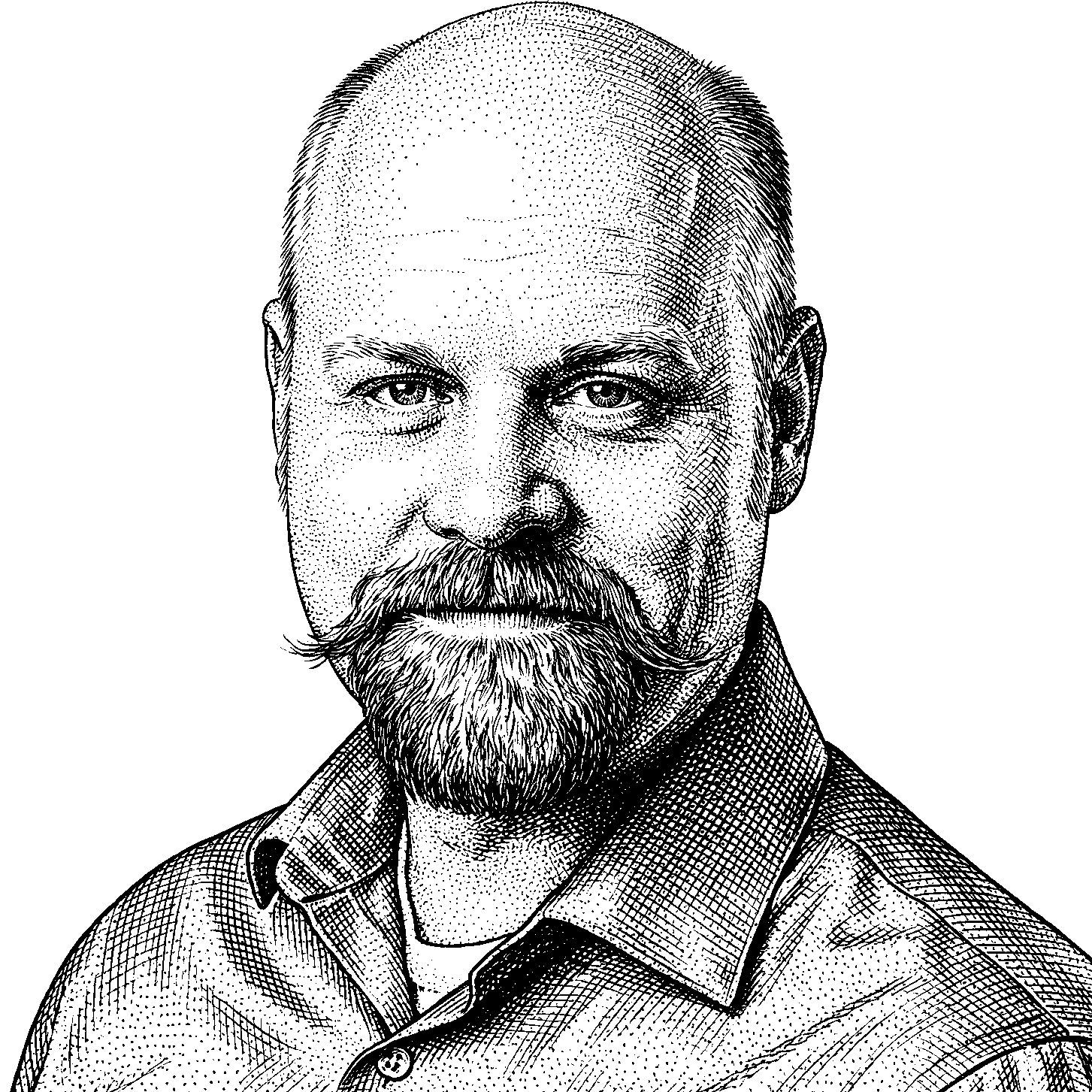
Chris Bradford is a co-founder and former president of the Mormon Transhumanist Association. He has a background in helping people explore and understand their ancestral histories, having worked for a company dedicated to genealogy. He recognizes the powerful impact of understanding and shaping the stories of our past on our understanding of ourselves. His interests include the intersection of transhumanism, Mormonism, and historical narratives, particularly as they relate to themes of memory, identity, and community. ¶ Visiting from his home in Switzerland, Bradford brings an international perspective to the Mormon Transhumanist Association. His conference talks often explore the concept of “redeeming our dead,” drawing parallels between ghost stories, genealogical research, and the transhumanist aspiration to enhance and extend life.
Transcript
Chris Bradford
I’m happy to be here with all of you. For those of you who don’t know me, I’m Chris Bradford. I’m one of the co-founders and current president of the Mormon Transhumanist Association. I am visiting from my home in Switzerland, and so I’m a little jet lagged, but I’m really happy to be here with all of you.
Chris Bradford
Just a couple of housekeeping items first. Restrooms, if you exit out the back of the room here and look on your right. You’ll find the restrooms there.
Chris Bradford
Also, we still have room and welcome any additions to our dinner this evening. And the cost of dinner is $25, and you can pay at the desk out there. If you’d like to join us.
Chris Bradford
Also, a reminder for voting members of the association that we have board member elections going on. Please make sure you’re checking your email. We’re currently in the discussion phase for nominations, and that will be wrapping up in the next day. Tomorrow, I believe, is our wrap up of that phase. So please make sure that you’re involved in those elections.
Chris Bradford
We also just have a couple of corrections to your printed program. So you’ll note that we have Caleb Jones followed by Don Bradley in the program. That’s actually swapped. So it will be Don Bradley preceding Caleb. And then, unfortunately, we also have one speaker missing whom I will announce after Caleb. Britt Hartley is in there. So we have one omission. We regret that.
Chris Bradford
For those of you speaking, watch Nathan down here in the front, who will be giving you an indication when you have two minutes left. As we need to keep to our schedule, especially with our late start here. So please make sure you pay attention to that.
Chris Bradford
Thanks to everyone who worked hard to make the conference happen, especially Michael M, our CEO. And also in the interest of time, I’m going to assume that most of you can read well. So I’m not going to read the full bios of people, but just give a really quick intro as our speakers come up. in the interest of time.
Chris Bradford
And now I hope that you’ll indulge a few rambling thoughts from me on our conference theme, redeeming our dead.
Chris Bradford
I have met people who are obsessed with ghosts. People who spend countless hours and lots of money hunting ghosts. tracking down dates, photos, memories, and so on of the ghosts of our ancestors. The passion of genealogists can be quite contagious. I worked for many years for a company that helped people in this quest. recognizing that understanding and even shaping the stories of the ghosts of our past can have a strong effect on our understanding of ourselves.
Chris Bradford
I have read lots of ghost stories, tales of love, adventure, mystery, and meaning. Some people dedicate their life’s work to enhancing our understanding of our past. Great historians can bring whole nations of ghosts to life, shaping our understanding of our communities and their relationships to each other and to us.
Chris Bradford
In October of last year, The New Yorker published an article about intellectual property conflicts between Google and Uber. Ending with this quote from Anthony Lewandowski, one of the key people involved in developing self-driving vehicles. The only thing that matters is the future, he told me after the civil trial was settled. I don’t even know why we study history. It’s entertaining, I guess. The dinosaurs and the Neanderthals and the Industrial Revolution and stuff like that. But what already happened doesn’t really matter. You don’t need to know that history to build on what they made. In technology, all that matters is tomorrow.
Chris Bradford
In an excellent response to this, Doug Priest pointed out how short-sighted this approach is, saying, Imagine trying to solve a problem and having absolutely no context about what the problem meant, for whom it was a problem, or why the problem existed in the first place. People have been trying to make the world better with technology for thousands of years. At the very least, You would think people who are interested in building the future of technology might want to study the people who have tried to do it before to find out how they succeeded and failed. And concluding, if you want to build a future worth living in, which I take is the entire point, take a deep breath and learn how the world got to be the way it is.
Chris Bradford
The creation of a better future world is the redemption of the past, redeeming our dead.
Chris Bradford
When I think about redeeming our dead, I think about redeeming our dead selves. The Apostle Paul teaches that we are baptized into Christ’s death and that thereby our old sinful self dies. And we rise to a resurrection of new life while still in the flesh, becoming a new person. Christ brings about a transformation, a redemption of the old person we once were.
Chris Bradford
Heber C. Kimball, an early leader of the LDS Church, described this process happening on a more continual basis. I improved yesterday. I worked and made all the improvements I could and did the best I could, but it came night. and I laid down to take a nap, which is typical of death. This morning I have risen up and again commenced my labours, and I’m going to improve to day, and do better than I did yesterday. But in comes another night of sleep. I lay down, which is typical of death, and I rise in the morning, which is typical of the resurrection, and I renew my labours.
Chris Bradford
In Mormonism, we recognize the opportunity to be reborn and redeemed even weekly in the ordinance of the sacrament. And I would argue that recent changes to the temple ceremonies suggest the idea of retroactively updating the covenants of our past selves.
Chris Bradford
When I think about redeeming our dead, I think about redeeming our ancestors. One of the most distinctive practices of the Church of Jesus Christ of Latter-day Saints is proxy baptism for the dead. and often comes to mind in connection with that phrase, redeeming the dead. But I think it goes beyond the ordinances and into the stories and the relationships we establish and the sealing power of the bonds of love. Charity, the pure love of Christ, is at the heart of redeeming our dead. In charity, we strive to understand the circumstances of our past community. and charity covers a multitude of sins.
Chris Bradford
Redeeming our dead means redeeming the dead whom we have killed, redeeming our killing, for we cannot live without killing. When we come to grips with the inevitability of our own sin, we may be more inclined to enact charity toward those who sin against us, thus participating in the atonement of Christ.
Chris Bradford
Several years ago, Adam Miller gave a keynote in the annual conference of the MTA. He pointed out that the idea of mind uploading was problematic if it did not consider the physiology and environment of the person being uploaded. And I noted at the time that the same challenge applies to the concept of resurrection. It may be unethical to resurrect someone into a completely foreign context. To me this suggests that resurrection and redemption must always be the creation of worlds.
Chris Bradford
Redeeming our dead means wrapping up into one great whole all of the past of humanity.
Chris Bradford
Or as Joseph Smith put it in Doctrine and Covenants 128, the earth will be smitten with a curse unless there is a welding link of some kind or other between the fathers and the children upon some subject or other. And behold, what is that subject? It is the baptism for the dead. For we without them cannot be made perfect, neither can they without us be made perfect. Neither can they nor we be made perfect without those who have died in the Gospel also. For it is necessary in the ushering in of the dispensation of the fulness of times, which dispensation is now beginning to usher in. that a whole and complete and perfect union and welding together of dispensations and keys and powers and glories should take place and be revealed from the days of Adam even to the present time. And not only this, But those things which never have been revealed from the foundation of the world, but have been kept hid from the wise and prudent, shall be revealed unto babes and sucklings in this dispensation of the fullness of times.
Chris Bradford
Most of you have probably heard about blockchain technology. In simple terms, the idea is that a block of information gets encrypted into a unique bit of data, which then gets included in the next block. In a chain of blocks, so that any attempt to tamper with information in any block can be detected by regenerating the encrypted data to verify its consistency. And in a way, our history is kind of like blockchain. Genetically and culturally, we always carry information forward in a way that is inextricable from where we currently stand. But the idea of redeeming our dead suggests that in a sense we can go back and modify the blockchain of history.
Chris Bradford
C. S. Lewis suggests that those who are redeemed will look back on their past and say, We have always lived in heaven. There may be problems with this approach, but there are profound desires of the human heart that compel us to realize such a vision. And I think this is the grand vision of Mormonism.
Chris Bradford
As human beings, we are all haunted. As tradition has it, we’re haunted by ghosts who have unfinished business. But perhaps we’re also haunted by the absence of ghosts we might have unfinished business with. What if the resolution of that unfinished business was not, as tradition holds, to free the ghosts to go away, but to free them to stay?
Chris Bradford
Charles Dickens captured something universal in the ghosts of Christmas past, present, and yet to come. Redemption for them and for us. Comes not in ignoring them or denying their existence. It comes in embracing them, in transforming and being transformed by them. For they without us cannot be made perfect, complete, or whole.
Chris Bradford
Redeeming our dead, selves, ancestors, and communities is our only hope. for redeeming ourselves and for building a future divine community.
Chris Bradford
Thanks.