Christian Transhumanism
James McLean Ledford presents his vision of Christian transhumanism, arguing that salvation requires both faith and works—a combination he illustrates through an information-time diagram depicting creation, cognitive evolution, and eventual theosis. Drawing on digital physics, the Nicene Creed, and the simulation argument, he proposes that reality may be fundamentally informational and that humanity could be living in a simulation created by an advanced civilization. Ledford sees this possibility not as undermining faith but as supporting it, suggesting that creators watching their simulations could perform what appear to be miracles—and that our own technological trajectory toward brain coprocessing and quantum computing may be part of a grand cosmic gathering back to a singular, Christ-like state of being.
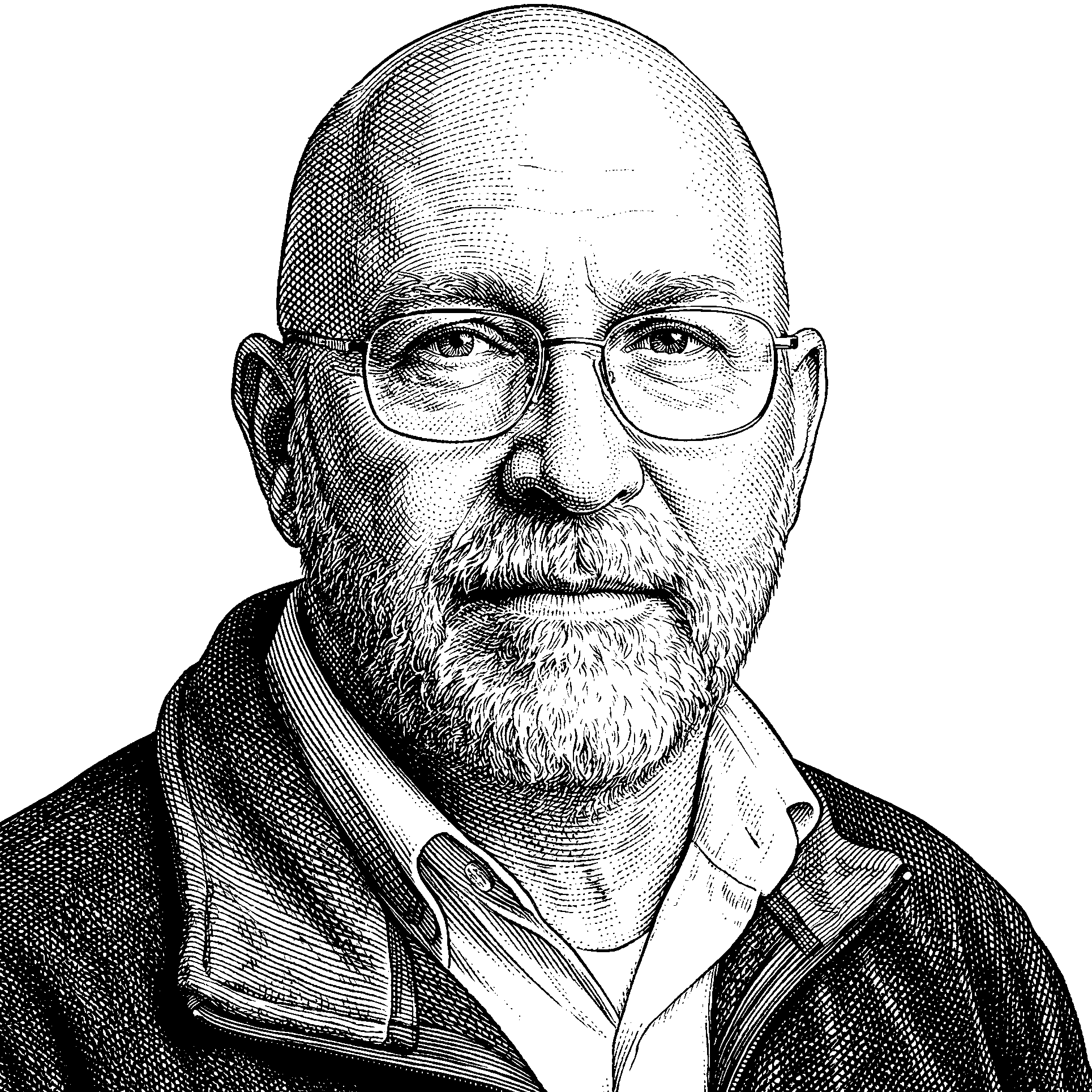
James McLean Ledford is a Christian transhumanist thinker and technologist whose work explores the convergence of faith, reason, and emerging technology. He came to broader attention within transhumanist circles through his participation in the Transhumanism and Spirituality conference held in 2010, where he presented on the theme of Christian transhumanism—situating the aspirations of the transhumanist movement within the theological and philosophical traditions of Christianity. ¶ In his 2010 presentation at the Transhumanism and Spirituality Conference, Ledford engaged with questions central to the Christian transhumanist philosophy: the moral imperative to overcome suffering and death, the relationship between human creativity and divine purpose, and the compatibility of technological enhancement with Christian anthropology. Drawing on scriptural and theological sources, he argued that the pursuit of radical human transformation need not stand in opposition to Christian faith, but may in fact represent a fulfillment of humanity's God-given capacity for reason, creativity, and stewardship. His perspective reflects a tradition of thought that sees science and technology not as rivals to spiritual life, but as instruments through which humanity participates in an ongoing work of creation and redemption. ¶ Ledford's engagement with these themes places him within a growing ecumenical movement of religiously committed transhumanists who seek to articulate a vision of the future that is at once technologically ambitious and spiritually grounded. Unlike secular transhumanism, which often brackets or dismisses metaphysical commitments, Christian transhumanism—as Ledford and others have framed it—insists that the deepest motivations for overcoming human limitation are themselves theological: rooted in love, hope, and the belief that creation is oriented toward flourishing. ¶ His work remains a meaningful contribution to the ongoing conversation between religious communities and transhumanist philosophy, a dialogue that the Mormon Transhumanist Association has been instrumental in fostering since its founding. Ledford's willingness to engage these questions publicly, and to articulate a coherent Christian framework for thinking about technological transformation, reflects the kind of intellectually serious, spiritually committed engagement that this conversation requires.
Transcript
James McLean Ledford
Hi, I’m Jim Ledford, and uh I’m just a regular guy that Is a theologian with a small T. And that’s kind of like all of us, right? We’re all theologians of some sort. In my spiritual quest, I have come to Christian transhumanism. And with Christian transhumanism, I would say that I’ve pretty much alienated everybody. Okay. Yeah. But that’s okay because I think it’s a good place to be if you want to be original, right? You know.
James McLean Ledford
The main sticking point is faith and works. You know, with most of my buddies that are Christians, they think that it’s only by faith. you know, that we’re saved. And then on the other hand, you got transhumanism where it looks like it’s only by our works. But I see it in my worldview as being a combination of both. Okay, that it takes faith in works.
James McLean Ledford
Have you ever heard of H? Okay, H is the transhumanist logo. Oh, this is the one I wanted to submit, but I again got shot down for that. As you can see here, it’s humanity raised to a higher power. Okay? And that’s in combination of faith and works where I believe that this is happening.
James McLean Ledford
Because I really think that what is happening when you just deal with faith alone is that you lose the spirit of humanity. You lose. The Spirit and a categorization of the Spirit, I’d consider the Holy Spirit, the one that concentrates on growth and understanding, connections, and love.
James McLean Ledford
Now, I don’t want to go right here right yet. I think I want to go to the very last slide. Let’s see. Because here’s all my slides, so I’m going to just go to end this way. Okay. I want to go to this slide right here just to get it to kind of an abstract of where we’re going with Christian transhumanism.
James McLean Ledford
Now, this is a not a space time diagram, but an information time diagram. And with an information time diagram, I’m looking at a creation. I am looking at chaos, and then I am looking at a cognitive process and a growth of understanding. And then as we have already, Mr. Givens has said before, a theosis. or a growing back, a gathering up, or ascension back to a singular point.
James McLean Ledford
And in Christian transhumanism, some people talk about the singularity. Is everybody familiar with the singularity? And what that is, okay, well the singularity would be this center section right here. And then that center section, I say, is A universal. It’s a universal section or a state of being, a the ultimate perfected state of being that is the same whether or not it’s an alien from another planet or it’s another universe completely that there is this one state that we describe as As well, I describe as Christ. Okay, it’s all-knowing, it’s all creative, it’s a creative power.
James McLean Ledford
Now, that power right here in this diagram, it’s not a space time diagram, as I said, it’s an information time diagram. And let’s go from this point and let’s think about the Nicene Creed, where in the Nicene Creed they say that all things in heaven and earth are created through Christ. Okay? All right, now then put that with a big bang theory, and with a big bang theory you have what we know as a Just basically a creation of information. And the reason I use information here instead of energy is because I want to lean from here on out on digital physics. Okay, I want to lean on the fact that many of our current scientists today believe that That our reality, the material universe, is at its heart information. And there are very many well-respected scientists that believe that. It’s the current thought. As far as our ground of being.
James McLean Ledford
So let’s take that on out, and let’s say from here you have basically a chaos and then you have a condensation into matter and then from matter this shifts off to where finally life is emerges on the scene. And when life emerges on the scene, then there is a sort of cognitive process that’s going on that I like to call a growth and understanding. Now this growth in understanding is at its highest pinnacle when we get to the I guess you’d call it the quality of love. Okay? And to love something, you’ve got to know it. And to know something completely, you have to love it.
James McLean Ledford
Does anybody know who said that? It was Aldous Huxley in his book called The Perennial Philosophy. He did an anthology of all the great religions, and he said, You know, what we can just basically boil love down to is we can boil it down to a cognitive process. Where at its peak is love. Okay? So that has a definite Christian flavor, I’d like to say, with that. And I’ll talk about it. I’ll lead up to that.
James McLean Ledford
Now here you would say, well, you know, this is life making this turn back in right here. And it’s as a Taurus. I hope you guys have already seen that this This topographic really is a torus, right? With a closed, infinitely small circle right here. At this point down here, it looks like we need some batteries for this laser because it’s dying out. But at this point right up here, we get to what you might call Our current society. In our current society, we have cognitive evolution going on. We have actually, I would call it a conscious evolution going on where we’re able to start to take control of our of our own evolution.
James McLean Ledford
Now we get back to what the Bible would say about this section right here, this lighter blue section. that’s gathering back up. Remember, this was from the Nicene Creed where they would say all things are created through Jesus Christ. On this end right here, we are being gathered back up. And there’s many parts in the Scriptures that talk about being gathered back up into Christ. I think it’s Ephesians 1. 11 is one that I like to lean on there. And with that, you get into Mr. Given’s theosis. Where we are growing by faith and works back to this singular point where we all participate because we are all Going to experience the same sensation, the same feeling. Okay? So
James McLean Ledford
So this is information. This isn’t matter. Information, we’re going to learn if I got enough time here, is disembodied. It has actually got an external nature. And I can go into some papers by MIT physicists that say, hey, you know what, we’ve gone as far as we can go in physics, and we know that there’s external realities. And they talk about mathematics being a mathematics as being eternal, universal. Okay, always there, regardless, right? So that’s what we’re talking about here. Not material, but more of like an external reality and a process that’s taking place. I think you could overlay process theology pretty well with that.
James McLean Ledford
So here we get back to our first slide. Now let’s build into this. And we’ll build into it by what I put in my paper was That Christianity is the religion of the Logos. It’s the faith in the Creator’s Spirit. And you’d be surprised to know who said that. It was the Pope. About two or three months ago, he said that Christianity is a religion of the Logos and the faith in the Creator Spirit. The Holy Spirit, the Spirit that looks at valuing life, enjoying life, and wanting to create more. Okay?
James McLean Ledford
So what is this thing logos? Logos has an ancient meaning and it has a more contemporary meaning in that it is word or reason. They identified it with the animating principle of the universe. You take it back to the Platonics and even with the perennial philosophy, it’s the divine ground of being. So the world, is it created from word? Well, what does the Bible have to say about that? It says that. In the beginning, the world was the word, and the word was with God, and the word was God. He was with God in the beginning. Through him all things were made. Without him, nothing was made that has not been made. And the word became flesh and dwelt amongst us. Okay, disembodied information coming from an external reality, which physics seems to be supporting.
James McLean Ledford
Okay, and then over here I I just wanted to show you uh a space-time hypersphere Well, a space-time diagram, I should say, where you could say that space is a two-dimensional slice right here, and time is that third dimension. in this drawing from the Big Bang on out through what we know as far as expansion is concerned. External reality. Would be here, and internal reality is inside here. And I’ll try to use that as a theme so that we can start to embody it.
James McLean Ledford
Another thing that Christianity says, especially the early church fathers, is that we become participators in Christ. This is why I can be a Christian transhumanist is because there are plenty of places in the Bible that say we can be participators in this singular State of being. It’s just a singular state of being. Okay? It’s hard to reach, but it could be reached. That’s our hope. That’s our faith. Okay? We participate in this divine.
James McLean Ledford
And how do we do it? By spiritual growth. Increasing your knowledge and understanding of the word of God, decreasing your frequency of severity of sin, increasing your practice and qualities like Christ-like qualities. And your faith and trust in God. And I got this from allaboutgod. com. That’s spiritual growth. That’s the works.
James McLean Ledford
Now, the reason I’m here is because of this controversial idea that there’s a Christian transhumanism. Way of looking at this world. Okay? And this Christian transhumanism look at this world is to describe what is transhumanism. How much do I need to spend on this slide? Is there anybody that doesn’t know what transhumanism is as far as it supports science and technological application to mental and physical characteristics? try to reduce disability suffering and death, use technology as much as possible, and then transform themselves into post-humans. So there’s the philosophy of transhumanism and post-humanism. Post-humanism would be that evolutionary next step, okay?
James McLean Ledford
So I’m going to take us to the simulation argument next because the simulation argument is a It’s a contemporary argument that they say is probably one of the best arguments for God that there is nowadays. And I’d like to start with looking at This graph that I think Mr. Hughes probably knows quite a bit about. He’s seen it all over the internet. And anybody that’s been researching transhumanism knows that one of the things that we have is as a a a source of pride for man is on this scale right here, we have information millions of information process information processes per second. Okay, so what that means is how fast the machine is is actually processing over our our lifetimes basically the well from the 1900 actually I guess here to 2010 and then goes to 2050. and it shows a continual increase. And in this case, it’s a logarithmic scale. So you see that linear increase. Do I sound like Kurtzwell? Okay, not well, I don’t want to too much, but that’s where we are right now.
James McLean Ledford
Now, at this point, right here, there’s a lot of doubt. And there’s a lot of faith in the transhumanist community that somehow or another we can bust past the limitations that are coming up with computational computer type advancements because of the heat problem, because of software problems and one thing or another. that we won’t be able to continue this trend on out to actually be able to get to human intelligence. Well, there’s a in the last week or so there’s been some news that’s come out. Because it seems that something always crops up that supports man. that gives us more hope.
James McLean Ledford
And the most recent is quantum computing, where they would use qubits, not just binary bits, but qubits. that you would tap into the very quantum state of an atom, of an electron, and from that be able to store four times Eight times as much information, depending upon the quantum states that they would tap into. And with this, they’re talking about here. in the next five years, being able to surpass the computational capabilities of our current day computers. Okay? There’s hope, even in the transhumanist. There’s faith and hope with transhumanists, right? And I put a lot of hope into this right now because It’s gotten to the point where there’s a lot of naysayers that lean on this trend of just binary computation and saying you’ll never get there from here. Quantum computing, we will be able to get there from here because quantum computers do a timeless calculation. Okay? Now
James McLean Ledford
This gets more into the Holy Spirit aspects right here where I put this overlay in that I think the best hope for humanity is to hitch a ride on the computer processing. And in the last couple of weeks, they’ve been talking about this new term called coprocessing, brain coprocessing. augmenting our ability to sense things, our memory, our just basically cognitive process with coprocessors. Okay? And at first, where would they apply this? They’re first applying it to how are we doing for time? Okay, we’re good. We would be able to, they’re going to apply this mostly to people with epilepsy. Where they would have a sensor that would see that you’re getting ready to have an epileptic fit. There would be a processor along that, and then an input. So it’s an input-output type of thing. It’s part of you. Okay.
James McLean Ledford
So I I said we’d like to look at more of this digital physics and this disembodied information as being the the ground of being that physicists are coming up to. Digital philosophy and digital physics are the current state of affairs with many of our leading physicists and scientists. And at the end of this, if you’d like to see it, I’ve got a list of some very impressive scientists that say that at the physical processes of nature are forms of computation, and the processing is the most fundamental level of reality. Biology reduces to chemistry, which reduces to physics, which reduces to conformational comp well let me say that, computational information. Okay, all changes in physical nature are consequences of digital information processes. Okay, that’s digital physics.
James McLean Ledford
Now, given what we saw with the trends of computers, given what we’ve seen with coprocessing that’s been going on, Let’s talk about Mr. Bostrom, Mr. Nick Bostrom and his simulation argument. Okay, I’ve thrown this in here because it’s a controversial thing, but it is worth talking about because it’s interesting and it it could fit into this Christian transhumanism. What it’s saying is that we Given a few assumptions that if you look at the fact that we are actually going to enter a post-human phase. Let’s assume that. Let’s also assume that we will continue to play SimCity. that will continue to model, like in my case, nuclear power plant operation or one thing or another, that we would actually grow to the point where we could simulate whole universes. Does that sound outrageous? At this moment, millions of people are running simulations.
James McLean Ledford
It’s likely Is that likely to stop in our post-human phase? Or will there be a chance that I talked to a few guys earlier this today that there’s maybe a 20% chance that we’re living in a simulation now. That there’s an external reality, there was a creator, and that that creator is a you know, watching us do what we’re doing here, right? And to what uh to what ends? Well, that’s uh my theology with a small T. Okay? And I’ll come up to that in a second, I hope.
James McLean Ledford
Okay, so here, just to show you the plausibility of this and that it is actually not only plausible, but it’s coherent. and that it fits with our reality as we know it today. So it is not too far out there. Here’s a simulation of evolved galaxies. that we are doing. Okay, right here is the noise of the fundamental constants of nature. and this internal reality that was generated by the Max Planck Society in Germany. And let’s go ahead and bring that little dot right there, make it a little bit bigger, make it a little bit bigger, make it a little bit bigger. And the Millennium Run has simulated a galaxy. Okay now with this what we’re talking about is just the matter, you know, and that, okay? And so from here on
James McLean Ledford
I have to just basically flip through the slides here real quick and give me about what, just five minutes maybe? Less than that, okay. Here’s a blue brain project. Here I am running an external reality, in my external reality, running a simulation at the Palo Verde nuclear power plant. Here I am now in that, and I see that I can create minor miracles for these guys at this nuclear power plant. There’s my shiny head over in the corner. There’s the the power plant as a whole. And from there, I see that there’s really A good argument for a creation, a creator, an external reality, and And miracles, that there can be miracles. And I guess I’ll just go ahead and leave it there. So thank you very much.