Redeeming Death A Skeptical Approach to Living Forever
A therapist who practices dialectical behavioral therapy, the speaker examines his own resistance to technological resurrection despite being drawn to Mormon transhumanism. He applies dialectical thinking to death itself, proposing that death might be both monster and friend—something to be overcome in certain contexts while also serving important functions. Drawing on acceptance and commitment therapy, Buddhist philosophy, and the Gaia hypothesis, he suggests that the real problem may not be death itself but our fear of it and our clinging to narrow definitions of life and self.
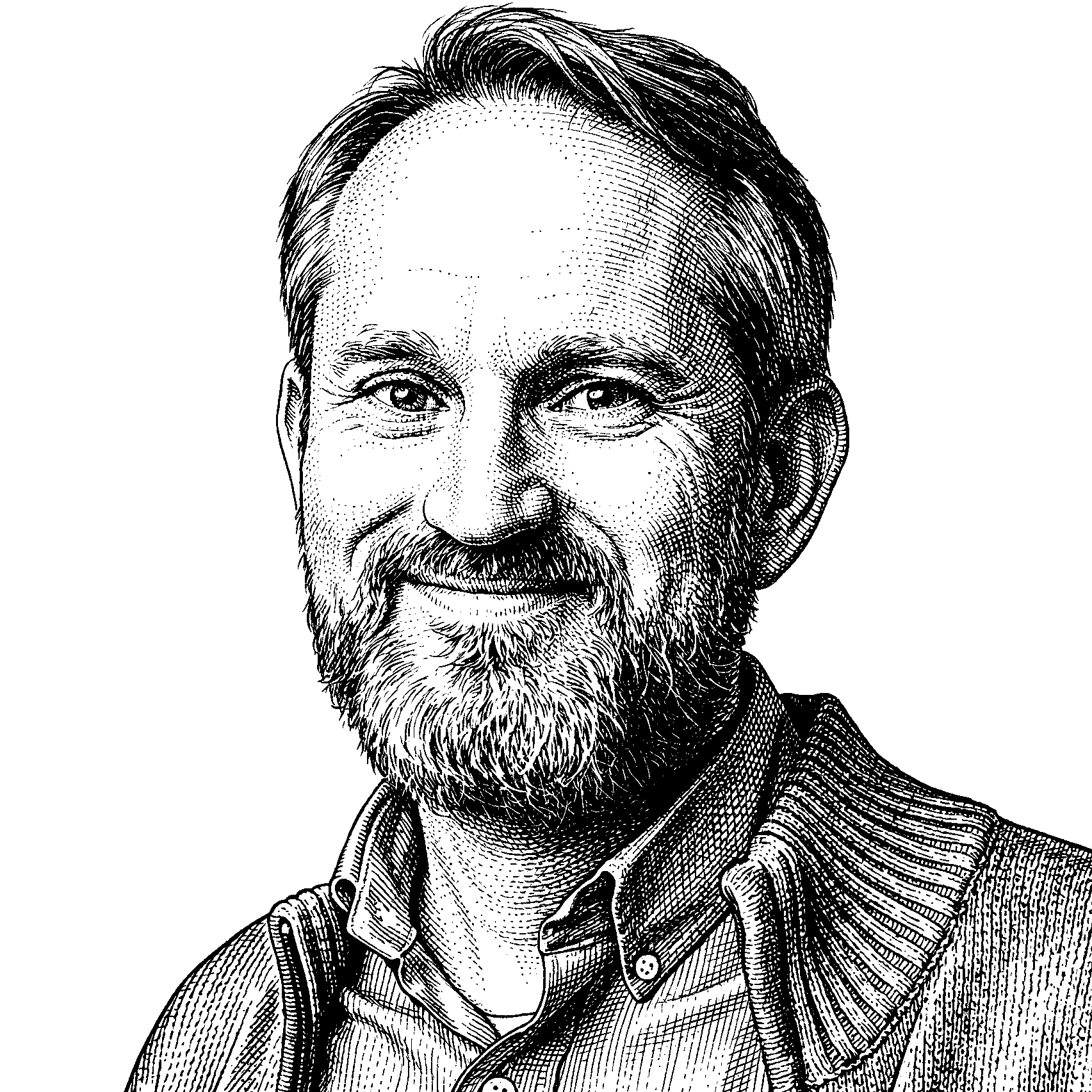
Jordan Harmon is a psychotherapist and social worker who considers himself an “accidental transhumanist.” His journey into transhumanism began after encountering the Mormon Transhumanist Association (MTA) through a podcast and subsequent interactions with members. Initially drawn by a misunderstanding—thinking it was the “Mormon Transpersonal Association” due to his interest in transpersonal psychotherapy and its implications for spiritual growth—Harmon initially approached transhumanism with some hesitation. ¶ However, after engaging with the ideas of transhumanists like Lincoln Cannon and Carl Youngblood, Harmon became increasingly interested in the movement. His work now explores the intersection of psychology and transhumanism, particularly focusing on our relationship to pain and problem-solving. He delineates two types of problem solving: the primitive, reactive response rooted in evolutionary survival, and the evolved, meaning-making response of the prefrontal cortex, which can sometimes exacerbate emotional and psychological pain. ¶ At the MTAConf 2015, Harmon discussed the “problem of problem solving,” examining how our evolved capacity for rational thought and planning can inadvertently trap us in our minds, hindering our ability to live fully. He also touched upon the internal experience, characterized by a vast array of thoughts, emotions, urges, and moral judgments, and how these elements interact to shape our perceptions and actions, highlighting persistent challenges in self-governance and interpersonal relationships.
Transcript
Good to be here with you today. So the title of my remarks, Redeeming Death, a Skeptical Approach to Living Forever. I was joking with people at the table where I was eating lunch that This is the highlight, the title, is the highlight of my remarks. It’s all downhill from here. I’ve got a provocative and clever title, and it’s kind of a play on The theme, and then from here I get in over my head. So I’m just warning you ahead of time.
So the subtitle, A Skeptical Approach to Living Forever, is I didn’t initially come up with it. Michael Ann had that as an idea and another one, and I didn’t love it at first, but then I thought, okay, that’s fair. You know, this is kind of a skeptical approach. It might be more of a skeptical approach to technological resurrection, depending how that’s defined. I think a true skeptic, I will admit I’m skeptical of my skepticism too, and that kind of con continues to play out. which makes it sometimes hard to put ideas into words. And so this is going to be an interesting and exciting opportunity.
Another subtitle, so I’m sticking with the title for a couple slides. ‘Cause I like it. A dialectical work and glory. So dialectical um those of you who are philosophers know this process and and I’m going to talk a little bit about dialectics and how that Comes about in my practical professional life as a therapist, practicing dialectical behavioral therapy, and how some of these orientations and thinking and experiencing and working to help people and working to change things that seem unchangeable relate to the way I’m thinking about death and thinking about how death might be redeemed.
So, first a little backstory. I’m a bad transhumanist, maybe. I’m kind of an accidental transhumanist, or maybe lapsed. In 2015, I spoke at the convention or the conference at the Salt Lake Library. Ralph Merkel was the keynote speaker, and he started his talk by saying and it was a great talk, and it was a great conference, I really loved it. He started it saying, Who wants to live for 200 years? And hands went up and he said, Who wants to live for 10,000 years? All the hands were up. Who wants to live to the heat and death of the universe? Everyone’s hands were up, except for my wife and I. We looked at each other sheepishly and we’re like You know, we don’t belong. We don’t want to live forever. What’s wrong with us? You know?
So that is kind of Been on my mind since then. And when I first came across Mormon transhumanism, it was on my mind. I read Lincoln Cannon’s convincing and inspiring message on Mormonism mandating transhumanism. And I thought it was beautiful until this one point of we are supposed to make a glorified and human body. But we’re supposed to do the resurrection. And that just, it was like this skip into the uncanny valley that my mind couldn’t go to, you know. And so it’s been there with me ever since, this little like splinter in my brain thinking about this. So I’m questioning myself, why am I resistant to this?
Here’s a picture, a painting, called The Power of Death. Why would anyone want to redeem death? Ridiculous. Death is an awful monster. You know, why would here’s a picture from by Cézanne of someone clearly in grief? Why would someone want to try to defend Something so horrible as death. So I’ve been kind of wrestling with that as I’ve been trying to prepare this.
One thought came up. Maybe myself, maybe my wife and I both were contrarians and we just kept our hands down because we’re like, we like to be different than the majority of people or something like that. And there probably is some truth for me for contrarianism.
I’ve been in some ways fortunate that my The path that I’ve taken in my life as a talk therapist has led me to this form of therapy called dialectical behavioral therapy. If you’re a contrarian out there and you’re thinking of being a therapist, then you can channel your contrarianism for noble purposes by doing dialectical behavioral therapy. The whole point of that kind of therapy is Is you’re helping people who have had a set of dialectical failures learn to to live in a balanced or a dialectical way where they’re learning to balance things like their emotional experiencing with their logic. their sense of doing and their sense of being. And so it’s a lot of this kind of Eastern philosophy background, but put into very practical and functional ways.
So of course the Hegelian dialectic, we have thesis, antithesis and a synthesis, right? So one dialectic related to redeeming death that could come up. Oh, before we go there, I like finding dialectic Dialectical processes or paradoxical processes within Mormonism. Joseph Smith has this quote that is somewhat famous: By proving contraries, the truth is made manifest. Eliza R. Snow wrote the text for the hymn, How Great the Wisdom and the Love, in the last verse. The last line says, How great, how glorious, how complete redemption’s grand design. Where justice, love, and mercy meet in harmony divine. These are some examples of kind of dialectics coming up in Mormonism.
So a dialectic with death. One thesis would be that this would be more on the transhumanist side. Death, both spiritual and physical, is a monster and an enemy to life, and humans must overcome death. An antithesis would be death is good and a friend to life. We have no right to play God in regards to death. So, the Hegelian version of this would be that neither of these are true, that both of these are ideas, there’s one idea, there’s the opposite idea. And the truth would be somewhere holding both of the the valid or the validity of both of these would need to emerge into some synthesis or be held together in some way. And then, of course, you’d have a new thesis, and you’d have a new antithesis and an ongoing process.
So, a possible synthesis: death is a monster and a friend. Death can be overcome. Now, this gets kind of ridiculous. Death can be overcome depending on what we’re talking about and what context. And at the same time, in some ways, maybe it can’t be overcome, depending on our definition of death. or our context. Another possible synthesis, death is already overcome. That might not be as much of a synthesis as just an alternate perspective. Or perhaps, what if the problem that we’re dealing with with death isn’t death itself, but it’s our fear of death? That’s maybe hardwired into us. That’s a part of that’s been beneficial to us. It’s helped us get to where we are. And the problem is our clinging to a narrow definition of life and self. And death. And not just clinging to a narrow definition, but a narrow experiencing of those things.
So I come back to why this resistance I’m influenced, probably like a lot of us, by religious and secular approaches. Anyone recognize this image, right? If you served a mission for the LDS Church before the year 2000 or in the 90s, you probably. Knew this well. So Mormon missionaries teach, at this time we taught, and it’s probably similar today, that there are two main existential problems that humans face. There’s this physical death and this spiritual death, these two obstacles, and there’s one solution. The atonement that can be kind of broken up into two parts as well, but it’s basically one solution. And there’s this idea of the doctrine of the first estate, meaning that anyone who’s come to earth kind of to maybe I think it was Lincoln that said it, you know, this idea of relax, or maybe that was Ben. This idea of relax, if you came to earth, It’s already taken care of. Don’t worry about physical death. It’s done, right? So that’s one reason that someone might be resistant, right? That would be kind of the orthodox. Believing reason. And there is that part of me, but I’m not as interested in talking about that because, as since my mission, my faith has evolved and
Though those hopes and thoughts are still there, I’m much more compelled by other parts of me that are unsure about what comes after death, that realizes I’ve never heard from or talked to anyone. who has died and stayed dead. And so I really can’t I can say I know or I can hear other people saying I know this or I know that, but I can’t really know. But I’m interested in the secular parts of me, or the agnostic or atheist parts of me, that are also resistant. To overcoming death, because there are those parts of me that are still resistant to overcoming physical death, or we may say literal death, through technology.
Secularly, I’m influenced by different, like I said, types of therapy. There’s a therapy called acceptance and commitment therapy that is a behavioral contextual therapy. It kind of builds off Skinner’s behaviorism and is much more humanistic and I think much more compelling and and but builds off his basic idea of uh that humans that we are always influenced and influencing the world. We’re always not just things to act were things being acted upon all the time. And in acceptance and commitment therapy, the truth criterion is functional, not formal. And so metaphor is not diminished as only a story. Metaphor is lifted up as perhaps more important than what we might call literal truth. In fact, clinging to literal forms of truth, at least psychologically, becomes part of the problem, part of what gets people stuck in depression, in anxiety, in In those kinds of different states.
So, dialectical behavioral therapy, which is the other kind of Version of therapy that I use is designed for chronically suicidal people. So just in case you think I’m on the side of death, know that my days every week You know, 50 hours a week is spent helping people not end their lives. So I’m definitely on the side of living and not dying. And a lot of that has to do with helping people create a life worth living, is kind of the common sense term that we use for it. And so what happens is people who are suicidal typically are experiencing their life as not worth living, right? They’re experiencing their life sometimes as meaninglessness or meaningless, sometimes as purposeless, or sometimes as just too painful. and pain that isn’t experienced as meaningful, which deep pain usually does kind of eradicate meaning.
So as a therapist, we approach clients and a case and working with someone. Well, hopefully, we approach them very humanly and as a person, as an individual, and not as a formula to be solved, but as a human being to get to know and to experience. But we assess. And we intervene. So there’s assessment and intervention. The more that I’ve done therapy over the last 10 years, the more I found that assessment is ongoing. That if I approach my client, even after I’ve been meeting with them 10 or 15 weeks, as knowing them Now I know, now I know how to intervene. Then we kind of go back to the drawing board. You know, it’s the same idea as empathy and letting go of giving someone advice is more transformative for the other individual oftentimes than telling them what to do. So assessment and empathy and understanding is its own intervention.
So, I want to assess what is death. Here’s a picture of what looks to be an awful monster to me. And when I see this, I think, yeah, I don’t want to redeem this. You know, I don’t want to argue for that. This is that Goya painting. I don’t know if his painting has to do with death, but it it it’s what I thought of when I thought of what an awful monster is. We might think of death as a monster. We might think of it as the end of life or the end of ourself. One of my favorite
Poets, songwriters is named Phil Elvram. He goes by the name Mount Erie. I might have to skip through this because there’s a lot here, but One of my hesitancies as I prepared this was: how do you go and talk abstractly about redeeming death without acknowledging how deeply horrific it is? And this is an artist who spent years singing existentially about impermanence and meaning and meaninglessness and all this stuff that I love listening to. And then his wife died of cancer a few years ago, and he wrote an album. That was this kind of grief album. And the first song on the album, he sings, Death is Real, Someone’s There and Then They’re Not. And it’s not for singing about as he’s singing. It’s not for making into art. When real death enters the house all poetry is dumb. When I walk into the room where you were, and look into the emptiness instead, all fails. My knees fail, my brain fails, words fail. He goes on to sing about going down to his front door, opening the door, and seeing a package that his now deceased wife had ordered for their daughter. who was a couple of years old, ordering a backpack for her for when she would go to school. He sings about that and about weeping on the door you know, on the his front porch as he thinks about her. Thinking about a life that she wouldn’t be present in. He ends the song saying, Though you clawed at the cliff, you were sliding down, being swallowed into a silence that’s bottomless and real. He says, it’s dumb. I don’t want to learn anything from this. I love you. So
I was listening to the song preparing for how I should talk about redeeming death, and I think I was convinced that I shouldn’t try. So that’s one outcome. And still, I’m here, right? I’ve just got a few minutes left.
So one way of thinking about this is instead of thinking formally about what is death, the end of life, or that we could come up with many definitions. Is it a process? Is it an event? Instead of thinking about life and self in a narrow way, I want to think about it functionally and at different levels. You know, death to the individual, to a society, to a species, to a planet. When we think about death in different levels, it might It might change how we see things. And I think one of my resistances to the notion of ending kind of death i in the way that I perceive most transhumanists are talking about it is that it’s a very anthropocentric view of death and of life and of self. And it’s a very narrow sense of self, that the self is Jordan, you know, and this. I think like we’ve talked about, we ourselves is always changing.
One of the things that we’re helping people do in therapy, when we’re helping them get beyond depression and anxiety, we’re not carrying it formally. We’re not saying, okay, here’s the interventions for you so you’ll never be depressed again. Here’s the interventions or here’s the medication and we figured out the right brain things and now you’re never going to have this again. You’re going to only experience happy thoughts. We’re helping someone expand their sense of self so that they don’t experience themselves as a thought of hopelessness or worthlessness or a thought of it would be nice if I wasn’t alive. We’re helping them expand their sense of self to You know, not I am depressed, but I experience depression or this feeling of sadness, and I’m more than that. So this kind of echoes maybe a Buddhist or a Mormon or Christian sense of we find ourselves by losing ourselves. we die, we learn to die, kind of the Adam Miller before we’re dead. We learn to lose our identity. And this is going to help us become alive in a more powerful way.
If I had more time, I’d talk about James Lovelock and the Gaia hypothesis, and how, as a biologist and a secular person and a futurist, he talks about Earth as being best assessed as a self-organizing a self-regulating organism, right? And so thinking about how cells need to die in the human body I’m thinking about how does this mean humans, is there some function that’s more important than we can see in terms of human death? There’s so much more.
Just the last thing. This is my I didn’t make it into Michael Ann’s slides, but this is the picture of my ancestors. Kind of to end on a controversial note: Leah Bailey Dunford and Isaac Dunford, and the tree that’s growing up out of their remains in Bloomington, Idaho. And as I took this sitting with my family, my children kind of contemplating the, are there spirits somewhere? Perhaps, I don’t know. Are there physical bodies in some way going to be reshaped through technology or through something I don’t understand? That’s that, you know. I don’t know, but what is happening already, what is already being transformed, what already is resurrected, is interesting to me as well. Thank you.