Toward a Science of Spirituality
Michael Ferguson surveys emerging neuroscience technologies that enable researchers to decode thoughts, emotions, and visual experiences directly from brain activity patterns. He describes work at Carnegie Mellon on word recognition, Tor Wager’s emotional decoding research, and Jack Gallant’s visual reconstruction experiments at UC Berkeley. Ferguson proposes that these technologies could eventually be applied to understanding spiritual, religious, and mystical experiences—not to confirm or deny theology, but to enrich our understanding of human nature. He suggests this represents a potential bridge between humanities and physical sciences, where scientific investigation of spiritual experiences could help mediate fundamentalisms while reinvigorating societal discourse on transcendence and wisdom.
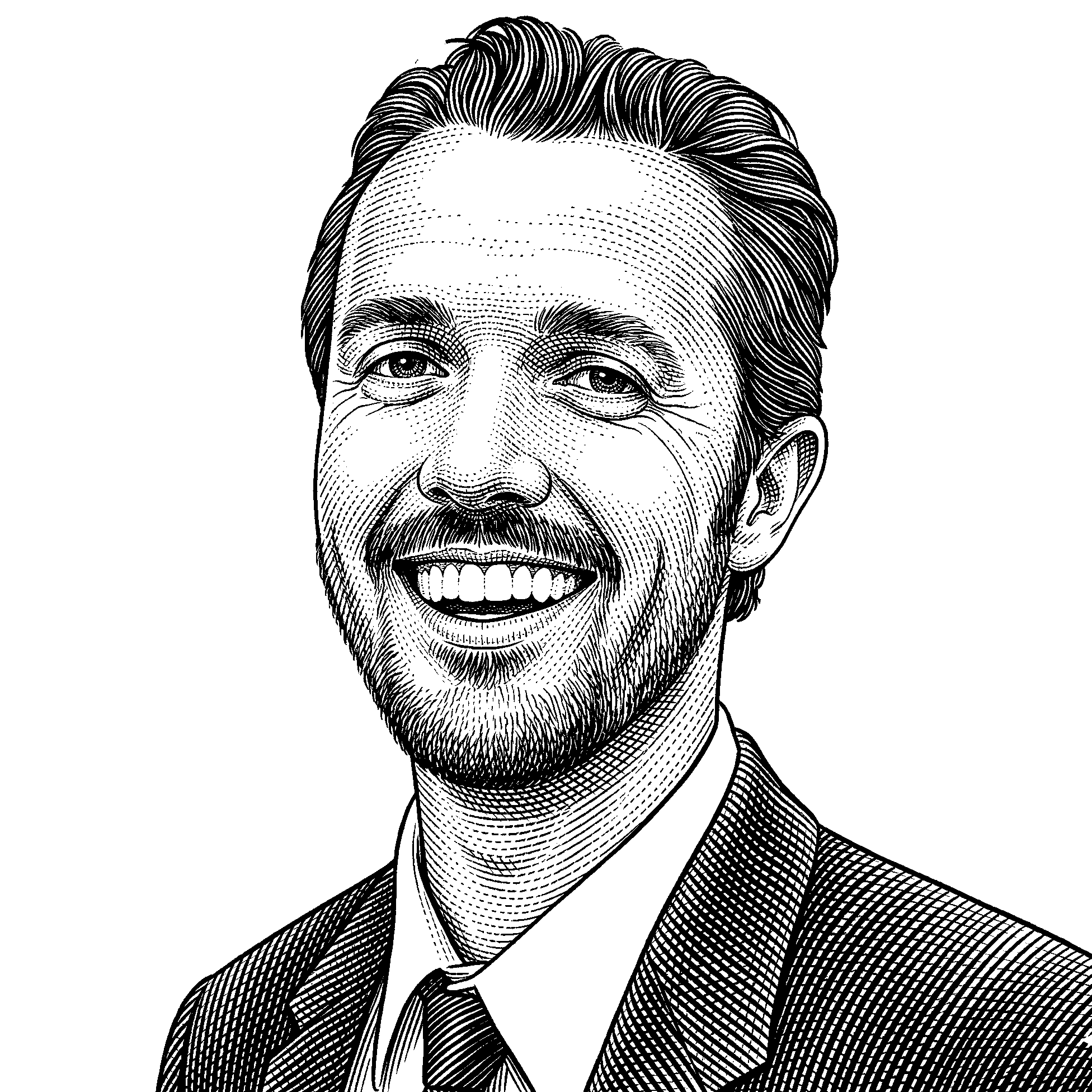
Michael Ferguson is a neuroscientist, researcher, and educator whose work explores the biological foundations of spiritual experience and the intersection of cognitive science and theology. A prominent voice in the dialogue between Mormonism and transhumanism, Dr. Ferguson is widely recognized for his pioneering research into the “religious brain,” seeking to understand how profound spiritual states are mapped within the human nervous system. ¶ Dr. Ferguson’s academic journey began with a focus on physics and communication, but his interest soon shifted toward the complexities of the human mind. He earned his Ph.D. in Bioengineering from the University of Utah, where his doctoral research gained international attention. During this period, he led a landmark study using functional magnetic resonance imaging (fMRI) to monitor the brain activity of devout Latter-day Saints as they reported “feeling the Spirit.” This research identified specific activation in the nucleus accumbens—a region of the brain associated with reward and dopamine—suggesting that spiritual experiences leverage the same neural circuits involved in music, love, and other deeply meaningful stimuli. ¶ Following his doctoral work, Dr. Ferguson completed postdoctoral fellowships at Cornell University and Beth Israel Deaconess Medical Center. He currently serves as an Instructor in Neurology at Harvard Medical School and as a researcher at the Center for Brain Circuit Therapeutics at Brigham and Women’s Hospital. His clinical and research interests have expanded to include the use of brain lesion network mapping and deep brain stimulation to explore the neural circuits associated with religiosity, spirituality, and various neuropsychiatric conditions. ¶ A frequent contributor to the Mormon Transhumanist Association, Dr. Ferguson presented “The Religious Brain Project” at the MTAConf 2014. In this and other presentations, he argues that a scientific understanding of spiritual mechanics does not diminish their sanctity but rather provides a "technological" vocabulary for the soul. He posits that by understanding the neural architecture of transcendence, humanity can better cultivate profound experiences of wonder, connection, and ethical transformation.
Transcript
Speaker 1
And Michael Ferguson is now making his way down. We get to hear from him on Toward a Science of Spirituality. Michael is a PhD student at the University of Utah. And specializing in neuroimaging. He completed his undergraduate training in biochemistry at Brigham Young University And attended medical school at SUNY Health Sciences Center. He’s passionate about the human brain. And the potential for transhuman aesthetics to promote pro-social dynamics. Thank you.
Michael Ferguson
I am teched out. I’ve got three laptops here between these three. I think we will have a successful presentation.
Michael Ferguson
Title says, I’m speaking about directions toward a science of spirituality, and per the introductory comments, I’m working on My degree in neural imaging. I love the human brain. It’s fascinating. Whether you take a dualistic approach to understanding human nature or A unified physicalist, materialist explanation to human nature and consciousness. Either way, the brain is where it is at.
Michael Ferguson
So our first stop is to talk about a theme that’s been a long-running theme in human fiction and in human fascination, and that is the idea of seeing directly into somebody else’s experience. And this was a theme that was fashioned into the cult classic being John Malkovich. It’s been the subject of a number of other Hollywood movies, like The Change Up, Freaky Friday, and an unfortunate number of Look Who’s Talking movies. And I’m pleased to say that we are well on our way to making these fictions reality.
Michael Ferguson
There was a 60 Minutes spot just a few years ago on work that’s being done at Carnegie Mellon University by researchers named Marcel Just and Tim Mitchell. And what they did was put individuals into the scanner and based exclusively on their brain patterns. They were able to predict the words that the individuals were thinking of. It turns out that from person to person, there’s this uniformity of brain patterns when we’re thinking about hammer. or chair. And so if you scan enough individuals and you build up this database of what the patterns look like for individual words, then you can put someone else into the scanner who’s never been scanned before. And then based again just on their brain activity patterns, you can discern what words are thinking of.
Michael Ferguson
Another similar direction is being forged by a researcher named Tor Wager. He used to be at Columbia University, just got recruited to University of Colorado. And he’s working on decoding the human brain’s patterns of basic emotions. His work has a myriad of potential applications, including investigations into psychiatric disorders as well as applications into the placebo effect or into chronic pain, perhaps looking at Objective markers for levels of pathological pain that a person is experiencing.
Michael Ferguson
Another direction in brain decoding is in the legal realm. There was a landmark case in 2010 where functional brain imaging data was submitted as evidence into the case. to discern the intentionality of the witness, to assert that the witness was lying under oath based on what they were able to see from the brain scan. Although it was ruled inadmissible in this particular case in 2010, it’s definitely a landmark moment in moving toward legally recognized discernment of intentionality. And there are a number of for-profit organizations that are on the race to patent this technology and make it Applicable in courtroom settings.
Michael Ferguson
Maybe the flashiest brain decoding work is happening in the laboratory of Jack Gallant at University of California at Berkeley. And they’re doing visual decoding, visual video streaming discernment, where what they’ve done is they’ve taken about 18 million seconds of YouTube clips. And in a similar process to the word decoding, they put the individual in the scanner, they look at what are the patterns that are associated with individual video clips. And then they have somebody go into a scanner and they look at the patterns second to second as they’re watching a novel video. And what they do is they take out of those 18 million seconds of video clips that have been assembled in their library of of brain patterns, they look for the top one hundred that have closest matches to the brain patterns in the new stimulus. And then they average them together in order to create an approximation of what the individual in the scanner is seeing.
Michael Ferguson
And so this is a demonstration and right now you know, admittedly, it’s primitive technology that though the screen on the right is the reconstructed video image. based exclusively on the brain patterns of a person watching a video that’s not a part of this decoding library. And the one on the left, if you can look beyond the YouTube advertisement. We should have an entire talk on the transhuman advertising that is to come. Oh, because it’s painful. There we go. And the panel on the left is the clip that is being presented. Now even though this is primitive technology, this is pretty darn cool. That just based on someone’s brain pattern, that we’re beginning right now. This is not futuristic technology. This is right now. that we’re able to approximate what that person is actually seeing. So imagine the applications for dream states, to be able to pick out from somebody’s brain what’s happening when they’re in a semi-conscious or an unconscious state. Lots of really cool opportunities.
Michael Ferguson
Okay, so if we put this all together, we’ve just talked about verbal recognition, emotional recognition, recognition of intentionality, recognition of video streaming. And you can imagine that we’re on our way to a point where we’ll have the capacities to reconstruct the entire internal life of somebody. based on the signals that we’re able to detect at the physical level of their brain.
Michael Ferguson
Where might we go with this? Well, there’s a lot of deeply important applications for such technologies where we can understand the mental life of patients who have locked in syndrome. persistent vegetative states and partially conscious states, medical applications for understanding psychiatric disorders more deeply possible opportunities for parents who want to more fully understand the inner life of a child with autism. In addition to myriad interfaces in the realm of law and justice that are going to be very interesting ethical dilemmas as we move forward.
Michael Ferguson
I would like you to consider, though, what it would be like to use some of these technological approaches to understanding some of the most vexing and elevating experiences, those that we describe as spiritual, mystical and religious experiences. For example, what if we were able to look at what it was really like when a Sufi mystic goes into a deep trance state? Or when a Carmelite nun says that she hears the voice of Jesus, what is qualitatively happening in that process? Or when a Hindu yogi says that he accesses bhakti, universal love. And instead of asking the question about being John Malkovich, what if we start to ask the question, what’s it like to be the Dalai Lama? Or Mother Teresa, or someone before she passed away, someone now who is just filled with this overwhelming love for humanity. Other spiritual leaders, Thomas Monson, Chuck Norris, or if you’ve been following today’s memes, the ridiculously photogenic guy.
Michael Ferguson
One thing that both believer and skeptic need to be aware of is that these approaches to understanding spiritual, religious and mystical experiences are neither going to enable us to directly confirm nor deny theology. That’s not the purpose. That’s not the primary objective. of these investigations, but rather it’s to increase the richness of our understanding of our own humanity. On the one hand, mechanistic detail of spiritual, religious, and mystical experiences enrich our humanism. At the same time, those believing that we are formed in the image of a Creator might revere the expanding scientific details of our deeper nature as glimpses into the contours of divinity.
Michael Ferguson
This work is in its fledgling stages. Perhaps the most established in this general arena of research is Richard Davidson, who’s at the University of Wisconsin. And among his many research forays, he’s looked at long-term Buddhist meditators. And findings have demonstrated, for example, that there is an increase in the amplitude of gamma waves in the electrical pattern of the brain. and also of the synchrony of brain waves when experienced meditators go into these deep meditative states. To date, Richard Davidson has received the largest research grant from the National Institutes of Health into studying meditation, and it’s a nod to the possibility that the practices derived from spiritual traditions may be applicable In a broader secular domain, to contribute to the health and the well-being of the general population.
Michael Ferguson
As we consider spiritual, religious, and mystical experiences, their value is not confined. to the ecstatic moment proper. Such evaluation designates the religious phenomenon as a sort of cognitive and emotional masturbatory event. However, the primary reason that these experiences have become culturally prized is because of what the experiences point to and what they lead toward. They’re seminal events through which a conception of the transcendent is implanted. It gestates inside the individual who has experienced the spiritual or the mystical occurrence, and ultimately Birth is given to a new paradigm, a new well-being, an abiding peace, Tao, moral realization, bhakti, the comforter, interconnectivity, enlightenment. In the broadest terms, spirituality at its best results in transformative wisdom.
Michael Ferguson
I would submit to you that we’re on the cusp of an era wherein we can begin to approach the neurobiological mechanisms involved in experiences that have traditionally been relegated, if not scorned, beyond the margins of empirical inquiry, such as spirituality and wisdom. Such an inclusionary approach may offer a twofold benefit of helping to mediate fundamentalisms that lead to extremism. while at the same time enlivening a general societal discourse in which these questions of transcendence and wisdom are revisited with renewed vigor and productivity. It represents a potential complementarity between tradition and modernity, a strong bridge between the disparate realms of humanities and physical sciences. The way that I see it, that future looks very bright. Thank you.
Speaker 3
So I like neuroscience a lot too. I’ll give you two questions and you can pick which one is a hostile witness. After I die, at least in Mormon theology, I’ll have a spirit body, and that spirit body will retain memories of my mortality. even though I’m disconnected from my physical body. The question would be then how do you what’s your understanding of a potential way for that to happen? The other question that you can choose to answer is what’s your understanding of how memories or experiences are acquired in near death experiences where the brain is physically not functioning at all. That there is no blood flow to it, but After recitation, they come back with a series of experiences and memories.
Michael Ferguson
Those are terrific questions. The first one as far as memory encoding in some type of Non-corporeal physical entity. Man, my guess would be as good as yours. And I think that it segues into your second question about the mechanisms that we understand right now for memory encoding in the physical body.
Michael Ferguson
And what’s interesting is that neuroscience in the past decade and a half has undergone major infield revolutions. For example, it was the dogma that the number of neurons that you’re born with is the number of neurons that you have. For the duration of your life. And only in the past decade and a half, it’s been demonstrated clearly that that is not true, that we’re forming new neurons even into our adulthood.
Michael Ferguson
Another misconception that was dogma that’s been revised. relates to the rigidity of the neural wiring once it has been in place. It was thought that once the mechanisms are locked in, that that’s the functional pattern of the brain. And the discoveries in neuroplasticity are just Blowing that out of the water. We could have a long, fascinating discussion, but the buzzword is neuroplasticity, if you want to look that up.
Michael Ferguson
So, getting to your question, though, right now The prevailing neuroscientific dogma about memory encoding is that it is a function of the synapses, the junctions between individual brain cells. Actually, just this past month in a journal called PLOS Biology, PLOS One Biology, it’s been demonstrated that there’s intracellular mechanisms that are clearly involved with memory formation, that there’s something going on inside of the cells themselves with protein expression, with protein modulation. That are involved in memory formation. So the short answer is that, you know, for take it for what it’s worth, but my hunch is that the current Dogma in neuroscience about memory formation occurring at synapses as the crucial mechanism is about to go through another revolution.
Michael Ferguson
I hope that answers your question a little bit. Maybe. We can definitely talk afterward. Okay.