Michael Ferguson

Portrait of Michael Ferguson

Michael Ferguson is a neuroscientist, researcher, and educator whose work explores the biological foundations of spiritual experience and the intersection of cognitive science and theology. A prominent voice in the dialogue between Mormonism and transhumanism, Dr. Ferguson is widely recognized for his pioneering research into the “religious brain,” seeking to understand how profound spiritual states are mapped within the human nervous system.

Dr. Ferguson’s academic journey began with a focus on physics and communication, but his interest soon shifted toward the complexities of the human mind. He earned his Ph.D. in Bioengineering from the University of Utah, where his doctoral research gained international attention. During this period, he led a landmark study using functional magnetic resonance imaging (fMRI) to monitor the brain activity of devout Latter-day Saints as they reported “feeling the Spirit.” This research identified specific activation in the nucleus accumbens—a region of the brain associated with reward and dopamine—suggesting that spiritual experiences leverage the same neural circuits involved in music, love, and other deeply meaningful stimuli.

Following his doctoral work, Dr. Ferguson completed postdoctoral fellowships at Cornell University and Beth Israel Deaconess Medical Center. He currently serves as an Instructor in Neurology at Harvard Medical School and as a researcher at the Center for Brain Circuit Therapeutics at Brigham and Women’s Hospital. His clinical and research interests have expanded to include the use of brain lesion network mapping and deep brain stimulation to explore the neural circuits associated with religiosity, spirituality, and various neuropsychiatric conditions.

A frequent contributor to the Mormon Transhumanist Association, Dr. Ferguson presented “The Religious Brain Project” at the MTAConf 2014. In this and other presentations, he argues that a scientific understanding of spiritual mechanics does not diminish their sanctity but rather provides a "technological" vocabulary for the soul. He posits that by understanding the neural architecture of transcendence, humanity can better cultivate profound experiences of wonder, connection, and ethical transformation.
Videos by Michael Ferguson

The Religious Brain Project
15:56

Michael Ferguson

The Religious Brain Project

Michael Ferguson introduces the Religious Brain Project, a collaborative research initiative at the University of Utah using functional MRI to study Mormon spirituality. He traces the philosophical history from Descartes’ dualism through Joseph Smith’s "queering" of the material-spiritual binary, positioning the project within William James’s pragmatist tradition of assessing religion by its fruits. Ferguson describes the study’s methodology—behavioral questionnaires measuring religiosity, empathy, and moral cognition alongside neuroimaging of participants watching General Conference, praying, and pressing a button when they "feel the Spirit"—aiming to map the neural correlates of Mormon spiritual experience and explore questions of neuroplasticity, such as how missionary service might reshape brain connectivity.

Trinitarian Archetypes: A Transhumanist Mythos
17:55

Michael Ferguson

Trinitarian Archetypes: A Transhumanist Mythos

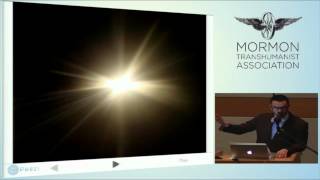
Michael Ferguson explores how Trinitarian theological archetypes—Father, Son, and Holy Spirit—can serve as a framework for understanding humanity’s biological, cultural, and technological evolution. He argues that humans are uniquely driven by narrative and story, and that transhumanism can draw on existing religious symbolism to articulate its vision. Ferguson draws parallels between Christ’s transfiguration and the future moment when human essence radiates through technological form, suggesting that the Christian story of Pentecost—when the Spirit enabled understanding across languages—foreshadows a future where technology amplifies our capacity for empathy and love.

Toward a Science of Spirituality
16:24

Michael Ferguson

Toward a Science of Spirituality

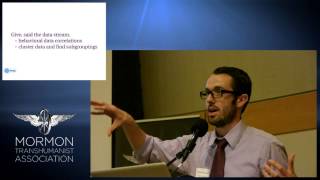
Michael Ferguson surveys emerging neuroscience technologies that enable researchers to decode thoughts, emotions, and visual experiences directly from brain activity patterns. He describes work at Carnegie Mellon on word recognition, Tor Wager’s emotional decoding research, and Jack Gallant’s visual reconstruction experiments at UC Berkeley. Ferguson proposes that these technologies could eventually be applied to understanding spiritual, religious, and mystical experiences—not to confirm or deny theology, but to enrich our understanding of human nature. He suggests this represents a potential bridge between humanities and physical sciences, where scientific investigation of spiritual experiences could help mediate fundamentalisms while reinvigorating societal discourse on transcendence and wisdom.